February 2014

NOW, CSL

I was unable to attend the fabulous NOW conference in Arizona this weekend, for women with bleeding disorders, where I was supposed to give a speech on Saturday. This assumes you have a voice. Which I did not. Returning from the Caribbean with a devastating chest cold (I think I inhaled mold from the AC system in the old hotel I slept in) and a voice that made me sound like a serial killer with laryngitis, I opted sadly to stay home and recover. So now (NOW) I don’t have a report on this great event, funded by the way by CSL Behring.

Speaking of which, here’s a book review by our colleague Richard Atwood in North Carolina about a book about CSL, or CSL Behring as we know it now. Even if you don’t read the book, the facts below are interesting. Having a business background, I’m always interested in knowing how these companies formed, and became what they are. Especially while I was in Barbados, a country which imports factor VIII from two companies, CSL Behring being one of them. Some of the there doctors didn’t realize it’s an Australian-based multinational company. 


Committed to Saving Lives: A History of the Commonwealth Serum Laboratories
A.H. Brogan, 1990,  Melbourne, Victoria, Australia: Hyland House Publishing Pty Limited. 301 pages.
SUMMARY: The government of Australia formed the Federal Serum Institute in 1916 and subsequently changed its name to the Commonwealth Serum Laboratories the following year. Despite its name, CSL had the mission to prepare vaccines, serums, and anti-toxins. As a pioneering public-sector manufacturer, CSL was prepared for the 1918 influenza pandemic by providing the diphtheria and tetanus immunizations. Subsequent public health achievements were the extraordinarily quick provisions of insulin in 1923, penicillin in 1944, Salk antipoliomyelitc vaccine in 1956, anti-D antiserum to prevent Rh disease in 1966, and tuberculosis vaccine. Although CSL had the statutory authority to run a pharmaceutical business, tension persisted for the next 75 years as to whether CSL was a commercial manufacturer or a national public health and research organization. Regardless, the government wanted a profit from a company that provided pharmaceuticals for both humans and domesticated animals.
   CSL conducted blood typing research, and then for the Second World War preserved whole blood and dried human serum for blood proteins. Whereas the UK, USA, and Canada used plasma for war casualties, CSL used serum to prevent spreading hepatitis. The war stimulated blood fractionation around the world beginning in 1941, using either the ethanol method developed by Cohn at Harvard or the ether method developed by Keswick in the UK. CSL implemented the Cohn method in 1945 using voluntary non-paid blood donors through the Australian Red Cross. Production began in 1953 for globulin, albumin, and fibrinogen, then in 1961 for AHG using the Cohn method modified by the Blombacks of Sweden, followed by cryoprecipitate until 1969, AHF in 1970, AHF HP (high purity) in 1972, Improved Intermediate Purity AHF in 1979, PPSB (Prothrombin, Proconvertin, Stuart Factor, Haemophilia B Factor) in 1968, and Prothrombinex in 1972. After learning from America in 1982 about the virus that was later to be called HIV, CSL began experiments in 1983 of heating AHF products and then implemented heat sterilization of FVIII products in 1984. CSL also produced the confirmatory Western blotting test for HIV-I beginning in 1984. Meanwhile, CSL upgraded and expanded the facilities for plasma fractionation.
COMMENT: The history of CSL for its first 75 years up to 1990, whose book title has the same acronym, was written by its recently retired personnel director. As an insider, the author confesses to be a partisan, and rightfully highlights the many medical accomplishments, but also includes some of its misfortunes. The book, which includes 121 photographs, 17 pages of Notes, 3 appendices, and a 9-page Index, ends with several questions regarding an uncertain future, whether CSL would continue to be owned by the government or be a candidate for privatization. CSL is a model for a government-owned commercial enterprise in the public health sector that accomplished its mission. It is also a case study for the continual difficulties imposed by government meddling in the public health research, development, and commercial activities that hindered its mission. Blood and blood substitutes were only a small part of the many commercial activities performed by CSL for the citizens of Australia and world-wide.

Great Book I Read
The Greatest Salesman in the World by Og Mandino [Kindle]
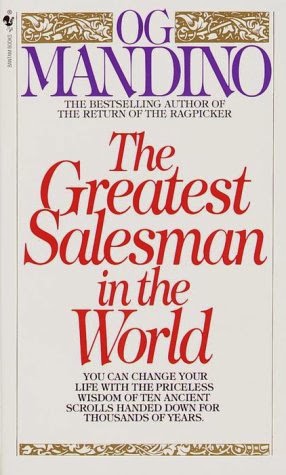
Published in 1968, this has become a timeless classic not just for sales, but for business, for life. A very simple story, set in the time of the birth of Christianity, with profound principles about being your best, making your life, not being a victim to chance but defining who you are, what you are and what you are to become. You can finish this in one sitting, but guaranteed it will stay withyou a long time. You can read this as a business self-help book, or as a way to build better character and life. I read it a long time ago for one and now read it for the other. Much in the style of Paolo Coelo, though Og came first! Five/five stars.
Barbados: Preparing Leaders for Change

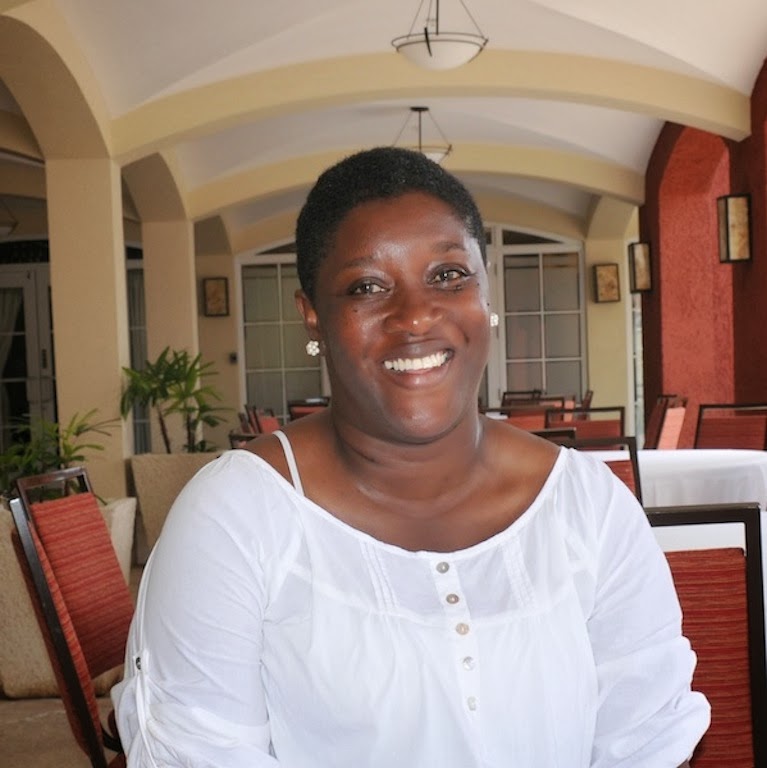
Sofia Codrington

Last Sunday, I had a nice flight back from Union Island to Kingstown, St. Vincent, and Martin Jennett, the pilot, was so supportive of the work we do at Save One Life,  he gave me a huge discount on the charter flight price, only $100 (compared to $160 going over). We said our good-byes, and then I waited to board my flight to Bridgetown, Barbados. I sat in the little airport café, sweating in the humid air, answering email and reading.  It was a quick flight to Barbados.

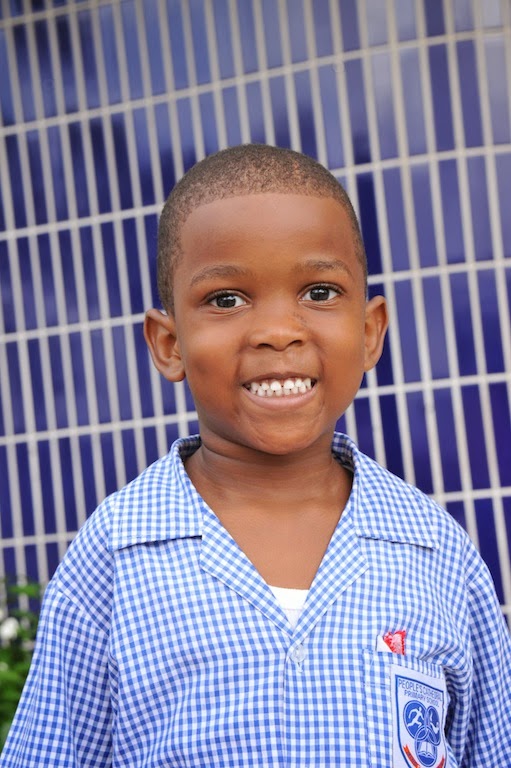
I settled in at a pizza place (Chefette) at the airport to wait for and in a little while, a lady and son came up to me—Sofia! And her four-year-old Aaron, who has hemophilia. We embraced and as always, when you meet another mom (or dad) of a child with hemophilia, it really doesn’t matter your nationality, race, religion. We are all family.

Sofia had asked me to come and visit, as no one from the hemophilia community has been here before (that I know of). She is interested in starting a hemophilia society. We hold Aaron’s hand– he is a live wire–and go to the parking lot, stuff the suitcases in and drive to the Marriott, not too far away. I am nursing a very sore throat. Sofia drove me to the Marriott, and we said our goodbyes.
Monday February 10, 2014
II had a leisurely morning, breakfast downstairs and then waiting for Sofia. And waited. Island culture—island time. Things will happen when they happen!
When she arrived, we had a chat. She explained about how she learned Aaron had hemophilia: He was 9.8 lbs at birth, seemingly normal. At 9 months he began crying all the time, and his knee was swollen. She took him to Dr. Inniss, her pediatrician, who sent her to the Queen Elizabeth Hospital (QEH), the only public hospital on the island. The doctors didn’t know what was wrong. They admitted him and did a biopsy on the knee! And they did an x-ray but never saw a bleed. The knee was traumatized but eventually the bleeding stopped and went down by itself.
In 2009 Sofia went to New York for a vacation, as a relative is there. Aaron had had a
fever. As the plane was landing Aaron cried and cried, inconsolable. No one knew but he was having a spontaneous head bleed. They took Aaron to Long Island
Jewish Hospital, a good HTC, and Dr. Richard Lipton helped determine this was a
cranial bleed. They ordered a CT scan. She said they told her, another 15
minutes and the damage might have been irreparable. Now they realized he had
hemophilia. Her cousin finally told her that her dad and both uncles had it! Aaron
stayed at LIJH for 6 months, and received factor. And there seems to be no permanent damage, thankfully.
Sofia explained how hemophilia is treated. Here in Barbados, everyone gets free factor. But I questioned what exactly does that mean? An unlimited supply? No. It means that the government buys a certain amount for the year, and whatever is there, you can use and don’t get
charged for. But inevitably it’s not enough and gets used quickly. This is why a few patients had recently contacted us for a donation.
Sofia also mentioned Aaron’s dosage, 1700 IU for a 4 year old, three times a week. This dosage seemed excessive.
We then drove to meet with Dr. Patricia Inniss, Aaron’s pediatrician. We waited about an hour and a half in her waiting room. It seems our day is
filled with waiting, waiting. No lunch. My throat got worse as the day went on. It was hard to maintain a conversation as I could hardly speak.
Finally we were let in. Dr. Innis is a lovely woman, graceful and civil. I gave her our toddler books about hemophilia, and asked her about Aaron, and the state of hemophilia on the island. I asked Dr. Inniss about Aaron’s prescription; why a 4 year old is be given 1700 IU, enough for a teenager. She wasn’t sure.  So we talked about lowering his dose.
After that we drove to meet with Ms. Maryam Hinds, director of Drug Services of Barbados. Gentle, articulate, devoted. We had a nice
chat. She showed me the drug formularies, the tender and explained how factor was procured.  According to her, they spend only enough money for 75,000 IU of factor VIII, much less than what one American child uses in one year! But at least Barbados is buying some. Many countries that have much more money than Barbados don’t even buy factor.
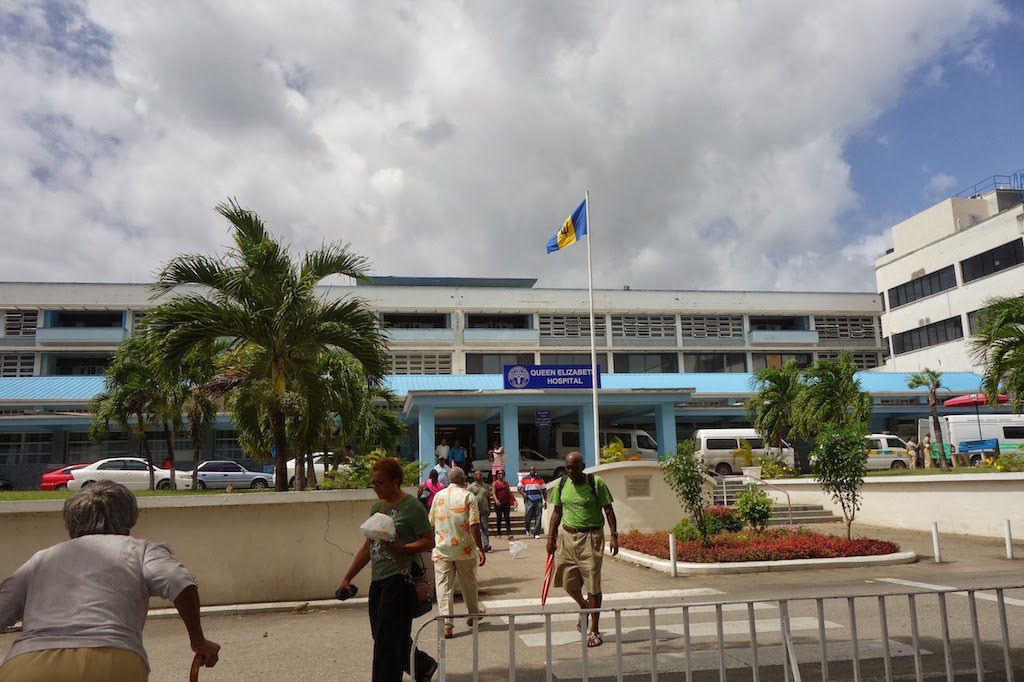
Queen Elizabeth Hospital

No one seems to know how many patients are on the island. I calculated 20? But one doctor later estimated 50. This, I told Sofia, is where a patient organization can really help out, by reaching out to patients in all the “parishes,” as they call them—St. John’s, St. Andrew’s, etc.

Tuesday February 11. My voice is gone and I can only whisper now, which is unfortunate as we meet with hospital doctors today.  Today’s meetings warrant a dress, and Sofia drives us to meet the hematology staff at the Queen Elizabeth Hospital (QEH). The hospital is your basic, underfunded public hospital in a developing country, yet it buys factor, which is astounding. We go to hematology and meet with Dr. Laurent, Dr. Hawkins (originally from England) and a student. Laurent accepted our donation of factor, looked into the bag,  passed over any thank you to sadly ask, “No
NovoSeven?” Which I guess shows the state of desperation here.
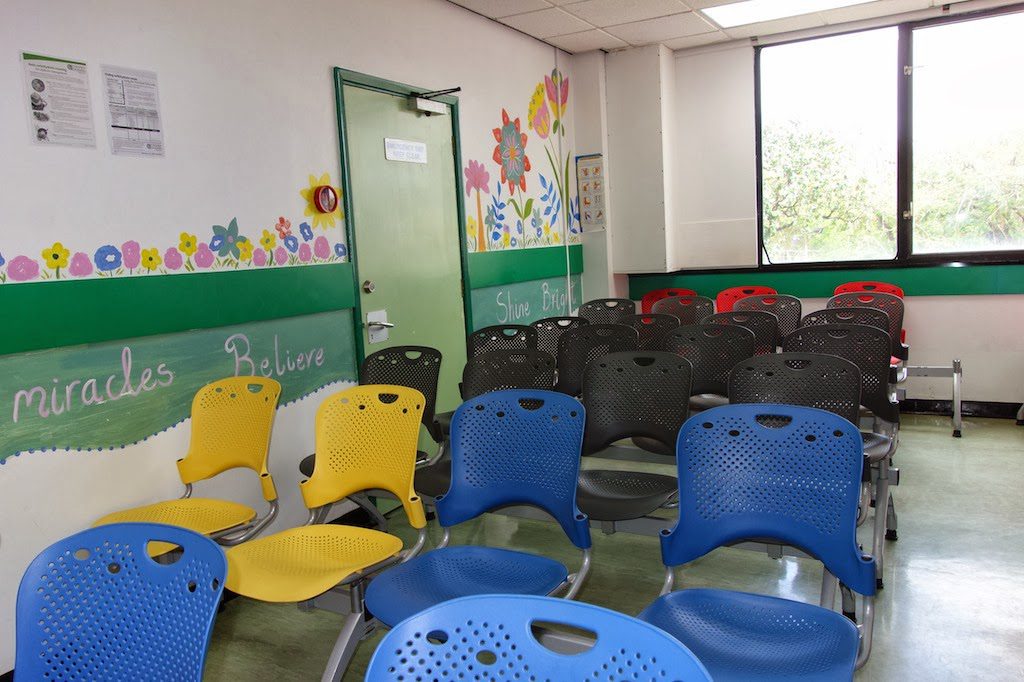
Hematology Ward
She painted a picture of hemophilia on the island. One patient is a fisherman, and he was forever getting cut with hooks, cleaning knives, etc. They asked him to think about getting another job perhaps? They
also mention the “poor whites,” on the other side of the island. This raised our eyebrows as being a politically incorrect thing to say, but yes, this is a real term used here.
The “poor whites” are  descendants of an estimated 50,000 white slaves  transported from Ireland to Barbados between 1652 and 1657. I read on line “Having succeeded in recruiting Irish men to die in the services of France, Spain, Poland and Italy, Cromwell turned his attention to others – men and
women press-ganged by soldiers, taken to Cork and shipped to Bristol where they
were sold as slaves and transported to Barbados.” They are now called “poor
whites,” or Red Legs or Red Shanks. They live in St. John parish and no one
knows much about them except they have hemophilia among them; they tend to intermarry and not mingle with the blacks. I thought that would make for a very interesting visit my next time around.
After our meeting,  we went with Sofia to the pharmacy and waited till her number was called. She received quite a few boxes of FVIII. More concerning was that Aaron gets an allergic reaction to each infusion of these. I told her that her hematologist needs to let the manufacturer know.
We then drove a long way round the island to visit Dr. Chris Nicholls, her hematologist. He’s a nice guy. Young, responsive, communicative, smiling. When I carefully broached the subject of Aaron’s dosage, he agreed that we needed to look into this. When I carefully broached the subject
of Aaron’s allergic reaction, he was also in agreement that the manufacturer needed to be contacted. It’s great to find a doctor so agreeable and open-minded. He lamented that no medical records here are kept digitally; all records are kept on paper! He studied in the UK and just returned not even four years ago here. He works in the QEH but also has his own practice. We asked if he might be interested in forming a nonprofit with Sofia,
and he agreed.
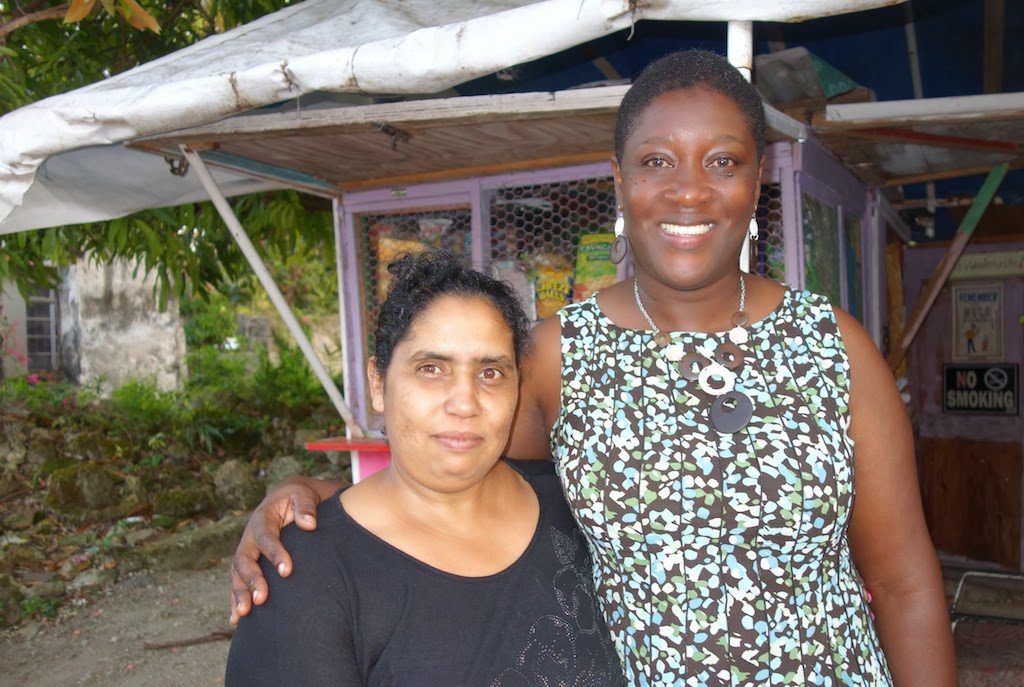
Mel with Sofia: Outreach to other families
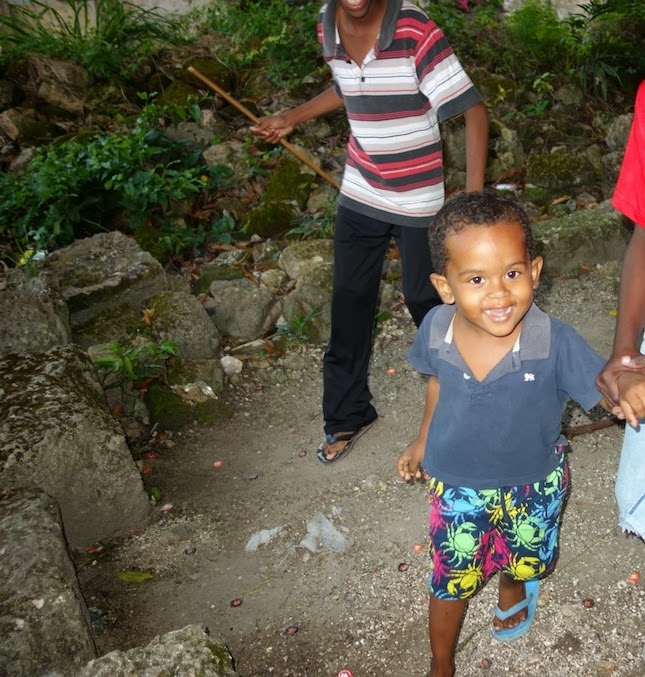
Last, we drove some more to visit a mother—Melanie. Sofia told us she runs a “shop,” and I pictured a little boutique. Not even close; it was a roadside stand, the kind covered with tarp that sells chips and drinks. Mel’s little son Remel fought desperately to hide from me though it was more like a game. Nothing we did could entice him to stay still for a picture. This led to an instant bonding which was good. We all laughed
at ourselves trying to get Remel to be still. Finally I tricked him and as he turned the corner, caught him in a great shot. I jumped in the air and pumped my fist, and the mom, and the neighbors sitting and watching all applauded! It was great.
 
Melanie told us that she has nephews with hemophilia in Guyana. I said we knew two brothers, Laurence and Lloyd… and she said that is them! What a small world! We’ve been helping her nephews for a long time.  Another bonding moment.

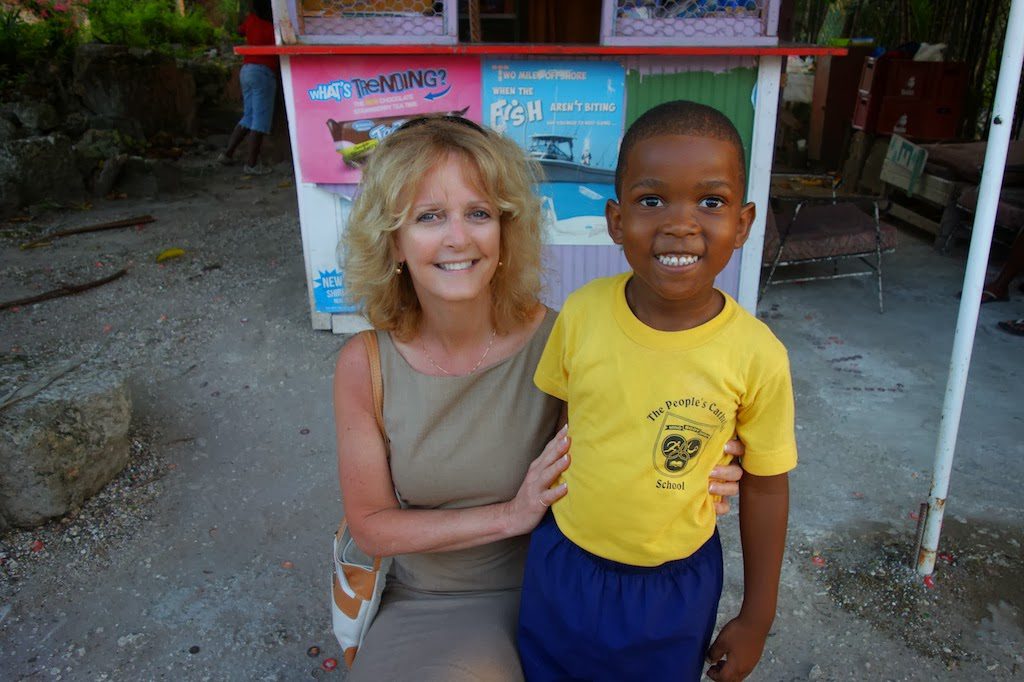
Laurie with Aaron
Remel has factor VIII deficiency
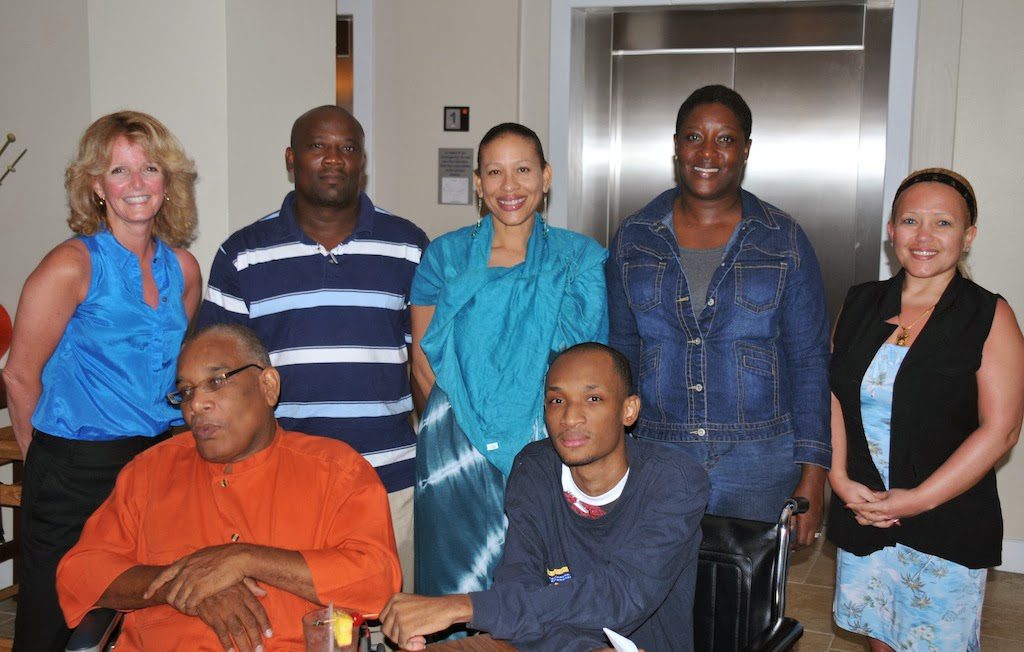
February 12, Wednesday evening. Sofia invited local families with hemophilia to meet us at our hotel for dinner. We were surprised at how many came, including two in wheelchairs—Jeffrey and Leemar, who we both sent factor to recently.
Dinner with Barbadian families

There was Kole and Kim, whose son Konnor has FIX—a handsome couple. Jeffrey, age 61, a real
hoot… great outlook and sense of humor. Ansley Marshall, with son Caiel. And Leemar, age 26, FIX with an inhibitor, so sweet, gentle and funny! Born only a month before my son, but
a world away. He has suffered horrifically. Jeffrey is his uncle. They both
spoke about what the pain was like: four nights, no sleep. You don’t want anyone
near you. No one can do anything for you to alleviate the pain. Jeffrey said,
“And you just pray for a few seconds, just a few seconds, of no pain so you can
have some relief.” The pain comes in waves, like the ocean that pummels the beaches
on this beautiful island. Leemar’s friend who brought him was interested and
asked questions. Such bright young men.

Dinner with Barbadian families

We took a photo, I paid the check for the dinner and drinks we bought for everyone, and promised to follow up with books and materials. I gave a pep talk about change and what they can do as patients and leaders to improve medical care and access to factor. But it wasn’t my best as my poor voice was at an end. But it was a great way to end a great trip.


The origin of the name Barbados?The name is Portuguese. The reference of the Portuguese to the island as Los Barbados (the bearded ones) is believed to describe the bearded fig trees on the island.


Become a Leader! (Fast!)

We have a lot of programs in the hemophilia community, but this is one of the best. You may need a lot more than just a diploma to secure a great job; you’re competing with talented and smart people. One thing that all prospective employers look for (me included) is leadership: that esoteric quality about someone that sets them apart from the pack. You don’t always learn it in school, but you can learn it here.
I was present in 2006 when a group of great people from our community came up with this idea and presented for funding. The Bayer
Hemophilia Leadership Development Program
(BHLDP) provides college students from the hemophilia community a unique internship opportunity to build foundational leadership skills while also deepening their connection to the hemophilia community. BHLDP, now in its eighth year, gives selected interns an opportunity to work directly with the Bayer marketing team in Whippany, New Jersey. Interns also get to experience rotations which include a public policy awareness session in Washington D.C., a community advocacy-focused visit to National Hemophilia Foundation in New York, and activities with Bayer’s partners.
When discussing their favorite aspects of the internship process, the former interns commented that they were surprised—and thrilled—by the amount of real work they were able to do during their time with Bayer. “We were exposed to real meetings and real experiences,” said Lewis Chesebrough, a 2012 BHLDP intern. “We participated in a real professional environment with people who were supportive and kind to us.”

In addition to getting to do real, meaningful work, the program also helped interns chart a course for their future. Christian Mund, a member of the 2013 internship class and a junior at Syracuse University, said that his Bayer internship helped him realize marketing was the path he wanted to pursue following graduation. “Before the internship, my local sales representative asked what I wanted to do after college; I had no idea. After I finished the BHLDP internship program, I knew marketing was what I wanted to do because the internship really opened my eyes to what I could do after graduation and now I am looking for other internships in marketing.”

Following a BHLDP internship, many former interns have stayed involved in the hemophilia community. Rich Pezzillo, a member of the 2007 internship program, is now the Communications Director at the Hemophilia Federation of America (HFA). “The BHLDP internship helped give me direction on what I was most passionate about and how I felt most fulfilled,” said Pezzillo. “I now have opportunities to help other young adults that may not have the proper resources or the family to talk to about what it is like to have a bleeding disorder.” And Aaron Craig, a member of the 2010 internship class, started a company called Microhealth that developed an app for the hemophilia community that he says is like
“Facebook for the health care system of hemophilia.”

Bayer is currently accepting applications for the 2014 Bayer Hemophilia Leadership Development Program. Applications for the six-week, paid internship are due by Friday, February 28, 2014. (Yeah, I put that in red, so move on it!) For more information and to apply visit https://www.livingbeyondhemophilia.com/webapp/index.jsp

For US patients only.
(Truth in advertising: The above is an unpaid announcement for the common good)
Great Book I Read
Act Like a Lady, Think Like a Man: What Men Really Think About Love, Relationships, Intimacy, and Commitment   by Steve Harvey
This was a gift from a co-worker who obviously thinks I need help in the dating department. She might be right, after reading this hysterical and no-nonsense view of how women should date from a man’s point of view. Blunt and taking a somewhat dismal view of men in general (think “dog training”), there are still some nuggets of truth here and it’s a whole lot of fun to read anyway! Men are not just from Mars, they are an entirely different species altogether and in severe need of BF Skinner’s behavioral training. I read it in one night and laughed a lot. And learned a few things. Three/five stars
HemaBlog Archives
Categories