October 2023

Blood Moon, You Knew Just What…

A partial lunar eclipse happened on October 28-29, visible on one side of the earth; this occurs during a full moon when the sun and the moon align on opposite sides of Earth. It’s sometimes called a “Blood Moon.” Why?
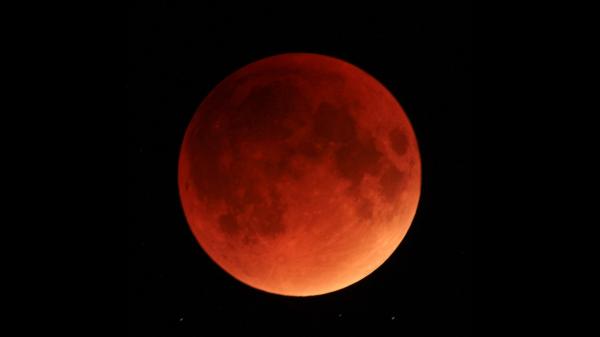
The term Blood Moon is used to refer to four total lunar eclipses that happen in the span of two years—called a “lunar tetrad.” The eclipses in a tetrad occur about six months apart. Lunar tetrads are rare, so it’s no surprise that sometimes special meanings are given to their occurrence.

Some religious scholars have called the eclipses Blood Moons after a verse in the Bible’s Book of Joel, which referred to the sun darkening and the moon turning red before the second coming of Jesus. The last lunar tetrad was in 2014 (check out our entry in HemaBlog!) and some people may have believed that this was a sign of end times.

But, we are still here!

Scientists believe that the moon may look red during a total lunar eclipse because of sunlight that is filtered and refracted by Earth’s atmosphere. From the website “earthsky.org”:

“The reason stems from the air we breathe. During a total lunar eclipse, the Earth lies directly between the sun and the moon, causing the Earth to cast its shadow on the moon. If Earth didn’t have an atmosphere, then, when the moon was entirely within Earth’s shadow, the moon would appear black and invisible.

“Thanks to Earth’s atmosphere, what actually happens is much more subtle and beautiful. Earth’s atmosphere extends about 50 miles above Earth’s surface. During a total lunar eclipse, when the moon is submerged in Earth’s shadow, there is circular ring around Earth – the ring of our atmosphere – through which the sun’s rays pass.

“Sunlight is composed of a range of frequencies. As sunlight passes through our atmosphere, the green to violet portion of the light spectrum is, essentially, filtered out. This same effect, by the way, is what makes our sky blue during the day. Meanwhile, the reddish portion of the spectrum is least affected.

“What’s more, when this reddish light first entered the atmosphere, it was bent (refracted) toward the Earth’s surface. It’s bent again when it exits on the other side of Earth. This double bending sends the reddish light onto the moon during a total lunar eclipse.”
We will have eight tetrads from 2001-2100. The first tetrad of the 21st century took place in 2003-2004, the second was in 2014–2015, and the next will be in 2032–2033, with the following eclipses: April 25, 2032, October 18, 2032, April 14, 2033 and October 8, 2033!

While you wait for it, Google music + Blood Moon and you will hear some interesting music, like this cool one from The Hives. https://www.youtube.com/watch?v=D7heQB5ST3g

Google “Blue Moon” and you will hear something completely different!

If you missed the full moon, partial eclipse and Blood Moon, prepare for it in ten years… which hopefully will not be end times!

Hematophages from Around the World

It’s Halloween season again, and always a fun time to look at the lore of blood-drinking creatures, known as hematophages. In the past we’ve looked at the relationship between vampires and hemophilia—some studies even thinking the lore of vampires may be started with cases of hemophilia, unknown at the time. What are other blood-drinking creatures from different cultures? I found this summary on the internet:

The Chupacabra, from Latin America, which drinks goat blood. It’s a bear-like creature with spines on its back. This myth dates back only to 1995, when a farmer in Puerto Rico found dozens of his sheep drained of their blood with small circular incisions on their bodies.

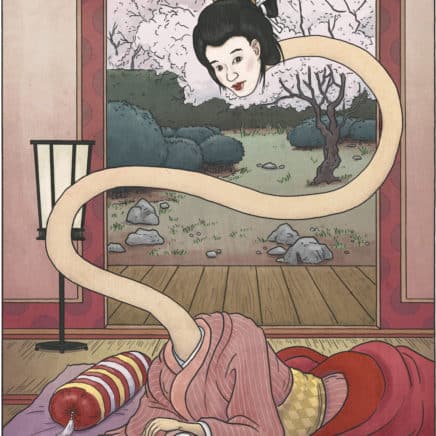
A Rokurokubi

The Baobhan Sith, a fairy in Scottish lore that drinks human blood, and usually appears as a beautiful young woman wearing a long green dress that conceals the deer hooves she has instead of feet.

Rokurokubi is a kind of Japanese apparition, whose name means “pulley neck.” By day these are regular women. By night, their bodies sleep, while their necks stretch to amazing lengths and roam around. There are two types; the others’ heads come off and fly about, and feast on blood.

Lamashtu is a Mesopotamian goddess/demoness that drank the blood of children. She is depicted as a mythological hybrid, with a hairy body, a lion’s head with donkey’s teeth and ears, long fingers and fingernails, and the feet of a bird with sharp talons. 

Jubokko, another Japanese apparition, was once a normal tree that eventually absorbed the blood from battlefields, and became alive as a spirit. Afterward, the tree only craved human blood. When someone passed by, the tree grabbed them with its long branches, pierced their skin, and sucked out their blood.  

Yara-ma-yha-who, a creature from Australian Aborginal mythology.  The creature looks like a red amphibian- man with a very big head, large mouth with no teeth and octopus-like suckers on the ends of its hands and feet. It lives in fig trees and, like the Jubokko, waits for an unsuspecting traveler to rest in its shade. The creature ambushes the traveler, using its suckers to drain his blood. Then, it swallows the traveler, and goes to sleep. Upon waking, it regurgitates the victim, who is alive, but shorter, and who in time becomes a Yara-ma-yha-who.

And finally, we return to vampires, the kind we are more familiar with, but from China. A jiangshi is known as a hopping vampire, created from a corpse when a cat jumps over it! It moves about by hopping with its arms outstretched, kind of like Frankenstein’s monster. It kills living creatures to absorb their qi, or life force. Like the vampire folk tales we are familiar with in the west, they prowl about at night, and sleep in coffins or dark places such as caves in the daytime.

All cultures seem to love a good scary story, don’t they? And blood seems to always be a component of scary tales—I had a few of my own when raising a child with hemophilia!

Insurance Expertise for Free

It’s that time of the year again… Open Enrollment, when you can change your health insurance policy or plan. But you can’t change unless you know what your needs are, and can calculate what your budget is and what expenses will be. Insurance is frustrating, it’s daunting, and with a bleeding disorder, it’s expensive.

But I just saw this on Facebook, which made me happy for two reasons: 1) a licensed insurance broker can help you get started for free, and 2) he’s a wonderful person I’ve known for a long time.

Meet Alexander Ell!

For over 10 years, Alex has helped over one thousand clients with their insurance across multiple states and numerous insurance companies. Alex’s goal is to walk you through the process, providing non-biased advice about the best plan for your needs and goals. His website helps you learn the basics of insurance, defines the many acronyms that insurance loves to use, and has a Frequently Asked Questions section.

On Facebook, he wrote: “Hey everyone! If you hear of any friends or family that need help with their Medicare or Health Insurance, please send them my way. I’ve been a licensed insurance broker for over 10 years. My services are free and I provide non-biased advice about the best plan for their needs and goals. I’m licensed in ID, NV, OR, WA, TX, GA, and FL. If you have any questions, please reach out to me. https://capitalrealm.com

Alex has navigated the complex healthcare system for himself as he has hemophilia. Now he’s here to do the same for you! Contact him to get started with a free consultation today.

Doug Did It!

My boyfriend Doug is such a go-getter, such a team player, that I would always tell people, You want something done? Doug’ll do it. And I volunteered him for various tasks at Save One Life, which he cheerfully accepted and did. One year I even made magnets and lapel buttons for the Save One Life team that read “Doug’ll Do It!” as a joke.

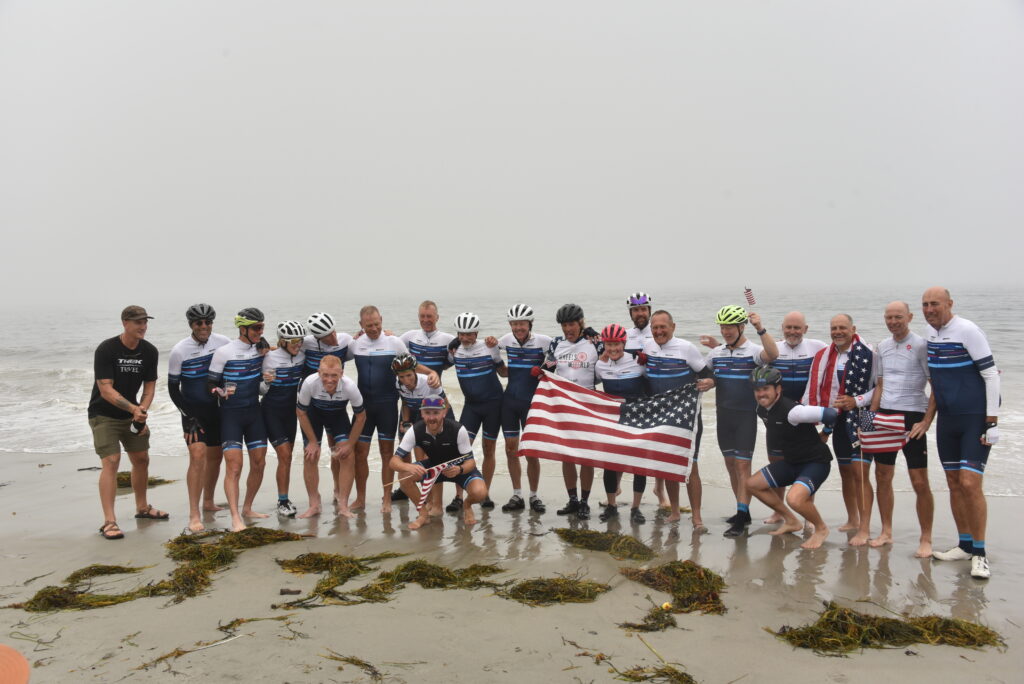
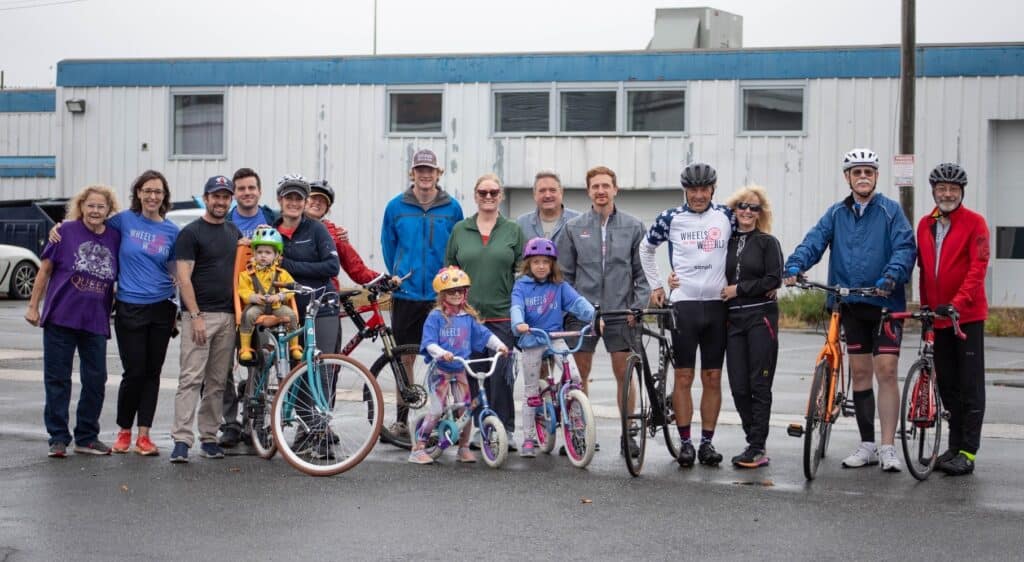
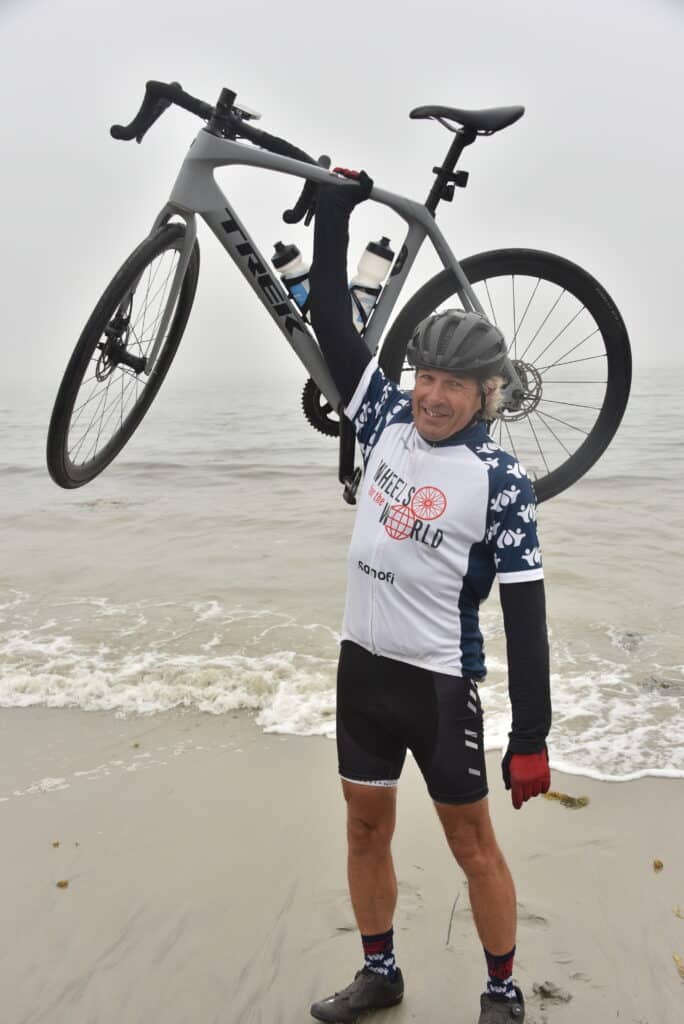
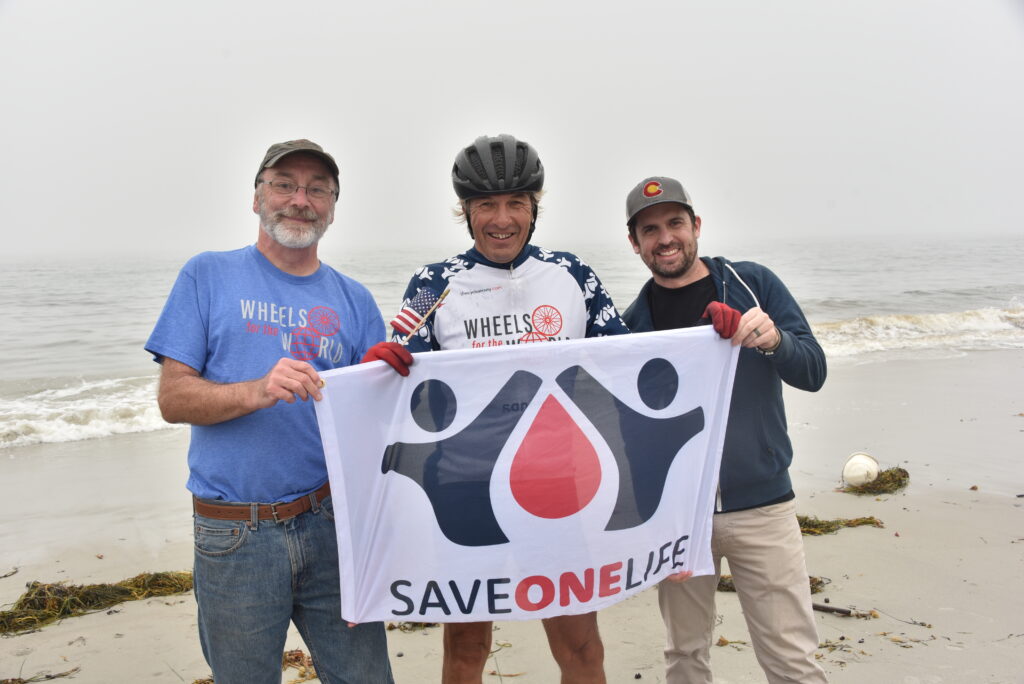
It’s no joke now. Doug did it! He cycled 3,784 miles coast to coast—from Portland, Oregon to Portland, Maine, arriving Thursday, October 5 on a grey and windy day in Maine, to dip his wheel in the Atlantic Ocean. It was an incredible feat, for someone who is 66, and only took up riding nine years ago, when he first met me. Combined, his efforts and those of our community around the country who participated in the Wheels for the World campaign, raised over $230,000 to support the mission of Save One Life, the nonprofit I founded 21 years ago. It was our biggest fundraiser ever.

Doug is inspired by Save One Life’s mission, to give direct financial support and medicine to those with bleeding disorders in developing countries. Save One Life assists over 1,200 people who live in poverty, in India, Pakistan, Nepal, Kenya and ten other countries. It offers direct sponsorship, college scholarships, microenterprise grants, camp support and millions of dollars worth of blood-clotting medicine.

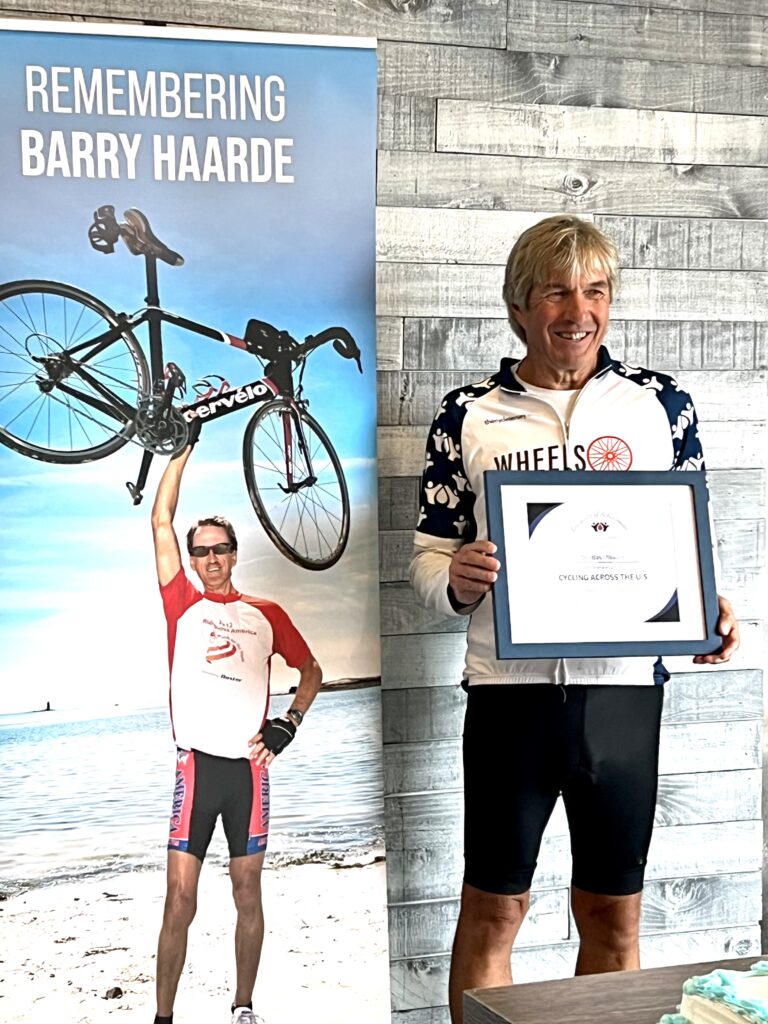
But Doug was also inspired by an incredible individual: the late Barry Haarde.

Barry was an avid cyclist with hemophilia who completed six—six!—long distance tours over six years to raise money for Save One Life. From coast to coast, with his final one dubbed “Call of the Wild” from Dawson Creek, British Columbia to Anchorage, Alaska. His tours totaled over 20,000 miles and raised over $230,000 for Save One Life!

What was remarkable about his achievement was that Barry had hemophilia, HIV and a contracted knee joint… health issues that would stop most people from considering this audacious ride. But Barry was not most people…he was driven by memories of the brother and brother-in-law he lost to hemophilia and HIV, and all the friends in the community lost to HIV. In addition, he knew firsthand the pain suffered by those in developing countries who often lack access to blood-clotting medicine.

Doug met Barry twice, and both learned that they loved cycling, both worked at Hewlett Packard, and both admired the work of Save One Life. Doug was in awe of Barry. Barry passed away in 2018, and no one since has dared to fill his cycling shoes. But Doug’ll do it! And he did. I’m so proud of Doug: the time he invested in training all year, the time spent away from me and home, his dedication and discipline, and his accomplishment.

Thanks to all who donated to this cause, thanks to our major sponsors, Sanofi and CVS, and for all the prayers. Through the Rockies, the cornfields, the highways and hills, he was safe and is now home. And Save One Life continues on, to help the needy.

Yesterday was a celebration of his accomplishment and a surprise announcement! We have a new volunteer for next year! James’ll do it! James is from Texas and was a friend of Barry’s. So the torch has been passed and we wish James much success in 2024!

School Days Part 2: Teacher, Parent, Child

It’s normal for anyone to be concerned at the thought of a child with hemophilia in the classroom, but it can especially worry the teacher, who bears responsibility for the students. Even if the teacher has some knowledge or experience, no two children with hemophilia are alike. Chances are, yours will be the first child with hemophilia that his teacher has met.

A group of seven multi-ethnic elementary school children, 7 to 9 years old, standing outside a building waiting to board a yellow school bus.

Many teachers have taught children with special needs, and they may be completely comfortable with your child. But for others, your first meeting may only temporarily relieve worries. A teacher could develop new concerns when left alone with your child for the day. Afraid of injuries, fearing the sight of blood, and anxious about being held responsible, a worried teacher might—without meaning to—show negative behaviors like overprotection, singling out, denial, and overreaction.

Overprotection

Fearing injuries, a teacher may want to exclude your child from some activities. Provide a list of activities that are safe for your child: using scissors, playing on the concrete or asphalt surface, using playground equipment, jumping rope, playing kickball and tag. If you want to forbid a specific activity—like hanging by his arms from the jungle gym after a forearm or shoulder bleed—write a note or email his classroom and physical education teachers. Ask them to find creative ways to include your child in an activity, even when a bleed sidelines him. He could be the assistant “coach” or scorekeeper, for example.

Singling Out

Your child’s teacher may accidentally single him out by announcing to the class that he has a blood disorder. The teacher may constantly remind other children not to hit your child. The phrase “Now, everyone except . . .” calls attention to your child. Most children dislike this kind of attention. Too much attention, especially when it sets a child apart from classmates, can produce resentment. Your child could be rejected or teased by classmates.

If your child must avoid a particular activity (with your approval), teachers should arrange a face-saving, tactful way to exclude him—one that doesn’t attack or shame him or draw attention to his disorder.

Denial

On most days, your child can participate in all activities and show no signs of bleeding. On other days, your child must be excused from certain activities when he is recovering from an injury or bleed. Outwardly, he appears fine, and his teacher may not recognize the need for rest. It’s even harder for the physical education teacher, who often hears a long list of illnesses and complaints from children who simply don’t want to run laps or climb ropes. Remember to stress that all teachers should trust your child’s judgment about a bleed or his recovery, with or without notes from home.3

Overreaction

Most teachers model emotionally mature behavior in the classroom, but some may gush “ooh” and “aah” over a child’s bruises and swellings, or exclaim, “Poor boy!” They may have good intentions, but this puts a spotlight on your child. He feels different from his classmates, and may develop negative feelings about hemophilia. Injuries and bleeds should be handled calmly and competently, with concern but with minimal fuss.

Teachers provide information about our children’s development. Teachers tell us how our children are adjusting to school. They can alert us to signs of depression, like withdrawal or slipping grades, which may indicate poor self-image or adjustment. They can tell us whether our children are interacting well with others or being bullied. They notice if our children are afraid to take risks.

Communication, trust, and respect between parent and teacher are key building blocks of a positive student–teacher relationship. Keep communication channels open by scheduling periodic meetings to answer school personnel questions. Consider becoming involved in school activities like parent–teacher groups. Volunteer at your child’s school. Attend open house events or chaperone a field trip, and model how you handle your child and his hemophilia. Sign up for your school’s online parent portal. Keep his teacher up-to-date with events at home; for example, a traumatic bleed while on vacation, the impending birth of a sibling, or anything that might cause stress and lead to a bleed or might affect school participation and attitude. Get involved with your child’s school experience to show your positive attitude and act as a role model.

Excerpted from Raising a Child with Hemophilia, 2023 Coming soon!

HemaBlog Archives
Categories