April 2024

Hemophilia and Poetry

To finish up National Poetry Month, let’s consider two more poets with hemophilia.

by Richard J. Atwood

To me, poetry specializes in the efficient expression of emotions and descriptions. It condenses writing into a purer form. You might compare poetry to the fractionation and purification of blood plasma to get the purest factor proteins, but I guess that metaphor would be a stretch.

Though I’m not an expert, I admire well-written poetry. Take time to read the exceptional works by the following poets who happen to have hemophilia.

Read My Mind by Jerome Stephens

Kildanore Press, 1990

Jerome Stephens (1955–1993) was born in Ireland with mild factor VIII deficiency. As he grew up, he was careful to avoid physical injuries and unnecessary knocks, and became a strong and robust young man who enjoyed outdoor activities. Living in Dublin, Jerome married and had children. In 1982, he underwent an appendix operation and was treated with contaminated factor concentrate imported from America. He was diagnosed with AIDS in 1987.

            Jerome was an artist who expressed himself through sculpture and poetry. But he is better known for speaking out publicly—the first to do so openly for a television camera—about how AIDS had ravaged his life and family. With encouragement from his hemophilia nurse, Jerome published Read My Mind, a collection of 52 poems that includes photographs of six wooden sculptures carved by the poet. He does not mention hemophilia. Instead, his poems emphasize his struggles, and how his love and religion, along with his family and friends, strengthened him to fight.

            Jerome wanted to speak on behalf of all Irish people with hemophilia and AIDS. His poems still capture that desire. After he died, his daughter spoke on his behalf in 2000, giving emotional testimony at the Lindsay Tribunal, after which those infected with HIV or their families received a financial settlement.

4:56: Poems by Carlos Fuentes Lemus

Dalkey Archive Press, 2012

Carlos Fuentes Lemus (1973–1999) was born to a literary family: his father, Carlos Fuentes, was a Spanish-language Mexican novelist and ambassador to France; his mother, Silvia Lemus, was a journalist. Carlos was a Mexican citizen who grew up mostly in Princeton, New Jersey, with short stays in various American cities where his father taught.

            Carlos was factor VIII deficient and was infected with HIV by 1985. Carlos was a bright student, but never finished high school. He immersed himself in literature (mainly English) and in music. His interest in pop culture and the arts led him to become a writer, poet, photographer, painter, and movie director.

            Carlos wanted to publish his first book of poetry after E. Shaken Bumas solicited several of his poems for the Minnesota Review in 1999. Bumas helped to record over 50 of Carlos’s poems that were to be used as the soundtrack for Carlos’s unfinished movie Gallo de Pelea. Unfortunately, Carlos died before completing those projects. Instead, his poems were posthumously published in 4:56: Poems. Written in English with some Spanish words and syntax, the poems delve into imaginative interpretations of youthful experiences. There is no mention of hemophilia in these lively poems that seem almost experimental or unfinished. Carlos also collaborated with his father on the book Retratos en el Tiempo (1998), in which his father wrote profiles of famous people he knew and Carlos took their photographs.

Poetry is an international genre that appears in many forms. These two poets with hemophilia did not have to include their bleeding disorder in what they wrote, but having it possibly sparked their passion to write. Maybe you’d like to express yourself in a poem? Go ahead! Dream, compose, write.

This review originally appeared in the Parent Empowerment Newsletter, May 2016

The Hemophiliac’s Motorcycle

April is National Poetry Month, and it’s time to recognize one of the bleeding disorder community’s top poets: Tom Andrews. Tom passed away in 2001, at age 40, of complications of a blood disease, but also had hemophilia. His poetry reflected the pain he often felt due to his disorder—he won several awards for his poetry.

Tom grew up in Charleston, West Virginia, and seemed destined for fame. He was recognized in the Guinness World Book of Records for clapping for fourteen hours and thirty-one minutes—at age 11! He wanted to be a stand-up comedian. And he raced in motocross as a teen, but that ended wjhen he learned he had hemophilia following an accident.

He was a man of many talents: comedian, daredevil, copy editor for Mathematical Review, a journal for mathematicians, physicists, statisticians, etc. Talk about right brain and left brain!

But he is best remembered for his poetry. I had the deep pleasure of meeting Tom, and sharing correspondence with him for a time.  He sent me several copies of his work, include Codeine Diary: True Confessions of a Reckless Hemophiliac (Little, Brown, 1998), a memoir.  

In an online bio of Tom, his work is described here: “In this second wise and passionate book, Tom Andrews explores illness as a major theme, avoiding sentimentality without being merely confessional. He advances his considerable talent with great strength and forcefulness. The poems are buoyant with humor and mindful of larger mysteries even as they investigate very personal issues. There is an urgency that is compelling; the work is immersed in the private grief of the speaker without excluding the reader. There is real and hard-won wisdom and intelligence in the poems, offering genuine surprises and delight; their attractive humility is not a pose.”*

A man who knew suffering, but was not afraid to embrace the world, and reveal his soul. Isn’t thay the essence of beautiful poetry?

Here is an exceprt from The Hemophiliac’s Motorcycle:

… may [the Lord] adore each moment alive in the whirring world,

As now sitting up in this hospital bed brings a bright gladness of the human body, membrane of web and dew

I want to hymn and bide by, splendor of tissue, splendor of cartilage and bone,

Splendor of tail-like spine’s desire to stretch as it fills with blood

After a mundane backward plunge on an iced sidewalk in Ann Arbor,

Splendor of fibrinogen and cryoprecipitate, loosening the blood pooled in the stiffened joints

So I can sit up, of sit up in radiance, like speech after eight weeks of silence,

And listen for Him in the blood-rush and clairvoyance of the healing body…

It’s National Poetry Month. Read some. It’s good for your mind and soul!

*https://uipress.uiowa.edu/books/hemophiliacs-motorcycle

World Hemophilia Day

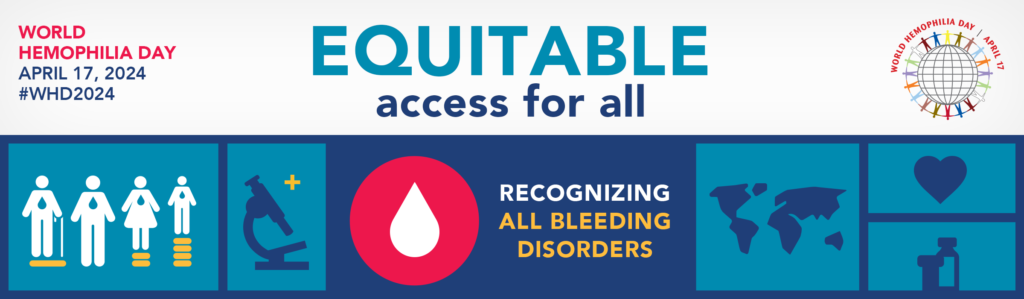
April 17 is the birth day of Frank Schnabel, a California businessman who, over 60 years ago, founded the World Federation of Hemophilia (WFH). All across the globe on April 17, the hemophilia community celebrates unity, that we are one family united by a protein deficiency that causes prolonged bleeding and suffering. It’s called “World Hemophilia Day.” The theme of this year’s day is “Equitable Access for All.”

We are divided only in access to treatment. Up to 75% of the hemophilia global community has no access to factor. We are trying to close the “gap,” as the WFH puts it, by donating factor medicine to those in need.

Help continue to unite the world hemophilia community. Donate unused or unwanted in-date factor to Project SHARE, and the rest to me! We will find a good home for it overseas. Sponsor a child with hemophilia in poverty through Save One Life. Give back to those in need, and to honor those who have gone before us.

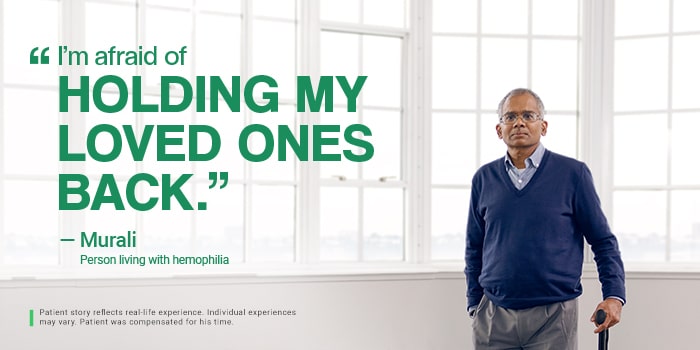
Explore the truths of people living with hemophilia (PwH) and change the conversation

This is a paid public announcement from Sanofi and does not constitute an endorsement of products or services. When you click on the links in this blog entry, you will be directed to the Sanofi website. LA Kelley Communications always advises you to be a savvy consumer when contacting any company; review opt-in language from any company website before sharing any identifying information.

PwH know how much work goes into managing the physical effects of their condition, but are there unseen impacts that PwH may not share broadly?

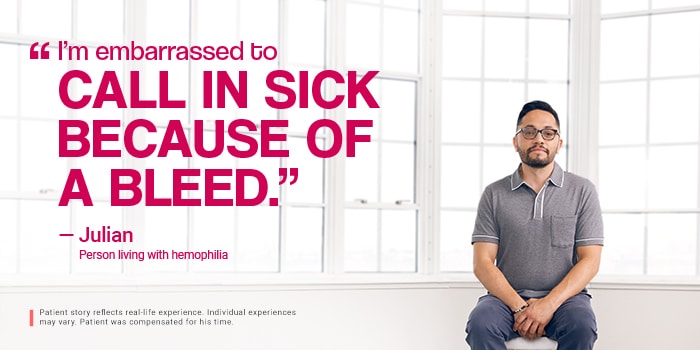
We were curious about how PwH really felt, so we brought 8 individuals together to share their hemophilia truths, and this is what we learned.

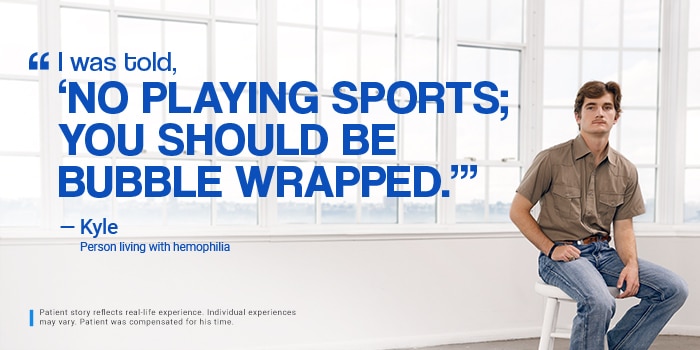
The many moving stories we heard brought a simple truth to light; hemophilia management can have a daily impact on mental health, family life, and the ability to explore other aspects of their identity. Kyle, one of the individuals we spoke to, shared the following about his experience growing up with hemophilia: “I was told, ‘No playing sports; you should be bubble wrapped.’” Have you ever felt limited by hemophilia, like Kyle? If so, you’re not alone.

Let’s discover some truths: what kind of unseen impacts are other PwH facing?
For many people living with hemophilia, the burden goes beyond the bleed. They may experience emotional, physical, and logistical challenges before, during, and even after bleeding episodes.

Emotional challenges
Many PwH have demanding treatment schedules that may disrupt their daily lives. Missing school, work, social and recreational opportunities, and more can have a negative impact on their mental health and lead to feelings of social isolation.

PwH may also experience negative impacts on their self-perception, social lives, and relationships.

Physical challenges
PwH live with daily concerns about their levels of bleed protection and are often aware of their vulnerability to breakthrough bleeds.

PwH may also periodically experience varying degrees of pain due to bleeding events and accumulated joint damage.

Logistical challenges
Management of hemophilia can come with logistical demands such as refrigeration requirements, the need for reconstitution, difficulties with scheduling treatment, and traveling to their treatment centers. These types of logistical considerations can make daily life more difficult for PwH.

Have you been sharing your whole truth with your healthcare provider (HCP)? Speaking your whole truth can help you and your HCP:
  • –    Better understand the daily unseen impact of hemophilia
  • –    Improve your hemophilia management and help you meet your individual goals
  • –    Educate PwH and caregivers about hemophilia and its various treatment approaches
Are there any of these challenges that resonate with you that you might not have shared openly? It’s time to consider your whole experience with hemophilia and change the conversation.

Are you ready to change the conversation?
Discover more truths and how you can address your whole experience at MyHemophiliaTruth.com

© 2024 Genzyme Corporation. All rights reserved. Sanofi is a registered trademark of Sanofi or an affiliate. All other trademarks are the property of their respective owners. MAT-US-2400561-v1.0-02/2024

HemaBlog Archives
Categories