
Marvel-ous Hemophilia!
Doug and I treated ourselves to a night out— like teenagers! We saw the newest Spider-Man movie. As I child growing up with six brothers, comic books about superheroes in the 1960s were a mainstay; my mother even sewed Batman outfits for two of my brothers one Halloween. But we were Marvel fans all the way. And Spider-Man was the coolest. So armed with popcorn (my Kryptonite) and a diet Coke, we enjoyed this latest installment!
And with the greatest of timing, our archivist and famed researcher, Richard Atwood, sent us an essay about hemophilia and superheroes! Where and when does Marvel Comics mention hemophilia? Or DC Comics? Or any superhero comic or movie?
Mayfly
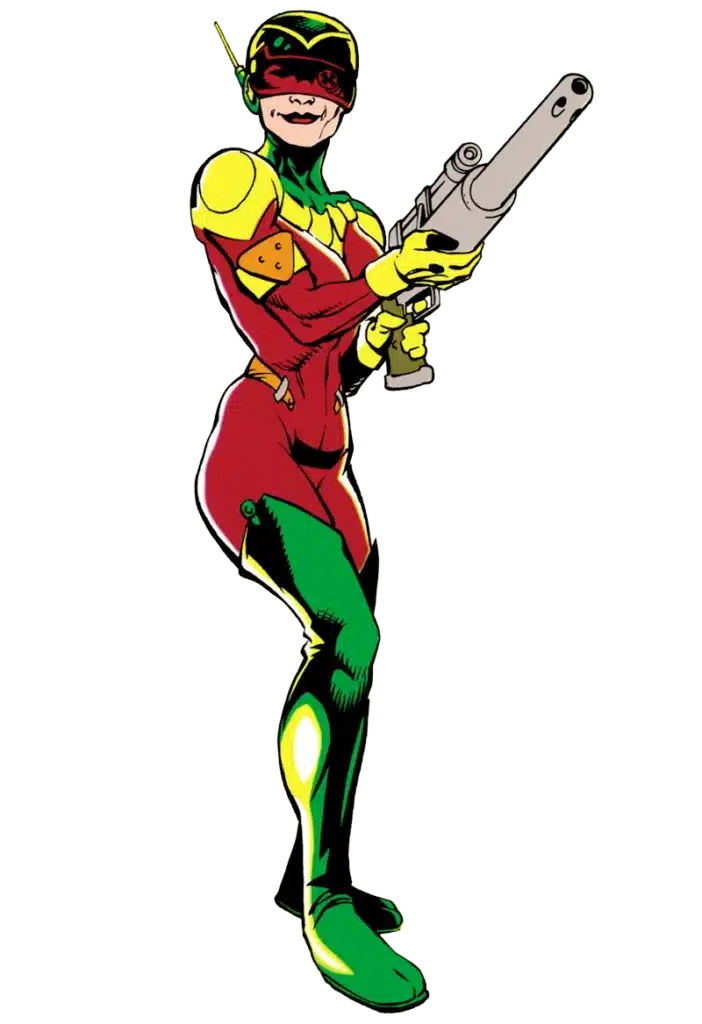
Mayfly is a nemesis of Wonder Woman [DC Comics]. Mayfly is a high-velocity hit woman who almost assassinates Diana, the name that Wonder Woman assumes. Mayfly suffers from a rare form of hemophilia. She is addicted to the drug Velocity-9. Wonder Woman captures the evil Mayfly. While imprisoned, Mayfly ends her own brief life. The type of hemophilia and its treatment are never revealed.
William Moulton Marston first introduced the super heroine character Wonder Woman in the 1941 DC Comics ALL-STAR COMICS #3. Mayfly, the fictional character with hemophilia, appears in the September 1993 (Vol. 2, #78) and the November 1993 (Vol. 2, #80) issues of DC Comics titled Wonder Woman.
Harmon Furmintz
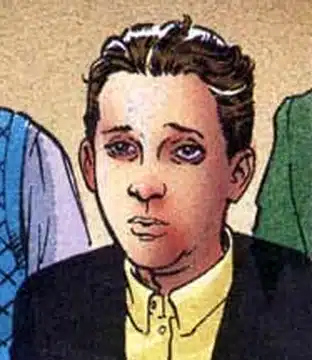
Harmon Furmintz is only 15 when he graduates from Stanford University. Because of his biochemical genius, he is considered a prodigy – even superhuman. In 1940, Harmon becomes a candidate for a top-secret military project, but is rejected because he has a genetic deficiency: hemophilia. This rejection hurts his pride. The military project goes on to develop the super soldier named Captain America [Marvel Comics]. Harmon pursues genetic knowledge. In the 1950s, he works with Howard Stark in his biochemical division. Harmon, who is emotionally stunted, becomes the Chief Executive Officer of Genetech, at its superhuman genetic research complex in Sayville, Long Island. The company, under Harmon, develops the New Warriors, superhumans who are called “The Heroes for the 90s” with enhanced minds and bodies by biochemical, biomechanical, and biosurgical means. Furmintz continues to call himself a hemophiliac, and is afraid of being physically hurt.
The New Warriors was originally published by Marvel Comics in The New Warriors #1, #2, #3, #4 and in Thor #411, #412, then was compiled in a 1992 book by Marvel Comics titled The New Warriors: Beginnings.
Michael Morbius
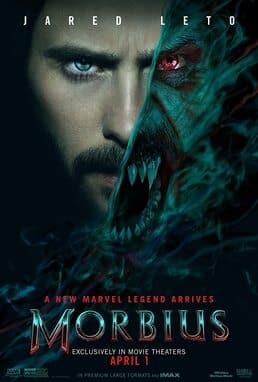
Dr. Michael Morbius, winner of the Nobel Prize, is the foremost biochemist in Europe with his own laboratory. He is dying of a rare blood disease that dissolves blood cells. He conducts his research on a yacht in international waters to avoid regulators and to ensure security. His experiments with bat fluids prove to be ineffective. He combines the bat extract with electrical shock, which turns him into a living vampire who hungers for blood. Morbius now has hollow bones and underarm gliders, plus fangs, claws, and a pug nose. He leaves his girlfriend to visit the Cornell Medical Center in New York City. Morbius, who wants to quench his thirst for blood, fights with Spider-Man, a worthy adversary. The electrical shock treatment to create blood cells seems more like dated Frankenstein technology.
The Marvel antihero character Morbius has an interesting origin story that does not change much from its original 1963 telling in Marvel Comics (in Amazing Spider Man #101, #102; Marvel Two-in-One #15; Spider-Man Family #5) to its 2021 re-telling (in Morbius: Bond of Blood #1), that were compiled in the 2021 book titled Marvel-Verse: Morbius. The 2022 movie based on the comics is titled Morbius and stars Jared Leto as the title villain, plus has a supporting cast of millions of bats. The movie has updated DNA technology for genetic engineering, along with computer-generated special effects. The mixture of human DNA with vampire bat DNA into a serum, when injected into Morbius, gives him fangs and claws, plus echo location, and makes him hungry for blood. Morbius becomes a murderer in New York City. The book has a For Ages 10+ rating. The movie has a PG-13 rating.
[WARNING: Injecting vampire bat DNA is NOT a treatment for hemophilia!]
Oswald Angelone
Oswald Angelone is a pale, 20-year-old with hemophilia. His mother, who gave Oswald his name, is protective of her son. His father is Christopher Angelone, or Big Chris, the Sicilian-American mob family boss who runs his cocaine operations out of Miami. Oswald is called “Hemo.” He takes pills as treatment. There are questions regarding Oswald’s ability to eventually assume the role of Don. Big Chris sends his only son to the Central American country of Santa Morricone to assassinate El Presidente Leopoldo Luna, who supplies the cocaine. For protection, Barracuda accompanies Oswald. Barracuda decides to double-cross Big Chris for personal gain. After realizing that Big Chris does not value his son’s life, Oswald instead kills his father. But when Barracuda congratulates Oswald on becoming “Don Hemo” with a slap on the back, Oswald bleeds to death with blood gushing from his mouth.
The original Marvel comics were published as Punisher Presents: Barracuda Max #1, #2, #3, #4, #5, then compiled in the 2007 Marvel book titled The Punisher Presents Barracuda. The book has an Explicit Content warning for its language and sexual content.
Tom Morrell

Tom Morrell is a skinny, left-handed, high school senior. His single mother Brenda worries about him. Besides having hemophiliac, Tom suffers from over a dozen syndromes including diabetes, amyotrophy, and grand mal epileptic seizures. His daily routine of meds includes refrigerated shots and pills. Tom, who wears a special wrist alarm, is called “Gimp” at school. He awkwardly meets a new student named Angela Dirst, but he cannot express his feelings. When Tom is struck by a Mack truck, he first feels tired, then gains superpowers. So he claims, “I’m cured.” He wants to be a superhero, and even tries on a spandex suit. When Angela punches Tom in the nose for spying into her bedroom window, he bleeds. He falls, separates his shoulder, and fractures his collarbone. Brenda does some research to speculate that Tom’s body absorbs energy from crashes, then uses that energy to fight his diseases. She suggests that Tom allow a truck to run over his arms. With his arms in casts, Tom has lunch with Angela.
In this 2005 DC comics graphic novel titled Kinetic, the protagonist reads a copy of Kinetic, wishing for superpowers. He is an adolescent with hemophilia who is uncomfortable talking to young females. There is no mention of factor concentrate to treat his hemophilia, or Sharp’s containers for his used syringes. Dealing with high school has more than enough problems for any adolescent.
[WARNING: Being hit by a truck is NOT a treatment for hemophilia!]
PART 2 in two weeks!
References:
Jose Aguilar, Jovenes vampiros. El códice secreto. versos y trazos, 2007.
Anonymous, Stellar Guardians. Genentech, 2025.
Scott Beatty, Wonder Woman: The Ultimate Guide to the Amazon Princess. DC Comics, 2003.
Simon Boulerice et Eve Patenaude, Papier Bulle. Alice Jeunesse, 2023.
Kim Chilman-Blair and Shawn DeLoache, What’s Up with Louis? Medikidz Explain Haemophilia. Medikidz, 2011.
Garth Ennis, The Punisher Presents Barracuda. Marvel, 2007.
Jennifer Grunwald, Marvel-Verse: Morbius. Marvel, 2021.
Fabian Nicieza and Tom DeFalco, The New Warriors: Beginnings. Marvel, 1992.
Frederick Peeters and Pierre Oscar Levy, Sandcastle. SelfMadeHero, 2011.
Kelley Puckett and Warren Pleece, Kinetic. DC Comics, 2005.