
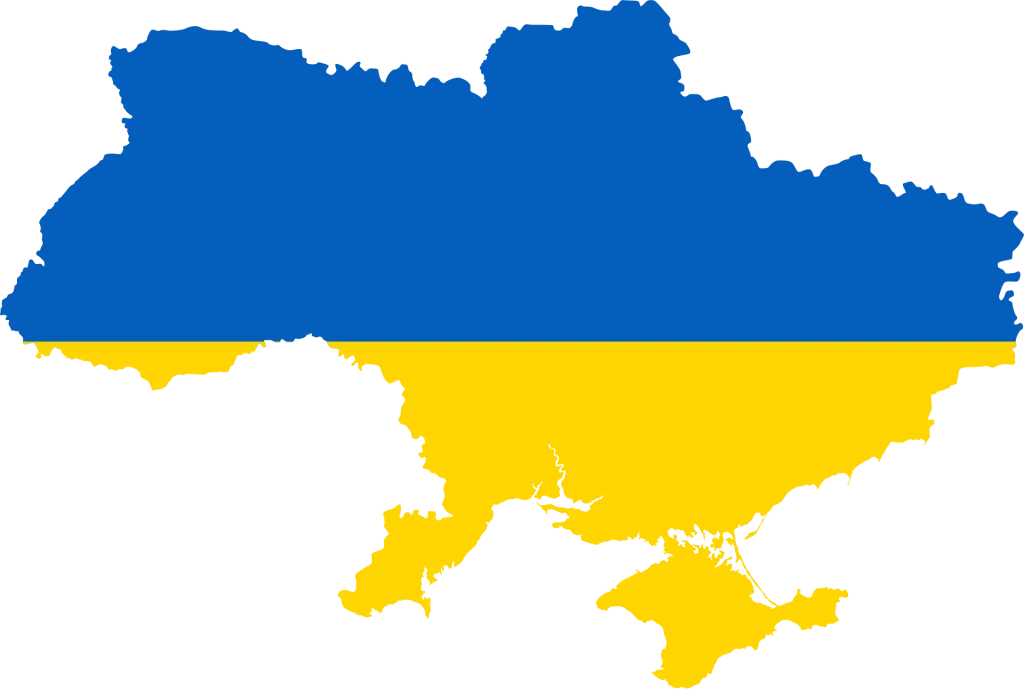
In our struggles with insurance and access to treatment, we forget that some bleeding disorder patients in the world are struggling to survive war. I was moved by this account on Facebook. Sergiy Shemet is president of the Ukrainian Association for Hemophilia and Hemostasis, part of the Ukrainian Alliance for Hemophilia and Related Conditions (UAHARD). He lives in Dnipro, about six hours from the capital, Kyiv. You can only imagine the responsibilities he faces as his country has been under attack from Russia. Russia annexed Crimea in February 2014, and launched a full-scale invasion of Ukraine on February 24, 2022. While there have been many false starts in recent peace negotiations, an end does not look feasible yet. Despite the incredible challenges the population faces, including harsh winters, cuts in electricity and heat, and bombing, UAHARD has made progress. Funding for hemophilia programs has increased over the past five years; home therapy is practiced.
I often wondered what was the state of bleeding disorder patients during a time of war; Ukraine has been in the news constantly. Well, two members of the US community, very brave Tony Hernandez and Sochi Frank, flew to Ukraine last year to deliver factor. Sergiy writes about their remarkable visit. (Reprinted with permission)
HAEMOPHILIA AND WAR
On October 10, 2025, I woke up in the Kozatsky Hotel in the center of Kyiv and realized I couldn’t get out of bed or even make it to the bathroom. My first thought, of course, was: ****ing Russians. The day before, Russian missiles had struck downtown Kyiv, leaving the hotels without electricity or water. That’s why I hadn’t injected my factor VIII treatment. I couldn’t even wash my hands. A mistake. I crawled to the bathroom, looked in the mirror, and knew my plans for the day had changed completely. What worried me even more was how our guests from the U.S. had endured the night.
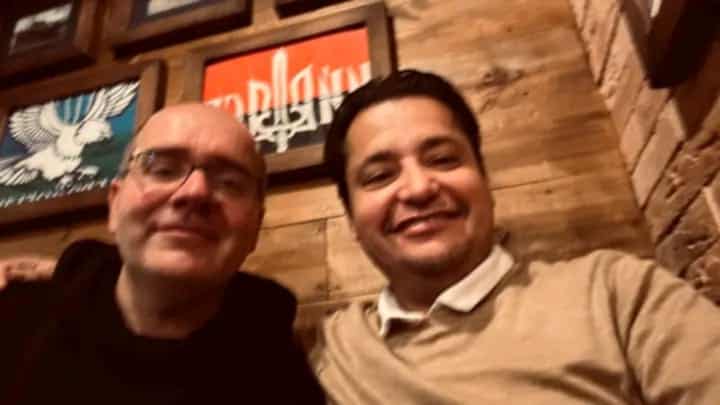
Back in spring 2025, I got a message from Tony, a stranger from Arizona, with an unusual proposal. He wanted to come to Ukraine with the mother of a U.S. Marine and volunteer, Ian Tortorici, who had been killed here. Ian was a Marine and only 32. Tony asked how possible such a trip would be and how best to organize it. His writing style was light and sincere, and we quickly became friends online. He’s cheerful and sociable; a writer with deep philosophical views, and like me, he also has hemophilia. The main purpose of the trip was to honor Ian’s memory. Ian’s mother, Sochi, wanted to come. She’s retired, a wonderful mom, grandmother, and great‑grandmother, and hemophilia runs in her family too. Tony and Sochi volunteer with Save One Life Inc., donating their own factor concentrates to people around the world. They wanted to see the country Ian gave his life for—and bring some factor VIII they had saved.
Ian’s girlfriend, Nadiia, who volunteers to support the front, also planned to come from Lviv. That’s how she and Ian had met.
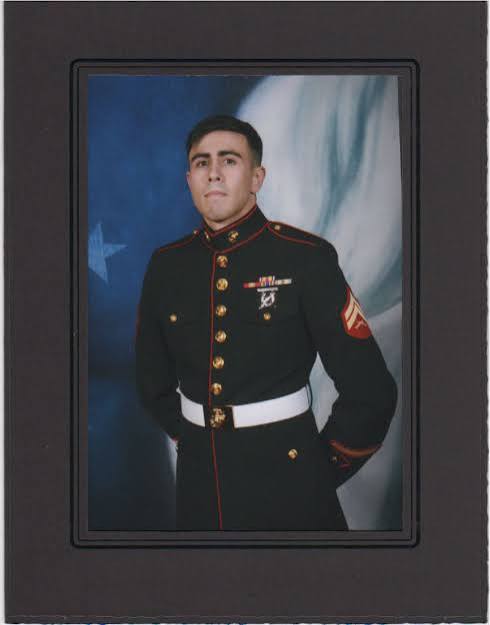
From spring to autumn, the war in Ukrainian Donbas only worsened, but our new friends didn’t change their minds about coming. We only had to cancel the planned trip to Kramatorsk, where Ian had been killed by Russian shelling while having lunch in a café.
Because of the war and constant strikes on Kyiv, far fewer of my hemophilia friends remained in the capital. So our HemAlliance (UAHARD) colleagues helped organize the trip mostly remotely. The biggest emotional and organizational burden fell on Nina. At first, I hadn’t planned to go to Kyiv myself. Then I thought: damn it, yes. It would be heavy emotionally – something I’ve been avoiding lately. But why should Nina carry all the weight of organizing, meeting, and honoring Ian’s memory alone? That’s how I ended up in that hotel in October 2025.
Logistics had their own tragicomic twist: Tony and Sochi arrived in Kyiv on a third‑class train from Chișinău. Nadia met them, and in the evening Nina and I joined. We talked for hours at Veterano Pizza, where Tony loved the military décor; said it felt very American. Later we walked them to the Ukraina Hotel, which has several floors of bomb shelters. As we said goodbye, the sirens started. Of course. The night promised to be “fun.” And it was. By morning, downtown Kyiv had no power or water. I decided to skip my prophylactic infusion—a choice I regretted many times afterward.
We met Tony and Sochi on the way to the people’s memorial for fallen heroes on Maidan, where Ian’s flag and photo had already been placed. But our plans changed completely. On Maidan, we saw a ceremony honoring another hero—also an American—Kyzyl Bowden. Without discussion, we joined. I hadn’t known about the Weatherman Foundation, which helps honor fallen heroes in Ukraine and return their bodies to the U.S. The coffin was draped with two flags—Ukrainian and American. Kizil’s commander spoke simply and heartbreakingly.
Standing for over an hour, I felt my ankles giving out. But I kept standing, thinking: what use are ankles, when others give their whole lives for Ukraine?
After the ceremony, we went with our new Weatherman friends to the memorial on Maidan. Now Ian’s and Kyzyl’s photos stand side by side. I hugged Sochi and told her I didn’t know how she is keeping that. She looks so much like Ian.
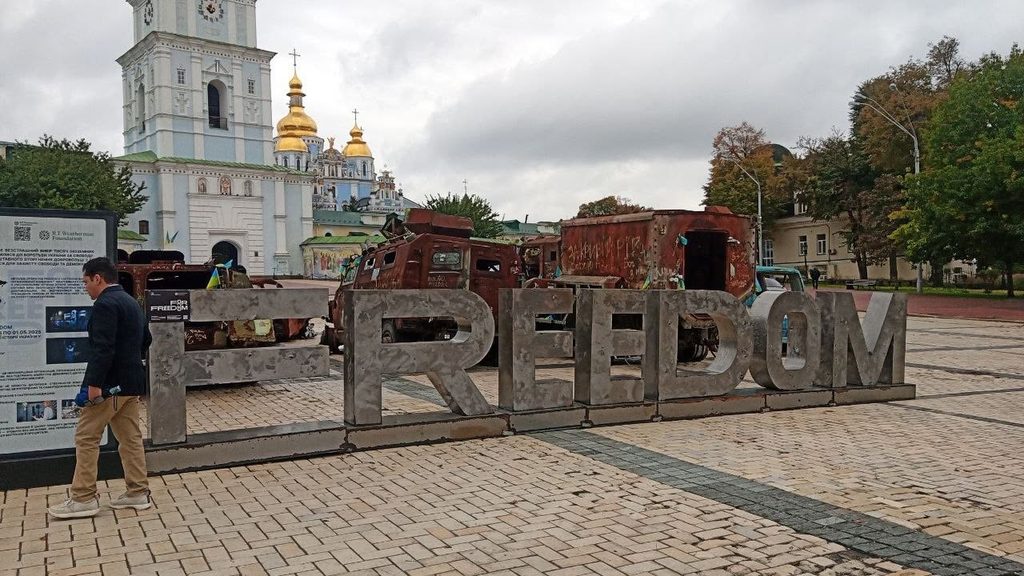
We walked to the “FREEDOM” memorial near St. Sophia, also created thanks to the foundation. In the cathedral, we again witnessed a ceremony honoring fallen heroes, as happens so often in central Kyiv.
After that, I had to take a taxi back to the hotel, infuse my entire supply of factor, and rest until the next day. That day was supposed to be Ian’s official memorial with the Ukrainian military. But with both ankles wrecked, I couldn’t take part.
So, because of Russian shelling of Kyiv on October 10, I didn’t leave the hotel again until my train back to Dnipro. In the morning Nina brought factor she had “borrowed” from her daughter, who has severe von Willebrand disease. Luckily, that factor works for me too. Sadly, the reverse trick isn’t always true with VWD people.
We saw how genuine the best representatives of the American people are. They put freedom and principles above everything—even life itself—just like we Ukrainians do. “Freedom is not free,” Tony and I repeated constantly. They may dislike their president as much as we dislike ours.
They don’t call the war “this conflict.” They clearly see the aggressor and the need to resist. They don’t say “the “other side shelled Kyiv “—they say ****ing Russians.
They don’t claim both sides are equally guilty. Instead, they save factor VIII from their own families and carry it halfway across the globe to share with us. How different that is from some official organizations – like the European Hemophilia Consortium, which in a similar situation decided to… visit Russia.
It turned out I never said goodbye to Tony and Sochi. We had planned to meet again, and said “see you tomorrow.” But in the world of hemophilia, you never know what tomorrow will bring. Better not to make detailed plans or promises. In wartime Ukraine, most people live with that same hemophilia vibe.
Friends, we’ll meet again another time!
Visit www.uahard.org.