
The Birth of a Russian Child with Hemophilia; The Death of a Tsar
Russia continues to be in the news daily, as it continues its war against Ukraine. Russia may go down in history for its heartless attack on Ukraine, but Russia also goes down in history for hemophilia. The most famous hemophilia carrier in history, Queen Victoria, is directly responsible for passing the gene along to her granddaughter, Alix, who in turn gave birth to a Russian baby with hemophilia—a baby who changed the course of world history.
This is why hemophilia is dubbed “The Royal Disease,” for its pedigree that started in Europe with Queen Victoria, and was shared with other European families as prince married princess and princess married prince.
Queen Victoria was a carrier of hemophilia B, and so then was her granddaughter Alix, who married Tsar Nicholas II of Russia. It was well known by then that hemophilia was running in the family.
Alix gave birth to Alexis (or Alexei), after already having four girls. The royal couple got their heir to the throne. But Alexis had hemophilia.
Alexis had no access to clotting factor of course; this was 1904, after all. The royal family came rely on a famous person of ill repute: Rasputin, the mad monk. He had a lascivious reputation but also a track record of helping people in pain, probably through hypnosis. Rasputin became ingratiated into the royal family and helped also to bring down the Russian monarchy. It’s been proposed that Nicholas II was so distracted by his son’s suffering due to hemophilia, that eventually he lost his grip on the monarchy at a time when the Bolshevik Revolution was poised to strike. And it did. It has been proposed that hemophilia changed the course of World War I, and changed the course of history. The Cold War, the Soviet Empire… all find their roots in the royal palace of the Tsar and a little boy with hemophilia.
The last Russian Royal family, including poor Alexis, was assassinated in a cellar in Siberia on July 16, 1918 by the Bolsheviks. There are many excellent books about the Romanovs, but my favorite is Nicholas and Alexandra, by Robert and Suzanne Massie, whose adult son had hemophilia (since cured by liver transplant). A 1971 epic British film was also made, based on the book. Review it here: Nicholas and Alexandra.
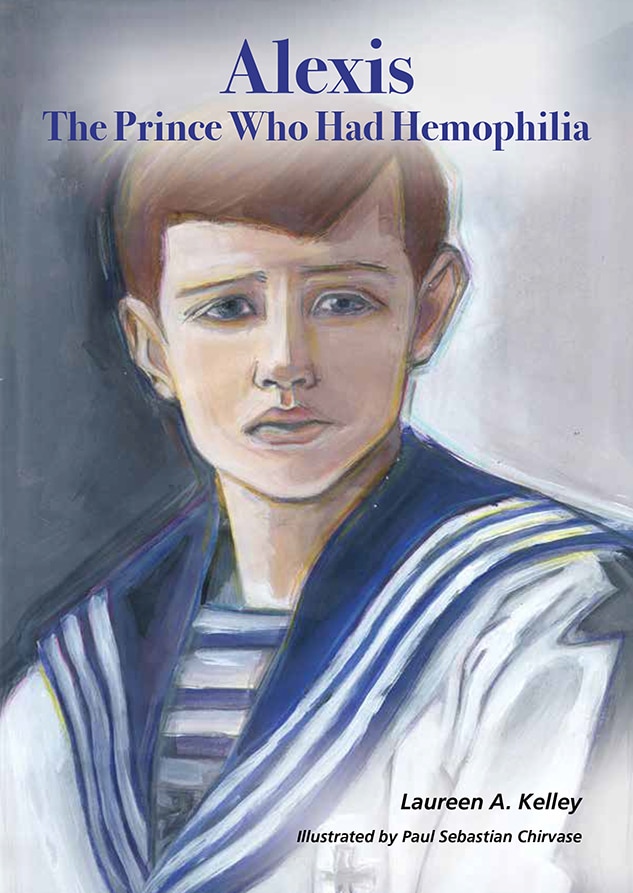
I have also written a book about this with illustrations, for young readers. Order Alexis: the Prince Who Had Hemophilia here for your teen with hemophilia.