Royal Disease

Why Harry Doesn’t Have Hemophilia

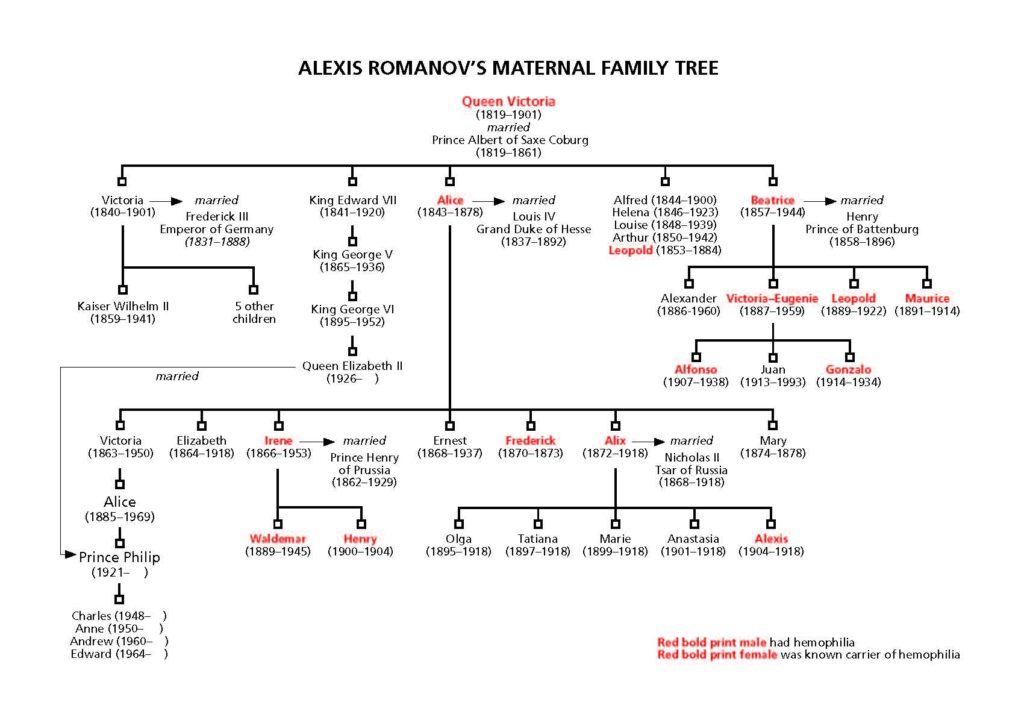
The randy royal Harry has been usurping the news lately, after his infamous interview with Megan on Oprah. But the royal who truly deserves some attention is Prince Phillip, Queen Elizabeth II’s spouse, who died last week at age 99. Hemophilia is known as the “royal disease,” primarily due to Phillip’s and Elizabeth’s joint family tree: Phillip’s great-great-grandmother was Queen Victoria, a known carrier of factor IX deficiency, also called hemophilia B. Let’s look at his family tree, to answer the question, why doesn’t Harry (or William, or Charles, or Phillip) have hemophilia?
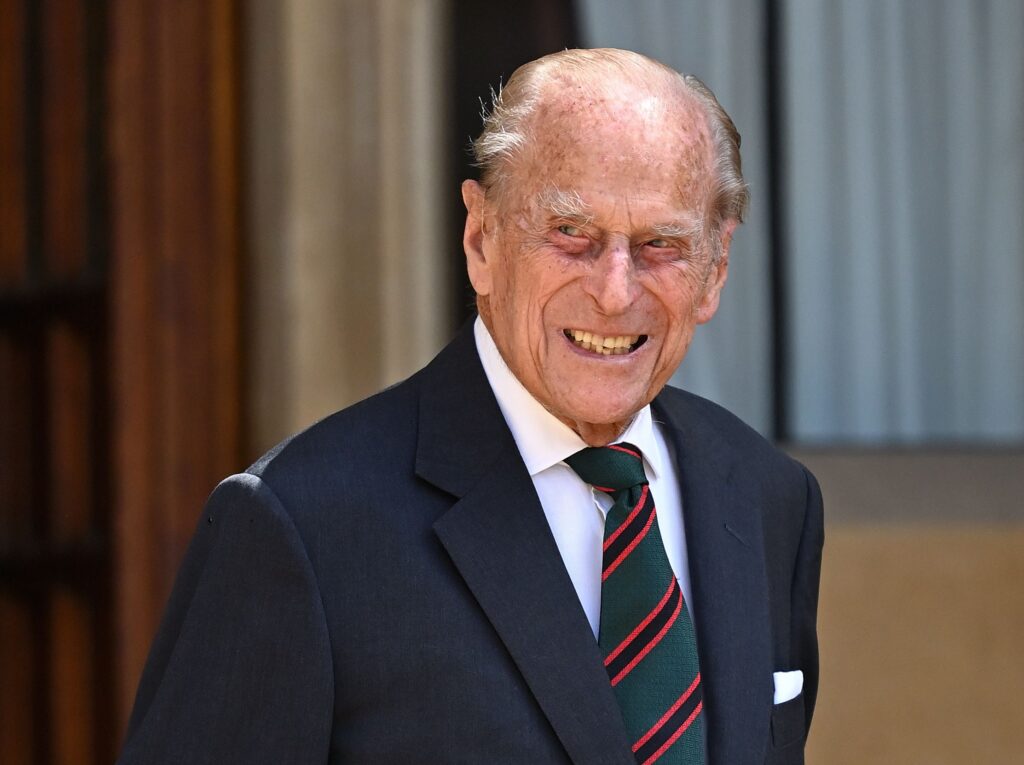
Prince Phillip

Prince Phillip was born a prince (unlike Diana, Camilla, Kate and Megan, who married into the family). His mother, Princess Alice, was a great-granddaughter of Queen Victoria. Phillip was descended from the third child of Queen Victoria, also called Alice, who like her mother, was a carrier for factor IX deficiency, or hemophilia B. In fact Queen Victoria had nine children, of whom two were carriers (Alice and Beatrice) and one had hemophilia (Leopold). These are very good odds!

Alice married Louis IV, the Grand Duke of Hesse. Alice introduced hemophilia into the House of Hesse and this German lineage. There were 7 Hesse children, and like their grandmum, one had hemophilia (Frederick) and two were carriers (Victoria, Phillip’s grandmother, and Alix). Alix married the Tsar of Russia, Nicholas II, and gave birth to Alexis, who had hemophilia. So, Prince Phillip has a long and illustrious side to his family tree regarding hemophilia! It’s been proposed that Nicholas II was so distracted by his son’s suffering due to hemophilia, that eventually he lost his grip on the monarchy at a time when the Bolshevik Revolution was poised to strike. And it did.

Queen Elizabeth? Not so much drama with hemophilia. Why? She is not a carrier of hemophilia. She is a direct descendant of King Edward VII, a son of Queen Victoria who did not have hemophilia. Now, Queen Elizabeth and Prince Phillip are related as third cousins. But since Phillip did not inherit hemophilia from his mother (not a carrier) or grandmother (also not a carrier but with a flip of the genetic coin might have been), and since Queen Elizabeth had no hemophilia in her direct line, neither Charles nor his sons, William and Harry, have hemophilia.

Harry’s got other problems, but hemophilia isn’t one of them, thankfully!
The Royal Disease

Hemophilia Myth #1: The Royal Disease

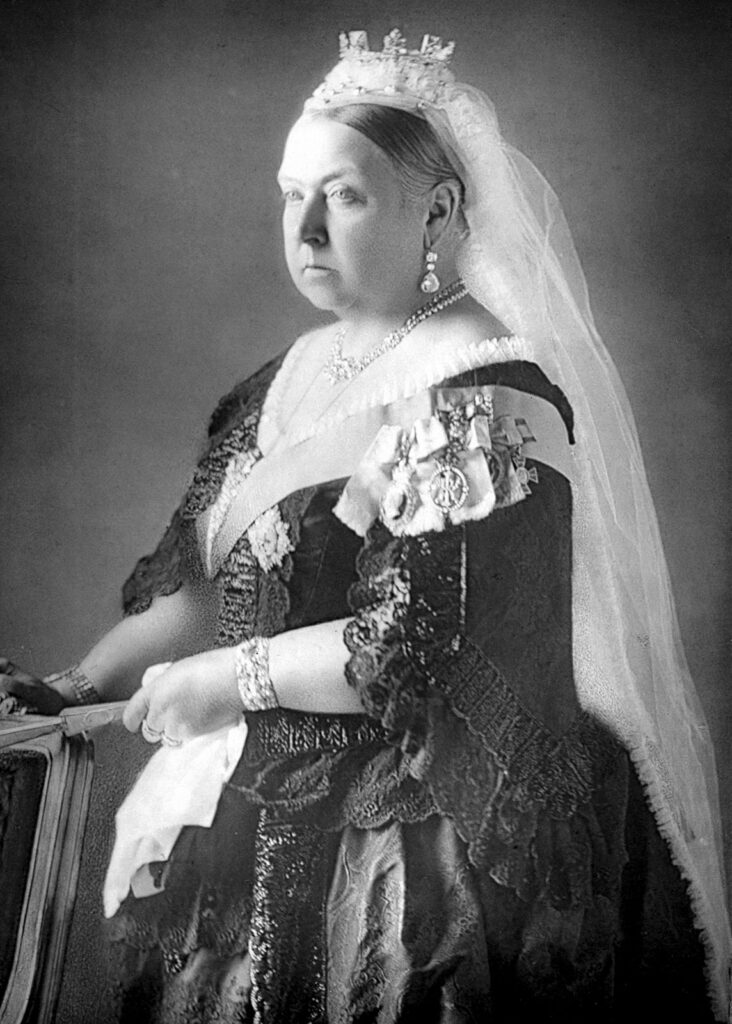
Queen Victoria: the most famous
carrier of hemophilia

Perhaps because hemophilia is so rare, it has generated many myths. Myths are stories, sometimes created by people in an attempt to make something understandable when scientific information is unavailable. Remember the Greek tale of Pandora’s Box? Pandora was the first woman on earth. She was given a wedding gift from the gods, a beautiful container. But she was warned never to open it. Driven by curiosity, she disobeyed the gods and opened it. Inside were evils— hate, disease, pain—that flew out of the container and escaped into the world. This story was invented by the ancient Greeks to explain sickness and suffering, because they didn’t know about bacteria and viruses. Some myths develop from a nugget of fact or experience, but then take on a life of their own within certain cultural settings.

Becoming familiar with the most widely held myths about hemophilia and their sources will help you explain the facts of the disorder to others. During this month, which is Hemophilia Awareness Month, we’ll discuss some common myths about hemophilia.

Myth #1! Hemophilia is a royal disease.

The Truth? Anyone can get hemophilia—rich or poor, famous or unknown. Hemophilia was dubbed the royal disease because in the 1800s, hemophilia affected the family of Queen Victoria of England, who was a carrier of the hemophilia gene. Hemophilia was transmitted to three other royal families when Victoria’s daughters and granddaughters, also carriers, married into the Russian, German, and Spanish royal families. Though it’s no longer known to be present in any European royal family, hemophilia is still often associated with royalty.

Question 1: What type of hemophilia did the English royal family have, A or B?

Question 2: Why does the present royal family no longer have hemophilia?

Order a copy of Alexis: The Prince Who Had Hemophilia to learn more!

Valentine’s Day with the Most Famous Carrier

I went to see the movie “Young Victoria” yesterday, which chronicles the most famous hemophilia carrier’s 1837 ascension to the throne as just a girl of 18. It also tells of her meeting with and eventually love for Prince Albert of Belgium. Lavishly filmed, I felt as though I had gorged on Godivas, taking in the costumes, scenery and gold. I thought the performances by Emily Blunt as Victoria and Rupert Friend as Albert were understated and well done. It was a very enjoyable movie. I was surprised it was such a love story, and the timing was perfect as it was a day before Valentine’s Day.

We always seem to think of Britain’s longest reigning monarch as a blimpy old woman, but here, she is beautiful, confident and headstrong. As you watch the courtship of the Princess and Prince, you marvel at how much they loved one another (by all accounts they truly did), and also by their tremendous wealth and privilege: Victoria cannot even walk down the stairs by herself, lest she fall. She always needs to hold someone’s hand (she abolishes that practice when she becomes queen). Despite the young love, and their wealth, one thing remains unsaid but we all know it happens: Victoria and Albert eventually have a child with hemophilia, Leopold.

I watched the ornate movie, and the tender love, and felt so sad for them! Like us, this young couple would have a child who suffers, but unlike us, there was no treatment. It was really poignant to see this beautiful young couple, blindly in love, happy, not knowing what fate had in store for them.

Victoria and Albert had nine children: three girls who were carriers and of course, Leopold. Eventually, she passed hemophilia on to the Russian, Spanish and German royal families. This is why hemophilia is called the “royal disease.” She had 42 grandchildren!

Albert died at age 42, after 22 years of marriage. The movie ends with a title which revealed that Victoria had his clothes laid out every morning for the next 40 years, in his memory. She forever wore black following his death. A movie worth seeing, especially if you have hemophilia in the family.

Great Book I Just Read
Child of the Dark by Carolina Maria De Jesus

This may quite possibly be the best book I’ll read all year. I don’t think I’ll ever read another book like it.

Carolina Maria De Jesus (1914-1977) lived in the favela, the slums of Sao Paulo, Brazil, surviving only one day at a time by picking up paper and scrap metal and selling it. Intelligent and single, she kept a journal, which became this book. She writes so much about hunger, the horror of slum life, rummaging through garbage to find something to feed her three children, and always hoping for a better life. Her insights are amazing and her description of the slum is simple but painfully portrayed. I couldn’t put this book down. I myself have been through slums in Central America, Brazil, Kenya and India. I often think that we could not live one day in the shoes of the poor, and after reading this book, I know it is true.

As amazing as her journal writing is, a co-author provides an epilogue: what happened after her book is published. Caroline, illegitimate and poor, rockets to fame as she becomes Brazil’s best-selling author. This book is a must read! Four stars.

The Royal Disease Defined

You probably already know that hemophilia is referred to as the “royal disease.” It’s not a royal disease, of course, but it was made famous by the royal families of Europe, some members of which had the blood disorder. Britain’s Queen Victoria is the world’s most famous carrier: she had nine children, but only son Leopold had the disorder.

Up till now, no one knew which type of hemophilia the royal line carried: A or B?

Read Nicolas and Alexandra, by Robert K. Massie, if you want a fascinating look at history that reads like a love story. This was also made into a spectacular movie. And for children, I offer my own book Alexis: The Prince Who Had Hemophilia, free of charge through my website. If you have hemophilia in your family, this is a story you must know!

The results are in; the DNA results, that is. Britain’s Queen Victoria’s family had a severe form of hemophilia B. Our own University of Massachusetts’s Dr. Evgeny Rogaev has conducted DNA tests on the remains of the Romanovs, the queen’s Russian relatives. Victoria’s granddaughter Alexis married Nicholas II, the last Russian tsar. Rogaev examined the remains of Prince Alexei, himself, who had hemophilia, and who was killed with his entire family on Lenin’s orders.

This is one of history’s most fascinating stories: how hemophilia played a part in the overthrow of the Russian dynasty and perhaps led to the Communist take-over. Communism helped to define much of world history following World War I.

HemaBlog Archives
Categories