Inhibitors

Inhibitors 101

Paul Clement

Paul Clement

For many parents of children newly diagnosed with hemophilia, the word “inhibitors” soon becomes part of their vocabulary. And although they may not know at first what an inhibitor is, they may have learned to associate the word with something fearful. But for people with hemophilia A and inhibitors, things aren’t as bad as they once were.

What exactly is an inhibitor? Who gets them? What happens when you get an inhibitor? How do you treat bleeds if you have an inhibitor? Do inhibitors go away on their own, or can you grow out of them or eliminate them?

What Is an Inhibitor?

Inhibitors are specialized proteins called antibodies. They’re a part of the immune system that protects us from bacteria, viruses, and foreign proteins—in other words, anything that the body identifies as not belonging, and as being potentially harmful. But sometimes the immune system makes mistakes: it may even attack the body itself, as in autoimmune diseases including rheumatoid arthritis or multiple sclerosis. With hemophilia, the immune system also makes a mistake: it misidentifies a helpful agent—infused clotting factor—as something harmful, and then mounts an immune response against the factor to neutralize it and mark it for removal from the body.

Inhibitors are very efficient. When an inhibitor is present in hemophilia, some or all of the infused factor is neutralized within minutes. This prevents the factor from participating in the clotting process to stop bleeding. And it means that people with inhibitors can’t use standard clotting factor concentrates to control bleeds.

Unfortunately, the alternative therapies we have for treating bleeds with inhibitors aren’t as effective as standard factor at controlling bleeds. As a result, people with inhibitors tend to bleed longer, develop target joints (joints that bleed frequently), and suffer from joint damage more often than people without inhibitors. Fortunately, for people with hemophilia A and inhibitors, treatment has improved dramatically over the past three years.

Diagnosing Inhibitors

How do you know if you have an inhibitor? There are usually no outward signs. Inhibitors are sometimes diagnosed during routine hemophilia treatment center (HTC) clinic visits; and sometimes inhibitors are suspected after you notice that factor infusions fail to adequately control bleeding. Your HTC should test for inhibitors at least annually and always before any surgery, and you should request a test whenever you feel that bleeds aren’t being controlled effectively with your usual dose of factor.1

 When an inhibitor is suspected, a diagnostic test called a mixing study (activated partial thromboplastin time, or aPTT) is performed: the patient’s blood plasma is mixed with normal plasma to see if this corrects the clotting time. In someone with hemophilia without an inhibitor, a mixing study results in a normal clotting time; but if an inhibitor is present, then the clotting time is abnormally prolonged. If this happens, then another test, the Bethesda inhibitor assay, is done to determine how much of the inhibitor-causing antibody is present.2 The Bethesda assay is a quantitative assay, meaning that it measures the amount of inhibitor and the results are expressed in numbers.

Note: Testing for inhibitors is a bit tricky. It’s best to have a Bethesda assay done at an HTC, because the lab techs there have more experience performing the tests, and the results are more likely to be accurate when compared to tests done at other hospitals.

Strength of the Inhibitor

To develop a strategy for treating bleeds, your doctor will need to know the strength, or concentration, of the inhibitor. The inhibitor strength is reported as a “titer” and is expressed in Bethesda Units (BU).3 Inhibitor titers can be as low as 1 BU or higher than 10,000 BU.

An inhibitor titer less than or equal to 5 BU (≤5 BU) is considered a low-titer inhibitor. An inhibitor greater than 5 BU (>5 BU) is considered a high-titer inhibitor. If you have a low-titer inhibitor, you can still use standard factor to treat bleeds, although in higher doses to accommodate for some of the factor being neutralized by the inhibitor. If you have a high-titer inhibitor, standard factor concentrates are not effective because all the factor is quickly neutralized after an infusion.

In addition to the inhibitor titer, inhibitors are categorized by how the immune system responds to infused factor. For some people, the inhibitor titer stays more or less stable and doesn’t rise after the patient is exposed to factor. If your child has an inhibitor titer ≤5 BU, and it remains at or below 5 BU for several days after an infusion, he is a low responder.

For others, when factor is infused, the immune system quickly ramps up inhibitor production in an effort to neutralize the infused factor. This results in an increase of the inhibitor titer within four to seven days of exposure to factor, peaking within one to three weeks. This ramping up of inhibitors after factor exposure is an anamnestic response (meaning a memory or recall response). If, after exposure to factor, the inhibitor titer rises above 5 BU over a few days, then your child is classified as a high responder. High-responding inhibitors are more challenging to treat than low-responding inhibitors because normal factor concentrates are useless with high-titer, high-responding inhibitors. Treating bleeds with these inhibitors requires special factor concentrates called bypassing agents, such as FEIBA or NovoSeven.

 But there’s one case where standard factor can be used to treat bleeds in high responders. In high responders, the immune system often produces fewer and fewer antibodies over time if it isn’t exposed to factor. If someone hasn’t been exposed to factor for several months, then the inhibitor titer may have decreased to a level low enough that normal factor concentrates may be used to treat bleeds successfully for a few days—that is, before the anamnestic response kicks in and the inhibitor titer increases again, making the factor ineffective.

1. You can get free inhibitor testing at federally funded HTCs by participating in the Centers for Disease Control and Prevention’s (CDC) Community Counts Registry for Bleeding Disorders Surveillance program.  2. There are several different types of inhibitor assays; the Bethesda assay is the most widely used.  3. A Bethesda Unit (BU) is the amount of an inhibitor that will neutralize 50% of factor VIII in normal plasma after 120 minutes’ incubation at 37°C.


Inhibitor Summits are Coming!

I was present way back at the first ever inhibitor summit meetings, brainchild at the time of George McAvoy of Novo Nordisk, and funded by Novo Nordisk. Now run by National Hemophilia Foundation (NHF) with funding from Novo Nordisk, NHF is pleased to announce the 2014 Inhibitor Education Summits, designed to specifically cater to your inhibitor educational needs. Come join this dynamic event and interact with expert healthcare professionals as well as other patients and their families for a weekend of education designed to improve your overall health and quality of life.

The Summits provide:

• Travel and lodging financial assistance provided for eligible patients and their caregiver(s)

• Both locations accessible to wheelchairs and other mobility devices

• Four different educational tracks tailored to suit your needs as a patient or caregiver

• An Interactive Education Camp for Youths, including an off-site activity (Ages 4-12)

• Childcare for infants-3 years old

To learn more, contact NHF:  877-560-5833 or inhibitorsummits@hemophilia.org

or go to https://www.nhfinhibitorsummits.org/register.aspx

Got Rabbits? Their Milk May Treat Inhibitors Someday

PEN has printed in the past articles about coming products, like long lasting and human-cell line products. We’ve also mentioned transgenic animals—which express proteins in their milk that can be used for human treatment of certain disorders. Hemophilia is one of the therapies being researched to create products from transgenic animals.

Charlton [Massachusetts] farm to raise rabbits for medicine

By Lisa Eckelbecker TELEGRAM & GAZETTE STAFF

A French biotechnology company that turns milk from genetically engineered goats into medicine plans to expand operations at its farm in Charlton by raising rabbits that produce a blood-clotting agent for patients with hemophilia.
LFB SA and its Framingham-based subsidiary rEVO Biologics plan to build a colony of 1,000 to 1,200 rabbits making a protein called Factor VIIa at the farm, said Dr. William Gavin, a veterinarian and senior vice president of operations for rEVO.

“We’re going to have the first shovel in the ground in August,” Dr. Gavin said. “About one year later we will be producing milk here from the rabbits that produce the Factor VII in their mammary glands.”

The plan represents the first potential product expansion at rEVO, previously known as GTC Biotherapeutics, since it launched a clot-busting drug called ATryn in 2009. ATryn was the world’s first drug made in the milk of genetically altered animals.

LFB has been producing limited amounts of Factor VIIa in the milk of rabbits in France while also testing the protein in humans. The company said Monday it expects to launch the third and final phase of human studies this year.

If approved, LFB would market its Factor VIIa product as a treatment for hemophilia A and B patients who have developed inhibitors, or antibodies, to other clotting proteins known as Factor VIII or Factor IX.

The global market for blood disorders, including hemophilia, is estimated to reach nearly $64.7 billion by 2017, according to analyst Usha Nagavarapu in a market research report published last year by BCC Research of Wellesley.

NovoSeven, a Factor VIIa product sold by Novo Nordisk of Denmark, posted worldwide sales of 8.9 billion kroners in 2012, or about $1.6 billion in current dollars.

Founded in 1993 as part of Genzyme Corp., rEVO has offices and laboratories in Framingham. The company developed transgenic animals as an alternative to traditional biologics manufacturing.

Transgenic animal production generally starts in a laboratory, where scientists inject human genes into an early animal embryo. The embryo then gets implanted in the womb of a surrogate mother. If the procedure is successful, the animal born will carry code for a human protein in its genes. Then the animal can be bred normally to produce offspring with the human code.

That is how rEVO built its herd of goats on its 383-acre Charlton farm. Transgenic females in the herd produce milk carrying antithrombin III, a protein involved in blood clotting. The company processes the milk to a sterile powder form of antithrombin III for sale.

Dr. Gavin said rEVO plans to bring transgenic New Zealand White rabbits from France to build a new Charlton colony. The company chose rabbits rather than goats to produce Factor VIIa because rabbits can produce the key protein with certain sugars needed for the best therapeutic results.

Rabbits can also produce 200 milliliters of milk per day, or nearly 7 ounces, and they lactate for about three weeks.

Contact Lisa Eckelbecker at lisa.eckelbecker@telegram.com. Follow her on Twitter @LisaEckelbecker.

So I just saw this in the newswires… and go here to read about my visit to this farm a few years ago, and to see pictures of the goats mentioned in the articles.
https://www.blog.kelleycom.com/search/label/GTC%20Biotherapeutics
You can also learn more here: http://www.transtechsociety.org/livestock.php
Great Book I Just Read
Bonk: The Curious Coupling of Science and Sex [Kindle]
by Mary Roach
This best selling author examines the history of the scientific study of
sex, and researches the sex researchers. It’s at once funny, interesting, witty
and head-scratching. From examining artificial insemination of sows in Denmark,
to examining her own physiological reactions in bed while participating in a
scientific experiment she reveals myths and facts about procreation. It’s
science, but with a flair for the funny. The author’s style is dead pan and
spot on. Four out of five stars

A Camp to Call Their Own

By Janet Brewer
The bleeding
disorder community is small, comparatively speaking. Smaller still is the community of families and individuals affected by an inhibitor. But what we lack in size, we make up in our voices.
The hemophilia community has advocated for better care, better products and better programs to support our daily needs. As a result, we have arguably the best treatment model in the world. In the last 20 to 30 years, hemophilia has realized a standard of care that involves routine prophylaxis. This 2-3 day per week regiment enables most affected by hemophilia to lead a relatively “normal” life. Annual chapter meetings, national education conferences offer a plethora
of information specific to those living with hemophilia. Week long summer camp programs where self-infusion is taught and opportunities to meet peers in an environment that promotes leadership are a right of passage for our community.
Yet the smaller subset of individuals and families affected by an inhibitor continues to struggle. An inhibitor diagnosis changes the entire landscape of hemophilia treatment. Routine prophylaxis becomes a thing of the past until the inhibitor is tolerized. Immune tolerance treatment (ITT) can take years of daily, sometimes twice daily infusions and even then, not every child becomes tolerized. There is no single factor product that works to stop bleeding consistently. Bleeds can take days, even weeks to stop. Hospitalizations are frequent and family life is turned upside. Attending a weeklong hemophilia summer camp often becomes a wish. When attendance is possible, there is a high probability that there won’t be anyone else there with an inhibitor. Participating
in many of the activities that other blood brothers can do with prophylaxis is impossible.
As one camper with an inhibitor states, “How I envied them and wished I could
do what they could do.”
Jane Cavanaugh Smith and Janet Brewer conceived the idea for Inhibitor Family Camp. As long standing members of the hemophilia community and mothers of sons with an inhibitor, they endeavored to bring families affected by an inhibitor together in an activity filled, intimate environment and where better than camp? The very nature of a camp setting provides opportunities to try things for the first time, stretch ones limits and create peer relationships.
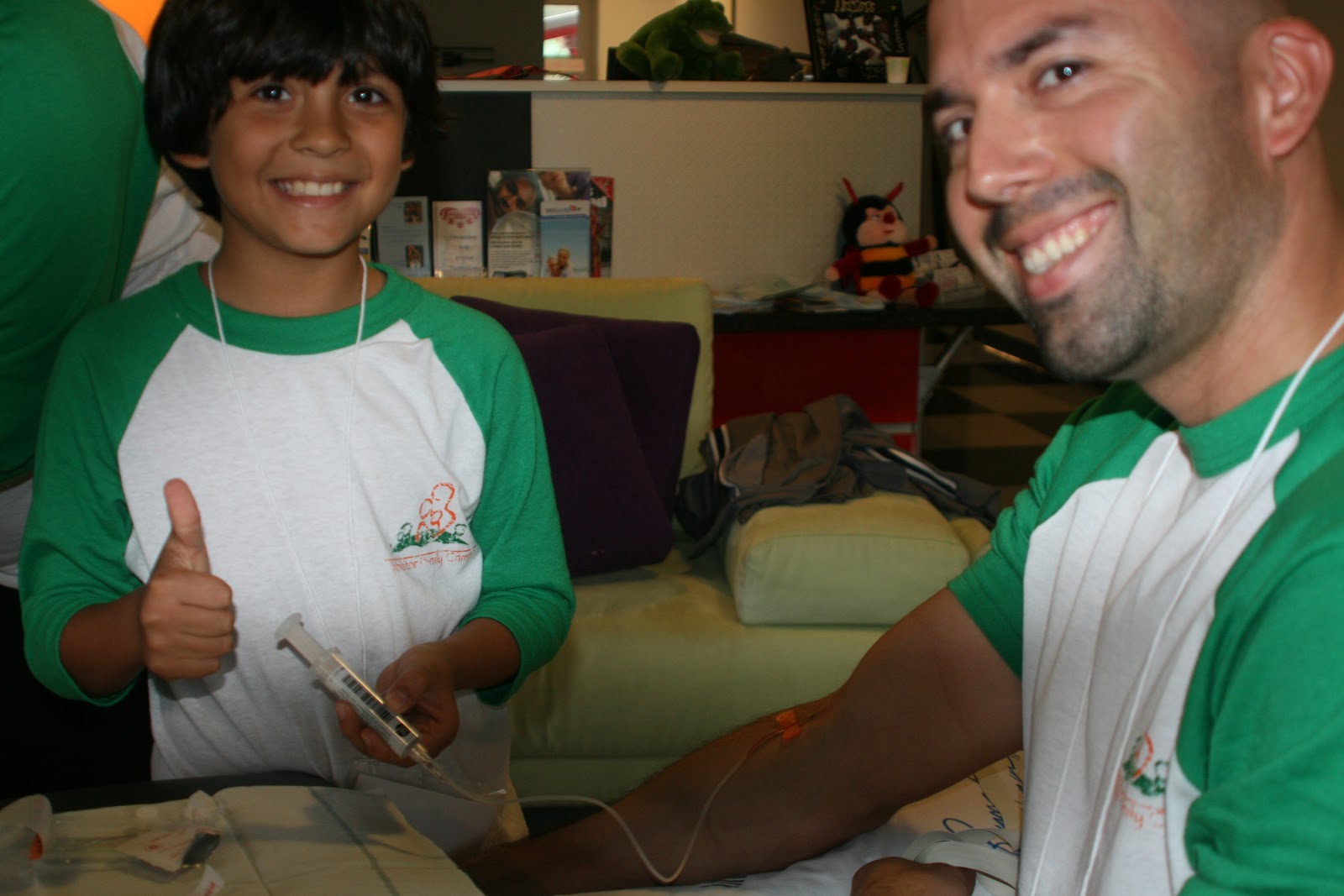
In 2010, Comprehensive Health Education Services (CHES) sponsored the very first Inhibitor Family Camp at Victory Junction in North Carolina. For the first time, children with an inhibitor and their families had a camp to call their own. Supported by an educational grant from Novo Nordisk, its goal then and still is to bring together families who continue to struggle with the challenge
of an active inhibitor. Families of a child whose inhibitor has tolerized are welcome if space allows. With camp now in its third year, CHES has partnered with Serious Fun camps (founded by Paul Newman), The Painted Turtle in California and Victory Junction in North Carolina to bring two Inhibitor Family Camp programs to the inhibitor community. In response to participant requests, this year’s camp program will offer three nights of education, activities and fun!
Inhibitor Family Camp is limited to 25 families per camp and slots fill up quickly. The Painted
Turtle session will be held Friday April 19 to Monday April 22, 2013 in Lake Hughes, California. Registration opens on January 4, 2013. The Victory Junction session will be held Thursday October 17-Sunday October 20, 2013 in Randleman, NC. Registration will open on July 1, 2013. Each of these programs are offered totally free of charge to eligible families.
Families response to what Inhibitor Family Camp means to them include:
“I loved all the activities. Lots of things to do. The boys had a wonderful time. I have no
complaints except we didn’t want to leave! Thank you!”
“Hanging with the other kids and connecting with them through similar experiences.”
“This program has been fully instrumental to my family in helping us deal with hemophilia and inhibitors.”
For additional information,
please call Comprehensive Health Education Services at 781-878-8561. 
Click below to view Comprehensive Health Education
Services’ 
Inhibitor Family Camp Brochure http://attachment.benchmarkemail.com/c51644/2013_Inhibitor_Family_Camp.pdf

Inhibitor Camp This April

Camp is coming early this year!

US hemophilia families with inhibitors are invited to apply for the third Inhibitor Family Camp weekend to be held April 13-15, 2012 at The Painted Turtle Camp in Lake Hughes, CA.

This program, run by Comprehensive Health Education Services (CHES) and sponsored by Novo Nordisk, is designed for families with a child age 6‐19 with an active inhibitor. These camps are special: children with inhibitors often report that they cannot participate in many of the activities offered at a traditional hemophilia camp due to the threat of injury. Or that if they do choose to participate, they may spend the rest of the week in a wheelchair watching from the sidelines.

Inhibitor Family Camp provides these children and their families an opportunity to come together with their true peers in the hemophilia community.

Space is limited so all registration materials must be completed in full by February 17, 2012. There is no cost to families associated with Inhibitor Family Camp. For additional information, please call Comprehensive Health Education Services at 877-749-2437 or visit www.inhibitorfamilycamp.org.

Great Book I Just Read
Steve Jobs by Walter Issacson (Kindle version)

This is an incredible read, quite possibly the best book I read in 2011. Not a perfect book, however, because there are gaps, almost as if Issacson rushed to get it out following the death of Jobs on October 5. Issacson was asked by Jobs to write his biography, and despite Jobs’s well known control issues, gave full control to Issacson, and engaged in 40 interviews with him. Issacson also interviewed Jobs’s family, coworkers, enemies, friends and wife.

This 600 page tome traces Jobs from his birth, adoption, and early childhood years all the way through his stint at Reed College, dropping out, founding Apple in his father’s garage, and the impact his adoptive father had on his curiosity about all things electrical and his father’s love of perfect workmanship, as we see in Apple products today. It’s almost two books in one: a fascinating account of the rise of the personal computer industry in Silicon Valley, and the infamous competition with Bill Gates and Microsoft (hard to believe Jobs and Gates were born in the same state, same year!). For those of us who lived through these years, it brings back memories and completes a story. For the new generation who takes these marvelous machines for granted, this history is a must read.

The other “book” is a searing account of Jobs’s psyche: his infantile approach to managing people, his tirades, temper tantrums, his eating disorders, control issues, his obsessive perfectionism, his total lack of empathy, his need to squash others’ self-esteem. If there is one psychological term you can hang on him, it’s narcissism. He was a genius, a visionary who saw things before they were built, who knew exactly what he wanted because he could already see it before him when no one else could. He invented an industry that has completely changed people’s lives and the course of history. He didn’t do market research to find out what the customer wanted; he knew what people wanted. He created need. But he left a scarred and brutalized wake, and no doubt his children will tell all one day. I have been an Apple customer since the 1980s, from day 1. I love the products, the marketing, the beauty of the machines, the integrated approach to everything Apple makes. They make intuitive sense, and Jobs knew this. He knew so much, saw so much, and had he lived, his impact would have been even more tremendous. I couldn’t help but feel sorry for his children, and have no doubt that his cancer originated from his chronic high stress levels and internal obsessions. When you go into an Apple store next time, look at the Restroom sign. The grey color took a team, including Jobs himself, 30 minutes to decide what shade of grey. Jobs involved himself at every level. When you live your entire life to that extreme, it takes its toll internally. What price genius? This book seems to mournfully ask that, while at the same time, marveling at an extraordinary man who led a great team that changed the world. The frustrating part comes when even Issacson, for all he interviewed Jobs 40 times, still could not but scratch the surface was what drove this man. No doubt, Jobs wouldn’t let him in; maybe no one got in. Five/five stars.

HemaBlog Archives
Categories