Poetry

Hemophilia and Poetry

To finish up National Poetry Month, let’s consider two more poets with hemophilia.

by Richard J. Atwood

To me, poetry specializes in the efficient expression of emotions and descriptions. It condenses writing into a purer form. You might compare poetry to the fractionation and purification of blood plasma to get the purest factor proteins, but I guess that metaphor would be a stretch.

Though I’m not an expert, I admire well-written poetry. Take time to read the exceptional works by the following poets who happen to have hemophilia.

Read My Mind by Jerome Stephens

Kildanore Press, 1990

Jerome Stephens (1955–1993) was born in Ireland with mild factor VIII deficiency. As he grew up, he was careful to avoid physical injuries and unnecessary knocks, and became a strong and robust young man who enjoyed outdoor activities. Living in Dublin, Jerome married and had children. In 1982, he underwent an appendix operation and was treated with contaminated factor concentrate imported from America. He was diagnosed with AIDS in 1987.

            Jerome was an artist who expressed himself through sculpture and poetry. But he is better known for speaking out publicly—the first to do so openly for a television camera—about how AIDS had ravaged his life and family. With encouragement from his hemophilia nurse, Jerome published Read My Mind, a collection of 52 poems that includes photographs of six wooden sculptures carved by the poet. He does not mention hemophilia. Instead, his poems emphasize his struggles, and how his love and religion, along with his family and friends, strengthened him to fight.

            Jerome wanted to speak on behalf of all Irish people with hemophilia and AIDS. His poems still capture that desire. After he died, his daughter spoke on his behalf in 2000, giving emotional testimony at the Lindsay Tribunal, after which those infected with HIV or their families received a financial settlement.

4:56: Poems by Carlos Fuentes Lemus

Dalkey Archive Press, 2012

Carlos Fuentes Lemus (1973–1999) was born to a literary family: his father, Carlos Fuentes, was a Spanish-language Mexican novelist and ambassador to France; his mother, Silvia Lemus, was a journalist. Carlos was a Mexican citizen who grew up mostly in Princeton, New Jersey, with short stays in various American cities where his father taught.
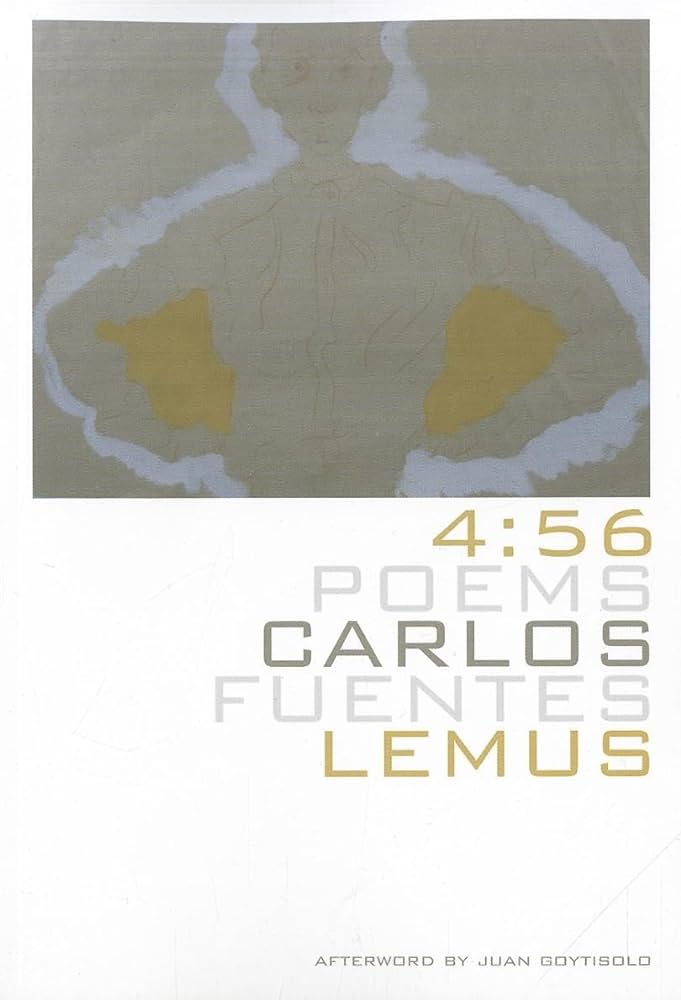
            Carlos was factor VIII deficient and was infected with HIV by 1985. Carlos was a bright student, but never finished high school. He immersed himself in literature (mainly English) and in music. His interest in pop culture and the arts led him to become a writer, poet, photographer, painter, and movie director.

            Carlos wanted to publish his first book of poetry after E. Shaken Bumas solicited several of his poems for the Minnesota Review in 1999. Bumas helped to record over 50 of Carlos’s poems that were to be used as the soundtrack for Carlos’s unfinished movie Gallo de Pelea. Unfortunately, Carlos died before completing those projects. Instead, his poems were posthumously published in 4:56: Poems. Written in English with some Spanish words and syntax, the poems delve into imaginative interpretations of youthful experiences. There is no mention of hemophilia in these lively poems that seem almost experimental or unfinished. Carlos also collaborated with his father on the book Retratos en el Tiempo (1998), in which his father wrote profiles of famous people he knew and Carlos took their photographs.

Poetry is an international genre that appears in many forms. These two poets with hemophilia did not have to include their bleeding disorder in what they wrote, but having it possibly sparked their passion to write. Maybe you’d like to express yourself in a poem? Go ahead! Dream, compose, write.

This review originally appeared in the Parent Empowerment Newsletter, May 2016

The Hemophiliac’s Motorcycle

April is National Poetry Month, and it’s time to recognize one of the bleeding disorder community’s top poets: Tom Andrews. Tom passed away in 2001, at age 40, of complications of a blood disease, but also had hemophilia. His poetry reflected the pain he often felt due to his disorder—he won several awards for his poetry.

Tom grew up in Charleston, West Virginia, and seemed destined for fame. He was recognized in the Guinness World Book of Records for clapping for fourteen hours and thirty-one minutes—at age 11! He wanted to be a stand-up comedian. And he raced in motocross as a teen, but that ended wjhen he learned he had hemophilia following an accident.

He was a man of many talents: comedian, daredevil, copy editor for Mathematical Review, a journal for mathematicians, physicists, statisticians, etc. Talk about right brain and left brain!

But he is best remembered for his poetry. I had the deep pleasure of meeting Tom, and sharing correspondence with him for a time.  He sent me several copies of his work, include Codeine Diary: True Confessions of a Reckless Hemophiliac (Little, Brown, 1998), a memoir.  

In an online bio of Tom, his work is described here: “In this second wise and passionate book, Tom Andrews explores illness as a major theme, avoiding sentimentality without being merely confessional. He advances his considerable talent with great strength and forcefulness. The poems are buoyant with humor and mindful of larger mysteries even as they investigate very personal issues. There is an urgency that is compelling; the work is immersed in the private grief of the speaker without excluding the reader. There is real and hard-won wisdom and intelligence in the poems, offering genuine surprises and delight; their attractive humility is not a pose.”*

A man who knew suffering, but was not afraid to embrace the world, and reveal his soul. Isn’t thay the essence of beautiful poetry?

Here is an exceprt from The Hemophiliac’s Motorcycle:

… may [the Lord] adore each moment alive in the whirring world,

As now sitting up in this hospital bed brings a bright gladness of the human body, membrane of web and dew

I want to hymn and bide by, splendor of tissue, splendor of cartilage and bone,

Splendor of tail-like spine’s desire to stretch as it fills with blood

After a mundane backward plunge on an iced sidewalk in Ann Arbor,

Splendor of fibrinogen and cryoprecipitate, loosening the blood pooled in the stiffened joints

So I can sit up, of sit up in radiance, like speech after eight weeks of silence,

And listen for Him in the blood-rush and clairvoyance of the healing body…

It’s National Poetry Month. Read some. It’s good for your mind and soul!

*https://uipress.uiowa.edu/books/hemophiliacs-motorcycle

The Poem of a Prince with Hemophilia

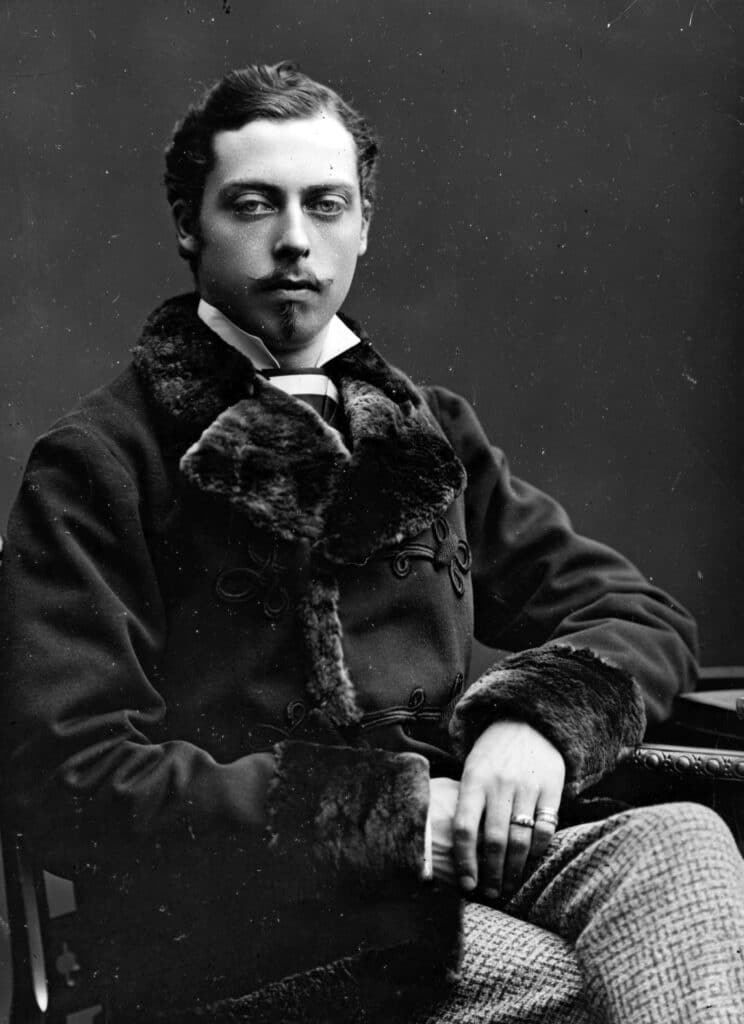
Prince Leopold (1853 – 1884), Duke of Albany. (Photo by Hulton Archive/Getty Images)

The first prince with hemophilia that we know of historically was Leopold, youngest son of Queen Victoria, and eighth of nine children. He was born on April 7, 1853. His birth was remarkable because he was the first royal child delivered with the aid of chloroform. This was administered by one of my personal heroes, Dr. John Snow, who also cracked the mystery of cholera in 1854 in London, during a savage outbreak, and pretty much launched the science of epidemiology and public health.

And because its National Poetry Month, we will publish a poem to Prince Leopold! This poem is from Colin S.K. Walker’s (Editor) 1993 book William McGonagall: A Selection. William McGonagall, born in 1825 in Edinburgh, published three collections of verses, and died in 1902. McGonagall is a terribly mocked Scottish poet. As the editor explained: “McGonagall’s poetry is undeniably dreadful, always sinking to new depths, just when you think you have hit rock bottom.” Ouch!

So yeah, it’s a pretty bad poem! But it is about Prince Leopold, a prince who had hemophilia, who died at age 30, after bleeding from a fall. At his funeral they played one of my favorite hymns (and that of Sir Ernest Shackleton), “Lead Kindly Light.” Let’s hope a better poem is written for King Charles III’s Coronation next month!

THE DEATH OF PRINCE LEOPOLD

ALAS! noble Prince Leopold, he is dead!
Who often has his luster shed:
Especially by singing for the benefit of Esher School,-
Which proves he was a wise prince, and no conceited fool.

Methinks I see him on the platform singing the Sands o’ Dee,
The generous-hearted Leopold, the good and the free,
Who was manly in his actions, and beloved by his mother;
And in all the family she hasn’t got such another.

He was of delicate constitution all his life,
And he was his mother’s favorite, and very kind to his wife,
And he had also a particular liking for his child,
And in his behaviour he was very mild.

Oh! noble-hearted Leopold, most beautiful to see,
Who was wont to fill your audience’s hearts with glee,
With your charming songs, and lectures against strong drink:
Britain had nothing else to fear, as far as you could think.

A wise prince you were, and well worthy of the name,
And to write in praise of thee I cannot refrain;
Because you were ever ready to defend that which is right,
Both pleasing and righteous in God’s eye-sight.

And for the loss of such a prince the people will mourn,
But, alas! unto them he can never more return,
Because sorrow never could revive the dead again,
Therefore to weep for him is all in vain.

‘Twas on Saturday the 12th of April, in the year 1884,
He was buried in the royal vault, never to rise more
Until the last trump shall sound to summon him away.

When the Duchess of Albany arrived she drove through the Royal Arch,-
A little before the Seaforth Highlanders set out on the funeral march;
And she was received with every sympathetic respect,
Which none of the people present seem’d to neglect.

Then she entered the memorial chapel and stayed a short time
And as she viewed her husband’s remains it was really sublime,
While her tears fell fast on the coffin lid without delay,
Then she took one last fond look, and hurried away.

At half-past ten o’clock the Seaforth Highlanders did appear,
And every man in the detachment his medals did wear;
And they carried their side-arms by their side,
With mournful looks, but full of love and pride.

Then came the Coldstream Guards headed by their band,
Which made the scene appear imposing and grand;
Then the musicians drew up in front of the guardroom,
And waited patiently to see the prince laid in the royal tomb.

First in the procession were the servants of His late Royal Highness,
And next came the servants of the Queen in deep mourning dress,
And the gentlemen of his household in deep distress,
Also General Du Pia, who accompanied the remains from Cannes.

The coffin was borne by eight Highlanders of his own regiment,
And the fellows seemed to be rather discontent
For the loss of the prince they loved most dear,
While adown their cheeks stole many a silent tear.

Then behind the corpse came the Prince of Wales in field marshal uniform,
Looking very pale, dejected, careworn, and forlorn;
Then followed great magnates, all dressed in uniform,
And last, but not least, the noble Marquis of Lorne.

The scene in George’s Chapel was most magnificent to behold,
The banners of the knights of the garter embroidered with gold;
Then again it was most touching and lovely to see
The Seaforth Highlanders’ inscription to the Prince’s memory:

It was wrought in violets, upon a background of white flowers,
And as they gazed upon it their tears fell in showers;
But the whole assembly were hushed when Her Majesty did appear,
Attired in her deepest mourning, and from her eye there fell a tear.

Her Majesty was unable to stand long, she was overcome with grief,
And when the Highlanders lowered the coffin into the tomb she felt relief;
Then the ceremony closed with singing “Lead, kindly light,”
Then the Queen withdrew in haste from the mournful sight.

Then the Seaforth Highlanders’ band played “Lochaber no more,”
While the brave soldiers’ hearts felt depressed and sore;
And as homeward they marched they let fall many a tear
For the loss of the virtues Prince Leopold they loved so dear. (pp. 89-93).

The Other Prince With Hemophilia

When we think of a prince with hemophilia, we almost always think about Alexis, the Russian heir to the throne, who was murdered on August 17, 1918. But there were others. The first prince with hemophilia that we know of historically was Leopold, youngest son of Queen Victoria, youngest of nine children. His birth was remarkable because he was delivered with the aid of chloroform, administered by one of my personal heroes, Dr. John Snow, who also cracked the mystery of cholera in 1854 in London, during a savage outbreak, and pretty much launched the science of epidemiology and public health.

But back to Leopold!

My friend Richard Atwood sent me this poem about Leopold, published in the 1800s.

THE DEATH OF PRINCE LEOPOLD

ALAS! noble Prince Leopold, he is dead!
Who often has his luster shed:
Especially by singing for the benefit of Esher School,-
Which proves he was a wise prince, and no conceited fool.

Methinks I see him on the platform singing the Sands o’ Dee,
The generous-hearted Leopold, the good and the free,
Who was manly in his actions, and beloved by his mother;
And in all the family she hasn’t got such another.

He was of delicate constitution all his life,
And he was his mother’s favorite, and very kind to his wife,
And he had also a particular liking for his child,
And in his behaviour he was very mild.

Oh! noble-hearted Leopold, most beautiful to see,
Who was wont to fill your audience’s hearts with glee,
With your charming songs, and lectures against strong drink:
Britain had nothing else to fear, as far as you could think.

A wise prince you were, and well worthy of the name,
And to write in praise of thee I cannot refrain;
Because you were ever ready to defend that which is right,
Both pleasing and righteous in God’s eye-sight.

And for the loss of such a prince the people will mourn,
But, alas! unto them he can never more return,
Because sorrow never could revive the dead again,
Therefore to weep for him is all in vain.

‘Twas on Saturday the 12th of April, in the year 1884,
He was buried in the royal vault, never to rise more
Until the last trump shall sound to summon him away.

When the Duchess of Albany arrived she drove through the Royal Arch,-
A little before the Seaforth Highlanders set out on the funeral march;
And she was received with every sympathetic respect,
Which none of the people present seem’d to neglect.

Then she entered the memorial chapel and stayed a short time
And as she viewed her husband’s remains it was really sublime,
While her tears fell fast on the coffin lid without delay,
Then she took one last fond look, and hurried away.

At half-past ten o’clock the Seaforth Highlanders did appear,
And every man in the detachment his medals did wear;
And they carried their side-arms by their side,
With mournful looks, but full of love and pride.

Then came the Coldstream Guards headed by their band,
Which made the scene appear imposing and grand;
Then the musicians drew up in front of the guardroom,
And waited patiently to see the prince laid in the royal tomb.

First in the procession were the servants of His late Royal Highness,
And next came the servants of the Queen in deep mourning dress,
And the gentlemen of his household in deep distress,
Also General Du Pia, who accompanied the remains from Cannes.

The coffin was borne by eight Highlanders of his own regiment,
And the fellows seemed to be rather discontent
For the loss of the prince they loved most dear,
While adown their cheeks stole many a silent tear.

Then behind the corpse came the Prince of Wales in field marshal uniform,
Looking very pale, dejected, careworn, and forlorn;
Then followed great magnates, all dressed in uniform,
And last, but not least, the noble Marquis of Lorne.

The scene in George’s Chapel was most magnificent to behold,
The banners of the knights of the garter embroidered with gold;
Then again it was most touching and lovely to see
The Seaforth Highlanders’ inscription to the Prince’s memory:

It was wrought in violets, upon a background of white flowers,
And as they gazed upon it their tears fell in showers;
But the whole assembly were hushed when Her Majesty did appear,
Attired in her deepest mourning, and from her eye there fell a tear.

Her Majesty was unable to stand long, she was overcome with grieff,
And when the Highlanders lowered the coffin into the tomb she felt relief;
Then the ceremony closed with singing “Lead, kindly light,”
Then the Queen withdrew in haste from the mournful sight.

Then the Seaforth Highlanders’ band played “Lochaber no more,”
While the brave soldiers’ hearts felt depressed and sore;
And as homeward they marched they let fall many a tear
For the loss of the virtues Prince Leopold they loved so dear. (pp. 89-93).

This poem was found in Colin S.K. Walker’s (Editor) 1993 book William McGonagall: A Selection. (Edinburgh, Scotland: Birlinn Ltd.). William McGonagall, who was born in 1825 in Edinburgh, published three collections of verses, and died in 1902. McGonagall may be the most mocked Scottish poet. As the editor explained: “McGonagall’s poetry is undeniably dreadful, always sinking to new depths, just when you think you have hit rock bottom. It is this inimitable multi-faceted awfulness which makes his work memorably funny.” Ouch!

Yeah, it is a pretty bad poem! To get a sense of what Leopold’s life might have been like, watch the movie “Young Victoria,” which just came out earlier this year. Lovely film about the 18-year-old who became queen of the most powerful nation on earth, who bore nine children, one with hemophilia, and who is still famed as England’s longest reigning monarch and one of the most beloved.

Good Book I Just Read
It’s Not How Good You Are, It’s How Good You Want to Be
Paul Arden

This is the fastest read ever: one hour. It’s a book about marketing, especially marketing yourself. The book itself is a marketing masterpiece, which makes it quite fun to read. Read it, pick up a few tips for your business, your nonprofit or your job hunting skills, and enjoy! Two stars.

The Hemophilic Poet


We have so many talented people with hemophilia in our community. One of them is Richard Atwood, currently president of Hemophilia of North Carolina, who shared this wonderful essay below with us. The other was his subject matter, Tom Andrews, who I had the pleasure to know and meet, a long time ago. An award winning poet, Tom lived an adventurous life, “one that was complicated by his hemophilia, and then used those experiences as a way to uniquely express himself in his poetry up to his untimely death,” writes Richard. Tom published several books, perhaps most famous was Codeine Diary, based on his experiences with pain and the narcotic.

Writing wasn’t his only forte: 11-year-old, freckle-faced Tom clapped his hands for 14 hours, 31 minutes to earn a listing in the 1974 edition of the Guinness Book of World Records. As a clumsier and accident prone child, Tom had bruises and bleeds in his knees, ankles, elbows, fingers, and toes. He was diagnosed with factor VIII deficiency when 15 years old. The diagnosis didn’t alter his risk taking behavior of motorcycle riding, skateboarding, and punk rock band playing.

Here’s his interesting career path: in 1984, Tom graduated from college summa cum laude in philosophy, and then went to work at a 7-11. Tom later worked as a copy editor for the Mathematical Review before teaching writing at the Ohio University and Purdue University. In January 1989, Tom fell on ice in Ann Arbor, MI and broke his right ankle, and began taking codeine for the pain.

Tom was a Poetry Fellow at the American Academy in Rome in 1999. During a visit to Athens, Greece in the summer of 2001, Tom fell ill, and he subsequently died in London, England in July 2001.

Richard writes, “The 1994 collection of autobiographical poems published in The Hemophiliac’s Motorcycle won the 1993 Iowa Poetry Prize. The poet’s first collection of poems published earlier in 1989, The Brother’s Country, was a National Poetry Series winner. Poetry is an unusual medium for an autobiography, though it does allow the beauty of words to be condensed for more meaning, placement, and sound. There were many references to religion and medicine, especially Tom’s female hematologist and the effects of codeine. Italics were used for prayer and other thoughts. The title was taken from one of the poems and indicated the poet’s risk taking behavior.

The 1998 autobiography Codeine Diary was dedicated to John, his older brother. Italics were used extensively for interjected flashbacks and personal thoughts. The author’s life was told in fragmented parts that were often repeated. The autobiography began as a diary of a serious bleed in 1989 and developed into an introspective investigation of the role of hemophilia in his life. Tom did not have any close friends with hemophilia, and he found that each person needs to define what hemophilia means to themselves and to find their own strategies to negotiate hemophilia and to be well. He did acknowledge the benefits of an ideal nurse coordinator and a hematologist.

Thanks so much to Richard Atwood for sharing this with us– may Tom rest in peace, and may we all enjoy his poems. He could well be the most famous poet with hemophilia.

Great Book I Just Read
Hiroshima by John Hersey. This book, which I read just in time to honor the 49th anniversary of the August 6 bombing of Hiroshima and today’s anniversary of the bombing of Nagasaki, is one of those absolutely rare gems: short, full of prose and thoughtfulness, and leaving a lasting impression. The story of the day the A-bomb was first used on civilians, from just before 8:15 am, when the bomb struck, till months afterward, Hershey tells the heart-rending true stories of six survivors—two doctors, two women, and two religious men. You can read this book in one evening, and probably will because it’s hard to put down. Simply told, powerfully effective and unforgettable. A classic. Four stars.

HemaBlog Archives
Categories