Richard Atwood

Iraq and Infusions


My friend Richard Atwood keeps finding the most interesting news items in hemophilia. His latest: A British soldier with hemophilia serving in Iraq.

In Bad Days in Basra: My Turbulent Time as Britain’s Man in Southern Iraq, Hilary Synnott, 58, was only weeks away from an early retirement after a career spanning 11 years in the Royal Navy and 30 years in the Diplomatic Service, half of which occurred in developing countries with large Muslim populations.

Then he was asked to be the senior civilian representative in southern Iraq. Synnott agreed to a 6 month tour as head of the Coalition Provisional Authority for the South, based in Basra, in an area holding 4.5 million Iraqis on a quarter of the country’s land mass, and hosting 11,000 British military personnel. The goal of the CPA was to establish a secure, peaceful, and democratic Iraq, but he described the situation as “a bloody mess.”

Funny he should call it that. Synnott underwent a customary medical check which revealed he had mild hemophilia. After another medical check at St. Thomas’s Hospital in London (right next to Big Ben), Synnott commented, “… the doctors provided me with a special medication kit and a supply of needles intended to clot the blood in the event of injury. It was all contained in an insulated plastic bag, to keep the medication cool. I was told to keep the whole lot in a fridge and to learn how to administer the potions myself since the accompanying instructions would be too complicated for non-specialists to follow in a hurry.” Synnott took the factor with him to Basra: “The bag stayed at the bottom of a cupboard, to emerge six months later covered in sand.”

It’s surprising that his hemophilia had not been diagnosed while he served on submarines in the Royal Navy. With regret, Synnott evaluated the civilian contributions as a disappointing failure because it was an impossible situation for a myriad of reasons. The author currently serves as a Senior Fellow at the International Institute for Strategic Studies, and this book sounds like a good read!

Good Book I Just Read
The Red Pony by John Steinbeck
Another good read is this classic. I last read it in high school, and mindful of the high school summer reading list for my daughter, I chose to dust this one off and read it again. I was struck by the very simplistic language, and paucity of creative phrases. Very simple writing, in short sentences, but a poignant story. It’s a marvel how much emotion is betrayed through the simple style. There is also lots of foreshadowing. The story follows Jody, a ten-year-old boy, who receives a red pony as a gift from his emotionally-withdrawn and stern father, and from his warm farm-hand Billy Buck. It’s a sad story, but one you can relate to if you have ever lost a pet. There are also three more short stories about Jody and his family: all portray the simplicity of farm life in dry and hot mid-20th century California, but the complexity in family life, and depths of a child’s mind and heart. Three stars.
North Carolina: A Vital Place in Hemophilia History

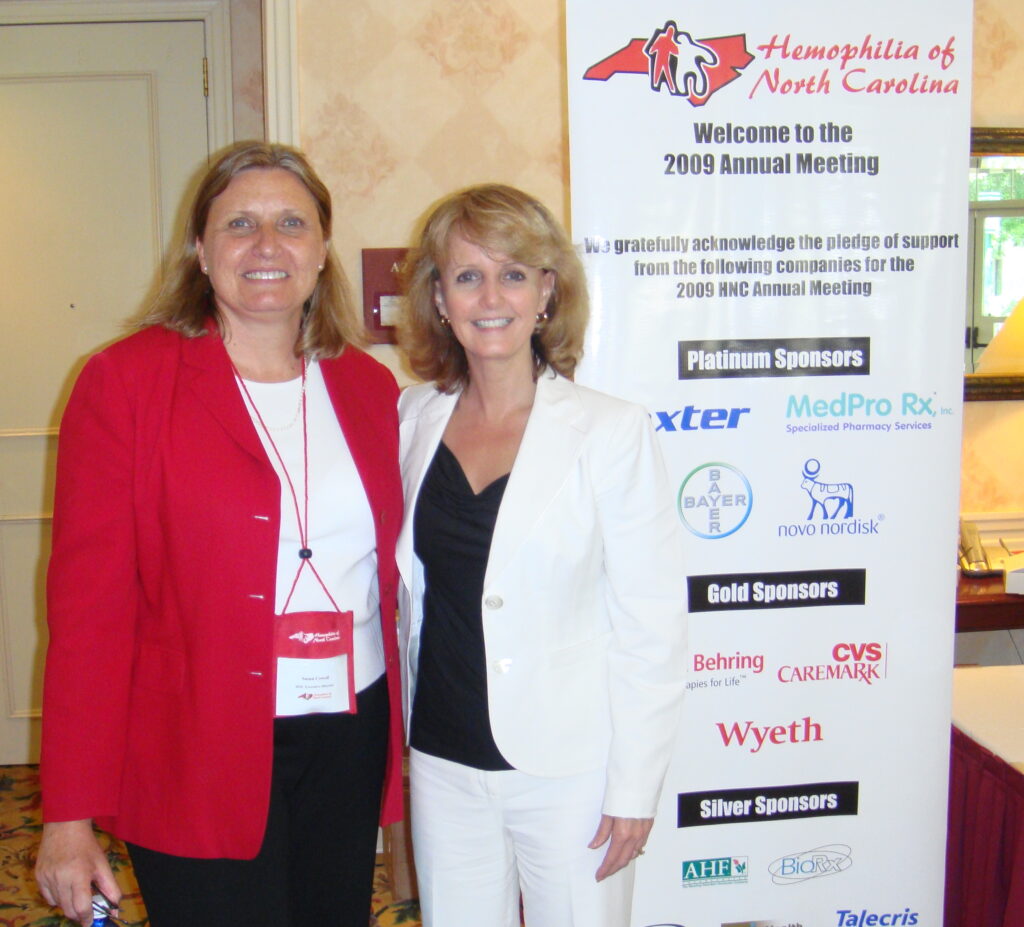
I spent the weekend in North Carolina at the state NHF chapter’s annual meeting. Under mild and southern blue skies, we had a good turn out and a jam-packed agenda. Sue Cowell is the excellent executive director of this dynamic chapter, which claims Richard Atwood as its president. It’s interesting that this is one of the few chapters, maybe the only one, where neither the executive director or president have hemophilia or are related to hemophilia. Richard, hobbling about on crutches after breaking his leg recently during a biking fall, joked with the audience that while he doesn’t have hemophilia, “I bleed.”

Laurie Kelley with Sue Cowell

Richard also happens to be a columnist for my newsletter, PEN, and I think knows more about US hemophilia history than anyone, as it’s his passion.

Speakers included:

Ray Stanhope, a long time acquaintance, to represent the NHF and provide an update on activities;

Carl Weixler, past president of Hemophilia Federation of America, to share its programs and activities;

Richard Atwood, who shared the history of hemophilia within North Carolina;

Mike Rosenthal, president of WFH USA, to share programs of the WFH to help those in countries with no access to treatment.

I have to say that Carl is always a delightful speaker and had everyone roaring with laughter when he did an ice breaker: “How to Speak Hillbilly.” Carl is from Kentucky. We were asked to decipher a conversation on the screen, which we couldn’t of course! The conversation ended with: LIB MR DUCKS. Translated: “‘ell, I’ll be! Them are ducks.” So I had to retaliate and quickly fixed my powerpoint to include an icebreaker with Bostonian-speak: “Linder, give the patient a shawt of factah.”

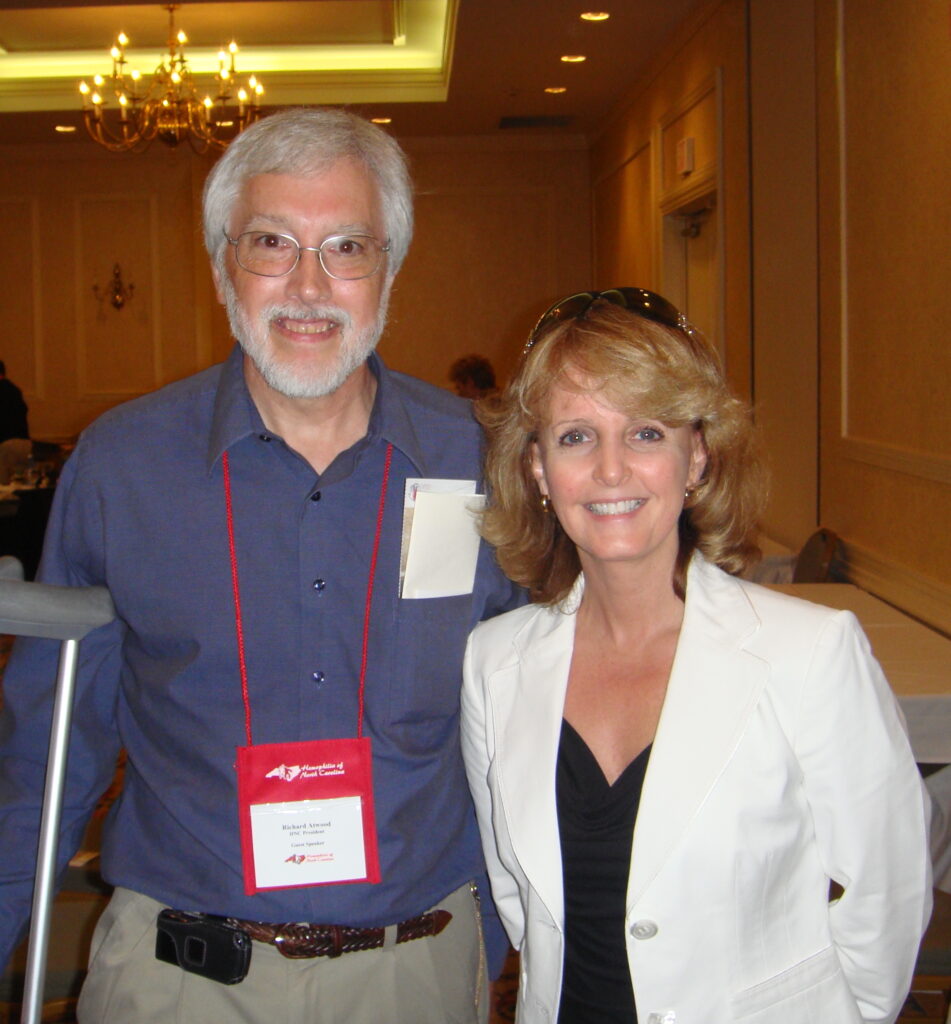
I was fascinated most by Richard’s presentation about North Carolina, especially about a man who bred dogs, and found that they had a mysterious bleeding disorder. After taking them to Chapel Hill to be diagnosed, and learning they had hemophilia, these dogs became the backbone of scientific research into treatment advances for hemophilia, and gene therapy. North Carolina truly has a vital place in hemophilia history. (Photo: with Richard Atwood)

I also spoke at the event, and shared photos and stories of my journeys around the world. We livened things up with a world geography quiz—I even have away money for those with the right answer! The point was to show perspective, which was the theme of the day. Having greater perspective allows greater appreciation. Knowing now the history of North Carolina, you can appreciate its important, and hopefully residents with hemophilia will join the NC chapter’s advocacy efforts at the state house. Greater perspective on how 75% of our community lives worldwide, without treatment, allows greater appreciation of our fortune, even though we may have occasional glitches in treatment. Some of the stories I shared were sad, and the photos heartbreaking. We had a few people cry.

We also had about 5 people approach me to ask to sponsor a child, including the legendary Dr. Harold Roberts, who has also been a keystone in hemophilia treatment innovations. I was very honored just to meet him, let alone accept his kind offer to sponsor a child through my nonprofit Save One Life.

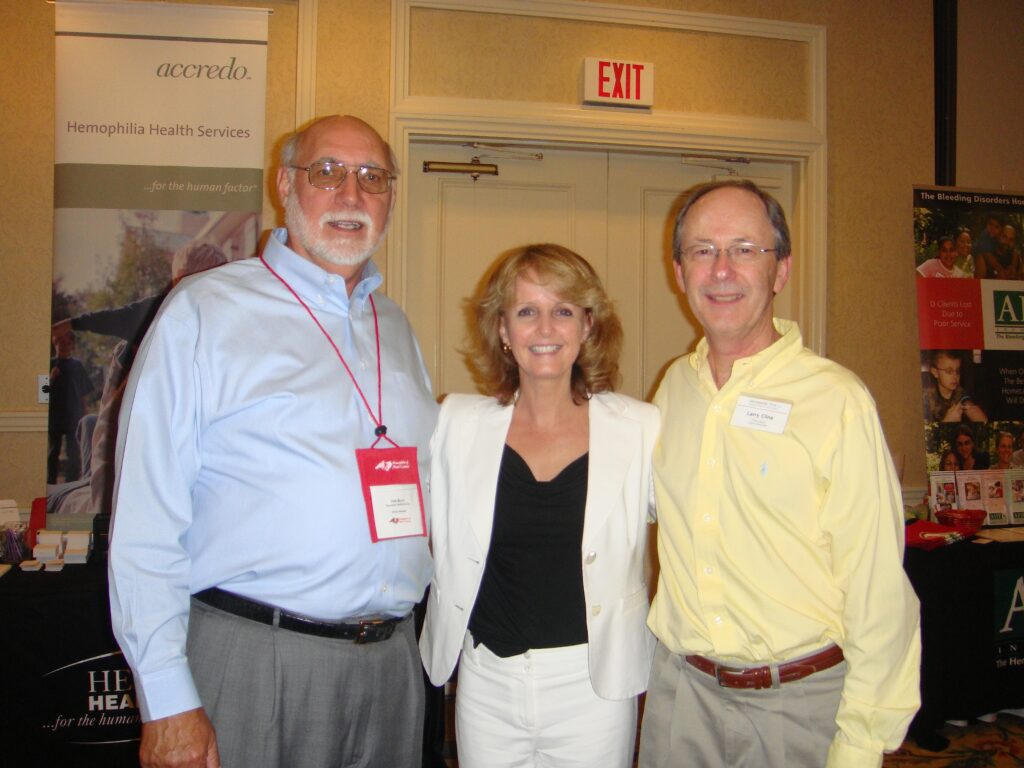
It was a wonderful day to mingle with parents, hear their stories, bump into old friends, like Sam Byers and Larry Cline, both of whom I had met about 13 years ago in the same hotel for a similar event!

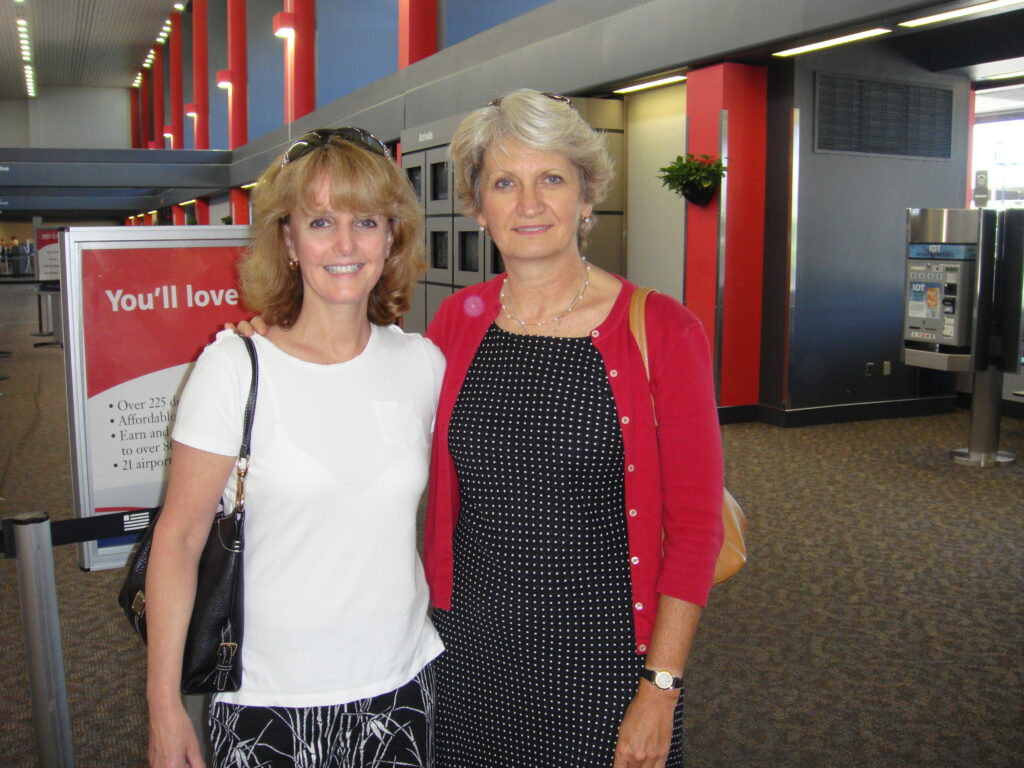
After the event, I was able to spend the night with my dear friend and colleague Adriana Henderson, who is renowned for her charitable work with the kids with hemophilia in Romania. She held the first World Hemophilia Day in Romania, and the first camp, Camp Ray of Hope, now in its fourth year. I joke that she does not have a son with hemophilia, but does have about 70 boys with hemophilia. Again, she is not related to hemophilia, and it’s to these people we owe so much.

So, if you are reading this, ask yourself: all these people are so deeply involved in helping others with hemophilia and they are not related. What’s holding you back? There are many who need help, advice, financial aid. Get involved at the local, state, national or international level. Your chapter especially needs you as a voice in the state house. Trust me, you will enjoy it, gain greater perspective on life, and do some good in the world!

PS Our website has had a facelift!!! www.kelleycom.com

HemaBlog Archives
Categories