When Hemophilia Prevents Vampirism*
I love reading books, and have already hit my target for 35 books this year. History, nonfiction, biography, exploration and rock bands seem to attract me the most. I hope to cram in about two more before the year is out. One I may try is Mari Mancusi’s Blood Ties: A Blood Coven
Vampire Novel.
Vampire Novel.
Our friend and colleague Richard Atwood sent me a synopsis and commentary on this “young adult” book, which includes a main character who has hemophilia. That fascinates me and makes me want to read it. I can easily accept the fantasy part (vampires and fairies) but have a hard time when someone mangles the science. I mean, science is science. Here’s the rather convoluted plot:
Sunshine McDonald, or Sunny, a teenager with a freckled nose and long dirty blond hair, is enrolled in Las Vegas High School. Her formal name is Princess Sunshine of the Sidhe Light Court of Tir na nOg. Sunny is the royal daughter of Queen Shrinking Violet. Sunny has wings and can
fly because she is a full-blooded fairy. She also has a twin sister named Rayne with black hair.
fly because she is a full-blooded fairy. She also has a twin sister named Rayne with black hair.
Rayne, the only known vampiric fae in existence, wants to be a vampire slayer and recently attended a two-week vampire 12-step rehab program. (You gotta love that) Sunny was bitten by a vampire – she turned into one for six days due to mistaken identity with her sister and then became mortal again, or was cured, after drinking blood, whose antibodies help the human cells, from the Holy Grail in England. There she met Lord Magnus, Master of the Blood Coven. Sunny loves Jayden, a mortal with green eyes and black hair who earlier saved her life. Jayden has hemophilia. (How does that relate to the plot? I’m sure I don’t know!)
Jayden is bitten by a vampire, and to save him, Sunny allows herself to be bitten again (who is doing all this biting?) to provide blood for the first time. Jayden is ill. Lord Magnus explains Jayden’s condition to Sunny: “He’s stable now,” he replies. “But I don’t know for how long. I don’t know if it’s because of the manner in which he was bitten or his hemophiliac blood disorder—but his human cells aren’t properly bonding with the vampire ones. Meaning he’s not really a vampire. But he’s not really human either.” Maybe hemophilia interferes with turning into a vampire?
Jayden needs transfusions for his vampirism (not for his hemophilia). Sunny provides more of her blood using a syringe and blood bag (sadly Sunny did not follow universal safety precautions!), but the cure for Jayden is to drink from the Holy Grail. The trio set off to England
but the Holy Grail is stolen and taken to Tokyo for the impending war with the vampire Consortium. In Tokyo Sunny rescues her
abducted twin sister and prevents the war between the vampire factions. Good job, Sunny. Before the Holy Grail is blown up in the Japanese temple
by the Consortium vampires, Sunny transfers to Jayden some of its blood by kissing him, thus curing him of being a vampire. Sunny asks Jayden how he is feeling once they return to Las Vegas: “One hundred percent,” he says, looking slightly bashful. “Except for the fact that somehow in the transition my hemophilia went away.” What?!
but the Holy Grail is stolen and taken to Tokyo for the impending war with the vampire Consortium. In Tokyo Sunny rescues her
abducted twin sister and prevents the war between the vampire factions. Good job, Sunny. Before the Holy Grail is blown up in the Japanese temple
by the Consortium vampires, Sunny transfers to Jayden some of its blood by kissing him, thus curing him of being a vampire. Sunny asks Jayden how he is feeling once they return to Las Vegas: “One hundred percent,” he says, looking slightly bashful. “Except for the fact that somehow in the transition my hemophilia went away.” What?!
Richard writes: This description of hemophilia is just as unrealistic and unbelievable as the rest of the story, but that will not deter its popularity
with teen readers as they somehow relate to a romantic fairy princess who kicks butt. The YA novel is part of on-going series about these vampire and fairy characters, including the character with hemophilia. The Emmy Award winning author and television producer lives in Austin, Texas
with her husband.
with teen readers as they somehow relate to a romantic fairy princess who kicks butt. The YA novel is part of on-going series about these vampire and fairy characters, including the character with hemophilia. The Emmy Award winning author and television producer lives in Austin, Texas
with her husband.
And I’d like to know: does Mancusi know anyone in Texas with hemophilia? Who’s the real life model for Jayden? Inquiring minds want to know. I’m pretty sure Mancusi didn’t read my book on hemophilia, which has no section on vampires.
Maybe a good stocking stuffer for your young adult reader with hemophilia? Blood Ties: A Blood Coven Vampire Novel by Mari Mancusi, 2011, New York, NY: Berkley Books. 231 pages.
 *Just kidding folks. Hemophilia does not protect against vampirism! Buy yourselves some garlic.
Great Book I Just Read
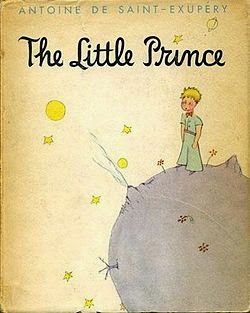
The Little Prince
Antoine de Saint-Exupery
A fable developed during the real-life crash in the desert of Saint-Expury’s plane, this story has become a beloved classic. The little Prince is a visitor from another planet who appears in the desert, keeps the aviator company until he is rescued, and dispenses worldy wisdom with simple observations and visits to other planets, each small and occupied by only one person or animal. Lessons include: to think outside the box, look at the world and its people with your heart, and my favorite, “You become responsible, forever, for what you have tamed”. Five/five stars.