admin

A Facebook Group that Works!
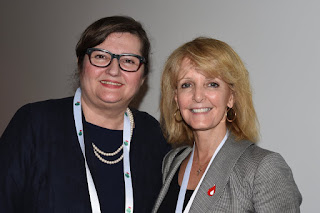
Milena Pirnat and Laurie Kelley

Milena started her talk by reading a post by one mother, about how devastated she felt at the diagnosis of hemophilia, and how much Hemophilia Mother had helped her–more on that letter in a bit.

Milena started Hemophilia Mother in 2011, when her son was 20. Her son with hemophilia–there’s the connection! Of the 6,328 members, 4,526 are “active,”  members.

Mileana added: 3,158 members are from the US.  531 are from India. 69.5% of members are women, and 30.5% men! These include fathers of children with hemophilia and men with hemophilia.

Top cities where members live are: Dhaka, Bangladesh 62; New York 50; LA 42; London 42; Chicago 39; Karachi 29.

More interesting than all the stats is Milena herself. Obviously not from Canada, with a foreign accent. She is a doctor, from Sarajevo, capital of Bosnia and Herzegovina. She survived the siege in 1992, which she recounts online:
“Some 10,000 civilians, including 1,500 children, were killed in Sarajevo during the 44-month-long siege, mostly by snipers and mortars fired from mountains surrounding the city. UNICEF reported that of the estimated 65,000 to 80,000 children in the city, at least 40 per cent had been directly shot at by snipers; 51 per cent had seen someone killed; 39 per cent had seen one or more family members killed; 19 per cent had witnessed a massacre; 48 per cent had their home occupied by someone else; 73 per cent had their home attacked or shelled; and 89 per cent had lived in underground shelters. We lived in a besieged city for 31 months with a toddler, without food, electricity and under constant shelling! And we were somehow spared? Survivor guilt mixed with hemophilia mom guilt stayed tangled in my brain for many years to haunt me more than I would ever want to admit.”
Incredible movie about the war in Sarajevo that Milena fled from

Milena emigrated to Canada and settled in Manitoba. Her son was diagnosed with hemophilia at age 6. She was very much alone, with trauma embedded in her memories. It was a difficult time. 

“All our struggles to survive the Bosnian war during the siege in Sarajevo, immigration and my recent diagnosis of a chronic condition were nothing compared to the feeling of loss after hearing our son’s diagnosis. Was it because we were both doctors unaware that he had an underlying condition, or the fact that I didn’t know I was a carrier, or that we were alone in that suburban apartment far away from our family and friends that day? I don’t know and I will never know but it hit us harder and deeper than my understanding goes. I went to my son’s room, I hugged him, I squished him tighter and longer than he wanted. He looked at me with his innocent smiling eyes. He had just turned six.”
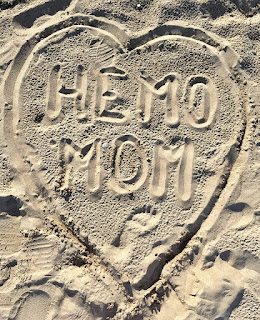
Hemophilia Mother was born. And here she was today, sharing her story and her Group with a rapt audience. She closed her talk by finishing the letter from the mom; the mom at one point was seriously considering to take her own life, so severe was her depression. But the support she received from others in the group made her want to live again; the community members gave her hope.

Coming home, reading my notes from that day, I had jotted down what the CEO of Sobi, Guido Gelkers, said when speaking about the 1 billion IU factor donation made by Biovertiv/Sobi to the WFH, referring to those who live in developing countries: “When you sit in your office, you forget what others’ lives are like.”

Hemophilia Mother knows what the lives are like of anyone in any country struggling with hemophilia. Members live it every day. Join it: give advice, get advice.     And be supported and inspired. Thank you, Milena, for your service and your inspiration!
South Africa: Self-Advocacy at Work!

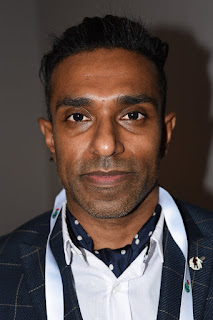
Reeshen Pilay of South Africa

I returned from a three-week visit to the United Kingdom just Saturday night. A visit to Yeovil, England first, to visit my dear friend Bill Boughton, who just turned 95! I try to visit him every year or two. How do I know him? You can read about him here!

Then off to Shetland, Scotland, to visit another dear friend, Jan Howard. I wrote about my visit there on May 20.

Then off to the World Federation of Hemophilia Congress in Glasgow! I attended quite a few sessions and had many meetings. All were interesting and worthwhile. Last week I wrote about the State of the World address by WFH president Alain Weill.

But one of the best sessions was by a young man with hemophilia from South Africa. Reeshen Pilay has severe hemophilia A, and for 11 years used cryo, which carries the risk of blood borne diseases. Now 25, he has been using plasma concentrates. His remarkable presentation was on self-advocacy, and how he was able to get the government of South Africa to approve his special request for recombinant products. Imagine having to self-advocate for that, something that is the accepted standard in the US.

A driving force behind this was simple: his veins could not withstand the huge diluent volume for each infusion. He wanted a product with smaller diluent size, for a faster infusion and less wear and tear on his veins. He got to work.

He learned that in South Africa, a staggering 97% use plasma-derived factor concentrate. It would be difficult to get the country’s health care system to accept his proposal to use a recombinant.

He knew he needed to present facts, not just rhetoric to the socialized health care system of this African nation. So he used the WFH eLearning platform. I was intrigued to know what he did and how he did it. First, he connected to the WFH Online Registry of Products. He learned that the way the WFH calculates how much factor is needed in any country is to set a minimum standard of 1 IU per capita, that is, 1 IU per person. According to the WFH’s Annual Global Survey 2016, a survey of 91 countries showed an average factor VIII usage of .82 IU per capita.  

From the WFH Annual Global Survey 2016

He did incredible research, leaving the audience fairly stunned! He found out which product used the smallest diluent. Reeshan had difficulty with the large volumes used by the plasma-derived product provided by the government. After finding the product with the smallest diluent, he then found where his country stood via others by IU/capita. It uses slightly more than 1 IU factor VIII per capita. (In the US, we use a whopping 9.5 IU per capita)  Then, he calculated how he could actually save money by using the smaller diluent size (which also happened to be an extended half-life product), improve his lifestyle and save his veins.

He presented his findings in a PowerPoint presentation to the health care system managers, won their attention and admiration and secured their approval.

He surely won our admiration for his persistence, and for his rational, economic approach to a huge obstacle!

Be sure to check out the WFH’s eLearning platform, which is filled with excellent webinars, booklets to download, slide shows and more.

WFH: More Factor, More Treated Patients… Now

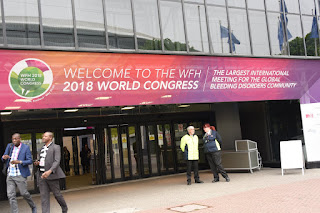
The World Federation of Hemophilia convened its biannual Congress this week in Glasgow, Scotland, for approximately 4,000 attendees from 120 countries. It is an amazing mix of cultures, languages, disciplines—all for those with bleeding disorders.
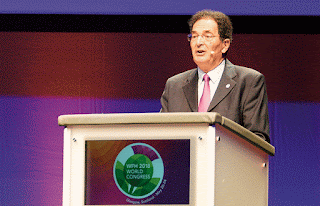
WFH President Alain Weill

This was my 12th Congress, and I am always amazed to meet up with people I’ve known for over 20 years now. We are all still fighting the good fight, in trying to bring advanced care and relief to those who suffer with bleeding disorders in other countries.I have so many notes from so many sessions, that I’ll need to read them out over a few blogs. Always fascinating is the opening night, which sets the tone for the Congress. The address is by the current president, in this case, Mr. Alain Weill, father of a son with hemophilia. The audience was packed with people and a hush fell over us as Alain took the stage.

Alain was rightly proud to share the accomplishments of the WFH. From 2004-2016 over 70,000 people with hemophilia were identified, representing 16 new patients a day. He described the State of the World of Hemophilia: out of the 7 billion people in the world, .5 billion are located in high income countries (with .6% growth annually), 1.5 billion are in middle income countries (1.2% growth annually), and 5 billion are in low income countries (with 2.7% growth annually). These are startling statistics: most people live in low income but high growth countries, where of course, we will find the most number of people with hemophilia.  Except that we cannot find them. We lack diagnostic equipment, trained lab staff and funding to fund them. And 42 babies will be born daily with hemophilia… with most in the low-income countries.

So Alain put forward two Calls to Action. The first was a call to develop a diagnostic test for hemophilia. Something like a test used to check glucose for those with diabetes. Imagine just pricking your finger and learning whether you have hemophilia! This may not seem a priority for those of us in developed countries but for those in developing countries, it would be a revolution.

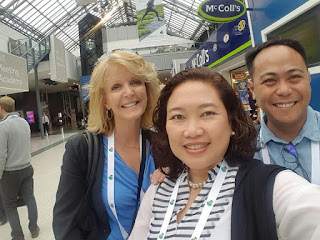
Laurie Kelley with Andrea Trinidad Echavez of the Philippines

The second call to action pertains to commercial clotting factor (CCF). Basically, most poor countries lack access to factor. The WFH measures how much factor a country uses by how many international units (IU) are consumed per capita (per person). Alain mentioned that 55 countries use less than 1 IU per capita, far below the recommended amounts. With 12 billion IU sold in 2016, and assuming that the world population of hemophilia used 1 IU per person, Alain noted that industry would need to increase production of factor by 21 billion to reach all people with hemophilia. Is this realistic? he questioned. Can pharma do this?

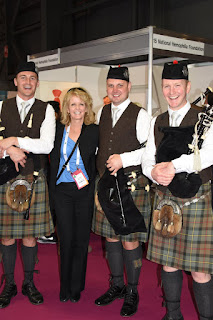
It’s Scotland!


This led to his second Call to Action, a series of changes to factor and its production:

  • Increase donations of factor. (Bioverativ/Sobi have pledged 1 billion IU of factor over 10 years. Grifols has committed 200 million per year. CSL Behring has donated substantial amounts. Where are the rest of the pharma players?)
  • Track the vast volumes of unused donated plasma and turn it into factor.
  • Increase existing production capacities
  • Create new manufacturing facilities
  • Make factor accessible and affordable
  • Make gene therapy (when it arrives) accessible to all

And finally he offered a stinging comment about pharma companies that sue one another (this would be pointed directly at Shire): end the legal actions against one another, especially if they block innovative therapies.

Alain urged a task force at once to review these and implement them. I’d like to be on that task force. These are action items I have been working for the past 20 years. Free factor to the poor, more factor and accessible factor for all… not just the lucky ones, like us.

Shetland: Hemophilia at 60° North

Croft House
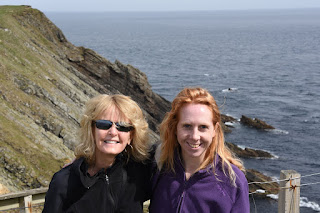
Two Hemo-Moms!

The Shetland Islands are a wind-swept, treeless, group of islands belonging to Scotland, that are carpeted with lush green, rolling hills, rugged rocks and daring cliffs that overlook the crashing North or Atlantic Sea. They are enchanting and idyllic. Having the best of the modern world—airport, hospital, cable TV and internet—they preserve a way of life not seen often in modern society. Community is paramount; civility the glue that holds communities together. You immediately take a deep breath of fresh sea air, and slow down your pace to enjoy a land where the surrounding sea seems to buffer you from cares and woes elsewhere. 

Their history is more about Nordic explorers than Scotland proper. The Viking invasion began around 800 AD, and Shetland over time became a strategic location for explorers, shippers and eventually maritime activities during the World Wars. The Norse dominated Shetland for 200 years until 1468, when James III of Scotland married Margaret, a Danish princess. As the Danish struggled to create a dowry for the princess, Shetland was mortgaged to Scotland and finally annexed in 1471. Despite that, about 60% of Shetland men stem from Norwegian (perhaps Viking?) heritage.

Puffin

My trip to Shetland actually began many years ago, when a mother from Shetland contacted me about her son with hemophilia. To assist answering her questions, I shipped her a copy of Raising a Child with Hemophilia, and our children’s books, and some things for the children, at that time numbering six—all free of charge. And so began a sweet pen pal relationship. Jan Howard is a thoughtful sender of cards, notes and photos of the children. I also love to send things by mail, so we exchanged birthday cards (home made by the children), Christmas cards and regular greeting cards. Jan always suggested I come visit and I wanted to. I had read about the Shetland Islands since a child, because of the Shetland ponies. And Jan ensured I read more by sending me books, some of which have become my favorites!

The World Federation of Hemophilia Congress is being held in Glasgow, Scotland this week, and this decided it for me. I would take a side trip before the Congress and fly to Shetland to visit Jan and the kids.

To read about a place is one thing; to visit, a lifelong memory, an experience that embeds itself in your heart and soul. What is there not to like about Shetland? With a population of only 30,000, people are polite to one another consistently, the pace of life is moderate and steady. The air is fresh, the countryside, though devoid of anything tall, and barren of trees, is stunningly beautiful. Stone cottages and stone walls landmark the horizon. Blue sky meets green land, which borders the ever-moving ocean. I was warmly greeted at the airport by David and Sandra, Jan’s parents, and Abigail, Jan’s 16-year-old daughter, who has mild factor VIII deficiency. Two other daughters have low levels of VWF.

A short drive over winding roads in the open countryside and we arrived at Jan’s pretty home, perched not far from the ocean. First order of business was to walk the gorgeous border collie Eddie, who enjoyed a brisk romp on the nearby beach! I worried even whether the children would understand me as my accent is different, but the Shetland accent is not like what you think of as a typical Scottish accent. It sounds more neutral, with some Welsh accent mixed in. In short, it’s delightful to hear!

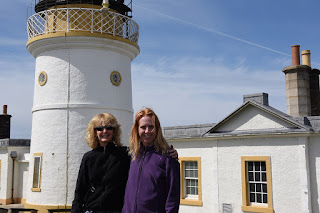
Laurie Kelley and Jan Howard at Sumburgh Lighthouse

I come from a big family myself, so to be surrounded by the loving and delightful chaos of laundry, snacks, board games, homework, happy dog, beady-eyed hamster, and chatty children were a throwback to my childhood. I lost 10 games of UNO with seven-year-old Talia. Abi and I belly-laughed  recalling hw much we enjoyed the movie Deadpool. Hillel and Talia peppered me with questions about what’s on the American dollar bill.


We had a lovely visit to the Sumburgh lighthouse, an incredible feat of engineering. Lighthouses are vital to Shetland and Scotland’s safety and made a great contribution to saving thousands of lives through the years. Jan sent me The Lighthouse Stevensons, about how the lighthouses were designed and built by the family of Robert Louis Stevenson, one of my favorite childhood authors. Excellent book! We visited a croft house, representative of the way inhabitants lived centuries ago. We spotted puffins and guillemots on the cliffs in Sumburgh, with the birds nestled into their small coves like people in a high-rise condo.

Meeting with medical team in Lerwick

I gave a talk on hemophilia and our charity work to the medical staff at the Gilbert Bain hospital in Lerwick, where Jan works as a pediatric nurse.


And we visit Yoel, 19, who has hemophilia, in Scalloway. What is it like having hemophilia and living on an island? There’s a hospital in nearby Lerwick; Yoel does receive excellent factor products, all paid for by the National Health System. One look at this over 6 ft lad is to see that he has received excellent medical care. His joints are in good shape. He is charming and fit. We walked about Scalloway, a quaint seaside community, and scaled the stone steps of Scalloway castle. While Yoel gets good medical treatment, he would still be reliant on an emergency helicopter ride to the mainland if needed. And the ambulance service in Shetland is… well, slow. There is a lack of community in hemophilia; there is only one other known family with hemophilia. I met the mother, Joanne, at the hospital, and gave her my book. It would be hard to start a chapter there, as there are only the two families.

But the families search the internet to get info and make contacts, have a great relationship with their hospital team, know the Haemophilia Society in Scotland, and Jan is attending the WFH Congress this week, for the first time. In fact, it’s her first time ever attending anything in hemophilia!

Scalloway Castle

We flew down together yesterday, and she was excited. While the five children (Yoel lives independently; Hannah is away at school) stayed with Sandra and David, the grandparents, Jan took a week off to be with her other “family,” hemophilia.

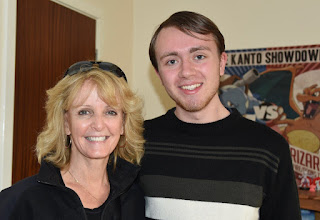
Laurie Kelley with Yoel Howard

Did I mention she is a single mom? Single, nurse, mother of seven (three of whom have bleeding disorders), living on a remote island. She also, incredibly, sponsors two children in Nepal with Save One Life.  If she doesn’t get Mother of the Year, I don’t know who would. I’m so incredibly happy to have visited her special community and to be in her country. I’m honored to have been with her family, and proud she is part of our bleeding disorder family.

You can read more about Jan next May, in PEN’s special issue on Island Life and Hemophilia.

For Mother’s Day: Some SMART Women!

Women are often the frontline defense forces in hemophilia at home. Not only do they carry the child and give birth to him or her, but they must learn about hemophilia, ensure their child gets good treatment, learn how to infuse, worry endlessly and love eternally… I know, as I have been there too!

In honor of Mother’s Day we’re sharing this article from PEN (February 2018), which highlights some amazing moms! Happy Mother’s Day to all the amazing mothers of children with bleeding disorders, and any chronic conditions! I hope you receive the special treatment this day you so deserve.

SMART Women
by Jess O’Donnell

From personal to professional, the women profiled here turned their connections to hemophilia into real, life-changing achievements. While many of us set out to complete a task, we may not label it as a goal or plot out a deliberate path to achieve it. But each of these women had a vision, implemented a plan, and plotted a path to reach her goal.

Each woman’s strategy was unique, but all the goals had something in common: they were all SMART goals. SMART goals are specific, measurable, accountable, realistic, and time-bound. Learn how Mischante, Angelie, Darlene, and Christy and Elise worked hard to get results.
 

A Better Future for Her Family
After Mischante Cortez’s son, Adam, was diagnosed with hemophilia in 2006, Mischante decided to set a goal: to become a registered nurse to better advocate for Adam’s healthcare needs. It wasn’t easy. Pregnant at age 16, Mischante had dropped out of high school. So before starting her nursing program, she needed to obtain a GED and enroll in community college. After receiving her GED and being accepted into a nursing program, Mischante divided her goal into smaller, specific steps.But her path wasn’t without obstacles. While enrolled in the nursing program, Mischante was often left with no choice but to bring her three young children to school with her because she lacked childcare.

Despite the setbacks, Mischante persevered. “I continued to strive toward my goal to be a nurse while raising three kids alone and working full-time as a certified nurse’s assistant [CNA]. In May 2010, I graduated from college with my nursing degree. It was the best decision I ever made for my family.” Today, Mischante supports her family as a working nurse and single mother. “I am Adam’s number-one advocate, and I get to heal people for a living. I am so grateful that Adam’s diagnosis of hemophilia was exactly what I needed to get into gear.”
 

A Son’s Diagnosis Prompts a Family Goal
When Angelie Garcia’s son Zayden was diagnosed with hemophilia, Angelie recognized that he was unhappy while being infused with factor. So she told her husband, “Once we’re taught by home nurses, within two weeks we will start involving Zayden.” Then Angelie set a goal to have Zayden take an active role in the infusion process within one year. Angelie and her husband divided their goal into small, attainable steps: the first was to make sure Zayden wouldn’t be afraid of infusions.
 

On their path to achieving their goal, the family’s largest setback was their location. “Our hometown hospitals need education on hemophilia,” explains Angelie. “I’m the only one here that can infuse my son, and it terrifies me because they don’t know about his condition and we are three hours away from our HTC [hemophilia treatment center].” Angelie learned very quickly that she had to be Zayden’s primary advocate for his hemophilia care. Teaching him to help in the infusion process empowered Zayden, now four years old, to be more aware of his condition. His proud mom says, “He is learning ab­out his condition and will tell you what he can and can’t do.”

Lobbying for Specialized Emergency Treatment
Darlene Shelton founded Danny’s Dose Alliance after her ten-month-old grandson was diagnosed with hemophilia. Although Danny always had his factor with him wherever he went, Darlene’s family learned that paramedics and ER workers were not allowed to administer the factor due to conflicting treatment protocols and liability fears. So Darlene sprang to action and formed Danny’s Dose with these goals in mind: (1) Raise awareness about the current gap in emergency treatment for people with rare diseases, chronic illnesses, and special medical needs; and see current protocols amended. (2) Assist with specialized education for EMS and ER personnel. (3) Provide education for affected families on how to better advocate for their treatment needs. 

The organization’s first goal was to amend protocols in the Sheltons’ home state of Missouri within two years. Darlene says, “Goals can be lofty, but I believe if you don’t set goals high, it removes some of the urgency.” After their proposed legislation was passed in Missouri, Darlene looked forward to their next goal. “We passed EMS legislation, assisted with the beginning of paramedic education, and are helping that grow in 2018 and beyond. Of course, we can’t be sure we will meet our five-year goal, but it looks promising, and we are determined to push hard.” Darlene hopes to have improved treatment protocols for ER and EMS in place across the entire US within five years of their first state, Missouri.The work of Danny’s Dose doesn’t just benefit people with hemophilia. “It benefits all individuals with special medical needs,” says Darlene, “covering rare disease and chronic illness. This covers those with rare, lifesaving meds, those with particular treatments based on their illness, and those with complex medical devices like trachs and heart-pumps.”
 

Never Too Early to Start!
It’s never too early to start teaching our children the importance of setting goals and achieving them. Christy VanBibber’s eight-year-old daughter Elise was disappointed by her neighborhood’s lack of knowledge and awareness of hemophilia. When Elise began sharing the news about her baby brother Timothy, who has hemophilia, she realized that many people didn’t know what hemophilia was. “She came home with a real concern,” Christy notes, “and asked, ‘Mom, why does nobody know what hemophilia is?’”

 
 Elise made it her goal to generate awareness in her community about hemophilia—by making and selling beaded bracelets and then donating all proceeds to the Southwestern Ohio
Hemophilia Foundation.

Christy recounts the initial success: “She made some bracelets and asked me to put them on Facebook. We decided to sell them for $3 each. Immediately she sold ten!” Elise went on to sell her bracelets at two local farmers’ markets and local football games.

Christy was thrilled. “She raised $880! Also, people recognize Elise and Timothy at school and the grocery store, asking questions and praising her for such a great job. We are really proud of her!”
All these women—and one young girl—achieved their goals fueled by close-to-home, real-life concerns, and you can too! If you want to learn how you can reach your goals this year, check out our cover story and find out how to make your goals SMART.


HemaBlog Archives
Categories