School’s out! When I remember summer days as a child, I recall being outdoors, riding my bike, taking walks in the wood, playing with my siblings… and reading. While we all get assigned summer reading lists for school, I truly enjoyed reading and would devour anything I could.
Credit: Andrea Petrlik
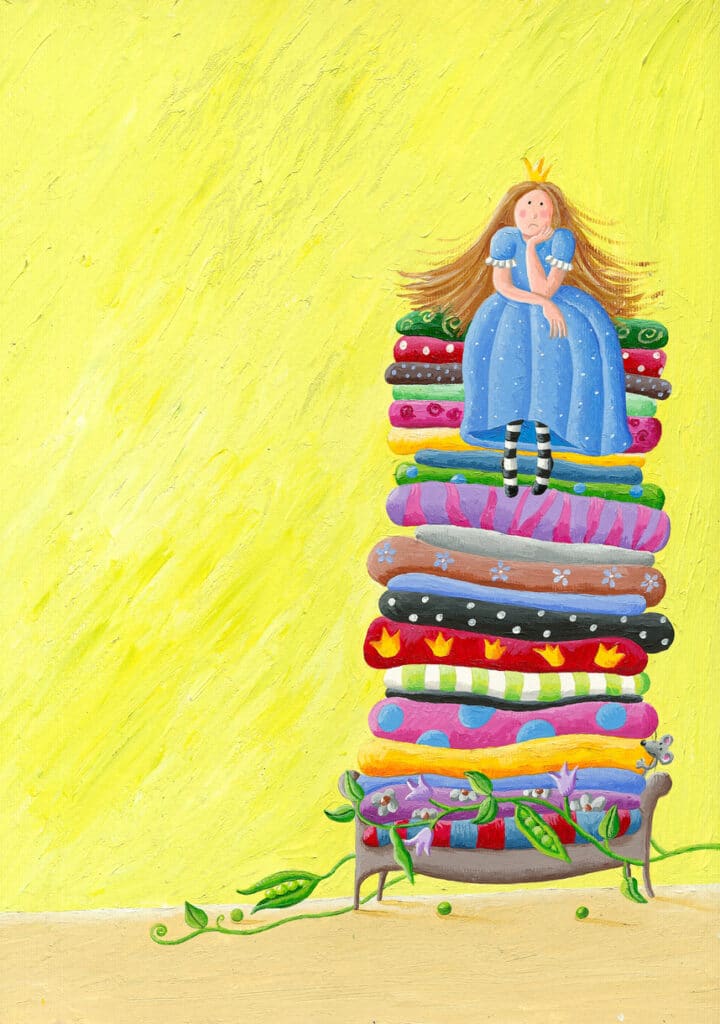
Most of us hear “fairy tales” as our first stories. Our archivist Richard Atwood of North Carolina, has a “bleeding disorder” point of view on a classic fairy tale—Hans Christian Andersen’s The Princess and the Pea.
He writes a summary: A prince, wishing to marry, searches the world to find a real princess. Unsuccessful in his search, he returns home. During a storm, a princess arrives soaking wet and claims to be a real princess. The prince’s mother, the old queen, devises a test. Servants place a pea from the garden under 20 mattresses and 20 quilts on the bed they make up for the princess to sleep upon. She believes that only a real princess would be sensitive enough to feel a pea buried under so many mattresses.
The next morning, the princess complains that the bed kept her awake and made her black and blue all over! The test proves that she is a real princess. And the prince proposes marriage.
Apparently, Hans Christian Andersen (1805-1875) equates sensitivity with being an alleged real princess. The underlying bruising is ignored. Women with bleeding disorders can relate to the etiology of bruises being misdiagnosed for many years.
Whether fiction, nonfiction or fairy tales, be sure to read this summer!
Source: Hans Christian Andersen, 1984, The Princess and the Pea. Illustrated by Dorothee Duntze. New York, NY: North-South Books. 22 pages.
Two weeks ago we told the story of a mother in Madagascar with two boys with hemophilia, and the challenges she faces. This week we look at what happens with assistance, when those challenges are met head on with help from the national hemophilia organization with international help. Meet Reinniel and be inspired!
Breaking Barriers, Achieving Dreams
by France S. Alviz June 14, 2024
“My disability doesn’t define me, it refined me.”— Reinniel John Cruz
“He won’t be able to graduate because he has hemophilia. He can’t achieve anything with his condition.” These words can leave a lasting impact. Such phrases can deeply affect individuals, dimming their hopes and aspirations for a brighter future.
Fortunately, Reinniel John Cruz transformed these words into the motivation he needed to excel in his studies. However, this fierce determination and commitment did not come easily to Reinniel.
Living with severe Hemophilia A in the province of Nueva Ecija, Philippines, Reinniel recalled the numerous instances when he felt like giving up on his education due to the challenges posed by his bleeding disorder.
As the fourth child among ten siblings, Reinniel was brought up by his widowed mother alongside his two brothers also affected by hemophilia. However, the challenges increased when his diabetic mother experienced a mild stroke. Seeing his primary carer, whom he relied on heavily, suffering took a toll on him causing him to falter. He also faced another setback when he had to pause his studies during the pandemic, pushing him further into desolation and hopelessness.
When all things seem to have fallen apart, Reinniel reignited his hopes and dreams after a conversation with one of the people he looks up to – Kay Ferrer, HAP’s Vice President, who also has a son with a bleeding disorder.
Asked with a simple question, “Would you like to get back to school and continue your studies?” Reinniel grabbed the opportunity to prove that his ability is stronger than his disability.
Through the years of financial assistance from Save One Life and the scholarship granted by his Kay to cover his tuition fees, Reinniel finally completed his Bachelor’s Degree in Information Technology in June 2024.
In a heartfelt facebook post, he shared graduation pictures along with a message of gratitude to all who stood by him during his journey.
He gave special thanks to his siblings for their hard work to support his dream, to Roy Luis De Guzman, HAP NE’s chapter leader, for aiding him with the necessary medical care, and the rest of their chapter for the guidance and encouragement.
He also expressed deep appreciation for his mentor and companion throughout his hemophilia journey – Jeff Rodriguez, who inspired him and his siblings to strive and conquer challenges despite having a life-long condition like hemophilia. Reinniel extended his immense thanks to HAP President, his Andrea Trinidad, for going above and beyond in empowering him and the rest of the hemophilia community. He valued the guidance and learnings they’ve imparted, enabling him to become self-reliant.
To his fellow hemos, Reinniel leaves them with an encouragement: “Having a disability should not limit us from pursuing our dreams. The suffering we experience now due to hemophilia, let’s use that as motivation to excel in our studies and reach our goals. There are people who have it worse than us. If they can do it, so can we.”
Despite the hurtful words from people who only saw his limitations, Reinniel responded with hope and resilience, leveraging what he has– the support of a community that lifts and empowers one another so they can rise above life’s challenges.
You too can help a person with hemophilia earn a degree and reach their dreams. Click here to DONATE OR SPONSOR a student today.
I’ve been doing a lot of gardening this spring, and have come across helpful and lowly creatures like snails, earthworms and spiders.
This got me thinking of other helpful creatures, like… maggots.
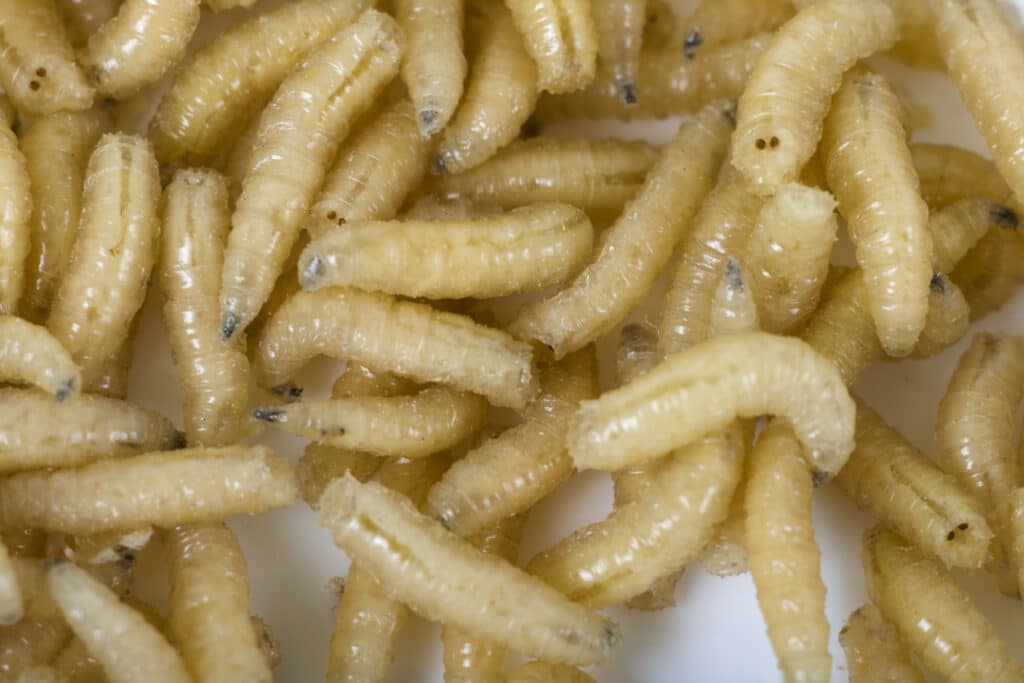
I detest flies with all my heart. But I realize that maggots—the larva form of flies—have had many uses to both animals and humans. They break down carrion; they eat dead flesh from wounds when there is no other treatment. And they have been used historically to treat complications from hemophilia.
Excerpted from our national archivist, Richard Atwood, from North Carolina:
In 1937, Frederick J. Pohle MD and Stephen Maddock MD at the Thorndike Memorial Laboratory and Harvard Medical School in Boston, Massachusetts reported on the treatment of an infected wound with maggot therapy in a severe case of hemophilia. I.G. was a single, nineteen-year-old, 150-pound, Jewish youth who was first diagnosed as being a “bleeder” at age six when a small cut on the buccal mucous membranes bled for twelve days. The symptoms of easy bruising were followed by frequent hemarthroses in his knees, ankles, and elbows. There was no family history of hemophilia.
Earlier in 1932, an attempt to forcefully correct a bent left knee resulted in a severe hemorrhage that was controlled with three blood transfusions. Then a hemorrhage developed in the left calf muscles, the posterior skin broke down, and the extensive infected wound did not completely heal for one year even with constant care by the physicians.
I.G. had recurrent hemorrhages into both knees and had not walked for the previous five months. On January 18, 1937, I.G. was admitted to the hospital with the chief complaint of “swollen knees.” There was moderate effusion in both knee joints and restricted motion due to pain. An x-ray examination revealed chronic degenerative arthritis. With the patient confined to bed, the knees were treated with radiant heat and active and passive exercises. After a spontaneous hemorrhage into the right calf muscles on February 4, the leg was elevated, immobilized, and packed with ice. Then two transfusions totaling 500 cc. of whole citrated blood during the following 44 hours stopped the bleeding and opiates relieved the pain. The lower right leg was swollen to three times its normal size. After several large blisters containing brown fluid developed on the posterior side of the right leg, a sterile dressing was applied daily. The blisters ruptured on the twelfth day discharging large amounts of blood-tinged liquid. The calf developed a deep denuded area measuring 6 by 15 cm. and the back of the knee developed a lesion that refused to heal due to pressure necrosis and low-grade infection. The right knee, with a 25 degree flexion deformity, was treated with baking and massage, and the drop right foot was treated with electrical stimulation.
At five weeks after hemorrhage the infected wounds were not healing. There was a daily fever between 100° and 102° F. Maggots—yes, maggots— were then placed in the infected wounds with additional maggots added daily as necessary. The dressings were changed daily. One week later, the patient’s temperature dropped to normal and much of the old blood clot and necrotic material had been removed by the maggots. The wound measured 4.5 cm. in depth and exposed the gastrocnemius muscle. Maggot therapy continued for four weeks entirely clearing up the infection and rapidly healing the wound. A clean granulating area of 1 by 5 cm. remained that was treated with an application of warm boric acid packs and was healed in two weeks. There was no evidence of bleeding during maggot therapy. After three months of therapy, the wound was healed. I.G. became ambulatory and was discharged on May 8, 1937.
In 1963, C.B. Kerr MB at the University of Sydney, Australia, reported a case with R.D., a 32-year-old with mild factor IX deficiency. A rotary mower injured his right big toe. R.D. had bleeding from at least six lacerations and had a severe staph infection. Even with wound cleansing, local hemostatics, adequate plasma for 72 hours and appropriate antibiotic therapy, control of the hemorrhage and infection required 14 days in the hospital. After another 14 days, amputation was considered necessary. Then during a hot weekend, several maggots developed within the dressing and thoroughly cleaned the wound. Healing was complete in ten days.
Maggots helped clean wounds in people with hemophilia. The abominable fly was proven to have a place in helping those with injuries, hemophilia or not, and an important role in medicine.
References:
Kerr CB. 1963 The Management of Haemophilia. Glebe, New South Wales, Australia. Australasian Medical Publishing Company Limited.
Pohle FJ and S Maddock. 1937 Maggot therapy in an infected wound in hemophilia. Journal of the American. Medical Association 109:2055-6, December 18.
Located off the southeast coast of Africa, Madagascar is the fourth largest island in the world. It is famous for its unique wildlife. Since gaining independence from France in 1960, Madagascar has experienced political instability. The economy is supported by exports of paddy rice, coffee, vanilla and cloves. Despite a wealth of natural resources and active tourism industry, it remains one of the world’s poorest countries, and suffers devastating cyclones. It is heavily dependent on foreign aid—and this includes hemophilia. With a population of just over 29 million, life expectancy is only about 68 years. Nearly 60% of the population is under age 25. Health expenditure is 3.9% of GDP (compared to 17.3% in the US).
This is a little story about me. My name is Arindra Ravelojaona. I was born December 16, 1975 in the Region of Tulear, in south west Madagascar.
I just have one youngest brother without hemophilia. My parents were simple people. I’ve finished high school in 1994 and I liked learning English language. But I lost my father when I was 20 in 1995. My mother was a housewife, earning no income, and because of the death of my father I couldn’t follow my studies. I had to help my mother for everyday living.
Arindra: A mother who never gives up
So I got married at age 24 and had a baby girl in 1998. In 2001, I had Mikaela, my first son.
When he was three, in 2004, we have decided to circumcise Mikaela. It was performed at the hospital, but then a problem started—the blood didn’t stop. My husband and I went back to thie hospital where the doctor sutured him, but it was still bleeding. Mikaela had blood transfusion everyday for about five weeks.
At that time my husband and I worked with the Shattenbergs, a missionary family (that’s why I know a little about English). They helped us by sending us to Antananarivo, the capital of Madagascar, through “Helimission.” We went from the hospital here in Majunga, to the airport, got in the small plane of the Helimission, and ninety minutes later arrived at the airport of Antananarivo. Thirty minutes later, we were at the one the biggest hospitals in the capital: HJRA, a large children’s hospital.
One again Mikaela had surgery and we continued with the blood transfusion. The medical team did some analysis there and sent the results to the “Institut Pasteur.” We waited until he recovered and finally had the result: hemophilia B.
Mikarla’s father couldn’t accept the diagnosis. The doctor explained to us what our son had, and that our son inherit it from me. Two years later, in 2006, my husband left me and my two children for another woman. By grace I had a job at the French school next to our house, so I could feed my little family.
Years went by and in 2009, I met someone. He accepted to walk with me and my kids, and we got married in 1992. I gave birth to a second son, Toky Hir’Aina, in 1993, but the same problem happened again. When he started to crawl, he had bruises on his knees and we knew that he has hemophilia too.
In 2019 we decided to circumcise our boy. Fortunately by then a rich family that had a son with hemophilia decided to build the Malagasy hemophilia association: “Association pour le Bien Etre des Hémophiles à Madagascar” (ABEHM), which is now affiliated with the World Federation of Hemophilia. So we had some boxes of factor IX at that time because their son has severe hemophilia B.
Mikaela
Toky
So Mikaela, my first son, didn’t receive factor IX until he was eleven years old. My second son received it since he was little. When we have planned to circumcise him, we had time to prepare him. We had almost a one week’s supply of factor IX and then we did the surgery.
We had to stay at the hospital until he recovered, for almost 20 days. Ten days after we were back home, my second husband decided to leave us also, telling me: “I’ve lost my time with you. You didn’t say the truth to me. This boy won’t be normal. I need to have a normal boy.” These were his words in court; he was asking for a divorce.
That was the worse day that I’ve ever had. I cried all day long for a long time. But God is in control; I didn’t give up. We passed through Covid-19 and I found a new job at the Anglo Franco School where I work until now. I work for 28 hours a week and I earn $1.50 per hour. That gives only $42 a week. So I had to find an extra job. In total, now I get double this amount every month.
But if I calculate all the expenses, it’s $250 per month for house rental, school and college fees, food and medicine. But most of the time I don’t earn that amount.
Since January 2024, we eat twice per day: a small breakfast and lunch. If there is a leftover, we take it at dinner time. Costs are increasing every week. And sometimes I have debts.
One sad story is about Mikaela, because of the lack of enough factor IX, he couldn’t continue his studies. He has only finished primary school. He had bleeding and pain with his knees; he was in a wheelchair for two years [2014-2016] and then we did physical therapy and he walks now. But when he feels tired his knees and ankles swell; all his joints are hurting him.
He is clever; he has a keen mind about computers. But because of his condition, he stays at home and help with the household. Toky Hir’Aina, his little brother, has just finished primary school.
He is in grade 6. He is really intelligent. He was the first in his class for the three first periods.
I asked God every day to help me with “angels” that He will send to our life; to help us to face the expensive life. As you know, Madagascar is one of the poorest states here in the Indian Ocean.
But it doesn’t mean that I will give up—no, no, no!
Some other boys with hemophilia in Madagascar
I am single now and I am not going to find another problem. I am focused on the future of my kids. I’m taking care of Mikaela and Toky Hir’Aina and my mum, who is 74 years old. She is a big help, because she helps at home. We had a real problem for the last nine months because, it was August 2023 when the boys last had factor IX.
Previously, we participated in the annual camp for the family and the patients, but because of our financial situation and the lack of factors, we didn’t attend.
I’m a volunteer of the Regional Antenna of our national organization here in the North West of Madagascar. There are few boys with hemophilia A and B here and they are also having a hard time.
I will always try to do and give the best I can do. But it’s not enough. I’m asking anyone reading this to help through their kindness, to help us with living expenses. Thanks a lot for reading. I hope that God will answer my prayer through all of you.
If you are interested in helping one time, please contact me: laurie@kelleycom.com
May is the month of Mother’s Day, and also is Mental Health Awareness Month.
To finish up the month, I want to give a shout out to Debbie de la Riva, mother of an adult son with hemophilia and dear friend, and licensed professional counselor, who created a program to help raise awareness of mental health issues in our community, as well as ways to address them. Her program is an invaluable resource. As we know, any chronic disorder must be treated medically. But mental health is important as well.
Photo credit: Believe Ltd.
Debbie has been an active member of the bleeding disorder community for over 25 years. She served as executive director of the Lone Star Chapter of NHF, was a co-chair of an NHF Annual Meeting, received a Ryan White Award for Advocacy Excellence, and has presented on mental health issues to chapter and national organizations. In 2018, Debbie founded “Mental Health Matters Too” as a way for helping community members who struggle with mental health challenges.
She has many podcasts and interviews available on line, listed below, that can offer insights into what people with bleeding disorders must endure, besides the pain of bleeds and infusions.
Thanks to Debbie for her dedications, as a mother and professional and community member!
To contact Debbie: www.mentalhealthmatterstoo.com or debbie@mhmtoo.com, (832) 689-9434