Laurie Kelley

Honoring a Special Mother

Mother’s Day…  a special day for mothers of children with chronic disorders, like hemophilia. The sacrifices and suffering they endure creates women of strength and compassion, and they deserve to be celebrated.
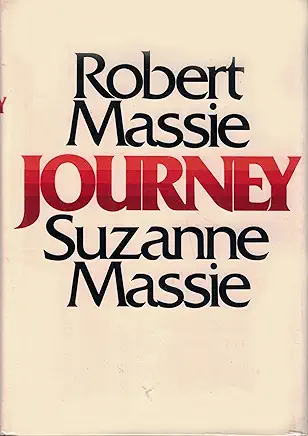
A perfect book to read this week is Journey, by Robert K. and Suzanne Massie, first published in 1973. The intimate story of a young couple facing the diagnosis of hemophilia in their infant son, Journey has become a classic in hemophilia. It is, arguably, the first book written about hemophilia. It slowly unveiled the suffering and disruption hemophilia causes, and what life with hemophilia was like before the advent of clotting factor. The story is written in alternating chapters by Robert and then Suzanne. They each have distinctive styles. Robert shares the history of hemophilia, the genetics, the science behind it and the treatment. He also delves into the blood banking industry, and the shocking policies and politics of blood. Suzanne shares the family’s story, day to day, and the exquisite pain a mother experiences while watching her son suffer through the night.

But these are not ordinary parents. Robert K. Massie is a Pulitzer Prize winning author, and having a son with hemophilia and being a writer at Newsweek, led him to research and eventually write Nicolas and Alexandra, the captivating masterpiece about the last Tsar of Russia, whose son also had hemophilia. It reads at once like a great historical novel, highlighting the tragic love story between the two royals, and postulates how hemophilia might have contributed to the downfall of the empire and the take-over by the Bolsheviks. Suzanne helped research and edit the book extensively, and in time, became an expert on Russian culture and history. The family gained notoriety when the book was published and then made into a Hollywood movie.

The story concludes when their son Bobby is 18. Later editions included an update: Bobby survived, contracted HIV and hepatitis C, attended Ivy Leagues colleges and became an Episcopalian minister. He also became a social activist (most notably against South Africa’s apartheid system) and a politician, running for Lieutenant Governor of Massachusetts, and later, the US Senate. He has dedicated his life to public service and has accomplished so much.

Suzanne, his mother, became an author in her own right, on Russia, and later became President Ronald Regan’s advisor on Russia during the Cold War! She could never have seen where her journey as a young mother of a child with hemophilia could have taken her.

As mothers of children with hemophilia, we know the limitations our sons can sometimes face. Reading Journey makes you appreciate what is possible, how much we as women can endure as mothers, and gives hope that despite the suffering, crippling, hospitalizations, pain and days or weeks lost from school or work, all things are possible. Suzanne is an extraordinary mother who raised an extraordinary son. 

Bobby eventually was cured of hemophilia with a liver transplant, and is the father of three adult children. His father has passed away; Suzanne still lives on, in her 90s, in Maine. Journey is out of print and a lone copy on Amazon is prived at $100. I have one copy that I am happy to ship to anyone in my database in the US, for free. Email me at laurie@kelleycom.com

Mothers Focus on Mental Health: Meet BD SUMHAC

May is the month of Mother’s Day, and I want to highlight this week and next two very special mothers and their cause: mental health in those with bleeding disorders.

Those of us who had sons born in the late 1980s found that the community was focused intensely on the devastating impact of HIV. Children and young men who were infected were suffering and dying. When the blood supply was tested and cleaned; when ten thousand were gone; when the lawsuits settled… our community looked to making products safe. When that was accomplished, we looked at joint damage. When that was conquered and prophy became the norm, we had to deal with insurance issues—and still are.

What got overlooked among all the pressing issues? Mental health.

Any chronic disorder must be treated medically. But mental health is important as well.

This year, a mother from the New England area, Kate Bazinsky, announced a new program to address substance abuse in particular. New England has been hard hit with deaths from substance abuse in the general population. Pain and suffering from a chronic disorder like hemophilia, can lead to abuse as well. From Kate’s exciting email:

“The Bleeding Disorders Substance Use and Mental Health Access Coalition (BD SUMHAC) emerged from tragedy. A young man with a bleeding disorder facing a substance use disorder was repeatedly denied access to behavioral health facilities. Without access to the treatment he needed, he overdosed and died. His death shocked the bleeding disorder community, and exposed a critical equity gap in behavioral health access.

“In response, a team of passionate community members, representing both national and local bleeding disorder organizations, took action and BD SUMHAC was born. BD SUMHAC’s mission is to advocate for access to appropriate substance use disorder and mental health treatment facilities for all individuals with bleeding disorders, with a focus on inpatient and residential facilities. We provide resources, tools and advocacy for providers, people with bleeding disorders, and their loved ones.

“Join us in bridging gaps for the bleeding disorders community!

“Since day 1, the commitment and dedication of BD SUMHAC’s team members to breaking down barriers to behavioral health access has propelled the work forward at a remarkable rate. In its first two years, BD SUMHAC made presentations at more than fifty in-person and virtual events to raise awareness both inside and outside the bleeding disorders community. From its first meeting with ten people, BD SUMHAC has grown to over sixty team members from twenty-nine states united in mission and it’s making a difference.

“In addition to the lives that have been changed by this work, BD SUMHAC has made significant progress at the policy level. Visit the website to learn more about the impact we have had as a community!”

What a way to celebrate Mother’s Day by celebrating the achievement of this group in making a difference, for all sons, for all children, for all people with bleeding disorders and substance issues.

Congratulations to Kate and her team and happy Mother’s Day!

You can reach Kate at kbazinsky@bdsumhac.org

Hemophilia and Poetry

To finish up National Poetry Month, let’s consider two more poets with hemophilia.

by Richard J. Atwood

To me, poetry specializes in the efficient expression of emotions and descriptions. It condenses writing into a purer form. You might compare poetry to the fractionation and purification of blood plasma to get the purest factor proteins, but I guess that metaphor would be a stretch.

Though I’m not an expert, I admire well-written poetry. Take time to read the exceptional works by the following poets who happen to have hemophilia.

Read My Mind by Jerome Stephens

Kildanore Press, 1990

Jerome Stephens (1955–1993) was born in Ireland with mild factor VIII deficiency. As he grew up, he was careful to avoid physical injuries and unnecessary knocks, and became a strong and robust young man who enjoyed outdoor activities. Living in Dublin, Jerome married and had children. In 1982, he underwent an appendix operation and was treated with contaminated factor concentrate imported from America. He was diagnosed with AIDS in 1987.

            Jerome was an artist who expressed himself through sculpture and poetry. But he is better known for speaking out publicly—the first to do so openly for a television camera—about how AIDS had ravaged his life and family. With encouragement from his hemophilia nurse, Jerome published Read My Mind, a collection of 52 poems that includes photographs of six wooden sculptures carved by the poet. He does not mention hemophilia. Instead, his poems emphasize his struggles, and how his love and religion, along with his family and friends, strengthened him to fight.

            Jerome wanted to speak on behalf of all Irish people with hemophilia and AIDS. His poems still capture that desire. After he died, his daughter spoke on his behalf in 2000, giving emotional testimony at the Lindsay Tribunal, after which those infected with HIV or their families received a financial settlement.

4:56: Poems by Carlos Fuentes Lemus

Dalkey Archive Press, 2012

Carlos Fuentes Lemus (1973–1999) was born to a literary family: his father, Carlos Fuentes, was a Spanish-language Mexican novelist and ambassador to France; his mother, Silvia Lemus, was a journalist. Carlos was a Mexican citizen who grew up mostly in Princeton, New Jersey, with short stays in various American cities where his father taught.

            Carlos was factor VIII deficient and was infected with HIV by 1985. Carlos was a bright student, but never finished high school. He immersed himself in literature (mainly English) and in music. His interest in pop culture and the arts led him to become a writer, poet, photographer, painter, and movie director.

            Carlos wanted to publish his first book of poetry after E. Shaken Bumas solicited several of his poems for the Minnesota Review in 1999. Bumas helped to record over 50 of Carlos’s poems that were to be used as the soundtrack for Carlos’s unfinished movie Gallo de Pelea. Unfortunately, Carlos died before completing those projects. Instead, his poems were posthumously published in 4:56: Poems. Written in English with some Spanish words and syntax, the poems delve into imaginative interpretations of youthful experiences. There is no mention of hemophilia in these lively poems that seem almost experimental or unfinished. Carlos also collaborated with his father on the book Retratos en el Tiempo (1998), in which his father wrote profiles of famous people he knew and Carlos took their photographs.

Poetry is an international genre that appears in many forms. These two poets with hemophilia did not have to include their bleeding disorder in what they wrote, but having it possibly sparked their passion to write. Maybe you’d like to express yourself in a poem? Go ahead! Dream, compose, write.

This review originally appeared in the Parent Empowerment Newsletter, May 2016

The Hemophiliac’s Motorcycle

April is National Poetry Month, and it’s time to recognize one of the bleeding disorder community’s top poets: Tom Andrews. Tom passed away in 2001, at age 40, of complications of a blood disease, but also had hemophilia. His poetry reflected the pain he often felt due to his disorder—he won several awards for his poetry.

Tom grew up in Charleston, West Virginia, and seemed destined for fame. He was recognized in the Guinness World Book of Records for clapping for fourteen hours and thirty-one minutes—at age 11! He wanted to be a stand-up comedian. And he raced in motocross as a teen, but that ended wjhen he learned he had hemophilia following an accident.

He was a man of many talents: comedian, daredevil, copy editor for Mathematical Review, a journal for mathematicians, physicists, statisticians, etc. Talk about right brain and left brain!

But he is best remembered for his poetry. I had the deep pleasure of meeting Tom, and sharing correspondence with him for a time.  He sent me several copies of his work, include Codeine Diary: True Confessions of a Reckless Hemophiliac (Little, Brown, 1998), a memoir.  

In an online bio of Tom, his work is described here: “In this second wise and passionate book, Tom Andrews explores illness as a major theme, avoiding sentimentality without being merely confessional. He advances his considerable talent with great strength and forcefulness. The poems are buoyant with humor and mindful of larger mysteries even as they investigate very personal issues. There is an urgency that is compelling; the work is immersed in the private grief of the speaker without excluding the reader. There is real and hard-won wisdom and intelligence in the poems, offering genuine surprises and delight; their attractive humility is not a pose.”*

A man who knew suffering, but was not afraid to embrace the world, and reveal his soul. Isn’t thay the essence of beautiful poetry?

Here is an exceprt from The Hemophiliac’s Motorcycle:

… may [the Lord] adore each moment alive in the whirring world,

As now sitting up in this hospital bed brings a bright gladness of the human body, membrane of web and dew

I want to hymn and bide by, splendor of tissue, splendor of cartilage and bone,

Splendor of tail-like spine’s desire to stretch as it fills with blood

After a mundane backward plunge on an iced sidewalk in Ann Arbor,

Splendor of fibrinogen and cryoprecipitate, loosening the blood pooled in the stiffened joints

So I can sit up, of sit up in radiance, like speech after eight weeks of silence,

And listen for Him in the blood-rush and clairvoyance of the healing body…

It’s National Poetry Month. Read some. It’s good for your mind and soul!

*https://uipress.uiowa.edu/books/hemophiliacs-motorcycle

World Hemophilia Day

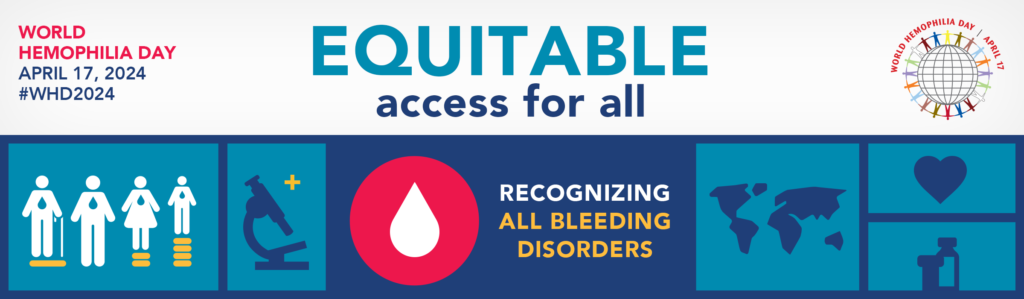
April 17 is the birth day of Frank Schnabel, a California businessman who, over 60 years ago, founded the World Federation of Hemophilia (WFH). All across the globe on April 17, the hemophilia community celebrates unity, that we are one family united by a protein deficiency that causes prolonged bleeding and suffering. It’s called “World Hemophilia Day.” The theme of this year’s day is “Equitable Access for All.”

We are divided only in access to treatment. Up to 75% of the hemophilia global community has no access to factor. We are trying to close the “gap,” as the WFH puts it, by donating factor medicine to those in need.

Help continue to unite the world hemophilia community. Donate unused or unwanted in-date factor to Project SHARE, and the rest to me! We will find a good home for it overseas. Sponsor a child with hemophilia in poverty through Save One Life. Give back to those in need, and to honor those who have gone before us.

HemaBlog Archives
Categories