Our Hemophilia Cyborg!
We often refer to our guys with hemophilia as superheroes. And so many truly are: whether they survived exposure to HIV in the 70s, or overcame an inhibitor, or live with an inhibitor, or have had surgeries or many surgeries. Their endurance, their tolerance for pain, their ambitions are heroic.
But how about a guy with hemophilia who helps create a superhero?
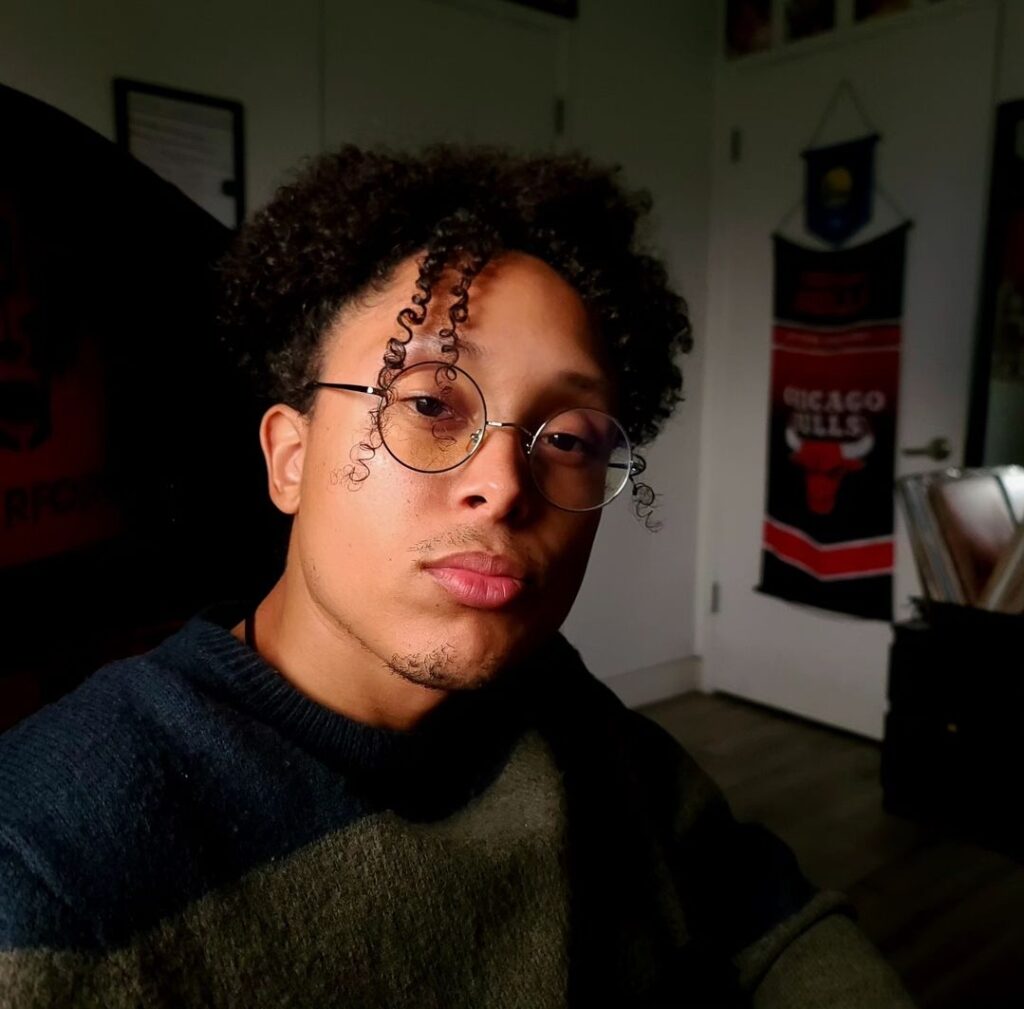
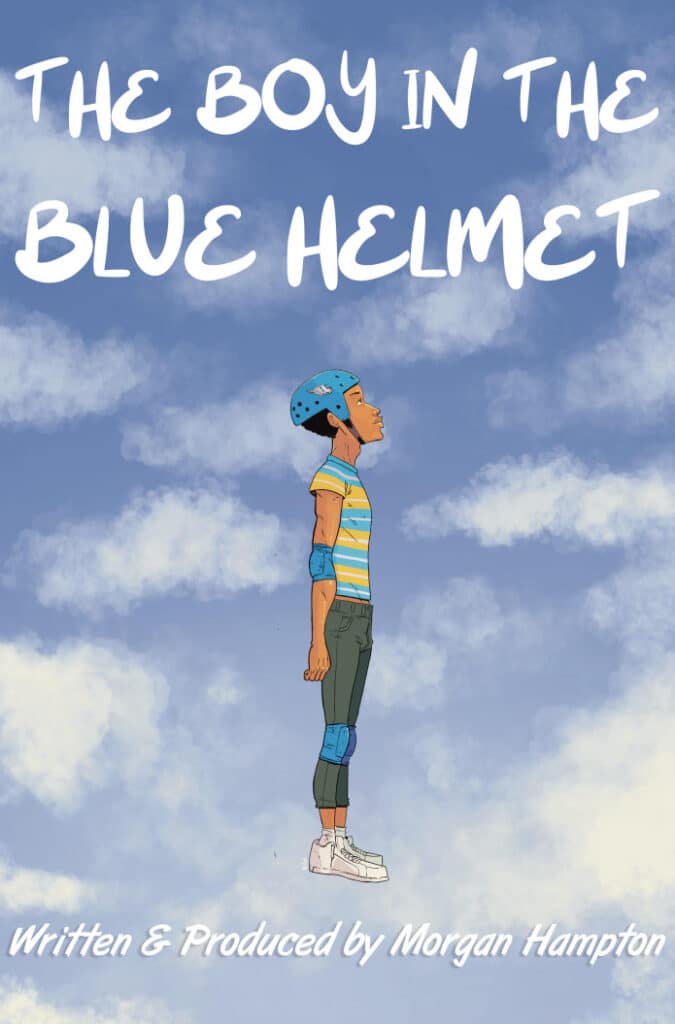
Meet Morgan Hampton, a 31-year-old with hemophilia, who astoundingly creates the text for DC Comics’s character Cyborg. Personally, I loved Cyborg from the 2021 movie “Justice League.” What a great job to have! In addition, Morgan is a third-year student of Writing and Producing for Television at Loyola Marymount University in Los Angeles. He’s working on his Master’s Thesis, an animated film about a young man with hemophilia: “The Boy in the Blue Helmet.” We’re helping to fund this project, which I know will be wonderful. Read our Q&A with Morgan below and be inspired!
When did you first know you wanted to be a writer?
The first thing I wanted to be as a child was a Power Ranger. And I wanted that for an embarrassingly long time. In hindsight, I think I always knew that I wanted to be a writer. I started making my own comics when I was eight. But I didn’t internalize that I wanted to write as a career until I got to college. Once I realized that, everything became clearer because I suddenly had a singular goal to strive towards.
Have you always been drawn to the superhero world? Or was this an opportunity that came out of the blue?
Yes, definitely. Comics, specifically superhero comics, are the only reason I read as a child. Novels couldn’t keep my attention, but comics had really cool pictures that kept me very engaged.
As I got older and paid more attention to the stories and the characters, superheroes presented an escape to a world where people with traumatic backstories, and devastating injuries could overcome that and use it to their advantage, saving the world and their communities along the way. Seeing that as a young person with hemophilia was very important to me.
What significant challenges did you face as a child?
The challenges I faced as a child were more mental and emotional than physical, I’d say. I’m a mild hemophiliac, and I was born in 1993, right around the time they started to make major breakthroughs in medication. Oddly enough, the bleeding and needles and medication has always felt normal to me. Because hemophilia is something you’re born with, this is all I’ve ever known, so there wasn’t any adjustment I had to make. The adjustment was trying to fit my very not “normal” life into a normal one.
My uncle also had hemophilia. He was one of the many with hemophilia who contracted HIV/AIDS in the 80s, ultimately succumbing to it in the 90s.
My mother had grown up watching my uncle struggle with hemophilia during a time when he did not have the same safety nets that I have had in my life. Informed by what he went through, my mom wanted to create as safe an environment as possible for me as any mother would. But it was hard for me to understand why I couldn’t go out and do the things my friends got to do. I didn’t like feeling different, and that was probably the hardest part for me. So I was stuck at home watching television, reading comic books, and playing video games. I know that doesn’t sound like the worst thing ever, but when you’re told you can’t do certain things over and over again, it starts to bother you.
How does it feel to be a writer for a great character like Cyborg in the DC Universe? What does Cyborg represent or mean to you personally?
Writing Cyborg is truly a dream come true. He was one of my favorite superheroes growing up, and to get to add to his mythology is the honor of a lifetime. No one ever breaks it down this way, but Cyborg is a differently abled person. He’s got bionic appendages. Sure, those bionic appendages grant him superhuman abilities, but at the end of the day, he’s a person that has to learn how to navigate this world in a different way because of his physical circumstance. That’s something that I’ve always resonated with.
Now I get to add a little bit of my own sensibilities, living in the world with a bleeding disorder that makes me have to navigate life differently, and apply that to one of my favorite characters. It’s the best feeling in the world.
How do you hope your film “The Boy in the Blue Helmet” will be understood by young people with hemophilia? What do you hope the message will be?
My film is an attempt to capture the emotional truth of what it feels like to grow up with hemophilia. Aspects of it are surreal, and off-kilter because honestly, that’s what having hemophilia feels like. I can twist my ankle and watch it swell to the size of an orange in minutes. To medicate, I have to poke myself with needles. Some people use ports. That’s inherently surreal.
So my goal for this film is to make hemophiliacs feel seen and heard. We aren’t represented much in film and television and when we are, it isn’t usually an accurate representation. And for everyone else, I want to share what our perspectives living with hemophilia looks like. We are constantly in pursuit of peace, of stability, and often through just trying to make sure we are as safe and secure as possible, the people that we love and care about can lose sight of the fact that we just want to feel normal.
Where do you think these amazing career opportunities will take you in later years?
My hope is to carve out a consistent creative career where I can work as a writer in many mediums whether it be film, television, comic books, anything really. I just want to write, and to live comfortably while doing so. I’m lucky enough to have found what I believe to be my purpose. So I just want to keep feeding into that as much as possible.
What message in general do you want to give to young people with hemophilia?
Something my mom always used to tell me when I would get down about my hemophilia and the limitations it had on my life is that everyone has something that they are dealing with. That made it easier to cope with my circumstance, knowing that others had their own personal things that they were going through. It made me feel less alone.
Not only is it okay to be different, it’s cool. It’s not always going to be easy, but you always come out stronger on the other side of adversity.
Listen and watch Morgan as he describes his project, and contribute if you can!
Also, Morgan’s Cyborg series will be collected into a book that comes out April 2, 2024. Preorder here!