Laurie Kelley

A Mother’s Day Reflection

While flower gifs and happy photos abound today on Mother’s Day, and hemophilia moms wish one another a happy day, a couple of thoughtful mothers on Facebook remind us with kind words that it’s not that kind of celebratory day for many mothers. There are mothers who have lost their children to hemophilia, or HIV; some to suicide. I know one mother who lost her young man with a bleeding disorder in the Thousand Oaks mass shooting in California. And there is just the loss of babyhood… our children have grown up, moved away, no longer “need” us. Loss is loss.

I recall this wonderful essay from years ago, from Anna Quindlen, Newsweek columnist and author. It’s a great essay to remind us to enjoy the journey while we can. Tomorrow may be too late. And it’s never too late to enjoy now!

Anna Quindlen, from Loud and Clear, Ballantine Books; Reprint edition, March 29, 2005.

“All my babies are gone now. I say this not in sorrow but in disbelief. I take great satisfaction in what I have today: three almost-adults, two taller than I am, and one closing in fast. Three people who read the same books I do and have learned not to be afraid of disagreeing with me in their opinion of them, who sometimes tell vulgar jokes that make me laugh until I choke and cry, who need razor blades and shower gel and privacy, who want to keep their doors closed more than I like. Who, miraculously, go to the bathroom, zip up their jackets and move food from plate to mouth all by themselves. Like the trick soap I bought for the bathroom with a rubber ducky at its center, the baby is buried deep within each, barely discernible except through the unreliable haze of the past.

“Everything in all the books I once poured over is finished for me now. Penelope Leach, T. Berry Brazelton, Dr. Spock. The ones on sibling rivalry and sleeping through the night and early-childhood education, have all grown obsolete. Along with Goodnight Moon and Where the Wild Things Are, they are battered, spotted, well used. But I suspect that if you flipped the pages dust would rise like memories. What those books taught me, finally, and what the women on the playground taught me, and the well-meaning relations–what they taught me, was that they couldn’t really teach me very much at all.

“Raising children is presented at first as a true-false test, then becomes multiple choice, until finally, far along, you realize that it is an endless essay. No one knows anything. One child responds well to positive reinforcement, another can be managed only with a stern voice and a timeout. One child is toilet trained at 3, his sibling at 2.

“When my first child was born, parents were told to put baby to bed on his belly so that he would not choke on his own spit-up. By the time my last arrived, babies were put down on their backs because of research on sudden infant death syndrome. To a new parent this ever-shifting certainty is terrifying, and then soothing. Eventually you must learn to trust yourself. Eventually the research will follow. I remember 15 years ago poring over one of Dr. Brazelton’s wonderful books on child development, in which he describes three different sorts of infants: average, quiet, and active. I was looking for a sub-quiet codicil for an 18-month old who did not walk. Was there something wrong with his fat little legs? Was there something wrong with his tiny little mind? Was he developmentally delayed, physically challenged? Was I insane? Last year he went to China. Next year he goes to college. He can talk just fine. He can walk, too.

“Every part of raising children is humbling, too. Believe me, mistakes were made. They have all been enshrined in the, ‘Remember-When- Mom-Did Hall of Fame.’ The outbursts, the temper tantrums, the bad language, mine, not theirs. The times the baby fell off the bed. The times I arrived late for preschool pickup. The nightmare sleepover. The horrible summer camp. The day when the youngest came barreling out of the classroom with a 98 on her geography test, and I responded, “What did you get wrong?” (She insisted I include that.) The time I ordered food at the McDonald’s drive-through speaker and then drove away without picking it up from the window. (They all insisted I include that.) I did not allow them to watch the Simpsons for the first two seasons. What was I thinking?

“But the biggest mistake I made is the one that most of us make while doing this. I did not live in the moment enough. This is particularly clear now that the moment is gone, captured only in photographs. There is one picture of the three of them, sitting in the grass on a quilt in the shadow of the swing set on a summer day, ages 6, 4 and 1. And I wish I could remember what we ate, and what we talked about, and how they sounded, and how they looked when they slept that night.

“I wish I had not been in such a hurry to get on to the next thing: dinner, bath, book, bed. I wish I had treasured the doing a little more and the getting it done a little less.

“Even today I’m not sure what worked and what didn’t, what was me and what was simply life. When they were very small, I suppose I thought someday they would become who they were because of what I’d done. Now I suspect they simply grew into their true selves because they demanded in a thousand ways that I back off and let them be. The books said to be relaxed and I was often tense, matter-of-fact and I was sometimes over the top. And look how it all turned out. I wound up with the three people I like best in the world, who have done more than anyone to excavate my essential humanity. That’s what the books never told me. I was bound and determined to learn from the experts. It just took me a while to figure out who the experts were.”
Waste not, want not

According to Wikipedia, and many other sites, the US is the largest consumer group in the world, with spending about 69% of our GDP. We are the engine that drives global progress. With consumerism comes waste, of course, and we also reign in that. We generate more waste than any other nation with 4.5 pounds of “municipal solid waste (MSW)” per person per day.

When it comes to hemophilia, we produce the most factor, and we use the most factor. We represent only 4% of the world’s hemophilia population but consumer about 33% of the world’s factor. Do we also waste it?

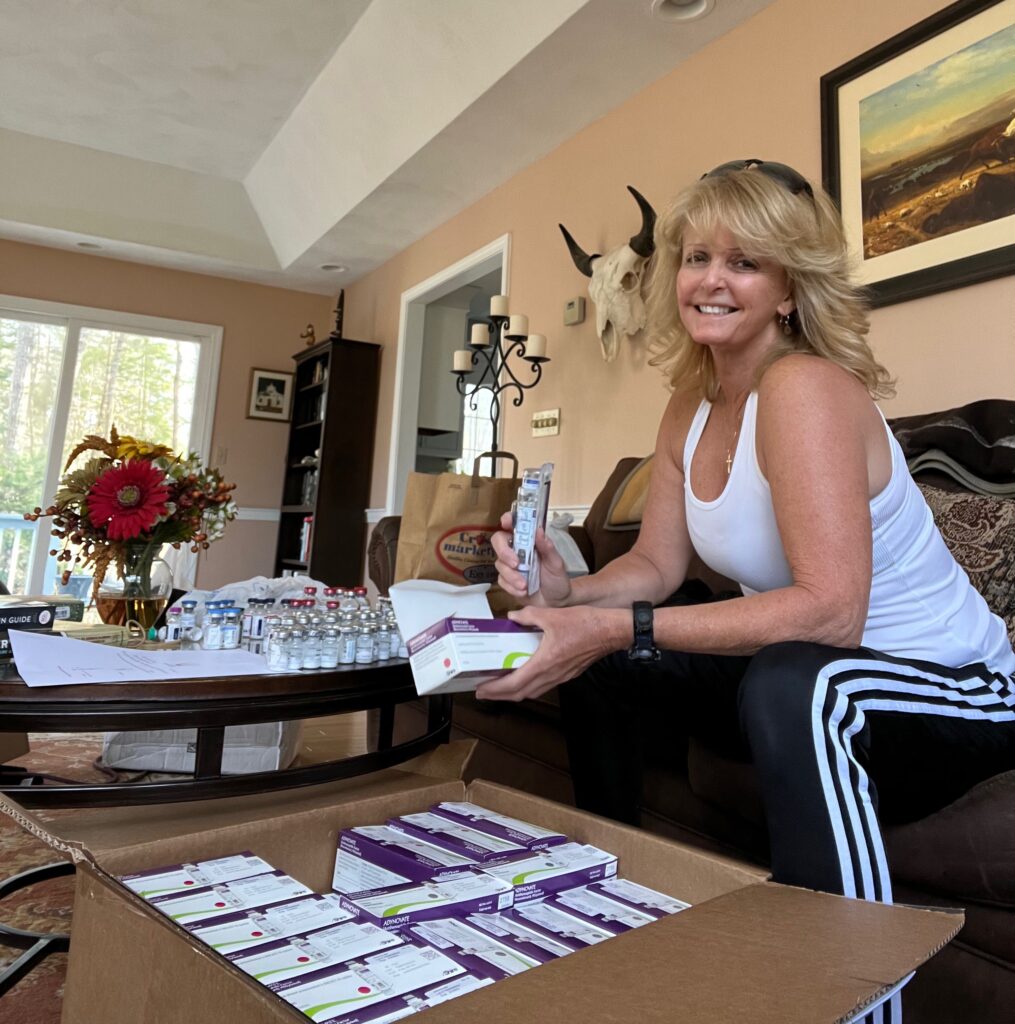
The factor keeps coming in!

I think we used to. But now, we have a means to recoup unwanted and unused factor. In 1996 I started collecting factor that normally would have been destroyed. What started as 30,000 IU (back then, about $30,000 worth) has grown exponentially. Save One Life, the nonprofit I founded, collects about 7 million IU annually. Its current market value must be about $14 million if the donations instead were sold commercially. And it’s shipped out to about 35 countries each year (70 different ones in total).

And I collect the rest.

I can’t bear to waste anything and am always looking for ways to provide value and keep from adding to our consumer waste. It was amazing to learn how much factor is out there that no one wants.

Why is that? New products primarily. It used to be donations from loved ones who died from HIV; families would donate their factor. Then it was inhibitors; if ITT didn’t work, if a standard factor didn’t work, people would send to me. Now it’s mostly new products, which are coming on fast and furious.

How fast and furious? When I returned home from two weeks in the Caribbean (where I hand delivered about 250,000 IU), I found I had another 1 million IU shipped to me. In two weeks.

In just two months, March and April, I was donated 2 million IU, all from specialty pharmacies, patients and a few HTCs. With the new products and gene therapy, this would be a banner year for donations.

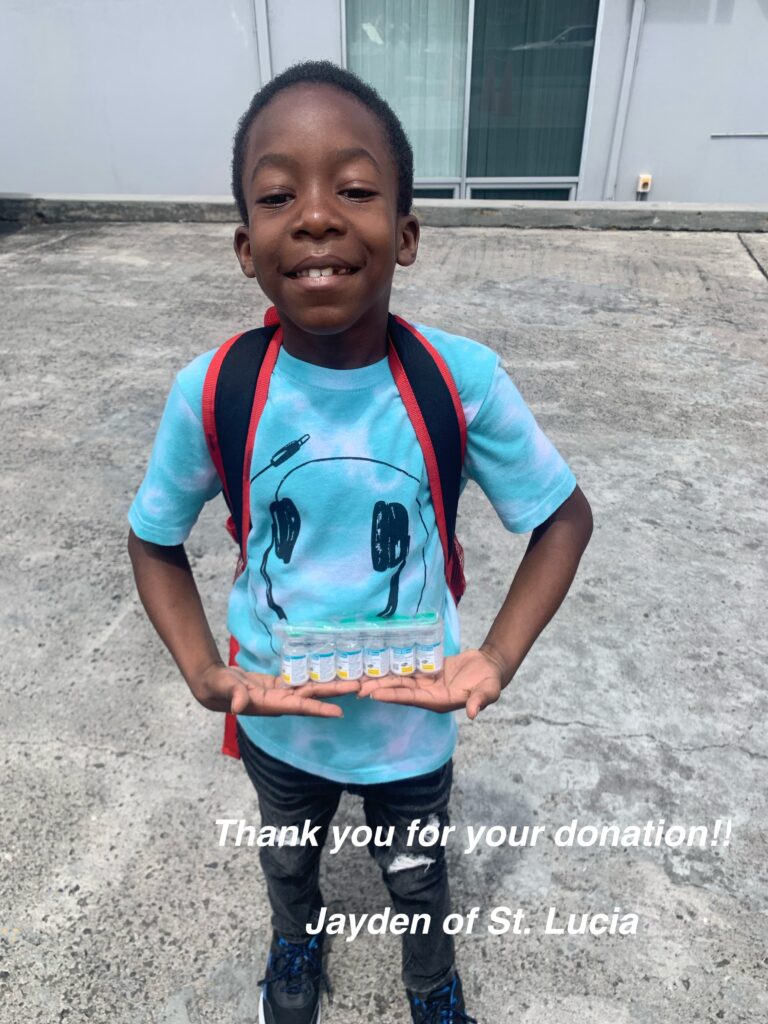
And what do I do with it? I ship it to patients all over the world. To some countries where there are no hemophilia programs or national organizations at all (like many of the Caribbean islands). To places where factor is available, like in Vietnam, but only at the major cities and hospitals, far from where many of the patients live. Thanks to FedEx, we get the factor there in no time.

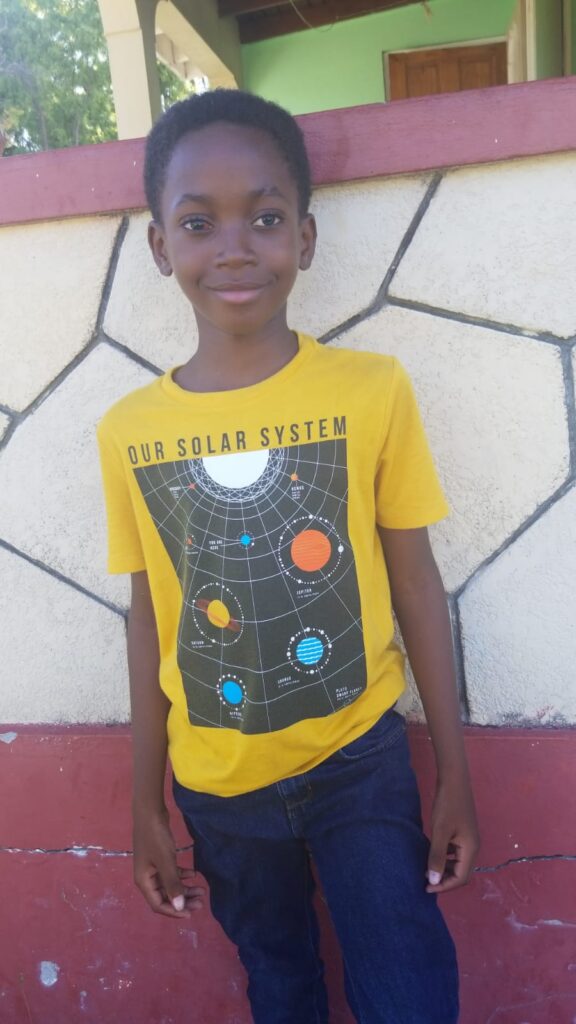
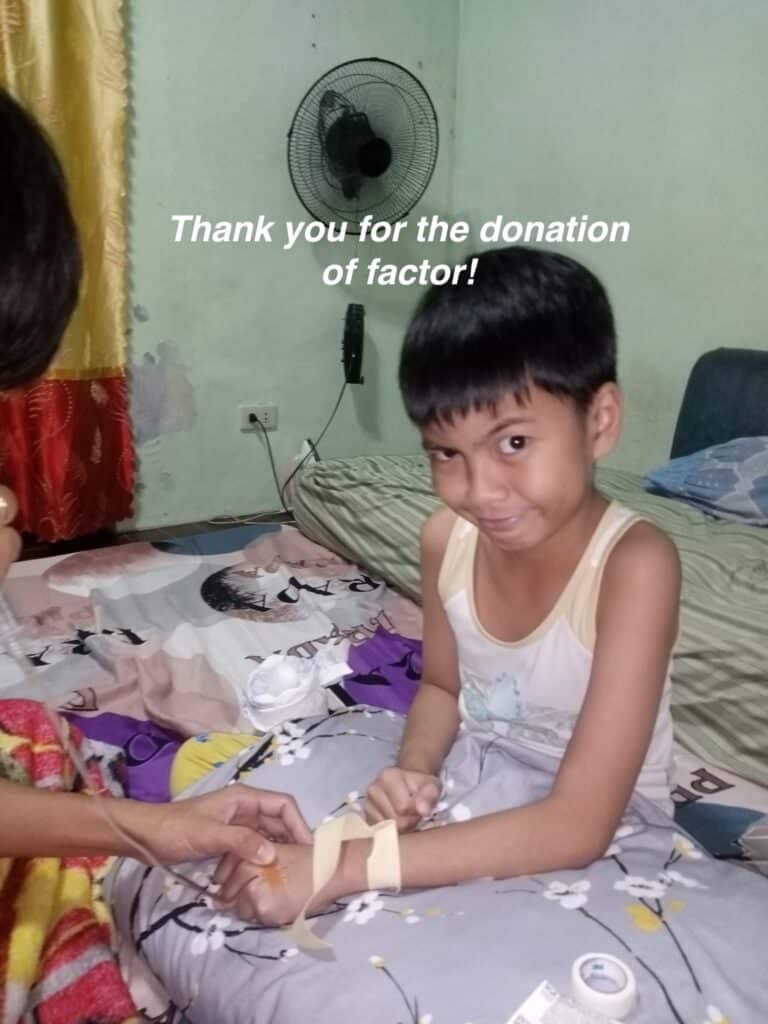
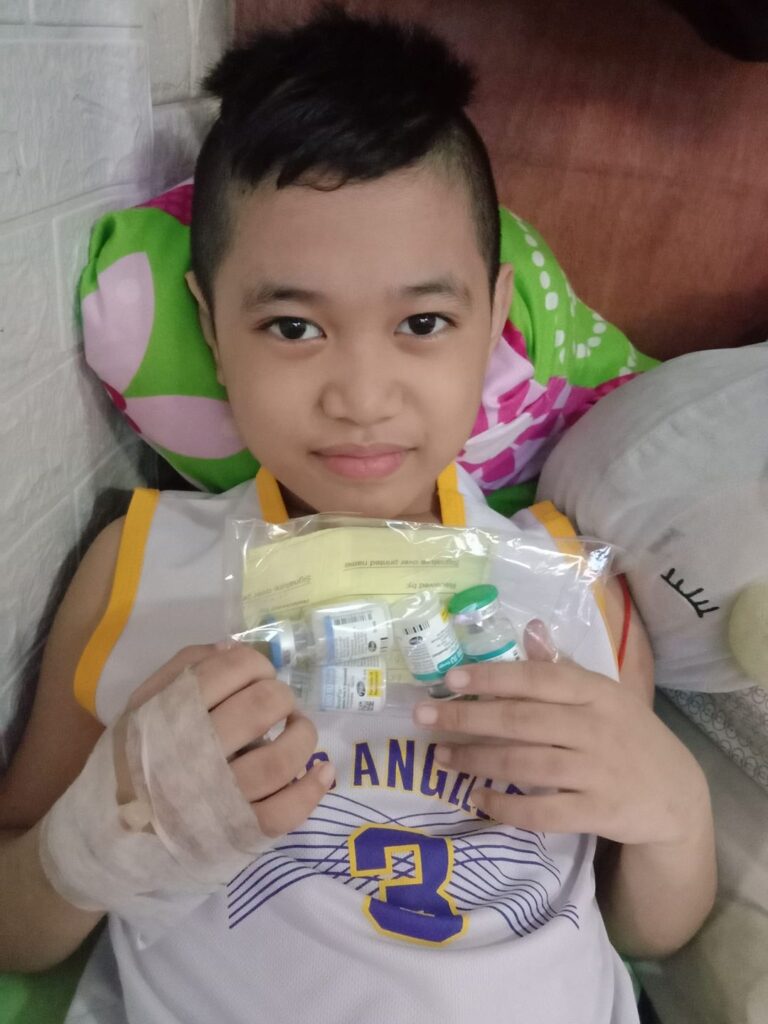
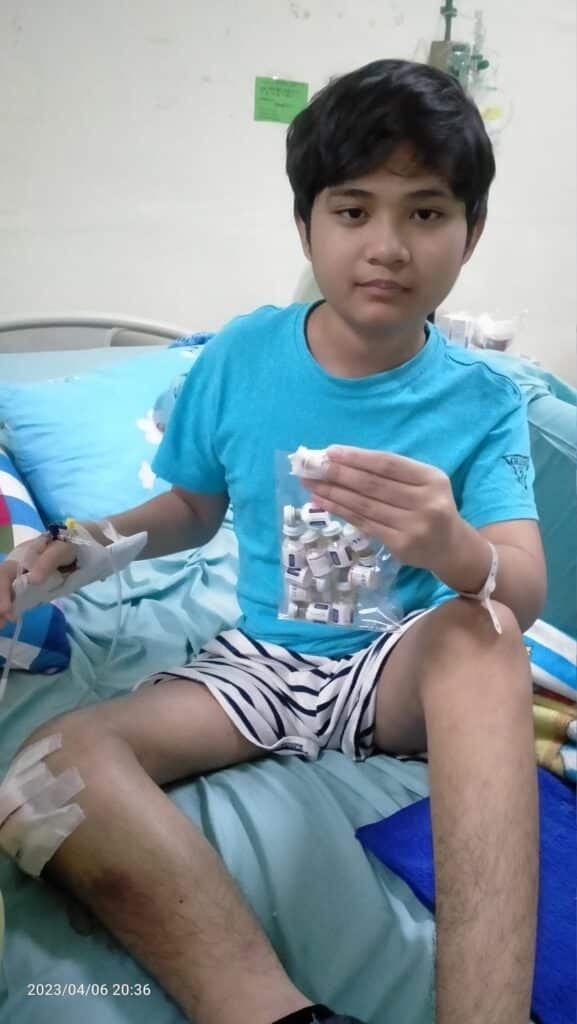
It has been a godsend for so many. So I want to thank all of you for your donations. With each donation, I send a personal thank you note and a photo of a child you helped, like these boys below.

Consumerism isn’t all that bad, when we can truthfully pledge, “Waste not, want not.” Lives depend on it.

The Poem of a Prince with Hemophilia

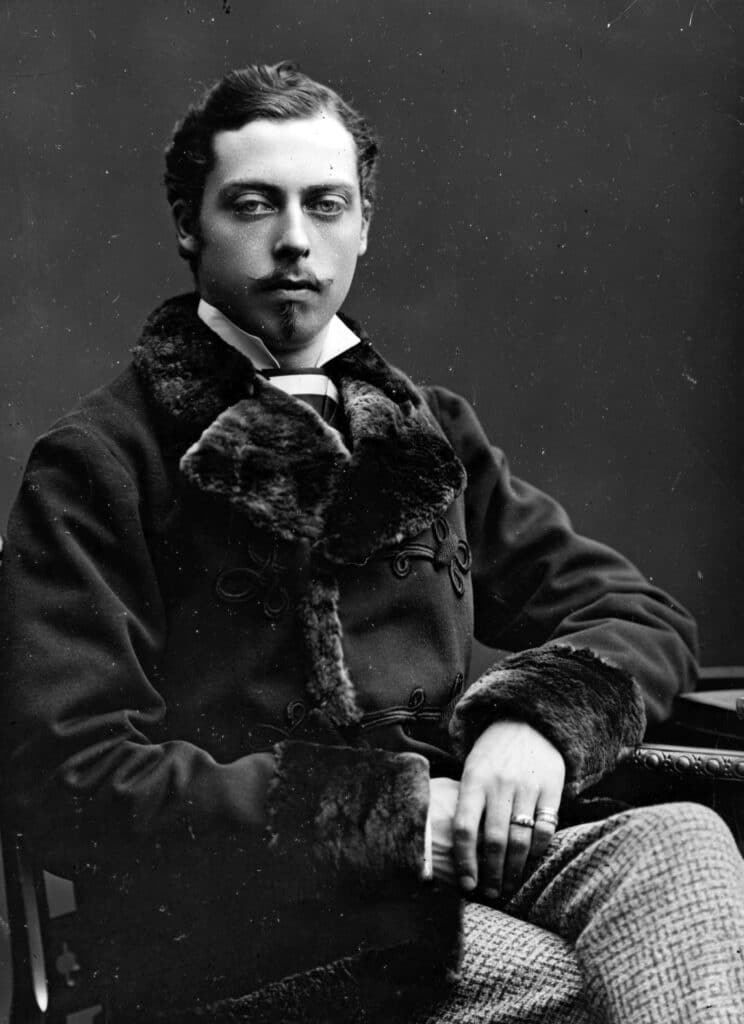
Prince Leopold (1853 – 1884), Duke of Albany. (Photo by Hulton Archive/Getty Images)

The first prince with hemophilia that we know of historically was Leopold, youngest son of Queen Victoria, and eighth of nine children. He was born on April 7, 1853. His birth was remarkable because he was the first royal child delivered with the aid of chloroform. This was administered by one of my personal heroes, Dr. John Snow, who also cracked the mystery of cholera in 1854 in London, during a savage outbreak, and pretty much launched the science of epidemiology and public health.

And because its National Poetry Month, we will publish a poem to Prince Leopold! This poem is from Colin S.K. Walker’s (Editor) 1993 book William McGonagall: A Selection. William McGonagall, born in 1825 in Edinburgh, published three collections of verses, and died in 1902. McGonagall is a terribly mocked Scottish poet. As the editor explained: “McGonagall’s poetry is undeniably dreadful, always sinking to new depths, just when you think you have hit rock bottom.” Ouch!

So yeah, it’s a pretty bad poem! But it is about Prince Leopold, a prince who had hemophilia, who died at age 30, after bleeding from a fall. At his funeral they played one of my favorite hymns (and that of Sir Ernest Shackleton), “Lead Kindly Light.” Let’s hope a better poem is written for King Charles III’s Coronation next month!

THE DEATH OF PRINCE LEOPOLD

ALAS! noble Prince Leopold, he is dead!
Who often has his luster shed:
Especially by singing for the benefit of Esher School,-
Which proves he was a wise prince, and no conceited fool.

Methinks I see him on the platform singing the Sands o’ Dee,
The generous-hearted Leopold, the good and the free,
Who was manly in his actions, and beloved by his mother;
And in all the family she hasn’t got such another.

He was of delicate constitution all his life,
And he was his mother’s favorite, and very kind to his wife,
And he had also a particular liking for his child,
And in his behaviour he was very mild.

Oh! noble-hearted Leopold, most beautiful to see,
Who was wont to fill your audience’s hearts with glee,
With your charming songs, and lectures against strong drink:
Britain had nothing else to fear, as far as you could think.

A wise prince you were, and well worthy of the name,
And to write in praise of thee I cannot refrain;
Because you were ever ready to defend that which is right,
Both pleasing and righteous in God’s eye-sight.

And for the loss of such a prince the people will mourn,
But, alas! unto them he can never more return,
Because sorrow never could revive the dead again,
Therefore to weep for him is all in vain.

‘Twas on Saturday the 12th of April, in the year 1884,
He was buried in the royal vault, never to rise more
Until the last trump shall sound to summon him away.

When the Duchess of Albany arrived she drove through the Royal Arch,-
A little before the Seaforth Highlanders set out on the funeral march;
And she was received with every sympathetic respect,
Which none of the people present seem’d to neglect.

Then she entered the memorial chapel and stayed a short time
And as she viewed her husband’s remains it was really sublime,
While her tears fell fast on the coffin lid without delay,
Then she took one last fond look, and hurried away.

At half-past ten o’clock the Seaforth Highlanders did appear,
And every man in the detachment his medals did wear;
And they carried their side-arms by their side,
With mournful looks, but full of love and pride.

Then came the Coldstream Guards headed by their band,
Which made the scene appear imposing and grand;
Then the musicians drew up in front of the guardroom,
And waited patiently to see the prince laid in the royal tomb.

First in the procession were the servants of His late Royal Highness,
And next came the servants of the Queen in deep mourning dress,
And the gentlemen of his household in deep distress,
Also General Du Pia, who accompanied the remains from Cannes.

The coffin was borne by eight Highlanders of his own regiment,
And the fellows seemed to be rather discontent
For the loss of the prince they loved most dear,
While adown their cheeks stole many a silent tear.

Then behind the corpse came the Prince of Wales in field marshal uniform,
Looking very pale, dejected, careworn, and forlorn;
Then followed great magnates, all dressed in uniform,
And last, but not least, the noble Marquis of Lorne.

The scene in George’s Chapel was most magnificent to behold,
The banners of the knights of the garter embroidered with gold;
Then again it was most touching and lovely to see
The Seaforth Highlanders’ inscription to the Prince’s memory:

It was wrought in violets, upon a background of white flowers,
And as they gazed upon it their tears fell in showers;
But the whole assembly were hushed when Her Majesty did appear,
Attired in her deepest mourning, and from her eye there fell a tear.

Her Majesty was unable to stand long, she was overcome with grief,
And when the Highlanders lowered the coffin into the tomb she felt relief;
Then the ceremony closed with singing “Lead, kindly light,”
Then the Queen withdrew in haste from the mournful sight.

Then the Seaforth Highlanders’ band played “Lochaber no more,”
While the brave soldiers’ hearts felt depressed and sore;
And as homeward they marched they let fall many a tear
For the loss of the virtues Prince Leopold they loved so dear. (pp. 89-93).

We’re Giving Away to Celebrate the Day!

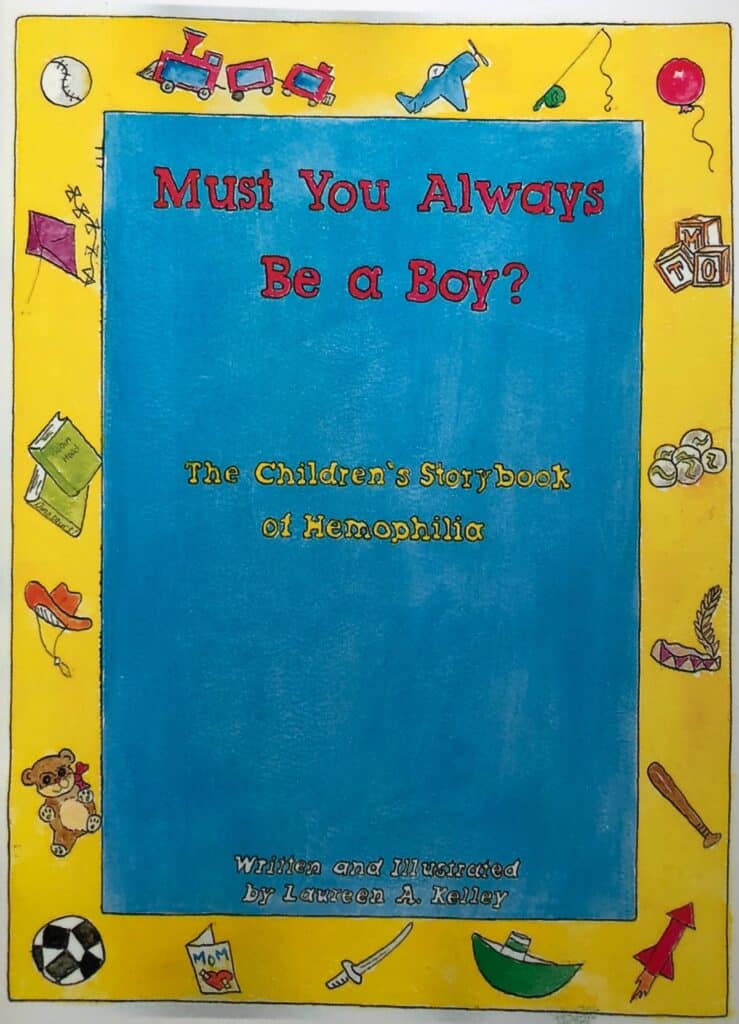
World Hemophilia Day, that is, in rhyming fashion! To celebrate, we are giving away copies of the first children’s storybook on hemophilia, Must You Always be a Boy? I created it over 30 years ago for my child with hemophilia when I realized there were no books for our children. I guess now it’s a “classic”!

Told in rhyming fashion, Dr. Seuss-style, the book contains four humorous and endearing stories for children to help them cope with hemophilia. The first is about over-reactive adults (namely, a well-meaning police officer!). The second, about a very active little boy! The third, about sibling rivalry; and the fourth—and my favorite—about a little monster who is bullied, but comes to realize he is stronger than he thinks.

The books are all based on real people (except for the monsters!).

The book has always been free, but for the first 50 people who email me, there is free shipping in April.

So email me today! And celebrate the day! (It rhymes!). laurie@kelleycom.com.

HemaBlog Archives
Categories