Laurie Kelley

Operation Shake Down
No lingerie, just butterflies

I must have been watching too much Border Patrol on YouTube, a TV show that highlights detainments and inspections of tourists into Australia. It’s really fascinating how they profile people through body language, looking for certain tell-tale signs of nervousness. Australia is tough on controlling substances it allows into the country to protect its fragile agriculture. And to stop the flow of drugs from countries in Asia. And to stop people from entering trying to find work illegally.

It got me thinking, for once in 27 years, that I should declare “pharmaceuticals” on my customs form when I enter a country. Often when I travel to a country where there are known and trusted hemophilia patients, I try to bring some factor.

On this trip, I’m visiting two islands: one does not provide any factor at all for its patients, and one does, but not enough. I brought about $200,000 worth for one country, and about $50,000 worth for another.

And due to what I checked off on the customs form, I got flagged. In the 27 years I’ve been bringing in factor, I’ve been stopped a handful of times only: Pakistan, Russia, Argentina, Jamaica, Haiti. Most customs agents are sympathetic when I say it’s for bleeding disorder patients, and that their country does not buy the needed drugs, and that mine are donations.

But only twice have I ever been “shaken down” for money to allow the product through. This means not legally—as in I’d be fined by the government—but money to go into the customs agent’s pocket. I would never give a bribe for donated factor.

And this customs (I’m not saying which country) is basically a wooden box with a rubber stamp and a bored official with no visitors and too much time on his hand.
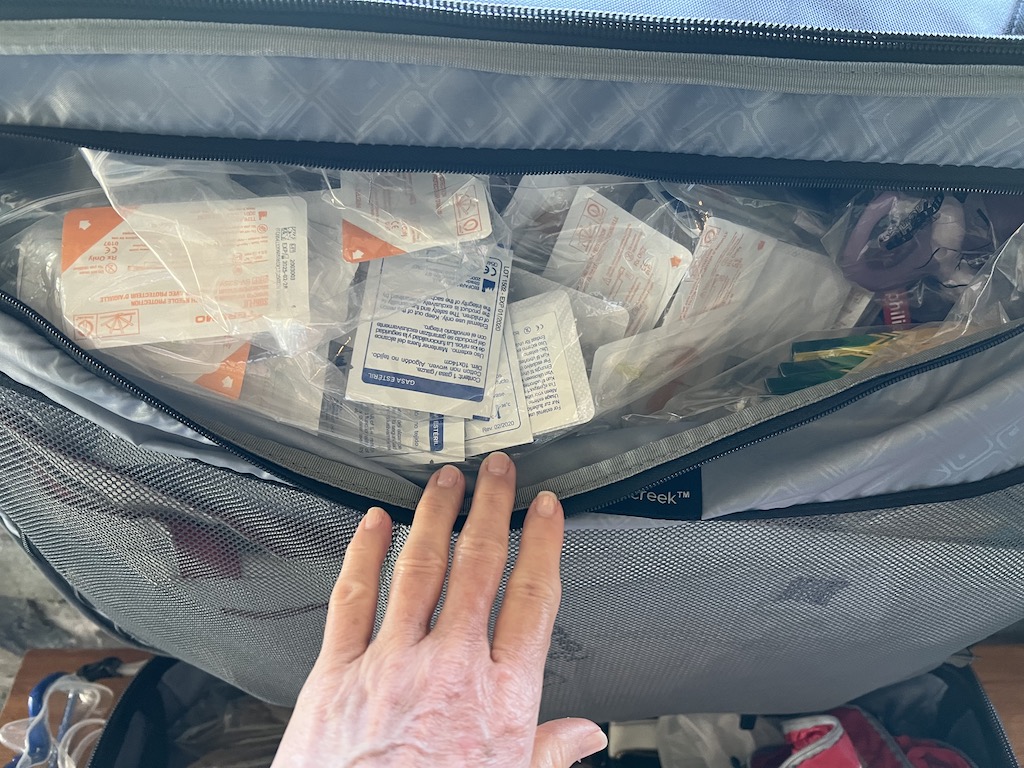
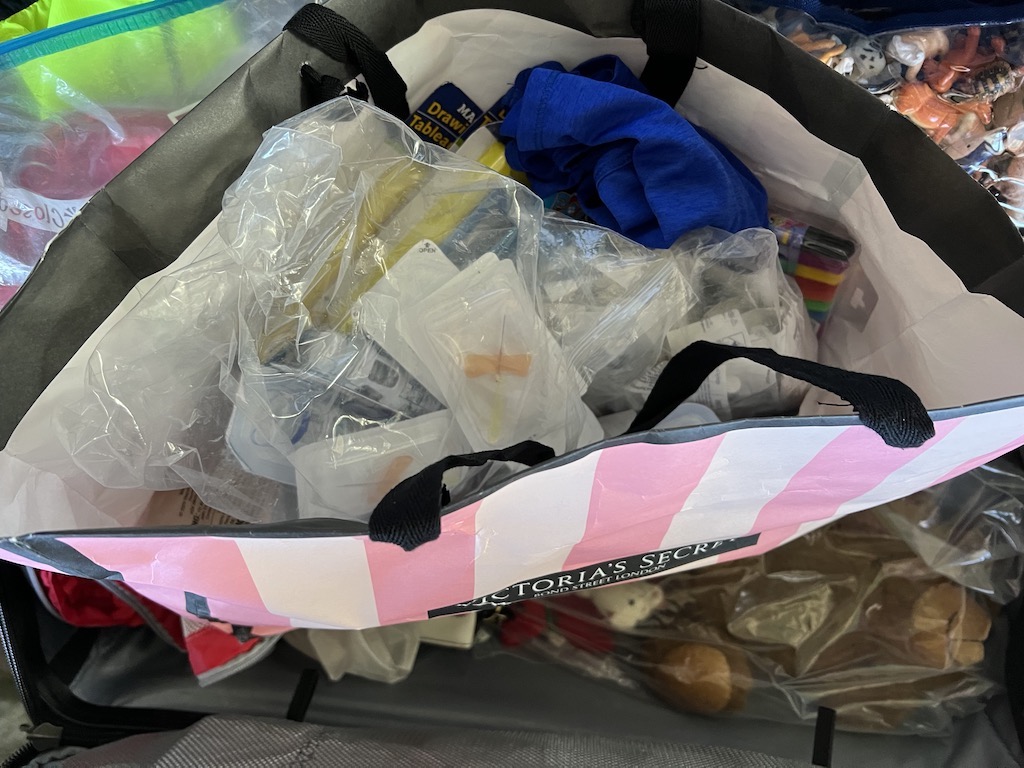
“Let me see the product,” he asked. And I opened my suitcase, which also held: a teddy bear, stuffed animals, lots of packages of crayons, some toys, a red ball. “For the kids on the island,” I offered. And lots of factor in a Victoria Secrets’ bag.

I explained about the drug, who it was for, what it meant, but he replied, “Everything has a value. How much is it worth to you?”

I knew immediately what he was saying, but played dumb. “It’s worth nothing. It can only be used by the patients with hemophilia.”

A little stand off ensued, with him posturing, maybe expecting a woman would be afraid of him, and me… smiling.

Just like the shake down several years ago, different country, he waved me through. And our patients with hemophilia are getting their donated medicine.
Barbados… Holding

The bustling airport, the long lines, new hotels popping up… all speak to a brisk tourism that provides the tiny island nation of Barbados with a staggering 17.5% of its $4.8 billion GDP. But hemophilia remains a quiet part of this country of 281,000.

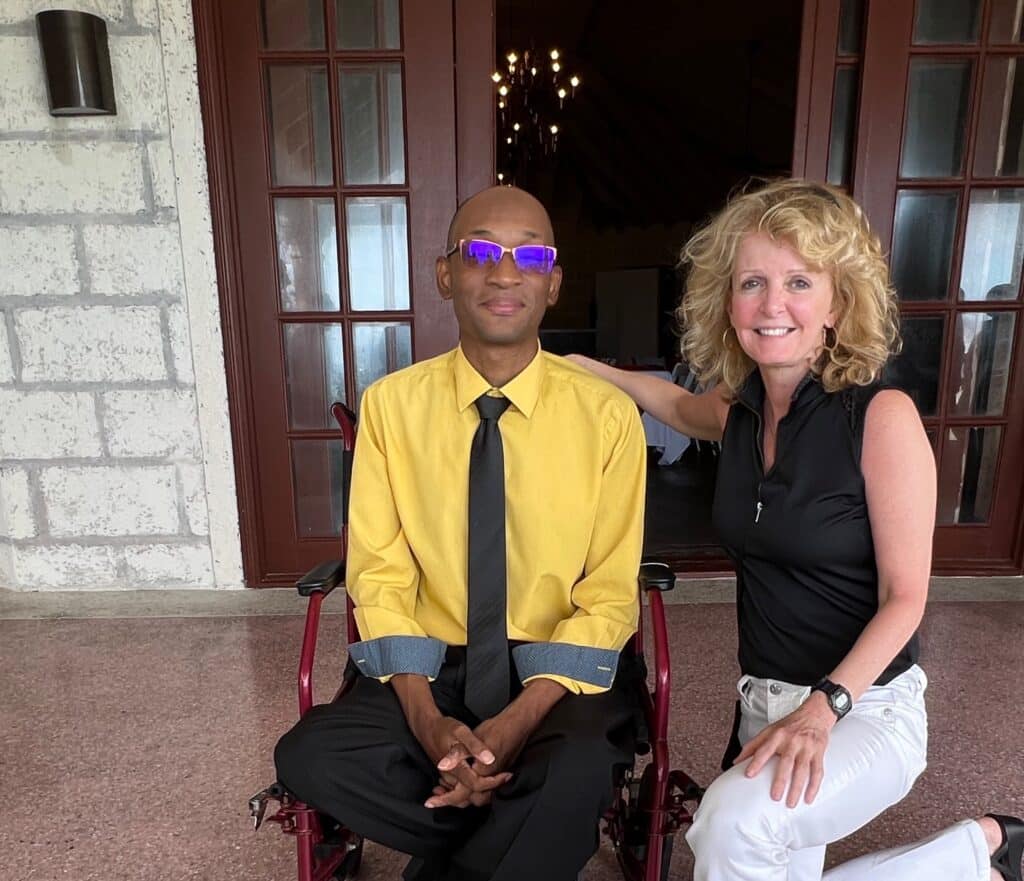
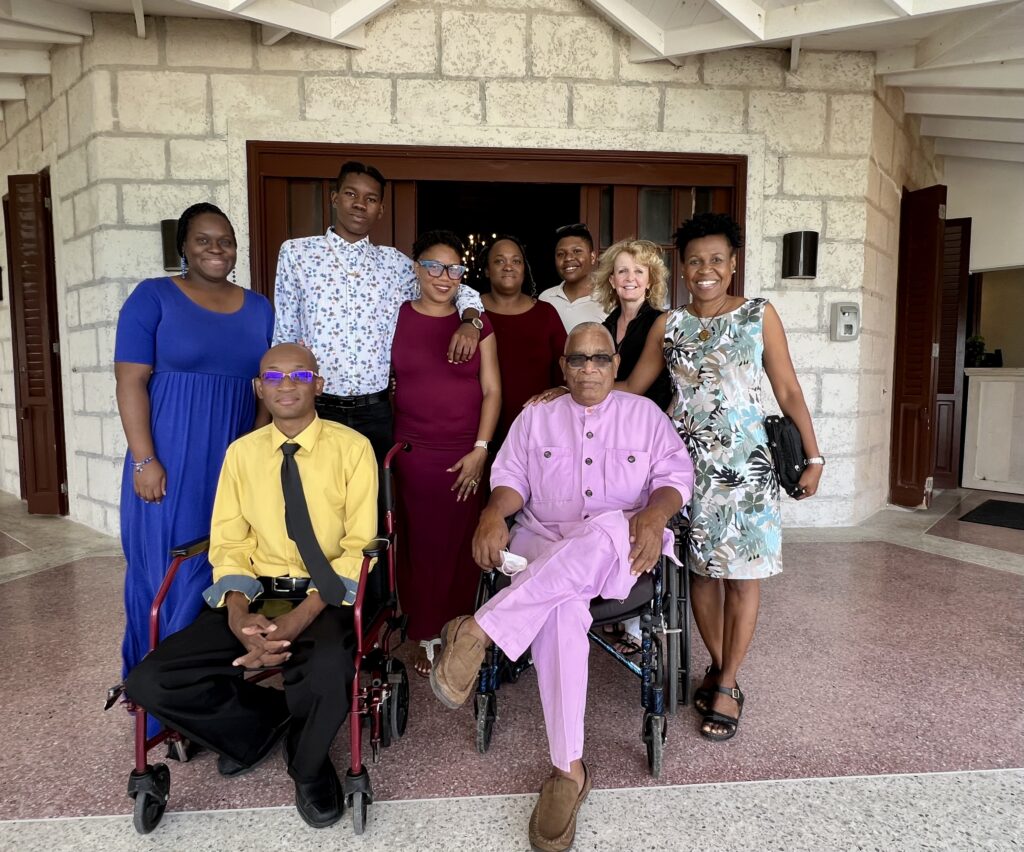
Laurie with the members of the Barbados Haemophilia Association

I last visited in 2014, when I had already made contact with Sofia, a young mother there in need of factor. I sent her some and in turn, with a bit of guidance, she was kind enough and motivated to start the Barbados Haemophilia Association, which continues this day. She has since left the island to raise her child in the United States, and Erica Worrell, another mother, took over as president.

It’s not easy. And like many businesses, nonprofits and lives in general, momentum was cut short by the pandemic. This was my first real country visit for hemophilia-related purposes, since the pandemic. I last saw Erica on the streets of Glasgow, Scotland in 2018, following the World Federation of Hemophilia Congress, as we were both window shopping. I looked forward to hearing how things were going; what were the factor needs; what were next steps?

After a lovely luncheon I hosted today for some of the families, I can see that hemophilia in Barbados seems in a holding pattern.

There is much potential. It’s a small island; only 33 patients known patients, with quite a few related. The government even buys some factor. They have a powerhouse of a nurse in Virginia, who knows everyone and knows hemophilia.

Unfortunately, the ERs do not. Despite the BHA’s best efforts, Jeffrey, a man with hemophilia B who I met the last visit, said, “I’m scared to go to the hospital.” Apparently the ER staff, as in many developing countries, do not place hemophilia as a priority (if they can’t see the bleed), and do not listen to the urgent requests of the patients or parents.

Erica Worrell, president of BHA

They also have problems with racial divides, believe it or not. There is a parish (like a county) called St. John’s, where descendants of the Scottish and Irish indentured servants or forced laborers who once landed here hundreds of years ago settled. They tent to keep to themselves. There are hemophilia patients there, but not much is known about them.

Access to factor is good, when it is available. What is provided by the government and by the WFH is typically not enough to meet needs. Though it certainly is much better since I visited in 2014! Erica and the BHA are well connected now to the WFH, which was one goal of forming the BHA.

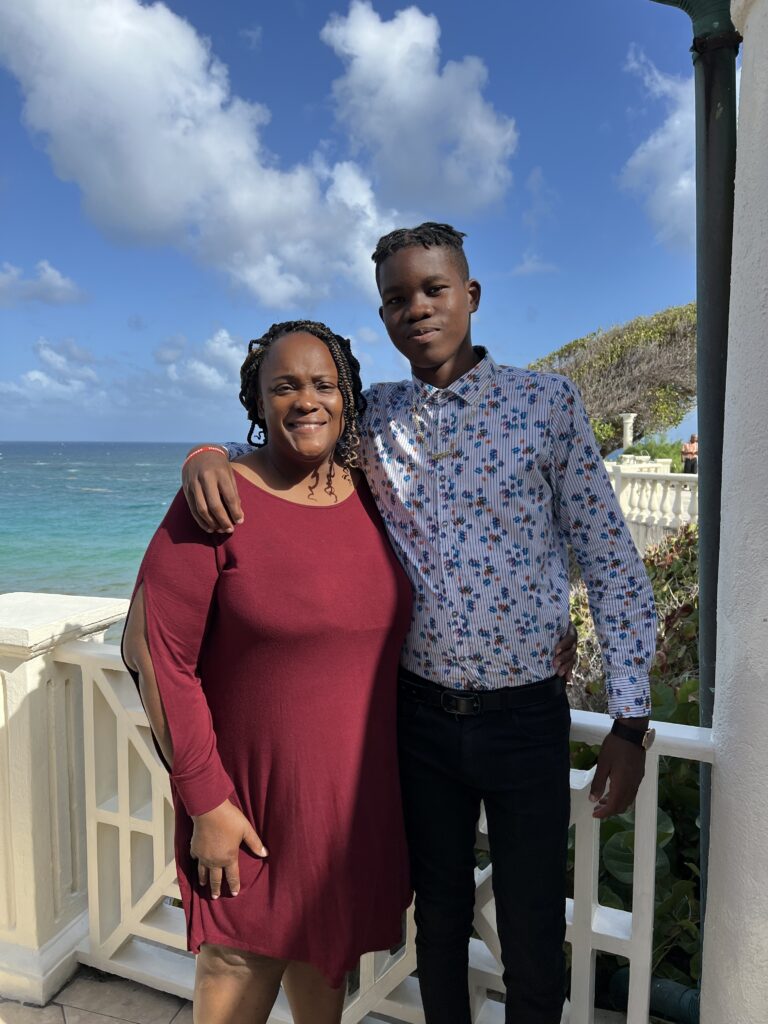
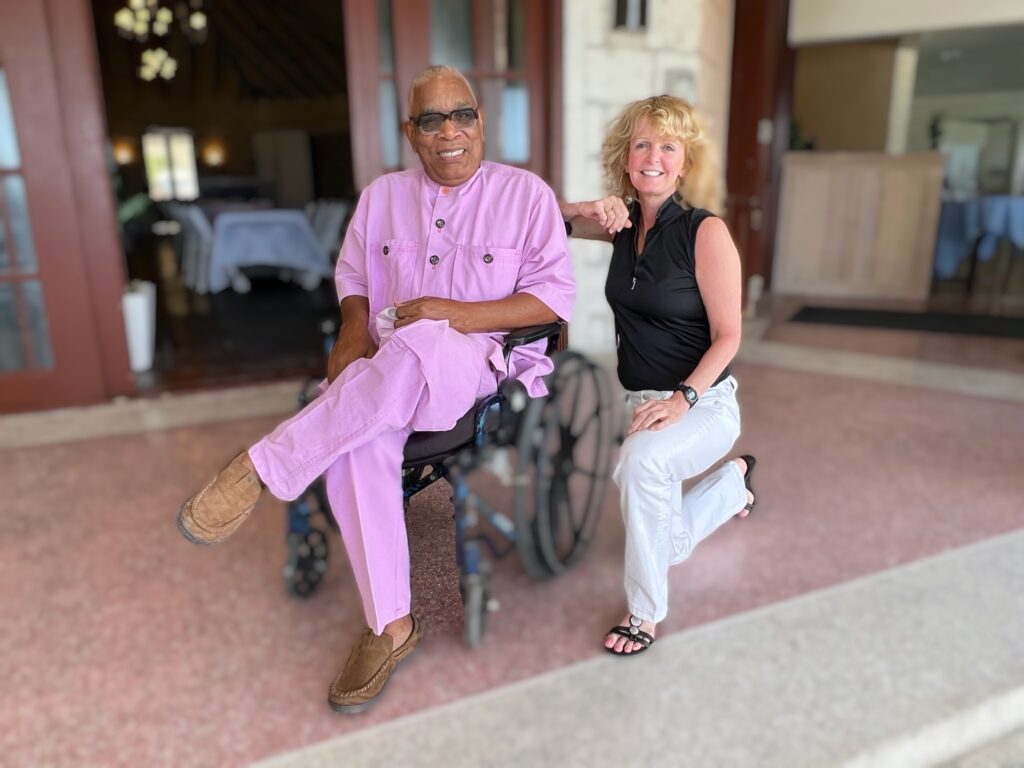
Jeffrey was one of 11 children growing up in the 60s. One brother also has hemophilia. His nephew, Leemar, and I are good friends now on Facebook messenger, and he lets me know when he needs factor (FEIBA or NovoSeven). A great-nephew, Konnor, was also there, a rising star! He has big dreams to become a hematologist, and something tells me he is going to succeed.

Laurie with Leemar

At least things are completely better than when Jeffrey was young. He tells me mischievously that as one of 11 children, “They couldn’t keep on eye on me so much!” He is famous as a teen for cliff diving… without factor! He describes the pain he endured as a “monster. You could feel it creeping up on you, thump, thump, as the knee got bigger and bigger.” The pain was excruciating, but Jeffrey tried to be stoic. Life was measured second by second then.

Thankfully now, because of the combined efforts of the BHA, WFH, and the dynamic nurse Virginia, a new generation has a chance. Barbados seems a bit paused, but it is starting to rise again, like the rest of the post-pandemic world. Erica already has a new idea for a comic-book style publication about the Jeffrey’s story, Leemar’s story… everyone’s. It’s a great idea, so long as they leave our Jeffrey’s cliff-diving escapades!

We parted as good friends, and they dispersed with the bundle of factor and medical supplies I brought. I’ll be back next year, with more factor, supplies and hoping to see activities and a new comic book!

The Royal Disease and Russia

Both the Royals and the Russians have been making the news this past year, not much of it good. For the Royals, it’s mostly just the Markles (on their “Privacy Tour”). For Russia…. well, let’s not go there.

While Russia is making a ruinous name for itself these past two years, it’s famous for its hemophilia history. Which originated from the English Royals.

We noted last week that it’s Bleeding Disorder Awareness Month, and we shared some popular myths about hemophilia. One was that hemophilia has been dubbed “The Royal Disease.” I shared in detail how this happened, and who it affected in my blog here.

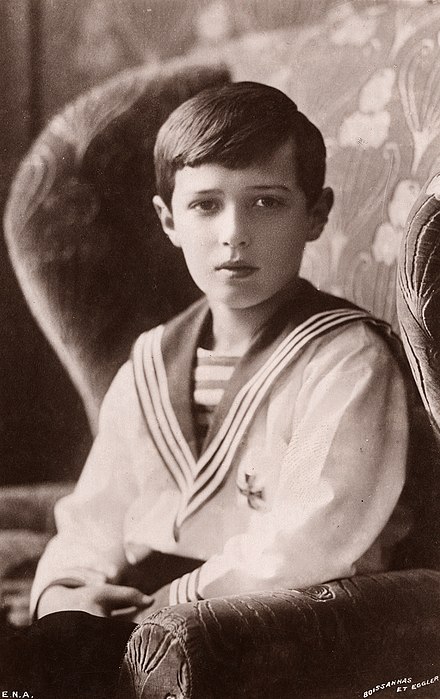
But the most famous outcome of a genetic link in the English Royal family happened when Princess Alix, whose grandmother was Queen Victoria, a carrier of hemophilia B, married Tsar Nicholas II of Russia. Queen Victoria had nine children, of whom two were carriers (Alice and Beatrice) and one had hemophilia (Leopold). It was well known that hemophilia was now running in the family.

Alix, nicknamed “Sunny” by Nicolas, gave birth to Alexis (or Alexei), after already having four girls. They got their heir to the throne. But Alexis had hemophilia.

Alexis had no access to clotting factor of course; this was 1904, after all. The royal family came rely on a person of ill repute: Rasputin, the mad monk. He had a lascivious reputation but also a track record of helping people in pain, probably through hypnosis. Rasputin became ingratiated into the royal family and helped also to bring down the Russian monarchy. It’s been proposed that Nicholas II was so distracted by his son’s suffering due to hemophilia, that eventually he lost his grip on the monarchy at a time when the Bolshevik Revolution was poised to strike. And it did. It has been proposed that hemophilia changed the course of World War I, and changed the course of history. The Cold War, the Soviet Empire… all find their roots in the royal palace of the Tsar and a little boy with hemophilia.

Order Alexis: the Prince Who Had Hemophilia here for your child with hemophilia.

A Pandora’s Box of Myths

It’s Bleeding Disorder Awareness Month! True: Designated in 1986 as Hemphilia Awareness Month this is the month to educate the public—and ourselves—about bleeding disorders.

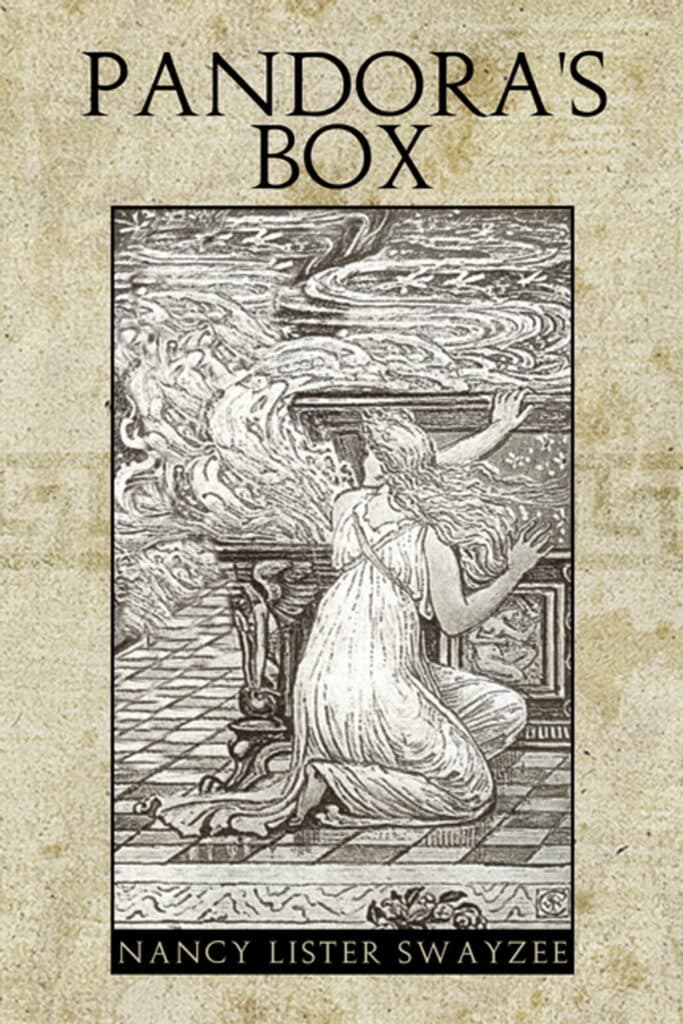
I usually start with what hemophilia is not. Perhaps because hemophilia is so rare, it has generated many myths. Myths are stories, sometimes created by people in an attempt to make something understandable when scientific information is unavailable. Remember the Greek tale of Pandora’s Box? Pandora was the first woman on earth. She was given a wedding gift from the gods, a beautiful container. But she was warned never to open it. Driven by curiosity, she disobeyed the gods and opened it. Inside were evils—hate, disease, pain—that flew out of the container and escaped into the world. This story was invented by the ancient Greeks to explain sickness and suffering, because they didn’t know about bacteria and viruses. Some myths develop from a nugget of fact or experience, but then take on a life of their own within certain cultural settings.

Becoming familiar with the most widely held myths about hemophilia and their sources will help you explain the facts of the disorder to others. Here are some common myths about hemophilia.

(Read Pandora’s Box here by Nancy Lister Swayzee)

Myth: Hemophilia is a royal disease.

Truth: Anyone can get hemophilia—rich or poor, famous or unknown. Hemophilia was dubbed the royal disease because in the 1800s, hemophilia affected the family of Queen Victoria of England, who was a carrier of the hemophilia gene. Hemophilia was transmitted to three other royal families when Victoria’s daughters and granddaughters, also carriers, married into the Russian, German, and Spanish royal families. Though it’s no longer known to be present in any European royal family, hemophilia is still often associated with royalty.

Myth: A small cut will cause blood to rush out and a child to bleed to death.

Truth: People with hemophilia do not bleed faster than anyone else. But they will bleed longer because their blood doesn’t clot properly. Still, not every cut will continue to bleed just because a person has hemophilia. Some cuts, especially small ones, stop bleeding on their own.

Myth: Children with hemophilia cannot play sports.

Truth: Children with hemophilia enjoy a wide variety of sports, including swimming, baseball, tennis, running, and martial arts. You’ll realize this someday when you’re chauffeuring your sports fan to various afterschool activities! High-impact contact sports such as football, hockey, and boxing are not advised. Physical activity is always encouraged for children with hemophilia.

Myth: Children with hemophilia must wear helmets and protective gear.

Truth: Although some parents place protective helmets or knee pads on their toddlers, it’s uncommon for a child with hemophilia to wear protective gear for normal activities. Medical treatments today are excellent and easy, offering a normal lifestyle. Of course, all children must wear protective gear when participating in risky activities: helmets should always be worn when riding bikes or motorcycles, ores, or when skiing or snowboarding. Oh yes, your child will be able to do these things one day!

Myth: Children with hemophilia must attend a special needs school.

Truth: Except for having a defective blood protein for blood clotting, our children have normal health and intelligence. They can be enrolled in any school. Overall, your child is normal and will be treated as such by the school system and the public.

Myth: Children with hemophilia need to be placed in special schools or classes.

Truth: Except for having a defective blood protein for blood clotting, our children have normal health and intelligence. They can be enrolled in any school. Overall, your child is normal and will be treated as such by the school system and the public.

Myth: Children with hemophilia will grow out of it.

Truth: Hemophilia is a lifelong condition. Your child does not have a disease that will get better or go into remission. Your child will not grow out of hemophilia: the mechanism for producing clotting factor is defective. Hemophilia is part of his genetic makeup, just like traits for hair or eye color, which can’t be outgrown. However, there is now a genetic therapy available for hemophilia B that will give, with one shot, protection against uncontrollable bleeds for a long time.

Myth: Hemophilia is caused by something you did during pregnancy.

Truth: Nothing you did while pregnant gave your baby hemophilia. Women who have perfect pregnancies and follow every safety precaution can give birth to children with hemophilia. There’s nothing you could have done to prevent hemophilia; nor could you have changed your child’s hair or eye color. Hemophilia is simply part of his genetic makeup.

Don’t feel guilty; get educated, and educate others. Now’s the month especially to do this!

Help is Here!

Hemophilia—all bleeding disorders really—requires help, and not just from therapies. Due to healthcare changes, patients are required often to pay higher out of pocket costs. And sometimes, it’s just life: single parenting, limited job opportunities, higher education bills, gas, care and health insurance. We could all use help.

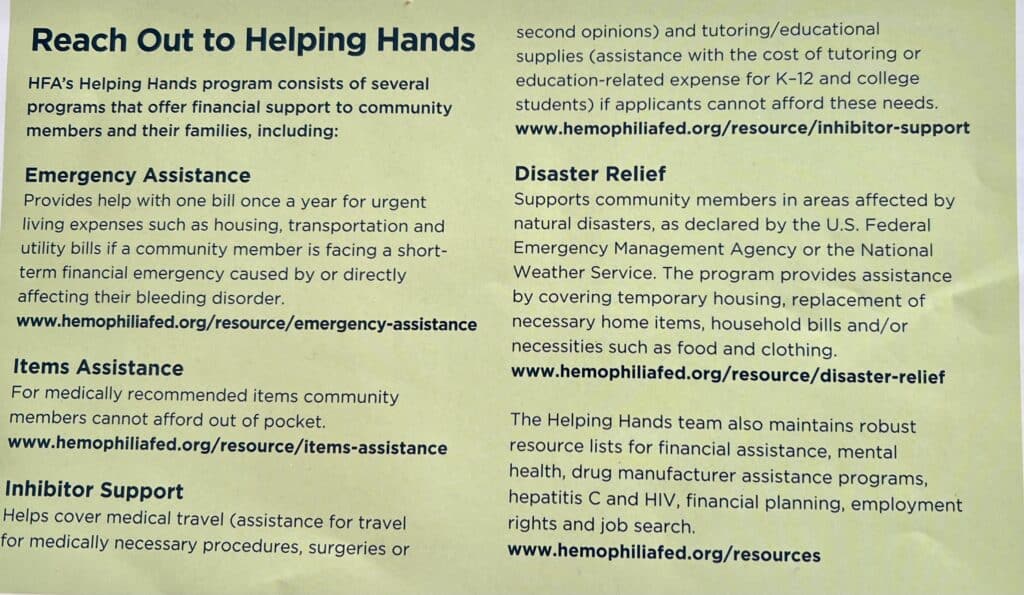
Hemophilia Federation has a great listing of all their ways they might help. HFA has long impressed me with their direct-to-patient aid. It’s a lot like what we do with Save One Life overseas: we give direct aid to those most in need. You local chapter might be a good first place to start, but then look at HFA’s website to learn more.

Check out these opportunities and find out if you are eligible:

HemaBlog Archives
Categories