
Laurie Kelley

Leadership Redefined

First published in PEN February 2020

I’m here in Antarctica, and have visited the grave site of one of the most famous leaders in history: Ernest Shackleton. The famed polar explorer was renowned for surviving a horrendous situation, and leading the men directly under his watch to safety. It’s such a compelling story, that I had to come to the Antarctic after reading in depth about it for years!
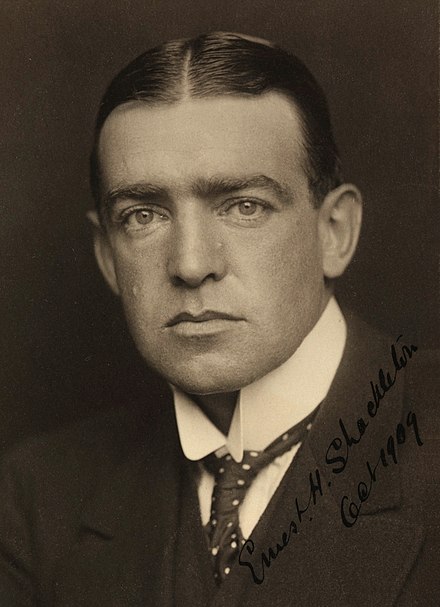
Ernest Shackleton

The bleeding disorder community is filled with admirable leaders, too. Though I often say that no one is a born leader, leadership can be birthed. In our community, leadership arose from the cataclysmic devastation when HIV was discovered in the blood supply in the 1980s and infected about half of our community. This horrific event birthed many leaders, whose legacies stand today.

When we think of those leaders—like Corey Dubin, Dana Kuhn, Val Bias, Jeanne White-Ginder, and Louise Ray—we think of certain leadership qualities: vision, authority, courage, commitment. These are leaders who made history and secured a safer future for us all.

Yet today, when you ask regular moms and dads and hemophilia patients about leadership, a slightly different picture emerges, highlighting different qualities. It helps to know more about what our community members seek today in leadership—who they admire, and what they expect from the leadership of tomorrow.

Types of Leadership

There are many types of leadership, but I usually peg leaders as one of three types: positional, situational, and transformational. In a nutshell, positional leaders are usually elected, appointed, or inherited: think president, CEO, executive director, chief, even king or queen. Situational leaders may or may not be positional leaders, but they rise to the forefront when a problem, event, or situation calls for a leader. Think first responder, rescuer, or anyone who steps forward to take action, like Lech Walesa of Poland in 1980, or US Army Major Hugh Thompson, Jr., during the Vietnam War. Or even Ripley in Alien!

Transformational leaders influence a community, industry, group, or era to make massive and lasting changes: think Jesus, Gandhi, Walt Disney, or Steve Jobs. When asked about leaders, people often name leaders who fall into those three categories. Characteristics of these types of leaders? Powerful, authoritative, visionary, action-oriented, decisive, committed, communicative, innovative, influential, even charismatic. Do bleeding disorder families see leadership the same way?

The Softer Side of Leadership

Rather than describe leaders in our community as figureheads with power and influence, parents and patients associate softer qualities with leaders these days. These softer qualities include traits that make the “followers,” or beneficiaries of leadership, feel more secure and feel their needs are being met. We polled parents and patients on Facebook to see what leadership qualities they look for most in the bleeding disorder community. And top among these qualities is listening.

 Eva replied, “For me, a good quality of leadership is to have an ear to listen, to communicate. To protect their member.” Krissy agreed. “Leadership is the ability to not just listen but truly hear you and your concerns. A leader inspires others and is someone who advocates passionately.”

 Dr. Anupama Pattiyeri of India added that a leader must be “a patient listener and motivator—someone who focuses on solutions and not on problems alone.” Katelyn and Alicia both put listening as their first sign of good leadership.

Wayne remarked that leadership means “the ability to listen before deciding. Having ties to the community and leading with integrity, honesty and compassion.” Karla agreed; for her, leadership means “commitment to our community combined with a personal connection.”

Tina noted that listening, combined with empathy, insight, and integrity, gives a leader the ability to understand life from a patient’s or caregiver’s point of view; the ability to understand important values of the community; and “the strength to stand up for those values.” In other words, parents and patients view the traditional forms of leadership as less important than “servant” leadership.

Servant Leadership

The style of leadership parents and patients most often mentioned is known as servant leadership. Servant leadership puts people’s needs first. A leader must understand the needs of the followers or constituents, be there with them, even suffer with them. Indeed, a trait of servant leadership is compassion, which means to suffer or feel alongside someone. It follows that traits of servant leaders include listening, empathy, stewardship, awareness, healing, commitment, and community-building. Historically, servant leaders have been either positional, situational, or transformational leaders too, but have always put their people’s needs first.

Ray agreed. “To be in service to the people you are leading—servant leadership” explains the style of leadership that works best today in our community.

Who are the servant leaders in the bleeding disorder community? Kathe cited her HTC physicians: “Both physicians are excellent leaders…They always take time to explain to patients and integrate therapies into everyday life. I am a better nurse for knowing them.” Rayna mentioned her doctor, currently at St. Jude’s, “for leading a whole generation of patients through recombinant therapies by studying the medicine and checking the facts. All the while he has a wonderful bedside manner to both parents and children.”

Kelly, who was nominated by respondents as a servant leader herself, listed integrity, compassion, and honesty as important qualities for our community leaders. These characteristics don’t require a leader to be in a position of authority.

But positional leaders—those in authority—can be servant leaders as well. Christal nominated a couple who started a chapter in her state, and do so much to help the underserved members of our community.

Likewise, Tiffany recommended Sue Martin, executive director of Hemophilia of South Carolina, as a servant leader. “She gives our organization her heart and soul. She has turned our local chapter into a source of hope, progression and compassion for our bleeding disorders community. And most importantly she drives people to educate themselves on advocacy, so we can advocate strongly and effectively for our children, and teach them how to become strong advocates for themselves.”

Ray warned that as great as servant leaders are, they must ensure that they are not indispensable. In other words, leaders must develop other leaders.

Mentoring

The great British wartime leader Winston Churchill was called the “Old Lion.” I think of this when I think of the top leaders in our community who fought our war with HIV, and are now in their 60s. Mentoring a new generation of lions, then, is vital. Some mentoring happens at the top, with youth leadership programs from National Hemophilia Foundation (NHF), but mentoring can occur anywhere by any of our servant leaders.

Two mothers mentioned their own sons as servant leaders who mentor younger followers. One mentioned that her son never missed a year of summer camp since age seven, and even after moving out of state for a while, came back to work as a counselor in summers. Servant leadership by example, combined with positional leadership, is powerful!

Kimberly nominated her son, who she believes has these leadership qualities, so important in servant leaders: integrity, honesty, loyalty, empathy, compassion, inspiration—and mentoring.

Unsung Heroes

Finally, Lisa made a poignant suggestion: “I’d like to nominate all of the ‘silent leaders’…parents who take the time, often in private, to welcome new members, offer our help, guidance, experience as parents with a baby with a bleeding disorder…Often done behind the scenes, but very helpful and appreciated nonetheless.”

 Sometimes the greatest leaders are the ones without the fanfare, tweets, photo ops, and popular achievements. They are the servant leaders who quietly and modestly, powerfully and permanently, change the world day by day, child by child. They are all of you—parents, patients, doctors, nurses—who dedicate their lives and careers to the bleeding disorder community.

Mental Health Post Coronavirus 

Debbie de la Riva

© LA Kelley Communications, Inc. www.kelleycom.com This article originally appeared in PEN August 2020. Reprinted here with edits.

The collective pursuit to control the spread of coronavirus resulted in an enormous challenge for the bleeding disorder community. The economic fallout of sheltering in place has affected our need for a steady income, health insurance, access to medical treatment, and—equally important—our access to each other. The degree of impact on our families is hard to determine, but it’s safe to say this pandemic has been very stressful.

But stress in not a new concept for the bleeding disorder community. In fact, our community has been dealing for years with the emotional angst of fighting for what is needed to manage our medical conditions. Remember our fight for safer products, or our fight for laws to protect us from job discrimination? Today’s battle, for our community, is to deal with the stress resulting from the pandemic. So let’s follow the same steps we have taken so many times before. Let’s get informed, find our resources, and stick together.

Get Informed

To learn to manage stress, we need to become familiar with how our central nervous system works. Our brain comes pre-wired with an intricate system that functions to keep the rest of our body alive. This is the limbic system, which provides the “fight-or-flight” response. If the brain determines that the body is in danger, it initiates a chemical chain reaction that gets the body ready to either fight the challenge or run from it. This response begins when sensory information is picked up by a part of the brain called the amygdala. If the amygdala determines there is a threat, it signals other parts of the brain and body to release hormones such as adrenaline and cortisol. These hormones instruct the heart and lungs to increase their output in order to create the energy needed to meet the challenge. This fight-or-flight response is extremely effective when a person needs physical energy to avoid a danger such as jumping out of the way of a car.  But most of today’s challenges are emotional, and they don’t require the extra energy provided by the stress response. The result is a steady supply of stress hormones circulating in the body at all times. The image that comes to mind is a person standing next to an IV pole and steadily receiving drips of adrenaline and cortisol. In others words, our body remains in a constant state of high alert.

The good news: We do have the ability to slow down the stress response. Since we now know that the brain is constantly scanning our body and our environment to determine if it should go into stress or relaxed mode, we can intentionally offer cues to indicate that we’re not in danger. In fact, this is how meditation works. The first goal of meditation is to slow down your breathing rate. This is important, because once your brain receives the signal that your breathing rate is lowered, it will interpret this to mean that you’re not in danger, and will turn off the stress response. The second goal of meditation involves your focus. You want to be focusing on the present—instead of musing about the past or anticipating the future—and you want to intentionally focus on words or images that evoke feelings of peace or happiness.

You can bring up images of when you felt safe and happy, or you can think of words that reassure you. This tool is like anything else in life: it requires practice and commitment. But eventually, you’ll find that you can truly create a sense of well-being, no matter what’s going on in your life. Sound too good to be true? Do you need proof? Ask yourself how you feel when you’re watching a scary movie, and compare that to how you feel when you’re watching a romantic comedy. In other words, what we focus on creates how we feel inside. That same principle is at work when we intentionally think about what we are grateful for, as opposed to what we lack or what we don’t like about our lives.

Learning to handle stress is more important than ever. Let’s look at the many resources that have been created since the coronavirus pandemic started.

Find Resources

National Hemophilia Foundation (NHF) and Hemophilia Federation of America (HFA) have created content to help people in the bleeding disorder community deal with both physical and emotional impacts of the pandemic. Visit:

National Hemophilia Foundation

Hemophilia Federation of America

You can also purchase proven self-help workbooks on stress reduction at New Harbinger Publications.

And yes, there is an app for learning to relax! Appropriately called the Calm app, it has hundreds of meditations and master classes on stress management: calm.com

You can find these resources and many others by visiting the Mental Health Matters Too.

Seek Out Others

It didn’t take long for our community to figure out how to be connected virtually. Though it isn’t the same as being in a room together, it is nice to see familiar faces and get a chance to let someone know you are there for them.

Take a moment to check in with yourself, because it’s very easy to feel lonely in isolation. If you find that you’re exceptionally lonely, depressed, or anxious, it always helps to talk to someone trained to help you feel understood and supported. Online platforms like Talk Space and Better Help are reporting an exponential increase in the number of requests for counseling sessions right now.

One of the best ways to combat the feeling of helplessness that comes with a crisis is to look for a way you can help others. This sense of purpose gives people some control, and helps them feel productive and useful. For me, contributing to Save One Life is one way I fulfill my need to have purpose in my own life. Each month, I have a small sense of satisfaction knowing that there are three young people with hemophilia who feel that someone else on this planet sees them and cares about them.

Look for Purpose

So, whether it’s meditating, talking with someone, or just being there for another human, there are ways to combat stress. We will get through this pandemic as a community, the way we always have. We will get informed, find resources, and seek out each other.

Debbie de la Riva, LPC, has been an active member of the bleeding disorder community since the birth of her son with severe hemophilia 25 years ago. She served as executive director of the Lone Star Chapter of NHF, was a co-chair of an NHF Annual Meeting, received a Ryan White Award  for Advocacy Excellence, and has presented on mental health issues to chapter and national organizations. In 2018, Debbie founded Mental Health Matters Too as a way of combining her degree as a licensed professional counselor with her passion for helping community members  who struggle with mental health challenges. To contact Debbie: www.mentalhealthmatterstoo.com or debbie@mhmtoo.com

5 things to know about hemophilia, factor activity, and exercise

Sponsored by Sanofi

With 2023 now under way, getting more exercise is probably on a lot of people’s minds. It’s a great time to make new plans to get moving! For people living with hemophilia, there are extra considerations to make sure you can safely participate in physical activities. Below are 5 things to know about exercising when you have hemophilia—and how factor activity levels play a role. Remember that you should always speak to your doctor before starting any new type of activity.

  1. Exercise is important for people living with hemophilia. Engaging in physical activity is associated with both physical and mental health benefits1—and that goes for people who have hemophilia, too. In fact, exercising can improve joint health and reduce joint bleeds.2 Hemophilia severity, factor activity, and other personal health considerations may all affect what kinds of exercises you and your doctor decide are the best fit for you.
  2. Factor activity levels determine hemophilia severity. Your factor activity level is how much clotting factor you have in your blood at a given time. These levels are used to help determine how severe your hemophilia is at the time of diagnosis.3 Higher factor levels in your body over time means better bleed protection. Factor activity levels and severity may affect the amount of risk that comes with certain forms of exercise.4
    • Categories of hemophilia severity and how they affect lifestyle,
      • Normal (non-hemophilia range)5, 6, 7, 8, 9
      • Factor activity: 50% to 150%*†
      • Lifestyle: normal
      • Activity: High impact activity possible with no pain
    • Near normal (non-hemophilia range)
      • Factor activity: >40% to <50%*†
      • Factor activity levels between 40-50 percent are currently undefined by World Federation of Hemophilia guidelines
    • Mild hemophilia6,10
      • Factor activity: >5% to <40%*†
      • Lifestyle: minor adjustments
      • Activity: limited activity with some pain and risk of spontaneous or micro bleeds
      Moderate hemophilia6,10
      • Factor activity: >1% to 5%*†
      • Lifestyle: significant adjustments
      • Activity: limited activity with some pain and risk of spontaneous or micro-bleeds
    • Severe hemophilia6,10
      • Factor activity: <1%*†
      • Lifestyle: vulnerable
      • Activity: high risk of spontaneous bleeds with low activity and pain with target joints
  3. Keep your hemophilia severity in mind when choosing types and levels of exercise. There are all kinds of ways to get exercise, depending on your hemophilia severity, your preferences, and your doctor’s recommendations. For example, people with moderate hemophilia may be better off with lower risk activities such as swimming, walking, or stationary biking.11 People with mild hemophilia may be able to participate in activities with more moderate risk, like weight lifting, hiking, rowing, or snorkeling.11
  4. There are also many ways to get exercise that aren’t the recreational activities that might immediately come to mind. Everyday activities like gardening or cooking are good ways to move your body and be productive at the same time.12 While there are many benefits to exercise and many ways to get active, no activity is completely risk free. Work with your doctor to choose the best kind of exercise for you.
  5. Treatment may affect factor activity and lifestyle. When your factor levels stay above 40% (in the near-normal to normal non-hemophilia range), you may be able to engage in activities longer.7,8,9 This is why many people look for treatments that improve bleed protection to allow them to spend more time doing the activities they enjoy. You may want to talk to your doctor about what your treatment is doing for your factor activity levels and how that may impact your lifestyle.
  6. Every person is unique. No two people living with hemophilia are identical. There are differences between hemophilia A and B, everybody’s factor activity levels are different, and everyone’s body reacts differently to exercise. Talk to your doctor to explore the options that are right for you. No matter what you decide together, it’s a great time to start the conversation.

To learn more, visit Levels Matter, a Sanofi website dedicated to helping people understand factor activity levels, how blood clots, how hemophilia is inherited, and more. The more you know, the better you will be equipped to make the right decisions for your lifestyle.

*Severity classifications may be different for women with hemophilia
†Factor levels may not reflect bleeding patterns

REFERENCES

  1. Centers for Disease Control and Prevention. Benefits of physical activity.
    https://www.cdc.gov/physicalactivity/basics/pa-health/index.htm.
  2. Harris S, Boggio LN. Exercise may decrease further destruction in the adult haemophilic joint.
    Haemophilia. 2006;12(3):237-240. doi:10.1111/j.1365-2516.2006.01214.x
  3. Centers for Disease Control and Prevention. What is hemophilia
    https://www.cdc.gov/ncbddd/hemophilia/facts.html.
  4. World Federation of Hemophilia. WFH guidelines for the management of hemophilia.
    https://www1.wfh.org/publications/files/pdf-1863.pdf.
  5. National Hemophilia Foundation. Hemophilia A.
    https://www.hemophilia.org/bleeding-disorders-a-z/types/hemophilia-a.
  6. Martin AP, Burke T, Asghar S, Noone D, Pedra G, O’Hara J. Understanding minimum and ideal factor levels for participation in physical activities by people with haemophilia: An expert elicitation exercise.
    Haemophilia. 2020;26(4):711-717. doi:10.1111/hae.13985
  7. Iorio A, Iserman E, Blanchette V, et al. Target plasma factor levels for personalized treatment in haemophilia: a Delphi consensus statement. Haemophilia. 2017;23(3):e170-e179.doi:10.1111/hae.13215
  8. Skinner MW, Nugent D, Wilton P, et al. Achieving the unimaginable: Health equity in haemophilia. Haemophilia. 2020;26(1):17-24. doi:10.1111/hae.13862
  9. Weyand AC, Pipe SW. New therapies for hemophilia. Blood. 2019;133(5):389-398. doi:10.1182/blood-2018-08-872291
  10. Centers for Disease Control and Prevention. Diagnosis of hemophilia.
    https://www.cdc.gov/ncbddd/hemophilia/diagnosis.html.
  11. National Hemophilia Foundation. Playing it safe.
    https://stepsforliving.hemophilia.org/sites/default/files/playing-it-safe.pdf#overlay-context=resources/physical-activity.
  12. World Federation of Hemophilia. Psychosocial Care for People with Hemophilia.
    https://www1.wfh.org/publication/files/pdf-1198.pdf.

Bulletproof Your Target Joints

Dr. Michael Zolotnitsky, PT, DPT

Originally published in PEN May 2020, ©LA Kelley Communications, Inc. www.kelleycom.com All rights reserved.

Growing up with hemophilia, I endured frequent joint bleeds into my ankles and knees while playing basketball. I was told that those were my target joints because I continued to bleed into the same joints, and that ultimately, this would cause hemarthropathy. I was put in braces, and told to use crutches, ice, rest, and elevate. All good things, right?

Well, have you heard of Steph Curry, the all-pro basketball superstar? He continuously experiences ankle sprains that force him to miss games. In our community, we would say that Steph has an ankle target joint; but he doesn’t have a bleeding disorder. So why do some people with a bleeding disorder get target joints, and others who experience similar injuries do not?

If an athlete has a low-level ankle or knee sprain, it takes 4–6 weeks for a ligament injury to recover. Recovery includes exercise to strengthen the lengthened ligament and exercises to stabilize the joint. A more intense sprain or strain takes 8–12 weeks to heal, with additional stability training recommended. Someone with a bleeding disorder has different recommendations: usually rest, avoid weight bearing, and ice. If this is all we do, we develop scar tissue, lose range of motion, and lose muscle mass. This turns into a negative cascade of events, because now that particular joint has limited mobility, stability, and flexibility.

When a joint is in a weakened state, it’s more likely to be reinjured. After four to six injuries per year, we call this cascade a target joint. This is all preventable with the appropriate post-injury exercise regimen. We must “bulletproof” our target joints, but how?

Let’s look at different treatment stages following an injury. When the initial injury occurs, we feel pain, our joint swells, it feels warm and tingly, and we begin to limp. First, follow the treatment protocol that is recommended by your hematologist. After that, consider this four-step return-to-activity protocol that I recommend:

            Step 1: The initial focus is to reduce swelling, so apply kinesiology taping specifically for edema reduction by using the fan strip.1 (See “HemoDoc” videos on YouTube.)

            Step 2: Active range of motion of the joint can improve blood flow in a non-weight-bearing position. For the ankle specifically, you can trace the alphabet with your foot, make ankle circles, and do gentle towel curls.2 This will reduce scar tissue adhesion and reduce the loss of range of motion.

            Step 3: Now begin to strengthen the joints and ligaments by employing gentle resistance. It takes three days to lose strength, but six weeks to regain it, so for a low-level ligament sprain, I recommend performing these exercises three to four times per week, for six to eight weeks.

            Step 4: Gently and gradually return to activity.

In my first 13 years of life, I was continuously in and out of the hospital for insidious joint bleeds. I began to exercise and took control of my own life. This is what inspired me to become a physical therapist. And for the past 15 years, I have not experienced joint bleeds, and I can say that I don’t have target joints. My dedication and focus now are to help people affected by bleeding disorders.

We are just like normal people. We get hurt; our muscles and joints are weakened. If we don’t take the appropriate measures to rehabilitate them, then we’re more likely to reinjure them, just like NBA star Steph Curry. Joint injuries are preventable with appropriate workouts and mobility exercises. Allowing our muscles to regain their strength is possible, and will ensure improved overall joint health. Let’s all bulletproof those target joints!

Dr. Michael Zolotnitsky is director of neurological rehabilitation at New Jersey Spine and Wellness in Old Bridge, New Jersey. He also has severe hemophilia A. He can be reached at 732-952-2292 and michael.zolotnisky@spineandwellness.com.

  1. A fan strip is a piece of tape that is cut in the shape of a fan. The head of the fan is placed above the area of the swelling, and four pieces are applied over the area without tension. This will allow a negative pressure gradient to occur to reduce swelling and improve circulation.
  2. Towel curls strengthen the inner foot. Place a towel flat on the floor and use your toes to grab the towel and curl it toward you. Then use your toes to push it away from you. Increase resistance by placing a weight on the towel.

What a doll!

Our eminent researcher of all things hemophilia, Richard Atwood of North Carolina, has found a book with “paper” dolls related to hemophilia! I certainly had paper dolls growing up, and apparently, we still have them for kids these days.

Nicholas and Alexandra Paper Dolls, published in 1998, is an oversized book (9”x12”) on the family of the last Romanov Tsar, Nicholas II, whose son Alexei had hemophilia B. The book includes 11 dolls on 16 plates printed on lightweight cardboard. There are two pages of text with notes and instructions to provide historical insights and fashion commentary. Alexandra has two dolls, accompanied by six dresses, including her 1894 wedding dress and 1896 coronation dress, plus ball gowns. Nicholas has two dolls, accompanied by five uniforms. Alexei’s older sisters, Olga, Tatiana, Marie, and Anastasia all wear the same casual dresses, that may be covered by two sets of identical dresses. Alexei is dressed in a sailor suit that may be covered with a uniform. Other dolls are the mad monk Gregory Rasputin in a monk’s garb and Clementy Nagorny in a sailor suit. The book cover illustration could also be used as dolls for Nicholas, Alexandra and Alexei.

The life of Alexei is briefly summarized. Alexei was born in August of 1904. From his mother, he inherited hemophilia B that was soon evident to the family, who did not publicly reveal it. Hemophilia was a deadly disease then, with no known cure. The bleeding bouts caused pain. Gregory Rasputin is described as a healer who used hypnosis to relieve Alexei’s suffering. Rasputin is also described as a lecher, a drunkard, and a con man. Clementy Nagorny was one of two sailors who acted as Alexei’s nanny.

Alexei is correctly shown with a bent left leg, though the metal brace he wore for most of 1913 is hidden. Something not revealed in the text is that Alexei’s accident at Spalo in 1912 caused femoral neuropathy (or paralysis of femoral nerve) due of an iliacus hematoma (or an iliopsoas muscle bleed). This was the medical reason for his hip flexion and bent leg. The metal brace, not Rasputin, straightened Alexei’s left leg. The instructions printed in the book do not mention the need for a sharp cutting tool such as an X-Acto knife in order to remove the dolls and clothes from the book pages.

The author, Tom Tierney, who is an artist, has signed each of the 11 dolls. Tierny is known for his series of paper dolls for a variety of historical figures, including Queen Elizabeth II, Michelle Obama, Abraham Lincoln, Shakespeare characters, and more.

And, you can still buy this on Amazon.com!

From Mineola, NY: Dover Publications. 32 pages.

HemaBlog Archives
Categories