Laurie Kelley

The Poem of a Prince with Hemophilia
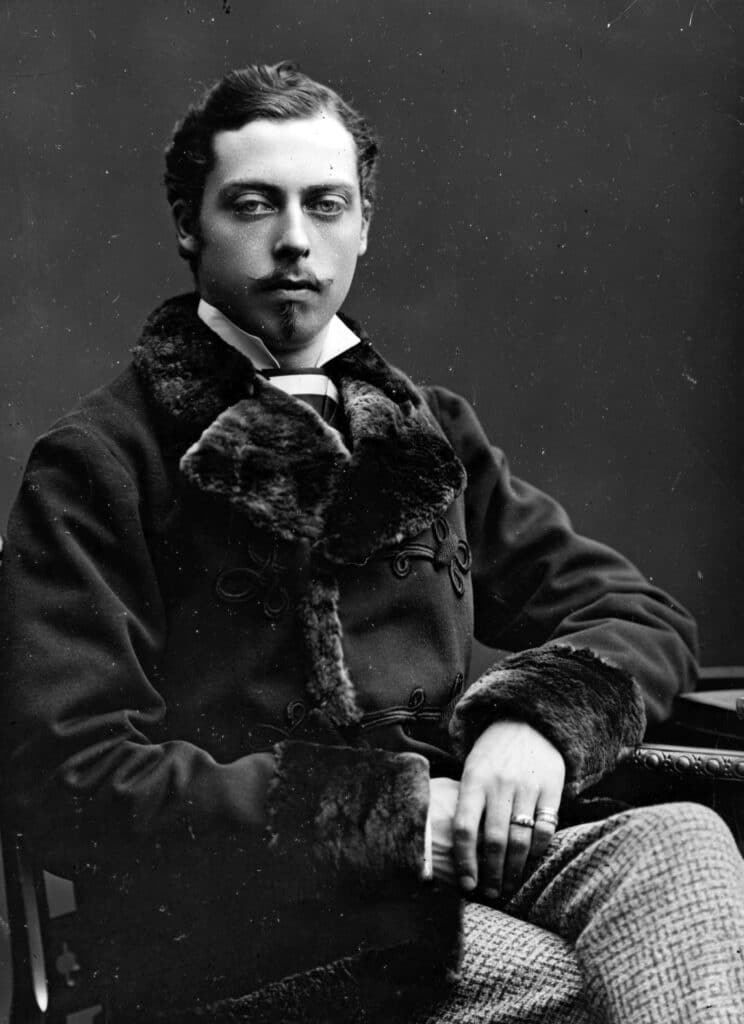
Prince Leopold (1853 – 1884), Duke of Albany. (Photo by Hulton Archive/Getty Images)

The first prince with hemophilia that we know of historically was Leopold, youngest son of Queen Victoria, and eighth of nine children. He was born on April 7, 1853. His birth was remarkable because he was the first royal child delivered with the aid of chloroform. This was administered by one of my personal heroes, Dr. John Snow, who also cracked the mystery of cholera in 1854 in London, during a savage outbreak, and pretty much launched the science of epidemiology and public health.

And because its National Poetry Month, we will publish a poem to Prince Leopold! This poem is from Colin S.K. Walker’s (Editor) 1993 book William McGonagall: A Selection. William McGonagall, born in 1825 in Edinburgh, published three collections of verses, and died in 1902. McGonagall is a terribly mocked Scottish poet. As the editor explained: “McGonagall’s poetry is undeniably dreadful, always sinking to new depths, just when you think you have hit rock bottom.” Ouch!

So yeah, it’s a pretty bad poem! But it is about Prince Leopold, a prince who had hemophilia, who died at age 30, after bleeding from a fall. At his funeral they played one of my favorite hymns (and that of Sir Ernest Shackleton), “Lead Kindly Light.” Let’s hope a better poem is written for King Charles III’s Coronation next month!

THE DEATH OF PRINCE LEOPOLD

ALAS! noble Prince Leopold, he is dead!
Who often has his luster shed:
Especially by singing for the benefit of Esher School,-
Which proves he was a wise prince, and no conceited fool.

Methinks I see him on the platform singing the Sands o’ Dee,
The generous-hearted Leopold, the good and the free,
Who was manly in his actions, and beloved by his mother;
And in all the family she hasn’t got such another.

He was of delicate constitution all his life,
And he was his mother’s favorite, and very kind to his wife,
And he had also a particular liking for his child,
And in his behaviour he was very mild.

Oh! noble-hearted Leopold, most beautiful to see,
Who was wont to fill your audience’s hearts with glee,
With your charming songs, and lectures against strong drink:
Britain had nothing else to fear, as far as you could think.

A wise prince you were, and well worthy of the name,
And to write in praise of thee I cannot refrain;
Because you were ever ready to defend that which is right,
Both pleasing and righteous in God’s eye-sight.

And for the loss of such a prince the people will mourn,
But, alas! unto them he can never more return,
Because sorrow never could revive the dead again,
Therefore to weep for him is all in vain.

‘Twas on Saturday the 12th of April, in the year 1884,
He was buried in the royal vault, never to rise more
Until the last trump shall sound to summon him away.

When the Duchess of Albany arrived she drove through the Royal Arch,-
A little before the Seaforth Highlanders set out on the funeral march;
And she was received with every sympathetic respect,
Which none of the people present seem’d to neglect.

Then she entered the memorial chapel and stayed a short time
And as she viewed her husband’s remains it was really sublime,
While her tears fell fast on the coffin lid without delay,
Then she took one last fond look, and hurried away.

At half-past ten o’clock the Seaforth Highlanders did appear,
And every man in the detachment his medals did wear;
And they carried their side-arms by their side,
With mournful looks, but full of love and pride.

Then came the Coldstream Guards headed by their band,
Which made the scene appear imposing and grand;
Then the musicians drew up in front of the guardroom,
And waited patiently to see the prince laid in the royal tomb.

First in the procession were the servants of His late Royal Highness,
And next came the servants of the Queen in deep mourning dress,
And the gentlemen of his household in deep distress,
Also General Du Pia, who accompanied the remains from Cannes.

The coffin was borne by eight Highlanders of his own regiment,
And the fellows seemed to be rather discontent
For the loss of the prince they loved most dear,
While adown their cheeks stole many a silent tear.

Then behind the corpse came the Prince of Wales in field marshal uniform,
Looking very pale, dejected, careworn, and forlorn;
Then followed great magnates, all dressed in uniform,
And last, but not least, the noble Marquis of Lorne.

The scene in George’s Chapel was most magnificent to behold,
The banners of the knights of the garter embroidered with gold;
Then again it was most touching and lovely to see
The Seaforth Highlanders’ inscription to the Prince’s memory:

It was wrought in violets, upon a background of white flowers,
And as they gazed upon it their tears fell in showers;
But the whole assembly were hushed when Her Majesty did appear,
Attired in her deepest mourning, and from her eye there fell a tear.

Her Majesty was unable to stand long, she was overcome with grief,
And when the Highlanders lowered the coffin into the tomb she felt relief;
Then the ceremony closed with singing “Lead, kindly light,”
Then the Queen withdrew in haste from the mournful sight.

Then the Seaforth Highlanders’ band played “Lochaber no more,”
While the brave soldiers’ hearts felt depressed and sore;
And as homeward they marched they let fall many a tear
For the loss of the virtues Prince Leopold they loved so dear. (pp. 89-93).

We’re Giving Away to Celebrate the Day!

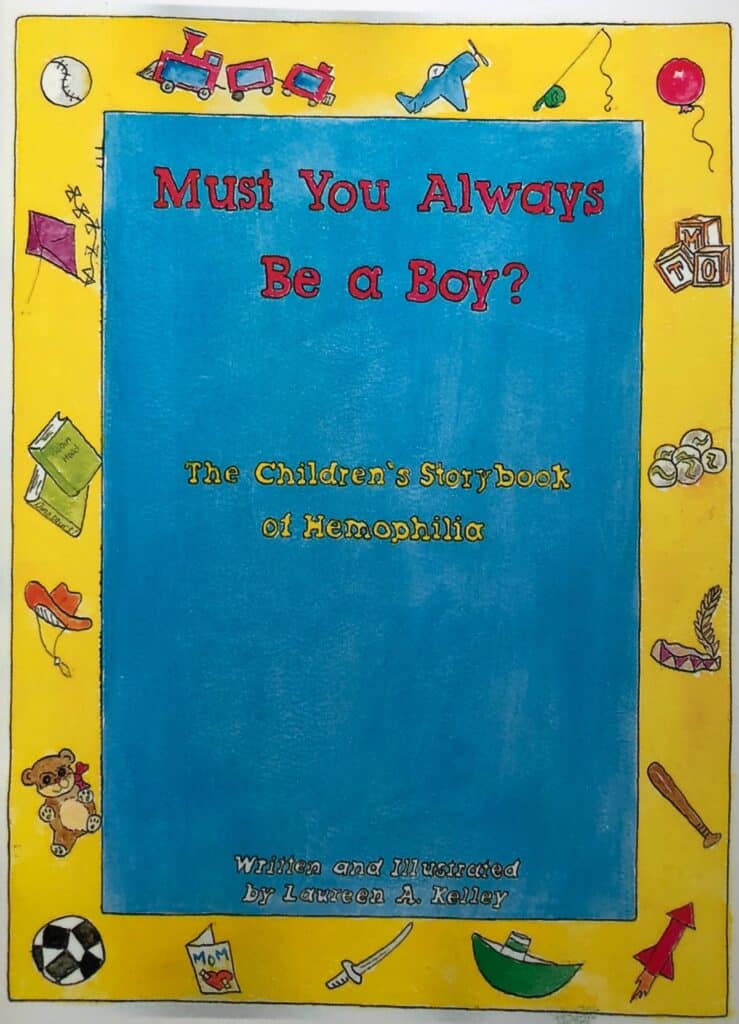
World Hemophilia Day, that is, in rhyming fashion! To celebrate, we are giving away copies of the first children’s storybook on hemophilia, Must You Always be a Boy? I created it over 30 years ago for my child with hemophilia when I realized there were no books for our children. I guess now it’s a “classic”!

Told in rhyming fashion, Dr. Seuss-style, the book contains four humorous and endearing stories for children to help them cope with hemophilia. The first is about over-reactive adults (namely, a well-meaning police officer!). The second, about a very active little boy! The third, about sibling rivalry; and the fourth—and my favorite—about a little monster who is bullied, but comes to realize he is stronger than he thinks.

The books are all based on real people (except for the monsters!).

The book has always been free, but for the first 50 people who email me, there is free shipping in April.

So email me today! And celebrate the day! (It rhymes!). laurie@kelleycom.com.

Operation Shake Down

No lingerie, just butterflies

I must have been watching too much Border Patrol on YouTube, a TV show that highlights detainments and inspections of tourists into Australia. It’s really fascinating how they profile people through body language, looking for certain tell-tale signs of nervousness. Australia is tough on controlling substances it allows into the country to protect its fragile agriculture. And to stop the flow of drugs from countries in Asia. And to stop people from entering trying to find work illegally.

It got me thinking, for once in 27 years, that I should declare “pharmaceuticals” on my customs form when I enter a country. Often when I travel to a country where there are known and trusted hemophilia patients, I try to bring some factor.

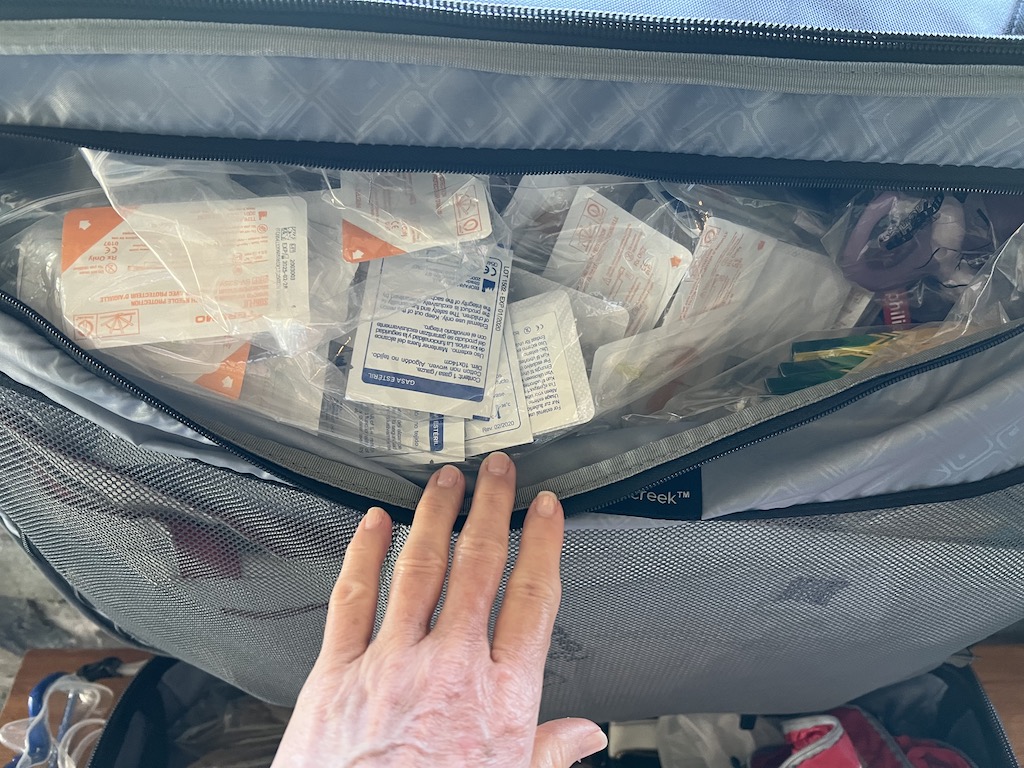
On this trip, I’m visiting two islands: one does not provide any factor at all for its patients, and one does, but not enough. I brought about $200,000 worth for one country, and about $50,000 worth for another.

And due to what I checked off on the customs form, I got flagged. In the 27 years I’ve been bringing in factor, I’ve been stopped a handful of times only: Pakistan, Russia, Argentina, Jamaica, Haiti. Most customs agents are sympathetic when I say it’s for bleeding disorder patients, and that their country does not buy the needed drugs, and that mine are donations.

But only twice have I ever been “shaken down” for money to allow the product through. This means not legally—as in I’d be fined by the government—but money to go into the customs agent’s pocket. I would never give a bribe for donated factor.

And this customs (I’m not saying which country) is basically a wooden box with a rubber stamp and a bored official with no visitors and too much time on his hand.

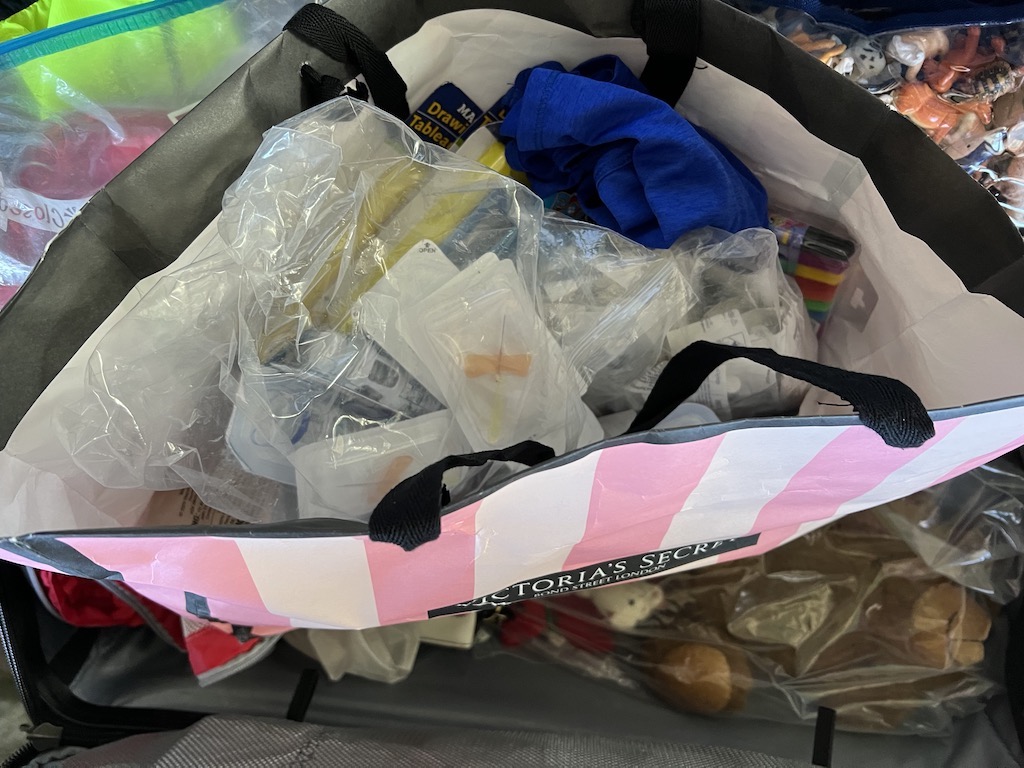
“Let me see the product,” he asked. And I opened my suitcase, which also held: a teddy bear, stuffed animals, lots of packages of crayons, some toys, a red ball. “For the kids on the island,” I offered. And lots of factor in a Victoria Secrets’ bag.

I explained about the drug, who it was for, what it meant, but he replied, “Everything has a value. How much is it worth to you?”

I knew immediately what he was saying, but played dumb. “It’s worth nothing. It can only be used by the patients with hemophilia.”

A little stand off ensued, with him posturing, maybe expecting a woman would be afraid of him, and me… smiling.

Just like the shake down several years ago, different country, he waved me through. And our patients with hemophilia are getting their donated medicine.

Barbados… Holding

The bustling airport, the long lines, new hotels popping up… all speak to a brisk tourism that provides the tiny island nation of Barbados with a staggering 17.5% of its $4.8 billion GDP. But hemophilia remains a quiet part of this country of 281,000.

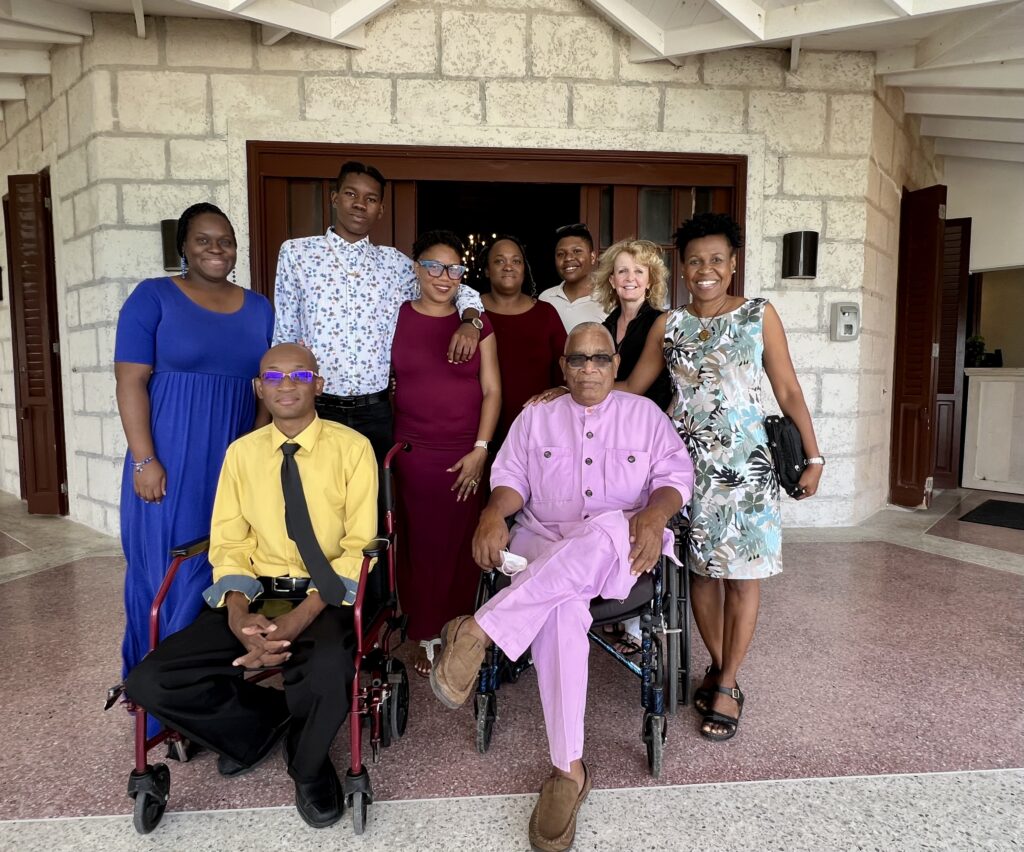
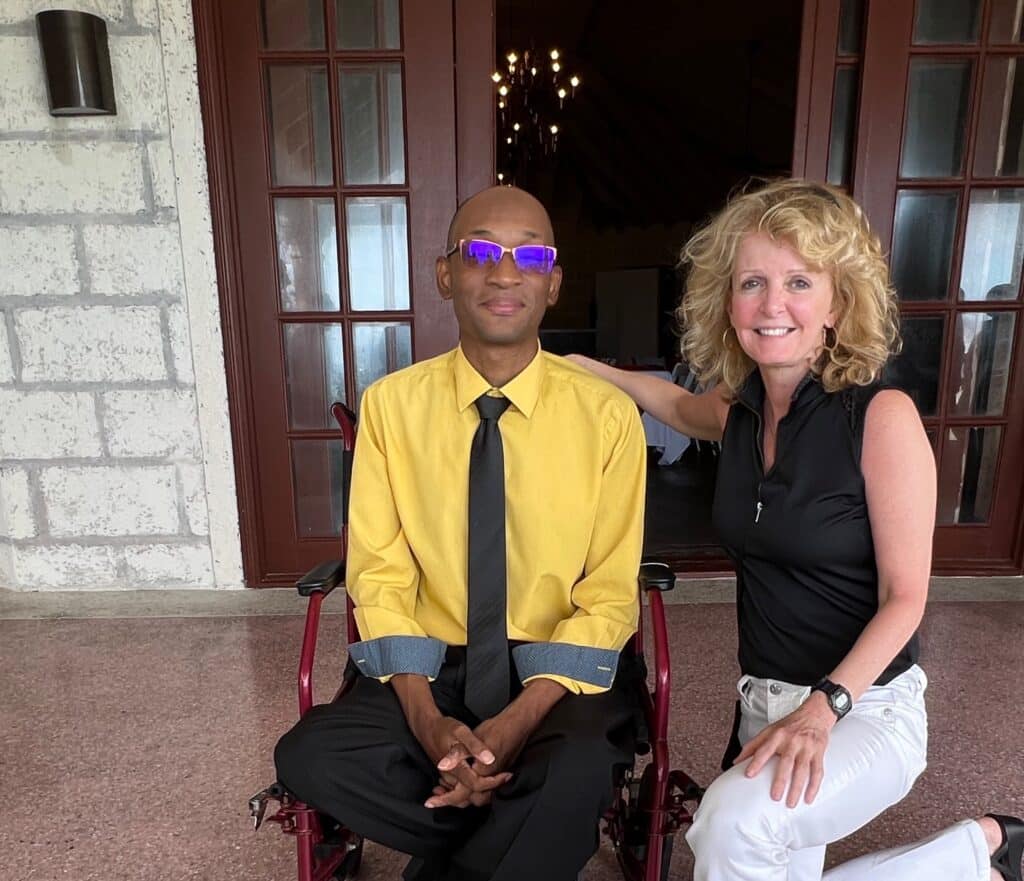
Laurie with the members of the Barbados Haemophilia Association

I last visited in 2014, when I had already made contact with Sofia, a young mother there in need of factor. I sent her some and in turn, with a bit of guidance, she was kind enough and motivated to start the Barbados Haemophilia Association, which continues this day. She has since left the island to raise her child in the United States, and Erica Worrell, another mother, took over as president.

It’s not easy. And like many businesses, nonprofits and lives in general, momentum was cut short by the pandemic. This was my first real country visit for hemophilia-related purposes, since the pandemic. I last saw Erica on the streets of Glasgow, Scotland in 2018, following the World Federation of Hemophilia Congress, as we were both window shopping. I looked forward to hearing how things were going; what were the factor needs; what were next steps?

After a lovely luncheon I hosted today for some of the families, I can see that hemophilia in Barbados seems in a holding pattern.

There is much potential. It’s a small island; only 33 patients known patients, with quite a few related. The government even buys some factor. They have a powerhouse of a nurse in Virginia, who knows everyone and knows hemophilia.

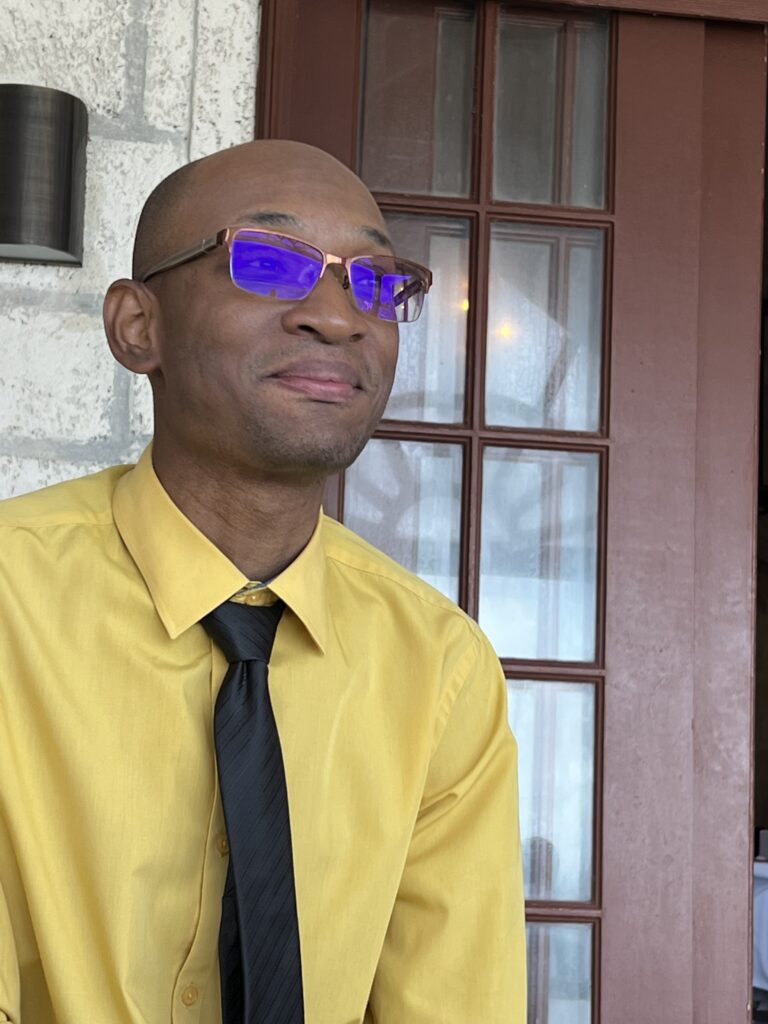
Unfortunately, the ERs do not. Despite the BHA’s best efforts, Jeffrey, a man with hemophilia B who I met the last visit, said, “I’m scared to go to the hospital.” Apparently the ER staff, as in many developing countries, do not place hemophilia as a priority (if they can’t see the bleed), and do not listen to the urgent requests of the patients or parents.

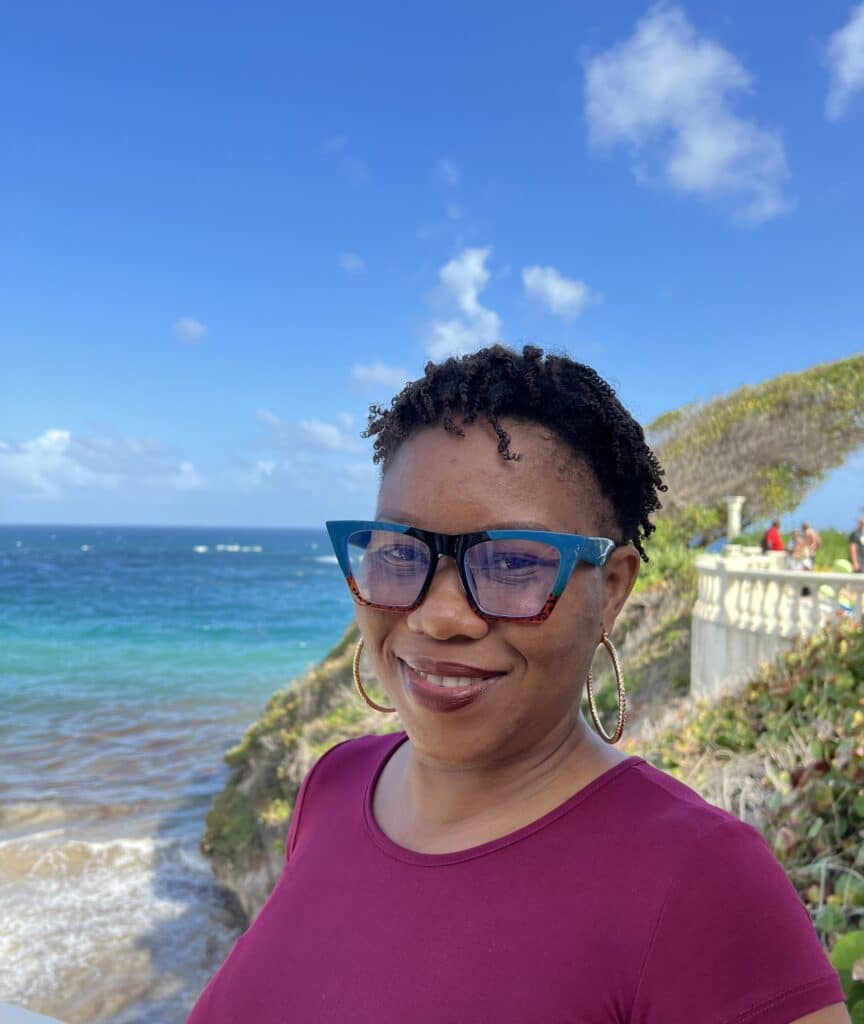
Erica Worrell, president of BHA

They also have problems with racial divides, believe it or not. There is a parish (like a county) called St. John’s, where descendants of the Scottish and Irish indentured servants or forced laborers who once landed here hundreds of years ago settled. They tent to keep to themselves. There are hemophilia patients there, but not much is known about them.

Access to factor is good, when it is available. What is provided by the government and by the WFH is typically not enough to meet needs. Though it certainly is much better since I visited in 2014! Erica and the BHA are well connected now to the WFH, which was one goal of forming the BHA.

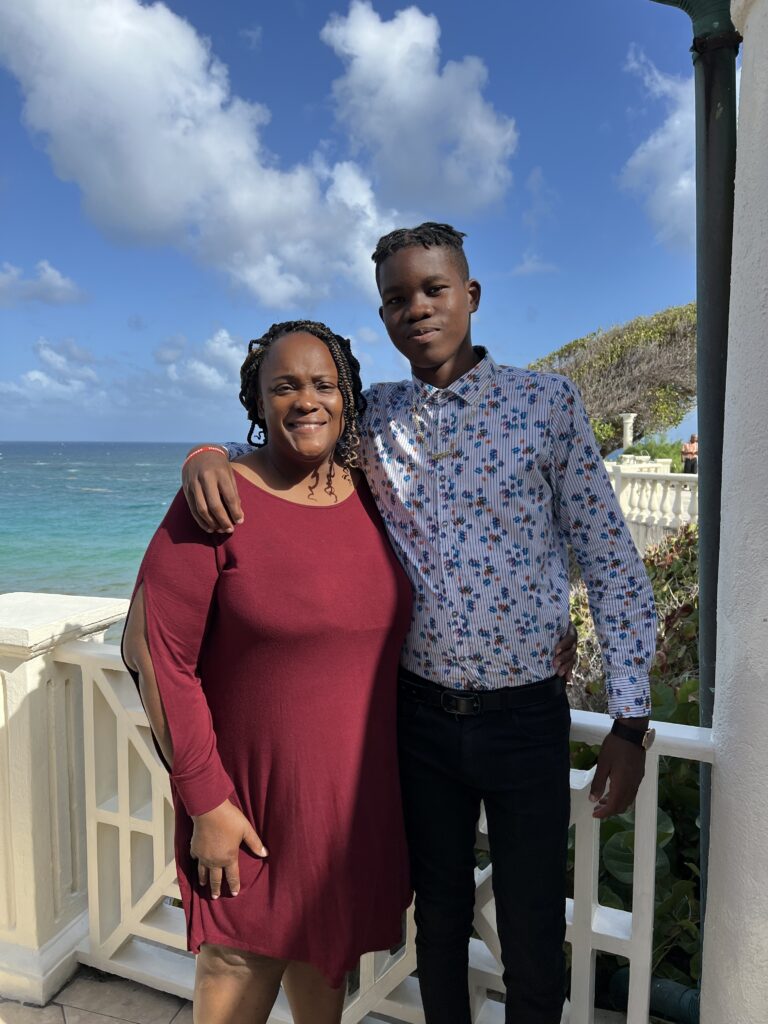
Jeffrey was one of 11 children growing up in the 60s. One brother also has hemophilia. His nephew, Leemar, and I are good friends now on Facebook messenger, and he lets me know when he needs factor (FEIBA or NovoSeven). A great-nephew, Konnor, was also there, a rising star! He has big dreams to become a hematologist, and something tells me he is going to succeed.

Laurie with Leemar

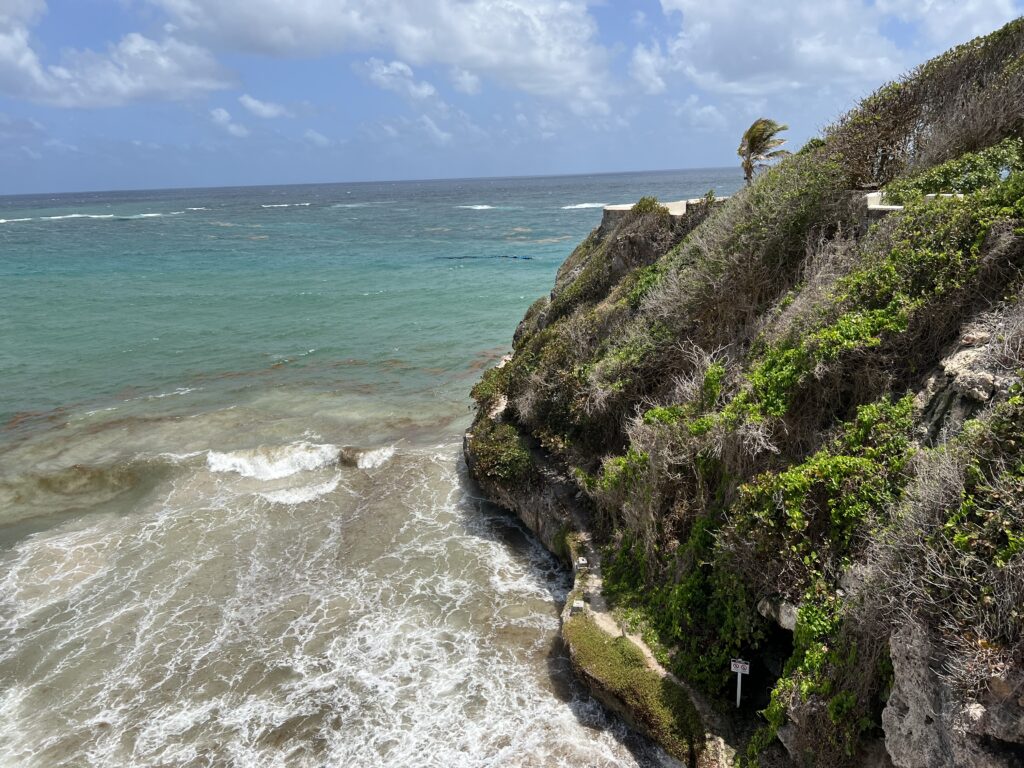
At least things are completely better than when Jeffrey was young. He tells me mischievously that as one of 11 children, “They couldn’t keep on eye on me so much!” He is famous as a teen for cliff diving… without factor! He describes the pain he endured as a “monster. You could feel it creeping up on you, thump, thump, as the knee got bigger and bigger.” The pain was excruciating, but Jeffrey tried to be stoic. Life was measured second by second then.

Thankfully now, because of the combined efforts of the BHA, WFH, and the dynamic nurse Virginia, a new generation has a chance. Barbados seems a bit paused, but it is starting to rise again, like the rest of the post-pandemic world. Erica already has a new idea for a comic-book style publication about the Jeffrey’s story, Leemar’s story… everyone’s. It’s a great idea, so long as they leave our Jeffrey’s cliff-diving escapades!

We parted as good friends, and they dispersed with the bundle of factor and medical supplies I brought. I’ll be back next year, with more factor, supplies and hoping to see activities and a new comic book!

HemaBlog Archives
Categories