Laurie Kelley

Medicare… Me?

Yup. This week I turn 65, and I am officially on Medicare! It makes turning 65 a joyous event. Really!
Switching healthcare policies over to Medicare was surprisingly easy. But partly this is due to my previous work on hemophilia and healthcare. Back in 2005, we were the ones to alert the community to the “Coming Storm” in insurance. We alerted the community that choice was going to start getting restricted; you would need to accept tiers of medicine, PBMs were going to dominate, and choice of factor may no longer exist. All this in the name of healthcare cost-cutting. And it all came to be.

We took our message out on the road, in a live-action form of our newsletter PEN’s Insurance Pulse, calling the workshops Pulse on the Road. We did this for 10 years. I must say that Michelle Rice, mother of two with hemophilia and formerly with the National Hemophilia foundation was our healthcare insurance guru, and taught me so much!
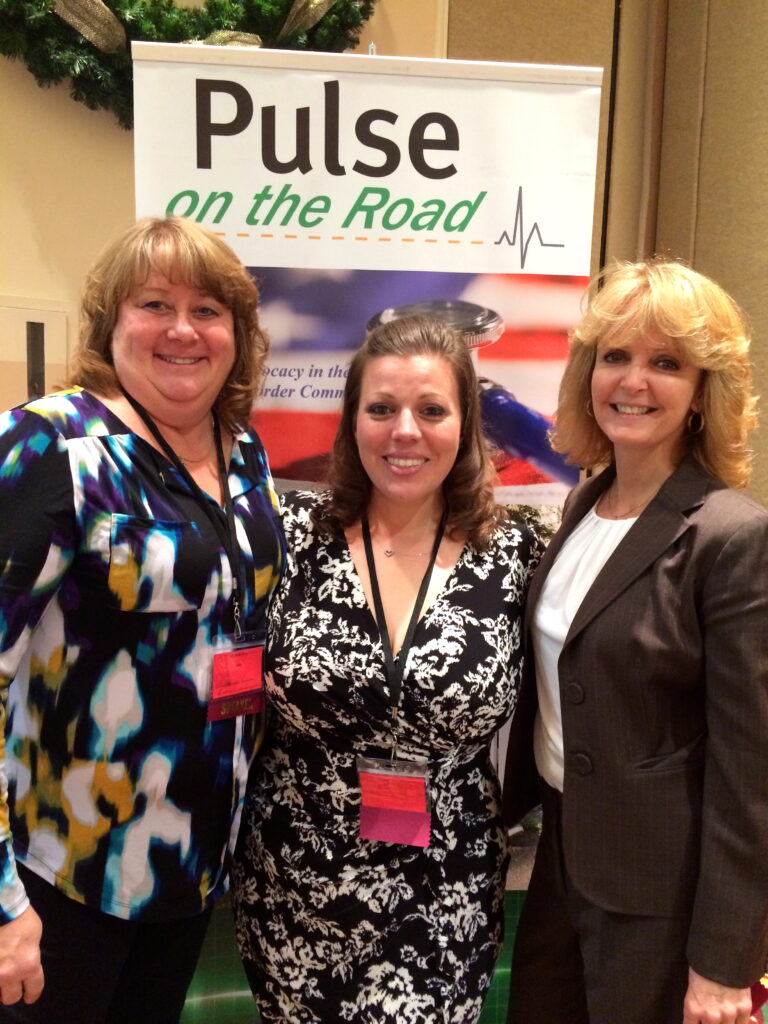
Glory days! Michelle Rice, Kelly Lynn Gonzalez and Laurie Kelley

And now I get to use it. Medicare is for anyone over age 65. It’s an entitlement program; you start contributing to it when you start working, kind of a forced saving plan. It’s made up of several parts. Part A is free of cost, but has limited healthcare coverage. It covers medically necessary inpatient hospital care (including rooms, meals, general nursing and drugs), skilled nursing facility care, some nursing home care (if following an inpatient hospital stay) and hospice care.

Part B is optional but I strongly urge everyone to get it; it doesn’t cost that much per month as an add on. It covers: medically necessary doctor services; outpatient medical care; durable medical equipment; some preventive care and other medically necessary services Part A doesn’t cover, such as ambulance services; cardiovascular, cancer and diabetes screenings; and laboratory services. Pretty important stuff, especially as you age.

Part D covers prescription drugs.

Our community is aging, which is good news! But people with hemophilia from previous generations, now in their 60s and 70s will have health issues, such as joint deterioration. It really pays to advocate, ask lots of questions and learn more about Medicare. You can enroll during the month you turn 65, but you should start researching it and apply for it three months before that. Go to https://www.medicare.gov/ to learn how to apply.

Until then, enjoy your youth! And stay on top of all insurance, Medicare or not.
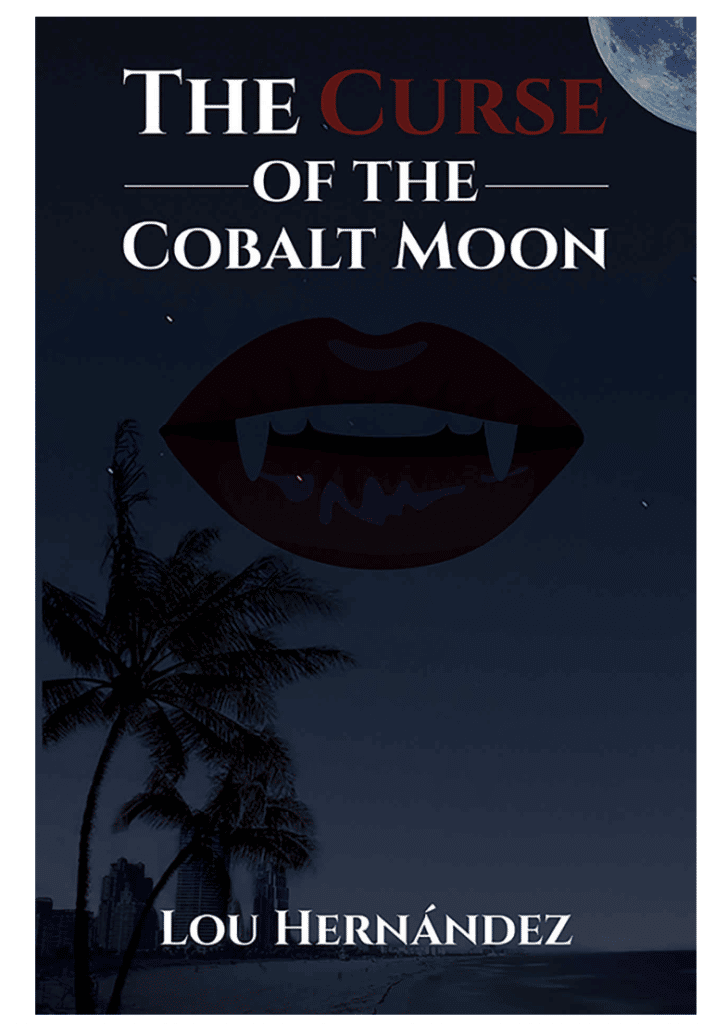
The Curse of the Cobalt Moon

Excerpted from PEN, 11.20

Here’s another Halloween treat in hemophilia! The Curse of the Colbalt Moon by Lou Hernandez (Austin Macauley Publishers, 2019) is a fictional book for teens, that includes vampires and hemophilia!

Rodolfo Josue Puig, who goes by “Joshua” to fit in, is a high school junior living in South Miami. Born in Cuba, Joshua was only nine when he was specially airlifted with other Cuban children to America in 1960. With no family members to help him, Joshua lives in a foster home. He loves playing on the varsity baseball team. Like his grandfather, Joshua has hemophilia that he treats with a daily injection of fibrinogen. After a fight with a teammate, Joshua is suspended from the school baseball team for his hemophilia, not because of the altercation. From a classmate, also from Cuba, Joshua learns that he is a “docile” half-vampire because his human mother married a vampire.

On the hunt night of the cobalt moon, hostile half-vampires (having a human father and vampire mother) drain the blood from docile half-vampires to become full vampires. Joshua and his classmates (some are also docile half-vampires) make many fatal errors of judgment while fleeing for their lives, but they eventually escape. Apparently, being a docile half-vampire improves baseball skills and reduces the bleeding due to hemophilia! The treatment of hemophilia seems inappropriate for the 1960s, and the genetics of vampires is never fully explained.

But every vampire story is a bit different, isn’t it?

You Should Donate Blood (But Not Like This)

I missed promoting National Blood Donation Week, which was September 1-7. And International Plasma Awareness Week (IPAW) just ended and was held October 3-7. This is promoted by the Protein Plasma Therapeutic Alliance (PPTAglobal.org), which is also involved in hemophilia. There are still factor products made with human plasma, so it’s always good to donate!

But don’t think it’s like the following donation story!  I love reading about medical history, especially about the men and women who discover cures and breakthroughs. One of my favorite stories is the history of blood, particularly how physicians and researchers employed it and through research and trial and error, learned how to properly transfuse. And since I wrote about vampires and vitalism (sort of like a blood transfusion!) last week, let’s visit this story.

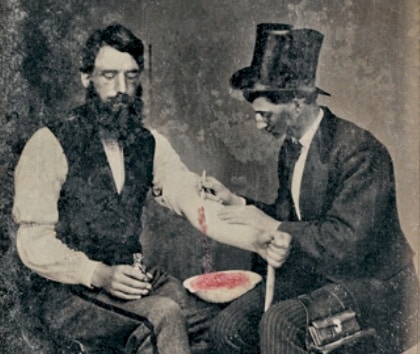
Blood letting

The ancient Greeks saw all phenomena as the result of the interaction of four elements: air, fire, wind, earth. In the body, this manifested as “humors”: phlegm, choler, bile, and blood. The Greeks believed good health meant maintaining a balance in the humor, so draining blood (“blood-letting”) and purging the digestive system should help restore balance.

One of the first human blood transfusion first took place in Paris, in the 17th century. It took a wild and undiagnosed insane man, Antoine Mauroy, to help change the course of history.

One night in 1667, in a frenzy, he stripped off his clothes and ran through streets of Paris, setting fires. Dr. Jean-Baptitste Denis, physician to king Louis XIV, had been experimenting with transfusing blood from animals into humans. He had his “aha” moment: let’s try this on Mauroy.

He infused ½ cup of calf’s blood into the mentally besieged man. Why calf’s blood? He believed that since the calf was a calm animal, its blood would be calm. Infusing it into Mauroy should calm the wild man.

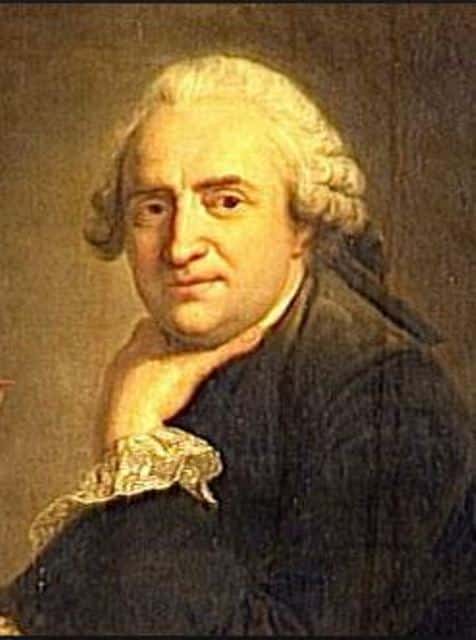
Dr. Jean-Baptitste Denis

This belief was called “vitalism,” that the blood somehow carried the essence of the creature. A stag’s blood carried courage; a horse’s, strength. A calf, calm. 

Prior to this experiment, other physicians had dabbled in transfusions with animals. Richard Lower, an English physician, tried transfusing blood from one dog to another: he figured out how to infused from an artery into a vein and it worked. His findings about the transfusion of blood are often ranked among the most important discoveries in medical history. And he is still remembered one of Oxford’s finest doctors. The English medical community worked on transfusions a year before Denis.

Dr. Denis had also tried transfusions in humans twice before, successfully.

So back to the madman. Unfortunately, Antoine Maury eventually died after the third infusion. Dr. Denis was accused of murder, and later acquitted, but it turned out that Maury’s wife poisoned Maury! He wasn’t the only wild one in that family. Human transfusions were stopped, and another 150 years would pass before they were attempted again.

And since it’s almost Halloween, I would add, unless you include vampires.

Hemophilia: From Vitalism to Vampires

Halloween season is here! I’m already seeing decorations going up of ghosts, ghouls and… vampires. Vampires are steeped in horror lore, because they thrive on human blood. And blood has fascinated humankind throughout its history. I thought I’d run a post from almost ten years ago, about vampires, blood and hemophilia.

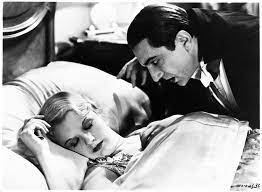
Dracula’s next victim!

Blood at once attracts and horrifies; it is the stuff of legends and tales, myths and medicine. I recently read the classic Dracula [read the book review below] and was amused to read how Dr. Van Helsing wanted to help the young Lucy, a victim of a vampire, by giving her a transfusion of blood. “Is it you or me?” he asks Dr. John Steward, about which one will roll up their sleeve to donate. Steward replies, “I am younger and stronger, Professor. It must be me.”

Steward offered his blood based on the concept of vitalism, that blood contains the traits of the being in which it flowed—a concept that was unchallenged for 1,500 years. Later in the book, Van Helsing says to Lucy’s fiancé Arthur, “John was to give his blood, as he is the more young and strong than me…. But now you are here, you are more good than us, old or young, who toil much in the world of thought.
Our nerves are not so calm and our blood so bright than yours!”

So Arthur becomes the better blood donor because he is calm and not scholarly! Of course, this is nonsense, but author Bram Stoker fell for the widespread belief in vitalism when he wrote his book. Dracula isn’t so picky; he pretty much would drink anyone’s blood.

Douglas Starr tells us in his book Blood* that the Egyptians saw blood as the carrier of the vital human spirit, and would bathe in it to restore themselves. Roman gladiators were said to have drunk the blood of their opponents to ingest their strength. “Our own culture attaches great value to blood, with the blood of Christ as among the holiest sacraments, blood libel as the most insidious slander, the blood-drinking vampire as the most odious demon.”*

Vampires… which are repelled by garlic and crucifixes (the two seemingly have nothing to do with one another). Yet rather than secure eternal spiritual life by consuming wine that has been transformed into Christ’s blood during Christian mass, Dracula drinks human blood to extend his physical life. 

The only thing scarier than vampires is the proliferation of teen movies about vampires!

*Starr, Douglas (2012-09-05). Blood: An Epic History of Medicine and Commerce (Kindle Locations
97-101). Knopf Doubleday Publishing Group.

Great Book I Just Read

Dracula  [Kindle]

By Bram Stoker

This classic, wonderful and visionary, has inspired an entire genre of books and movies. Jonathan Harker, a young English lawyer, is summoned to Castle Dracula in Transylvania to finalize a real estate transaction with the eerie Count Dracula, who is purchasing property in London. Harker is warned by local peasants, who give him crucifixes and other charms against evil. As a guest, Harker soon notices strange things: the Count has no reflection, is never present in daylight, and scales the castle walls downward, like a lizard. Unable to escape, Harker is soon a prisoner, until the Count reaches London, with 50 boxes of earth. The novel is told only through letters and diary entries of the main characters, including: Harker’s fiancée, Mina Murray; her friend Lucy Westenra, who is bitten by Dracula and slowly turns into a vampire; Dr. John Seward, Lucy’s doctor and once beau. Harker reappears in Budapest and eventually returns to London. Dr. Van Helsing, an expert on vampires, is called in from Holland to help save Lucy. Everyone realizes Dracula’s scheme to populate
London with the “Undead”—vampires. When Mina is bitten, and begins to turn into a vampire, the men sterilize the boxes of earth, set about London. Dracula, having no haven to stay when dawn comes, flees back to Transylvania, while the men pursue him. This is a fantastic story, though the language is not lofty or even that clever, with memorable characters, and cleverly told in letters and diaries. Perfect October reading. 5/5 stars.

Does Hemophilia Mean Brittle Bones? Part 2

By Paul Clement

In part one of this two-part series on bone health, we discussed osteoporosis and how it causes bones to become weak and brittle. We also reviewed some risk factors for developing osteoporosis—and having a bleeding disorder is a risk factor for developing osteoporosis. But just because you have bleeding disorder does not mean you are destined to develop osteoporosis—you can do many things to lower the risk of developing osteoporosis or to lessen its severity.1

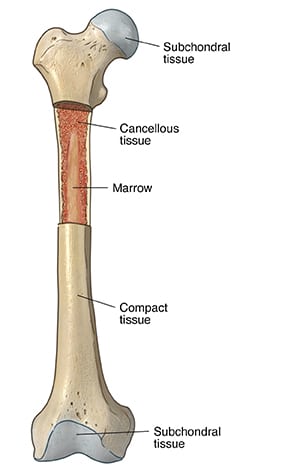
Front view of a leg bone with cut section showing bone marrow.

So, what can you do? First, if you smoke, stop! If you drink several alcoholic beverages or three or more cola soft drinks a day, reduce your consumption of these beverages. Eat a healthy diet containing adequate amounts of calcium and vitamin D. (Many people are deficient in vitamin D, which helps the body absorb and retain calcium and phosphorus. Check online for daily calcium and vitamin D requirements and recommended foods). And exercise!

Bone growth changes in response to stress and strain applied to the bones. If you are sedentary, such as sitting around all day or sitting in an office, your bones are not subjected to regular mechanical stress. So the remodeling process tilts towards resorption and bone loss occurs. The opposite is also true. When bones are subjected to regular stress or mechanical loading, such as when walking or running, then over time, the remodeling process tilts towards new bone formation, which keeps your bones healthy and can help prevent, delay, or reduce the severity of osteoporosis.

Exercise is key! Healthy lifestyle choices are important, but they alone cannot prevent osteoporosis unless you add exercise. And not just any exercise routine—although swimming and bicycling tone muscles and provide a great cardio workout and are often recommended for people with hemophilia, they do not stress the bones sufficiently to promote new bone formation. To develop and maintain healthy bones you need to engage in regular weight-bearing exercise, such as brisk walking, dancing, aerobics, stair climbing or jogging as well as resistance exercises such as light weight lifting or use of elastic bands. (Resistance exercises are especially important for bones of the upper body, including the arms and shoulders.) Note that higher-impact weight-bearing activities, such as brisk walking or jogging, provide more benefit to bone health than lower-impact activities, such as a leisurely stroll. And although exercise is crucial in maintaining bone health throughout your lifetime, the greatest benefit is seen in childhood through age 20, when the skeleton is more responsive to exercise than in adulthood and old age, when bones become less sensitive to exercise. Greater bone strength when you are young pays lifetime benefits in the form of greater bone strength over a lifetime.

So, if you have a teenager who likes to watch TV or play video games for hours on end, get them outside and exercising. If they don’t play sports, give them chores that make them walk or carry things. Walking the dog works! Their bones will thank you!

Of course, if you have not engaged in any exercise for a while or have painful joints, you should discuss your health status with your healthcare provider before starting any new exercise program. A physical therapist associated with a hemophilia treatment center is an excellent resource to help you get started.

  1. There are no outward signs that you have osteoporosis—until you break a bone. The U.S. Preventive Services Task Force recommends screening for osteoporosis in women 65 years or older and men age 70 years and older, and anyone who has broken a bone after age 50 years. However, if you have hemophilia, you may already be on the path to osteoporosis in your 30s. Because of this, it is often recommended that people with hemophilia have a bone density scan earlier rather than later. (A bone density scan is a simple and fast procedure which measures bone mineral density using a special type of X-ray scan called dual energy X-ray absorptiometry, or DEXA scan.)
HemaBlog Archives
Categories