Laurie Kelley

Egyptian Bull God in Hemophilia

I’m in Egypt, first to visit a patient with hemophilia (read this story in last week’s blog!) and second to vacation and learn all I can about ancient Egypt. It’s an incredible tour, complete with lectures and a visit from the famous Dr. Zahi Hawass!

As I am learning about the ancient gods and pharaohs, one symbol keeps appearing on the carvings on the temples and tombs. A bull with the sun sign between his horns. Where have I seen that before? It’s the logo for the pharmaceutical company Novo Nordisk, which is a Danish company.

Who was this god? He is Apis, one of the sacred animals of ancient Egypt. He represents strength and fertility. His mother is sometimes listed as Hathor, an extremely important goddess, whose temples are everywhere. I visited some and carvings everywhere show the cow and bull.  

Our guide, Mohammed, tells me Hathor is the goddess of health and motherhood, and was also the mother of the god Horus, one of the most important gods of ancient Egypt.

I just found this all so interesting. The word “logo” is defined as “meaning,” so it’s always important to choose a logo (image, color, size and intensity) that has specific meaning to the company. I think Novo Nordisk chose well!

Visit to Egypt: Sharing with the One

Tamer Hanna

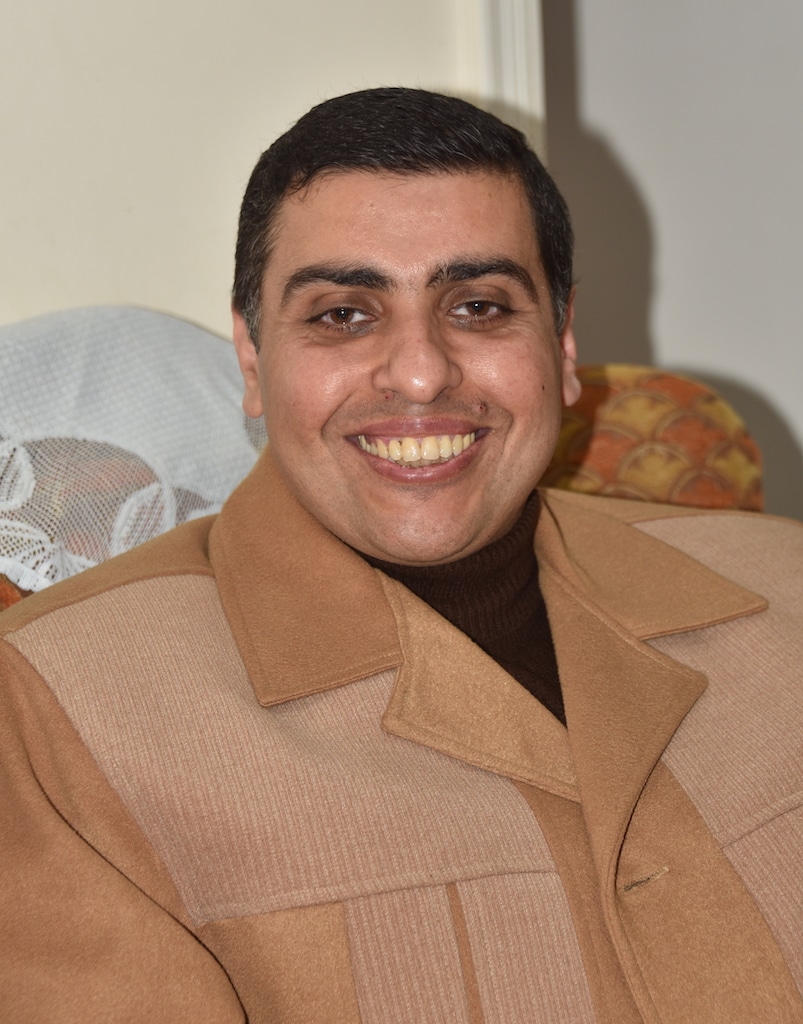
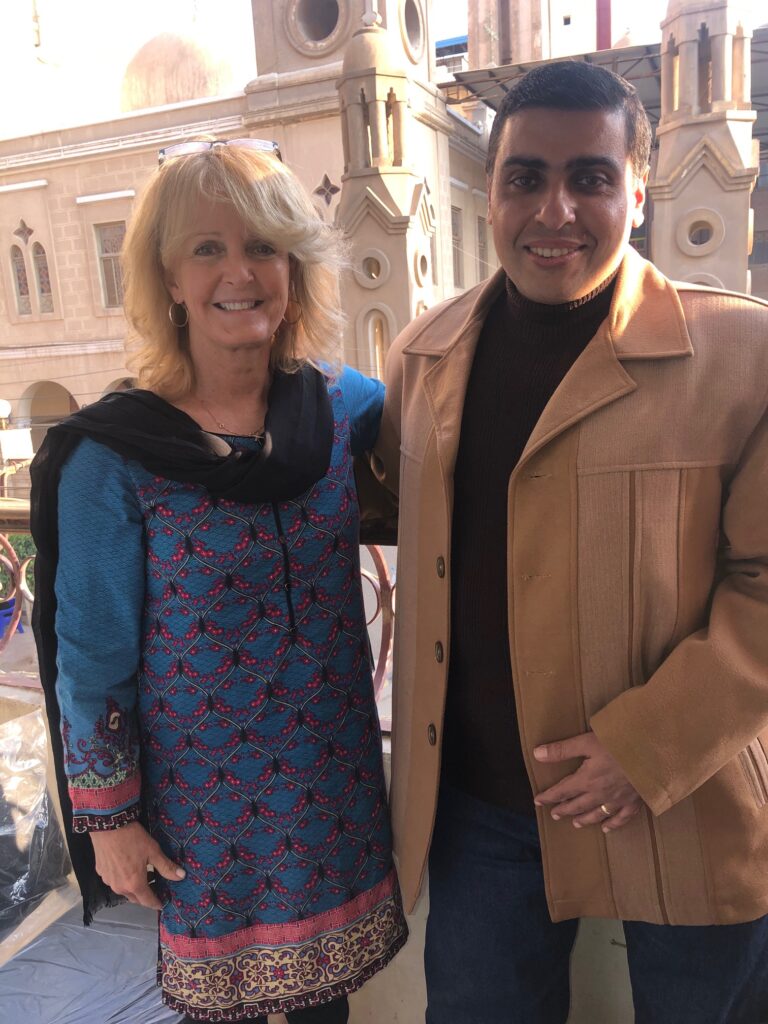
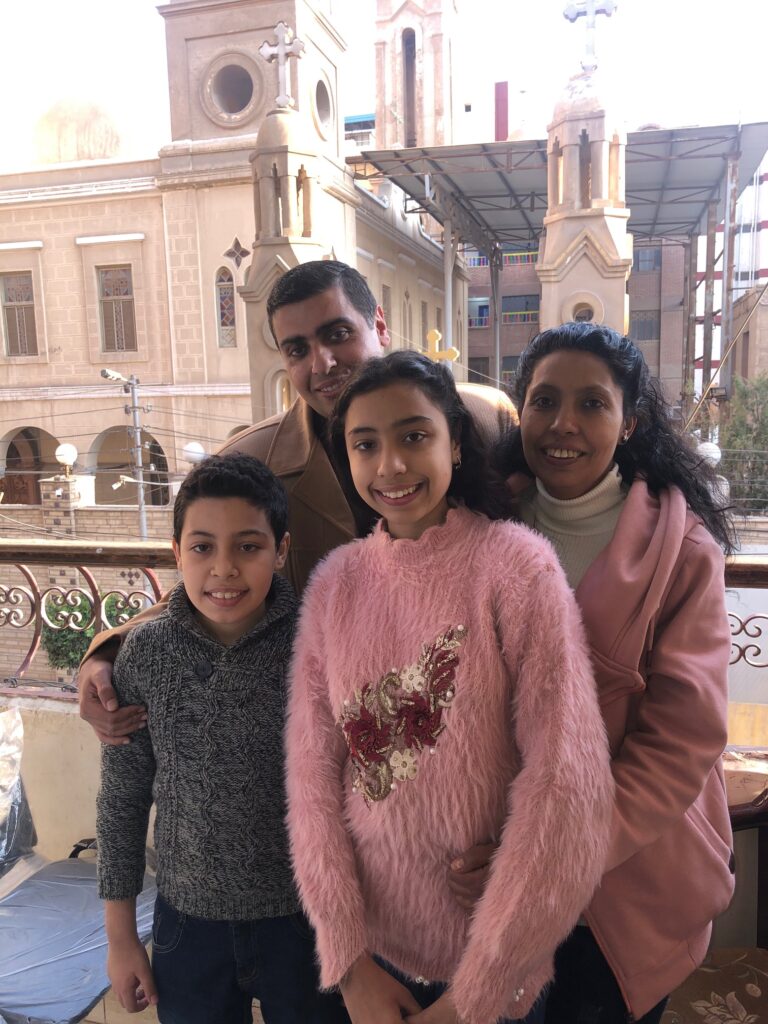
Tamer Hanna is blessed: intelligent, handsome, fluent in English, beautiful wife and two wonderful children. At age 45, he has a steady income and is self-sufficient. He also has a problem: he has hemophilia. And he lives in Egypt, which does not receive enough donated factor so that he can have some at home, or even when he bleeds.

I met Tamer via email about 17 years ago, long enough that I can’t recall exactly when he contacted me, or how we became friends. It was about needing factor, and he knew that I donated factor. His story grabbed my attention and heart: he had had his left leg amputated above the knee due to uncontrolled bleeding. While this sounds contradictory, it’s true: bleeding into the leg can cause the leg to swell, cutting off various blood vessels. The trapped blood can become infected, gangrenous, threatening the life of the patient. In March 2001, Tamer was able to come to the US, to Tennessee, where an Egyptian hematologist named Dr. Wahid recommended amputation. While this is a story for next week, Tamer eventually returned home to Egypt with no leg and a prosthetic. The same prosthetic he has this very day.

I started sending him factor around 2006, and have continued also to this day. In fact on this trip, my first to Egypt, where I am right now, I had about $200,000 with of factor to give him. Egypt has become so difficult to ship factor to. This was the easiest way.

I had promised to meet with him one day, the latest promise was in 2018. He had given up asking when I was coming to see him. I only told him about this trip about three weeks ago, and sent him the flight itinerary so he knew I was serious this time!

I left last Thursday, and in 24 hours I landed in Cairo, and sailed through customs.

On Saturday morning, February 26, my driver Ahmed picked me up and after a couple of stock phrases from each of us (he spoke almost no English and I almost no Arabic), we were on our way. The streets of Cairo were clogged with auto-rickshaws, cars, trucks, buses, “microbuses,” and tour buses. Ahmed was a deft driver, weaving in and out of traffic on the unlaned highway. After a few heart-stopping moments, we would give each other the thumbs-up sign. Traffic was heavy and a 90-minute trip took almost three hours. I took in the towns and farms we passed in this ancient land.

We finally arrived at a modest concrete building, which housed apartments. Luckily there is an elevator. With only one leg, and always on crutches, it’s hard for him to get around. He works as a teacher of English as a second language at a nearby school. On his days off, he mostly stays home, in a small but comfortable apartment. The small balcony overlooks a busy side-street, directly across from the Coptic Christian church, of which he is a dedicated member.

Our meeting was surreal! Tamer asked ahead of time if he could hug me; something not common in conservative Egypt. But of course he could, and we did. We rode up to his floor, and seated ourselves in the living room. His wife Susan had gone to great lengths to prepare a feast for me: two kinds of soup (including the delicious molokhia), chicken, beef, vegetable rolls and my favorite, a baclava with ground beef in a fluffy pastry. It was delicious, especially after such a long ride.

His children, Dede, age 12 and David, age 10, politely stayed throughout the entire visit, and were well behaved and respectful. I had brought gifts for them, and they gave me a lovely teacup with Nefertiri on it!

We chatted for three and a half hours, about what life is like in Egypt when you are disabled. There are no disabled facilities or special treatment for those with chronic problems. Wheelchair accessible? Forget it. Access to factor for a random bleed? Not going to happen. Even getting married was a problem. Tamer had had prospective wives (“The girlfriend/boyfriend concept does not exist here,” he once told me), but all had backed out when they learned about hemophilia. Oh, it wasn’t his hemophilia that was the problem; what if they had a daughter and the disorder was passed on to a grandchild? He found love in Susan, who happens to be a first cousin. She is kind, loving, very funny, devoted to making a happy home for them all.

His children are learning English, and Dede wants to be a doctor someday!

I promised Tamer I would always find factor for him. He’s been a faithful friend all these years, soon to be decades, and I have no doubt our friends in America will always donate enough to help him.

Tamer works hard and yet earns in a month about what one nice meal would cost for 3-4 people at a nice restaurant. He doesn’t take vacations or go shopping or attend sports or concerts. He doesn’t exercise for fear of causing a bleed. Think about this: he messaged me this once, “Many times I imagine what my life would be without this factor that you guys would throw away. My family wouldn’t find a loaf of bread to eat because the father, who is the only working person, would be bedridden. There would be no hope for giving my children education. As long as I am on my feet working, these three people in my small family will be safe and secure. Laurie, you are doing more than you imagine.”

But I can only do this with everyone’s help. So thank you, everyone, who has donated recently, because your factor went to help tamer.

Tamer and I share the same faith, which says, “Anyone who has two shirts should share with the one who has none, and anyone who has food should do the same.” (Luke 3:10-11)

Substitute factor for a shirt and food and this is what we are doing for Tamer. Thank you, Tamer, for a great visit, and thank you hemophilia community in America for sharing “with the one.”

Go Away!

Spring is coming, and it feels like it, as more and more, the country is opening up. It’s wonderful to see that some of our community events are back in person! Read below to see which ones you might attend. Remember, we are not yet through the pandemic. Please be sure you are vaccinated, and be careful. I’m going to wait a bit more before attending, but remember, you can always attend virtually. Check it out!

Factor IX Families Welcome!

Register for the Coalition for Hemophilia B’s annual meeting in Orlando! May 19-22; travel grants available! Attend also virtually. Register here.

NHF’s 74th Annual Meeting

NHF is thrilled to announce that its 74th Annual Bleeding Disorders Conference (BDC) will take place from August 25 to 27, 2022, in Houston, Texas. After two years of uncertainty, NHF is excited to gather our community in person! You can also attend virtually. Read more here.

Saddle Up!

Texas is the place to be this year! HFA will hold its annual meeting in person in San Antonio, the first time since 2019. Register here!

All You Need is Love

“All you need is love. But a little chocolate now and then doesn’t hurt.” – Charles M. Schulz, Cartoonist

It’s Valentine’s Day (almost)! And since HemaBlog is about anything to do with blood and hemophilia, why not include the heart? The heart is associated with our emotions–probably because we feel it beat fast when we are afraid… or in love. I confess when I met actor Paul Newman, my heart rate shot up to about 200 bpm! And I told him so!

Here are some fascinating facts about this important organ*:

  1. The heart beats about 115,000 times and pumps about 2,000 gallons of blood every day.
  2. An electrical system (a cardiac conduction system) controls the rhythm of your heart.
  3. The heart can continue beating even when it’s disconnected from the body.
  4. The first open-heart surgery occurred in 1893. It was performed by Daniel Hale Williams, who was one of the few black cardiologists in the United States at the time.
  5. The earliest known case of heart disease was identified in the remains of a 3,500-year-old Egyptian mummy.
  6. The fairy fly, a kind of wasp, has the smallest heart of any living creature.
  7. The American pygmy shrew is the smallest mammal, but has the fastest heartbeat at 1,200 beats per minute (which actually felt like mine when I met Paul Newman).
  8. The giraffe has a lopsided heart, with their left ventricle being thicker than the right. This is because the left side has to get blood up the giraffe’s long neck to reach their brain.
  9. Most heart attacks happen on Mondays.
  10. The beating sound of your heart is caused by the valves of the heart opening and closing.
  11. Broken heart syndrome has similar symptoms as a heart attack. But a heart attack is from heart disease and broken heart syndrome  is caused by a rush of stress hormones from an emotional or physical stress event.
  12. Heart cells stop dividing, which means heart cancer is extremely rare.

And where did the Valentine shape come from, that represents the heart? It’s believed to come from the siplhium’s seedpod. It looks like the modern Valentine’s heart. The seedpod’s role with love and sex may have been what first helped associate the symbol. 

Happy Valentine’s Day!

*Source: www.healthline.com

What’s in a Number?

Cazandra Campos-MacDonald

Numbers, numbers, numbers. Our society is flooded with numbers. From Social Security numbers to birthdays, PINs, passcodes and checking our weight, we can hardly get through a day without numbers. When you are living with a bleeding disorder, you monitor the assays of your factor, track the number of bleeds per month, check how many doses of product are on hand, and measure the circumference of a swollen knee. But when you live with an inhibitor, there’s another number that can become the focus of treatment: the Bethesda unit (BU).

            The Bethesda inhibitor assay is a test that measures the titer (strength) of the inhibitor, described in Bethesda units. Inhibitor titers may range from less than 1 BU to thousands of BU. Knowing this number will help determine how bleeds are treated. If the inhibitor registers as low titer (less than or equal to 5 BU), bleeds may be treated with high doses of standard factor concentrate. If the inhibitor registers as high titer (greater than 5 BU), standard factor concentrates are ineffective and special factor concentrates called bypassing agents are used instead. Attempting to treat bleeds in the presence of inhibitors is less effective than treating bleeds without inhibitors—so the goal is to eradicate the inhibitor. If the inhibitor registers as less than 10 BU, this is when many providers will have patients begin immune tolerance therapy (ITT), also called immune tolerance induction (ITI), a treatment protocol designed to eliminate the inhibitor.1 Knowing your BU is crucial in order to take the next step in working toward that goal.

            It’s easy to put your faith completely in the numbers. Knowing your current BU is important, but know first that every individual is unique and there are several different ITT protocols. Each person does not react to ITT in the same way. One body may accept ITT easily, and his BU will come down in a short time. Others on the protocol may take years to get the same results. Numbers do not dictate that the treatment for one person will be the same as for another. For example, two brothers, both with severe hemophilia and inhibitors and with the same parents, can live very different lives with an inhibitor. My older son, Julian, was one year old when he was diagnosed with a low-titer inhibitor; it never rose above 5 BU. He immediately had a port inserted, and he started ITT for two and a half years. He tolerized, meaning his inhibitor dropped to zero, and he has never had an inhibitor resurface.

            My younger son, Caeleb, was 11 months old when diagnosed with a high-titer inhibitor that registered over 2,200 BU. His titer dropped to 0 BU at one point after ITT, but now he is living with a low-titer inhibitor, and he receives factor daily to maintain his tolerance. My sons both reached 0 BU after ITT, but they had different outcomes.

            The numbers can be promising and sometimes disappointing. But ultimately, the numbers are a key component to treatment.

            Everyone who tracks his BU has an ultimate goal in mind: to lower the titer to zero. If your titer is 323 BU, your goal may first be 299 BU, then 250 BU.2 Another person may be hoping to get to double digits, and another to single digits. Of course, when you’re tracking your BU, you want to get to zero and stay there. When you reach 0 BU, you may think that the inhibitor is now a thing of the past—but not necessarily. Once 0 BU is attained, the next step is to monitor the half-life of the factor. To be successfully considered tolerized (this is also called complete tolerance), the following must be maintained:

            • The inhibitor titer can no longer be measured.

            • Factor recovery is greater than 66% of normal.

            • The half-life of factor VIII is greater than six hours.3

But someone may live with 0 BU for many years without these three characteristics. This is called partial tolerance. For example, if your child has 0 BU and a three-hour half-life of factor in his body, he will probably continue with the same ITT therapy, which may be daily infusions. ITT is not always successful: an ITT attempt in which inhibitor titers fail to decrease at least 20% over three to six months, or remain over 5 BU after three to five years, is considered a failure. This example shows that not only is BU important, but monitoring the number of hours for the half-life is critical to treatment. So how does a family live with the numbers?

            “Lab work disappointment” is a phrase Kari Atkinson’s family used when the numbers were not what they had expected for their son. “We had so much hope that the inhibitor would go away.” But now, says Kari, “we are not as concerned about the number because we can tell when [the BU is] up and down by how our son bleeds.” How an individual’s body reacts to treatment is the ultimate measure of success. If you’re living a full life with few bleeds and an active inhibitor, the important thing is that you are healthy, happy, and thriving. Eric Frey’s son, age seven, has lived with an inhibitor for over five years. “After time, we learned two things: First, we already knew what the results [BU] were going to show by the way our son was bleeding, bruising, and behaving. Second, the Bethesda number is far less important than how our son was bleeding, bruising, and behaving.”

            Despite living full, healthy lives with an inhibitor, many families still worry about the numbers. “Making peace” with the inhibitor is something that most people don’t want to do. It can feel as if you’re giving in and accepting that the inhibitor will always be present. In order to live a life where hemophilia is not the center of everything, making peace is crucial. “We have had enough experience that we know if the inhibitor is under 7 BU, we are living pretty good,” says Kari. Her family is not focusing on 0 BU, but for now, they know that anything under 7 BU is acceptable. “It’s really hard to not focus on the numbers, especially when you have the active inhibitor and either you need to get below 10 BU to start ITT, or you are doing ITT and trying to get down to zero,” says Eric. “We understand how hard that is. Focus on health. Focus on wellness.”

            Numbers are essential for people living with inhibitors. Keep track of bleeding episodes because this is a significant tool to see if your treatment is appropriate. Continue your regular blood draws according to your provider’s recommendations. Even if you’re not a slave to the BU, it’s vital to monitor the progress of your inhibitor. The key is to enjoy life. Savor every moment. When things aren’t going well, try to remember that life will get better. And when life is good, soak it in.

Cazandra Campos-MacDonald is a motivational speaker, educator, and patient advocate for families with bleeding disorders. She writes a blog chronicling the journey of her two sons with severe hemophilia and inhibitors, and has written articles and blog posts for other publications. Cazandra’s older brother, Ronaldo Julian Campos, died of complications from hemophilia as an infant. Cazandra lives with her family, Rev. Joe MacDonald, and sons Julian and Caeleb, in New Mexico.

1. ITT is a proven treatment toward eradicating inhibitors. Larger-than-normal doses of factor are given in the hope of overriding the inhibitor. ITT protocols can differ in frequency of infusing, depending on the physician’s and individual’s needs.

2. Once you achieve 10 BU, it doesn’t matter if the BU gets lower, because all infused factor is inactivated in minutes. Even so, families living with an inhibitor will find emotional relief when the numbers get closer to zero.

3. D. M. DiMichele, W. K. Hoots, S. W. Pipe, G. E. Rivard, and E. Santagostino, “International Workshop on Immune Tolerance Induction: Consensus Recommendations,” Haemophilia 13(2007): 1–22.

This article first appeared in the Parent Empowerment Newsletter, May 2017

HemaBlog Archives
Categories