

God Bless Us Everyone… with Hemophilia
Doug and I saw a local live performance Friday night of Charles Dickens’ “A Christmas Carol.” It was wonderful! A classic story about a greedy old man who spends his whole life counting his money, living frugally and sharing his wealth with no one. The story is about his visit Christmas Eve by three ghosts: The Ghost of Christmas Past, Christmas Present and Christmas Future. Really four, if you include the ghost of Jacob Marley, his business partner in life, who first comes to warn him of the coming apparitions.

It’s a brillant story, and a metaphor for life. What is most important? Who do we most care about, and why? What will be our legacy when we die?
In the story, the Ghost of Christmas Present takes Scrooge to the house of his employee, the long-suffering Bob Cratchit, who has a son with a mysterious illness. The illness is never disclosed, but we see its symptoms: a crutch, crippling, limping, pain. And when shown the future, little “Tiny Tim” does not survive.
Every time I watch this now, I wonder: could Tiny Tim have had hemophilia?
It’s not far-fetched. In 1859, Tiny Tim inhabited London when Queen Victoria’s son Leopold did (born in 1853), and he had hemophilia. But Tim’s condition was never disclosed. He didn’t have a cough (denoting tuberculosis, common at the time), or any other pain.
I’m going to imagine he did have it; and thanks to Scrooge’s transformation to a benefactor, Tim got medical care, nutrition, support and grew up. Of course, they did not have commercial factor. But even Leopold lived to his early 30s without it.

To those with hemophilia then and now, in the words of Tiny Tim, “God bless us, every one!” And happy holidays!
A Christmas Carol has never been out of print, and is one of the most enduring, powerful stories in English literature.
Texts That Protect

If something big were happening, you’d want to know about it right away, especially if it concerned the factor you or your loved one uses. The Patient Notification System (PNS) is a free service that will notify you about any withdrawals, recalls or warnings concerning your specific product, and even ancillaries. Are you signed up with it?
Launched in 1998 by the Plasma Protein Therapeutics Association (PPTA), a group that is supported by manufacturers of plasma-based products and recombinant products, this system has diligently sent out hard copy, telephone and email notices of any changes in your prescription drugs.
There was a time in the early 2000s when these were frequent, as there were shortages, plant shut-downs, recalls, products taken off line, and more. You can imagine that the specter of the mass HIV infections in the blood supply in the 1980s led to this unique and vital service.
There’s good news now: stringent manufacturing practices, better donor screening and genetically-engineered products means that notices of safety concerns are almost a thing of the past.
Are you signed up? You should be. It’s free, confidential, and now fast! Just recently, the PNS added notifications by text, probably the fastest route these days. You will want to be up to date on any changes in the product you use.
Sign up for the PNS at www.patientnotificationsystem.org or call 888-UPDATE-U.
Thanksgiving in Nepal
In America, we celebrate Thanksgiving in remembrance of how the native Americans assisted the struggling Pilgrims in New England. Right here in my native Massachusetts, in 1621, the Plymouth colonists and the Wampanoag Indians shared a harvest feast that is acknowledged as one of the first Thanksgiving celebrations in the colonies.
I’m not a foodie; farthest thing from it. And cooking? Forget it! My lack of cooking skills are becoming legendary. I like to celebrate Thanksgiving by also helping others in need. When I heard about a young man in need in Nepal, it was a chance to make Thanksgiving for him.
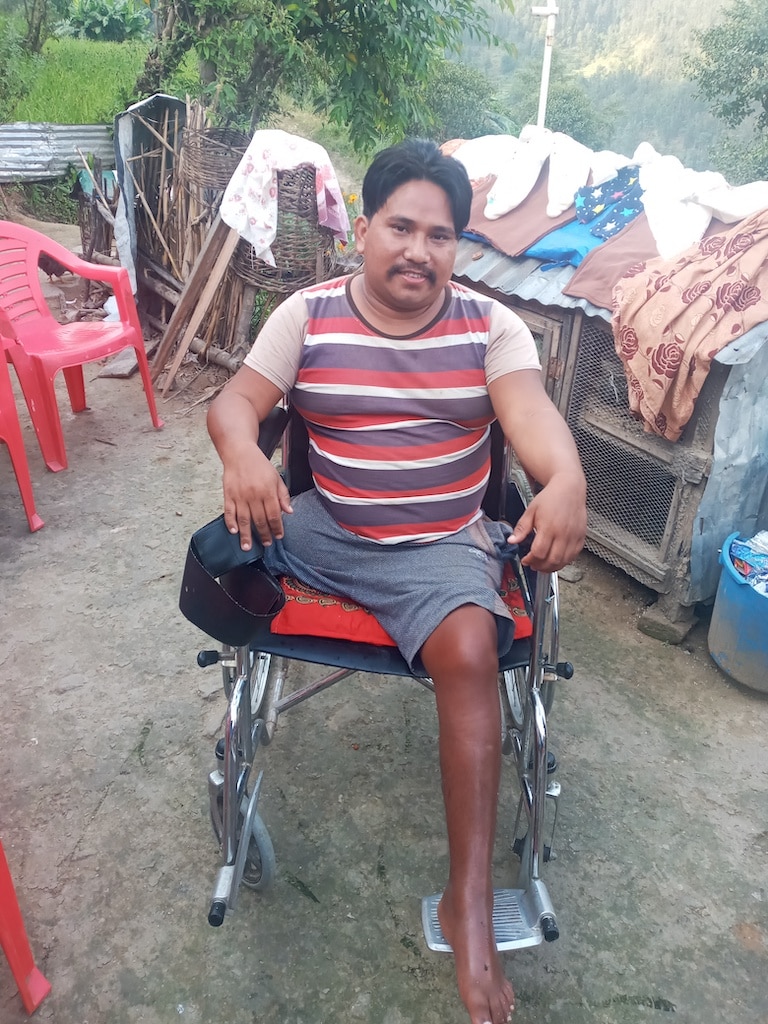
Meet Mohan Bhujel, who has hemophilia A. He’s a 28-year-old who lives in one of the remote villages of Sindhupalchowk, Nepal. In 2016 he was diagnosed with an inhibitor; this is almost like a death sentence in developing countries. Mohan’s condition turned deadly serious one day when an internal bleed in his stomach gradually spread into his right thigh and knee joint. Despite several attempts by doctors from several hospitals inside the Kathmandu valley, his bleeding could not be controlled. After multiple failed attempts, Mohan was referred to the Christian Medical College (CMC) in Vellore, India; a place where miracles happen. There, doctors decided to amputate his right leg, which had turned gangrenous. He had to stay there for 18 months to recover completely.
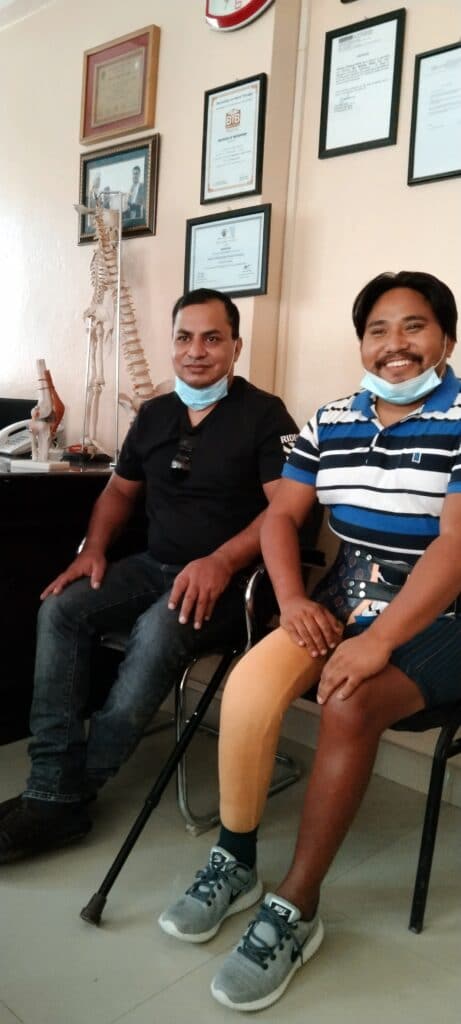
Since his surgery, Mohan has had to use a wheelchair to carry out his daily work and activities. To add to his distress and challenges, the devastating earthquake of 2015 destroyed his house completely. Since the government assistance rebuilding the destroyed houses has been terribly inefficient, Mohan and his wife and a little son have had to live with his brother’s family. Unfortunately, he has had to also be the only provider for his family, despite his condition.
How could he get work with only one leg and being limited to a wheelchair? How could he support his family? When the Nepal Hemophilia Society asked us to consider buying a prosthetic leg for this young man, we didn’t hesitate. He now has a fantastic leg, and is mobile, happy, and ready to return to work!
Happy Thanksgiving!
America’s “First Family” With Hemophilia
It’s Thanksgiving time in America, and living in the Boston area, one cannot help but think of how our country was first founded, and by who. When I travel just 15 minutes from my house to Newburyport, Massachusetts, a lovely seaport city, I can read plaques on the houses that read “1820,” “1775” and even “1656”! Many of these houses have existed since before America was born! Boston is the birthplace of our country, and Massachusetts is naturally a state of many firsts.
It was in Plymouth, Massachusetts that the Puritans landed; and here that the settlers weathered the severe first winters with help from the native tribes. And it was here that the first person with hemophilia was born in the US! In fact, I can travel 15 minutes from my house and see where he lived.
I run the following article almost each year, so we can remember this famous “first” family in the US: enjoy!
New England, 1639. Imagine that you are standing on the deck of the sailing ship Jonathan. You have just glimpsed the shore of your new home, the Massachusetts Bay Colony. Imagine the brilliant New England foliage, the bright chilly wind. Imagine your dream of farming your newly acquired land. Imagine the adventure. Now, imagine that you are the first European with hemophilia to step on the North American shore.
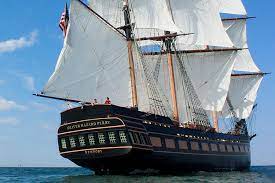
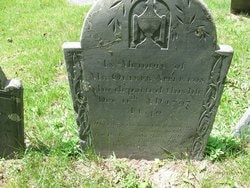
John Oliver (1613–1642) traveled from Bristol, England with his family to settle under the leadership of the Massachusetts Bay Company. He lived for only three years after he reached North America, fathering one child, Mary, and dying young as a consequence of his hemophilia. Not until after 1800 did the medical community begin using the term hemophilia to describe his disorder. John’s daughter, Mary Oliver (1640–1698), was likely the first hemophilia carrier of European descent born in the colonies. With her husband, Major Samuel Appleton, Jr. (1625–1696), Mary had three daughters and five sons. One of these sons, Oliver Appleton (1677–1759), was the first American colonist born with hemophilia!
Early Ipswich Roots
Mary and Major Appleton lived in a settlement known to native Americans as Agawam, but re-christened by the English in 1633 as the town of Ipswich. What would life in Ipswich have offered their son, Oliver Appleton? Thirty miles north of Boston on the Atlantic shore, Ipswich was owned by the Massachusetts Bay Colony; it was purchased earlier in the century from Native Americans for 20 British pounds. By the mid-1600s, Ipswich ranked second only to Boston in population and wealth. The Appletons were a wealthy colonial family. Major Samuel Appleton, Jr., Oliver’s father, was the son of Samuel Appleton Sr., one of the “landed gentry,” and a good friend of John Winthrop, the first governor of the Massachusetts Bay Colony. Appleton’s fertile 460 acres of farmland had been granted to him by the Colony in 1638, and left to his son, Major Appleton, around 1670. Major Appleton, who served as a judge at the infamous Salem Witch Trials in 1692, died in 1696. He left his now nearly 600 acres, split into four parcels, to his four sons: Oliver, Isaac, Samuel and John. Oliver’s 100-plus acre inheritance included his father’s sawmill, ox pasture, and farmland bordering his brothers’ parcels.
In 1701, Oliver married Sarah Perkins. Well-to-do millers, farmers and traders, Oliver and Sarah possessed numerous household and farm goods. They were involved in local politics, church affairs and business. Together they raised fourteen children; several sons and their descendants would become fine cabinetmakers. At the turn of the eighteenth century, Oliver and his three brothers were working their adjoining farms in a loosely communal style. Each brother might grow a crop that the other brothers could use. Yet each brother farmed separately, produced his own goods for trade (like basket hoops), and kept his own business ledger. The brothers owned cattle, sheep, turkeys and hogs, and traded goods with family and friends in Ipswich.
A Dangerous Occupation?
On their “new” land (already cleared and cultivated by Native Americans), the Appletons cut and milled timber, raised livestock and worked the farm. Today, farming is still one of the most dangerous occupations. In the seventeenth and eighteenth centuries, its hazards were surely compounded by Oliver’s hemophilia, and the harsh New England winters. Yet Oliver lived to be 82—a considerable age in any century.
Late in life, Oliver was confined to his bed and developed bedsores on his hips. At age 82, his cause of death is recorded as bleeding from his bedsores and his urethra. Oliver appears to have been a generous and fair man, dividing his estate equitably
among his children and his wife Sarah.
Making Medical History
Oliver and Sarah had six daughters and eight sons. Two of the daughters, Sarah and Hannah, had sons with hemophilia. Interestingly, Hannah’s sons, Oliver and Thomas Swaim, were doctors. What would they have thought of their family’s disorder?
Without letters or other documents, we can only guess. Yet it was the Swaim branch of the Appleton family that attracted the attention of the medical community. Based on his personal connection with the Swaim family, Dr. John Hay, a Massachusetts physician, published an article on the Appletons in a New England medical journal in 1813. Following this publication, the Appleton family history appeared in numerous medical journals, at least as late as 1962. By then, the family had been traced through 350 years and 11 generations: 25 males with hemophilia, and 27 carrier females. In 1961 a blood sample, drawn from the last known living carrier in the family tree, revealed factor VIII deficiency, or hemophilia A
Are the Appletons America’s “First Family” with hemophilia? Perhaps, in the sense that our knowledge of hemophilia has been enriched by the study of this large and long-lived colonial family. Thanks to our American Revolution, we have no “royal family” with hemophilia. Yet we can still honor and remember the Appleton family. This Thanksgiving, we can recall the challenges faced by earlier generations with hemophilia—people who contributed to our heritage as Americans, and as a hemophilia community. To understand ourselves, and create our vision for the future, we must always remember the past.
From Parent Empowerment Newsletter, November 2002
“THE APPLETONS: America’s “First Family” With Hemophilia” by Richard J. Atwood and Sara P. Evangelos
© 2002 LA Kelley Communications, Inc.