Laurie Kelley

A Haunting, a Murder, Secrets and VWD

All Hallows’ Eve, or as we call it tonight, Halloween, is the perfect time to share a novel about a haunting, a murder, secrets and von Willebrand disease!

Cassandra “Cassie” Mitchell is divorced and in her late 30s. She lives in her family’s home, called The Bluffs. Cassie’s great-grandparents built the Victorian house located in Whale Rock Village on Cape Cod, Massachusetts. And Massachusetts has its share of haunted house stories! The Bluffs is haunted, and the spirits there making their presence felt by emitting odors, scents or aromas – acrid or pungent like burning sugar when displeased, or sweet like caramel when approving.
Cassie and her older sister Zoe deal with the Mitchell “family curse,” in which the women suffer from miscarriages and stillbirths, just like their mother did. But they don’t know what causes this curse.

Cassie is engaged to Daniel Benjamin, 45, a retired FBI agent from Boston. But they must postpone the wedding after Hurricane Chantal strikes—the storm becomes a metaphor for ripping the lid off things, especially family secrets. One day Cassie discovers a dead body rolled up in a rug inside a dumpster. Simultaneously, Benjamin assists local police after a 3-year-old boy goes missing. Strangely and coincidentally, a drowned boy washed ashore in 1969 and was found by Cassie’s father. He is called The Barnacle Boy and, as a local legend, is buried in the Mitchell family plot. The grave is visited by a mystery woman who Cassie tries to track down.

Besides the suspicious behavior of the missing boy’s parents, another suspect, Christopher Savage, stays in the carriage house at The Bluffs after the storm. Christopher, who professes his innocence, is friendly with the missing boy’s older brother, who won’t talk to the police. Christopher is a prep school history teacher in New York with a questionable past.

Eventually, the police, with some insight by Cassie, learn of multiple interconnected lives. Three orphaned Italian children moved to Boston to live with relatives in the early 1960s. One, Renata, became a nanny to the Welles family, and later pregnant from the eldest Welles son. Never informing them of the child, Renata left employment for the Welles family, to raise her son, Antonio. Mrs. Welles realizes the connection that, due to their nosebleeds, both her son and Antonio had Type I von Willebrand disease.

Here’s the big connection: To keep Antonio from the Welles, Renata let her brother take him by boat to New York to start over, but Antonio fell overboard during the storm in 1969. He was the Barnacle Boy! Renata became Renee after moving to New York, where she married and had another son named Christopher Savage. Renee never informed her new family of her past before she died of cancer. Yet her sister Isabella locates both her nephews: Antonio’s grave, and Christopher in person, who she had never met before, on Cape Cod. Both nephews, when children, had been given St. Christopher medallions, a clue that confirms their family connection.

Two weeks after the storm, Cassie and Benjamin, along with the police, discover the true cause of death for the victim in the dumpster – an accident that was covered up – and the reason the young boy was hid by his older brother during the storm. A month after the storm, Cassie sees a genetic specialist who finds a genetic abnormality that explains the Mitchell family curse—though not von Willebrand disease? The novel never reveals what it was. Still, Cassie becomes pregnant, pleasing the spirits! And there’s nothing like good spirits.

The book gets 70% 5 stars on Amazon.

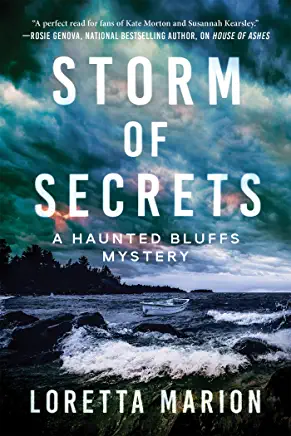
Loretta Marion, 2019, Storm of Secrets: A Haunted Bluffs Mystery. New York, NY: Crooked Lane Books. 327 pages.
Did the Vampire Myth Come from a Bleeding Disorder?

Let’s keep going with our vampire and bleeding disorder theme for Halloween!

My friend and colleague Richard Atwood of North Carolina found this novel for us.

Kate Neuman, 38, was raised in Boston and is a Harvard-trained, divorced hematologist at the Centers for Disease Control branch in Boulder, Colorado. Kate’s been a specialist in blood diseases for 15 years and is one of 15 top hematologists in the Western hemisphere!  

In May 1991, Kate is sent on a 6-week UNICEF and CDC International Relief Fund mission in Romania to investigate the orphan situation involving 200,000 babies, especially AIDS babies, and the adoption circus of gypsy babies being sold for, and then bought by, American parents. With the help of Father Mike O’Rourke, an American priest with a prosthetic leg, and Lucian Forsea, a Romanian medical student and translator, Kate focuses on Unidentified Juvenile Patient #2613, an abandoned, 7-month-old, nameless boy with an immune system disorder treated with whole blood transfusions.

Kate adopts the boy, names him Joshua, and brings him home to Colorado. Joshua, who responds to regular whole blood transfusions, undergoes MRI and CT exams showing a small appendix or abscess – a shadow organ – in the wall of his stomach that seems to absorb blood. Kate’s investigations show that Joshua has a critical shortage of adenosine deaminase (or ADA deficiency, a genetic failure on chromosome 20) that can be treated with PEG-ADA, a synthetic enzyme.

Kate presents at a CDC meeting her findings that a SCID (severe combined immunodeficiency) child, such as Joshua, can achieve an auto-immunological reconstruction with blood transfusion.

She concludes that this genetic mutation, which she calls the J-virus mutation, is the basis for the vampire myth.

Kate speculates that members of a family would have to ingest blood to survive, and that due to secrecy and inbreeding “the recessive-recessive traits would have been more frequent as a result, much as with the hemophilia which plagued the royal houses of Europe.”  Bypassing official approval, Kate injects Joshua with an artificial hemoglobin derived by genetic engineering that is as effective as whole blood.

Then in September, five intruders kidnap Joshua, injure Kate, and kill Tom, their nanny, and an AIDS researcher, plus burn her home and the CDC labs. Once recovered, Kate takes $18,000 in cash to Romania, and enlists the aid of Lucian and O’Rourke to recover her adopted son.

They learn that Joshua is actually the next “Prince of the Voivoda Strigoi,” or the heir apparent to the Father, also called Vlad Tepes, or Dracula. The strigoi disease is similar to the HIV virus, or what Kate calls the J-virus, a retrovirus that binds gp120 glycoprotein to CD4 receptors in T-helper lymphocytes. While desperately traveling around Romania trying to rescue Joshua before the child takes the Sacrament, or drinks human blood, Kate falls in love with O’Rourke, and is captured and then escapes from the strigoi. Then Lucian is killed. Kate arrives at Castle Dracula, or Poienari Citadel, before Joshua drinks human blood and the castle is set to explode. Just in time, Kate rescues Joshua, while O’Rourke steals a helicopter to ensure their safe escape.

Yet the aged Dracula, who injects himself with Kate’s hemoglobin substitute for rejuvenation, escapes as a giant bat to run his biotech firms in America!

This thriller novel delves into a complex medical explanation for a rare blood disease, one that causes vampirism. The vampires are called strigoi. The reference to hemophilia is not needed for the explanation of the J-virus. Kate risks her life, against huge odds, to retrieve her adoptive son, with a dangerous quest through Romania mountains, which adds more violence and excitement, even brief romance, to the novel.

This proves what a hematologist from Colorado can do!

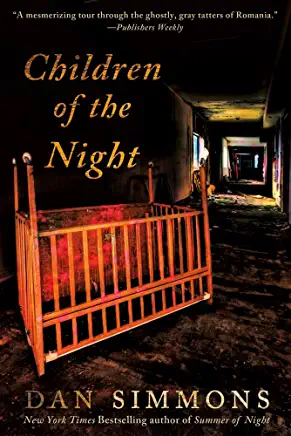
Children of the Night. New York, NY: G.P. Putnam’s Sons. 382 pages. By Dan Simmons, 1992.

Leechy Keen


It’s the season of Halloween, and I love all the myths, stories and celebration of this macabre holiday. Halloween conjures up creatures of the night, like werewolves and vampires, and creatures of the ground, like corpses, snakes and other critters.

Blood features prominently at Halloween: we have slasher films, witches that use blood in their potions, and vampires drinking blood. Blood is scary for many people, but essential for life… maybe the afterlife!

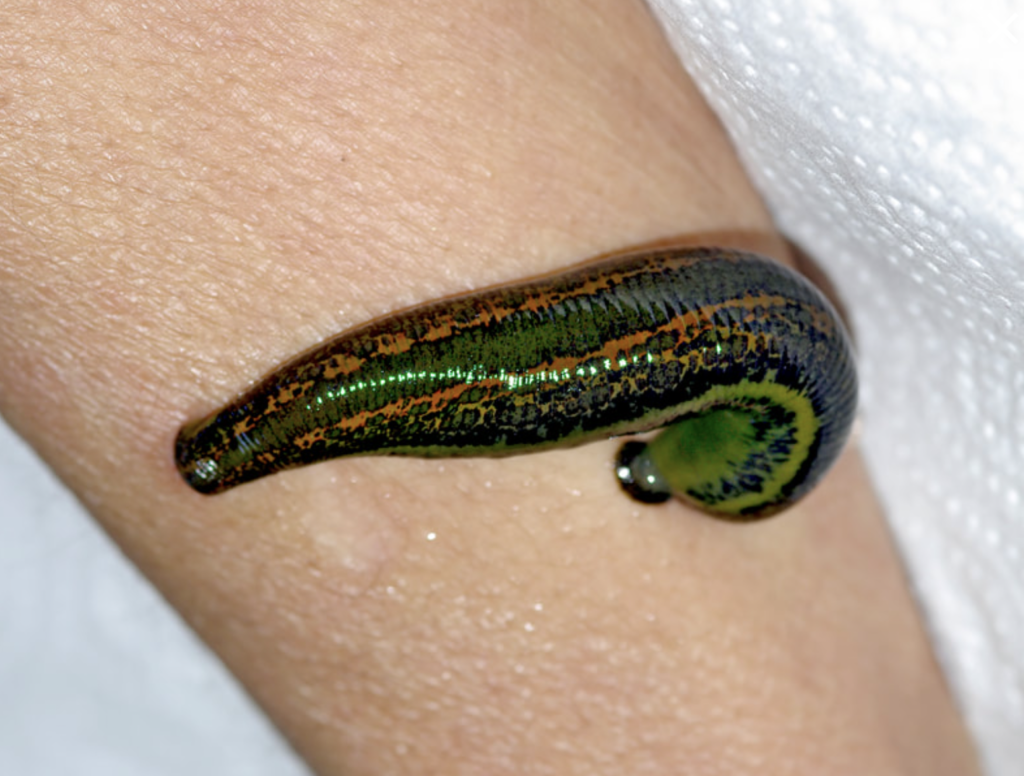
One creepy little critter has a place in medicine… behold the lowly leech!

From https://www.biopharm-leeches.com/

Leeches were used throughout history as a medical treatment. One of the earliest known medical treatments is phlebotomy, or bloodletting, believed to originate in ancient Egypt and Greece, and lasting through second Industrial Revolution. That’s a long time!  The germ theory is only 130 years old; transfusing blood is only 75 years old; but bloodletting is 25,000 years old!

In ancient Greece, Hippocrates passed the technique on to Aristotle, who then passed it on to Alexander the Great, who then spread it throughout Asia. The second medical text ever printed on Gutenberg’s press? A bloodletting calendar in 1462. In the Middle Ages when the Church was a leading authority, the Pope prohibited the clergy from bloodletting, and physicians were afraid to do it.

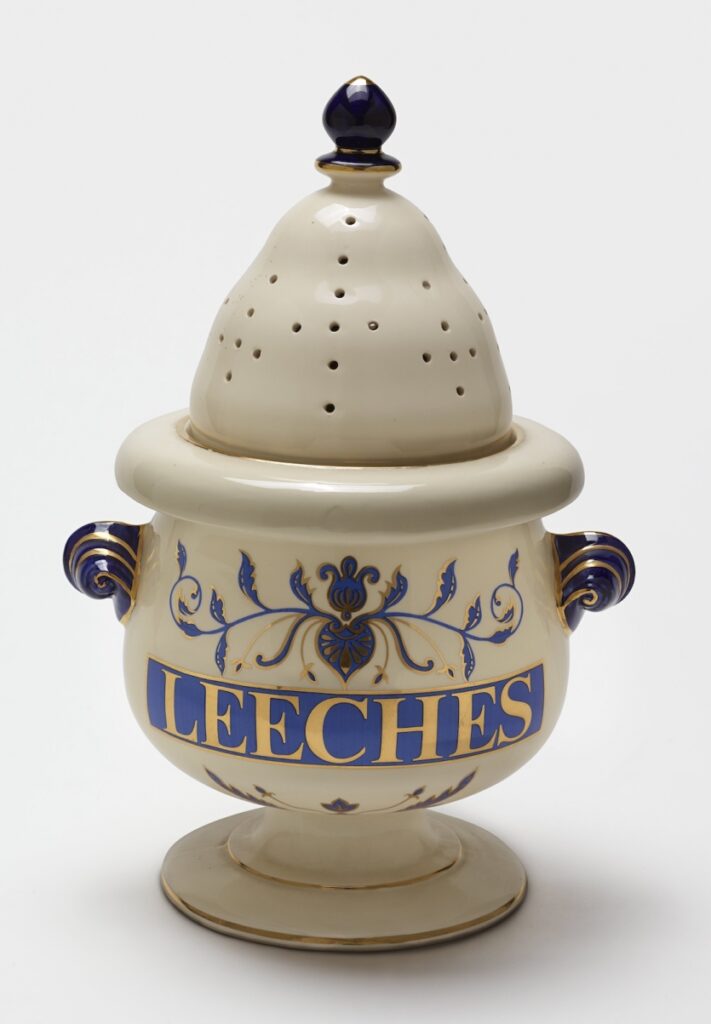
So, it moved into hands of barbers, who then cut hair and veins. They used a tool called a lancet, and customers would even bring their own bowls. Some were decorated and some even became heirlooms! Leeches were also used. “Leech” derives from the Anglo-Saxon word loece, “to heal.” Medieval doctors even called themselves leeches. Leeches were often used to bleed patients in hard-to-reach places.

Why? Well, we know that when blood leaks out of blood vessels, and is trapped in tissue, sometimes it is not easily broken down to be reabsorbed in the body. It can turn gangrenous. It’s vital for blood to circulate. So, leeches were applied to suck out the trapped blood, like little vampires. Old blood was removed, so the body could heal.

In 1883, French doctors alone imported 41.5 million leeches for bleeding!

Eventually phlebotomy was abandoned. A typhus epidemic in England in the 1830s, showed that even removing a little blood caused fainting, and the practice was eventually suspended. The rise of the germ theory also helped put an end to the questionable practice of bleeding.

But leeches are still used today medically! In fact, in 1985, a five-year-old boy from Medford, Massachusetts (I lived there at that same time!) named Guy Condelli had his ear bitten off by the family dog. He was taken to Boston’s Children’s Hospital, where leeches were placed directly on the congested tissue. Leeches for medicinal purposes are now produced in Wales, by Biopharm, which runs the world’s only leech manufacturing. They produce about 60,000 leeches annually. In 2004, the FDA approved the use of medicinal leeches in reconstructive and plastic surgery. 

So, this little Halloween-worthy creature, the leech, has quite the contribution to medicine! Maybe one day it may help someone with a bleed in a tight place?

https://www.biopharm-leeches.com/

VWD and Vampires!

October is the month of Halloween, and it always gets me reading my classics, like the excellent “Dracula” by Bram Stoker and “Frankenstein,” by Mary Shelley. Even some H.G. Wells and Ray Bradbury, my favorites.

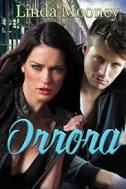
We’ve blogged about hemophilia and vampires before. But here’s a twist on vampires in literature from our literature reviewer at large, Richard Atwood of North Carolina, in a book called Orrora.

It’s the outset of autumn in New York City. Joel Powers, an independent film producer with blondish hair and blue-gray eyes, specializes in horror films. Now he’s gathering information for a book by visiting crime scenes to gain inspiration. In particular this one: the third victim of a serial killer called “The Bleeder,” who is found at 40th and Columbus. The killing is coded an unnatural or unattended death, which catches Joel’s attention. At the scene, he spots Ms. Orrora Dalca, a crime expert from Washington. Joel notices Orrora’s thick black hair and greenish-gray eyes. She notices his unusual blood scent. [Ed. Blood scent? Hint!]

The victims of the three ritualistic killings are all males, killed at night with slashed throats from claws, within 48 hours. Orrora meets up with Joel. He’s hungry (and seems attracted to her), so he takes her to a restaurant, where she eats a bloody rare steak [foreshadowing?].  He learns that Orrora was born in the U.S., but grew up in Slovenia, hence her accent. Her deceased father was from the U.K.

Later, a fourth victim is attacked on 11th Street, though Orrora interrupts the attack, and is beaten up. The victim dies. At the crime scene, Orrora finds a pure gold button with a crest that identifies The Bleeder as a Petrescu [a patronymic family name common in Romania… more hints!].

Joel later learns from Orrora that The Bleeder is a woman, because all vampires are female. Orrora reveals that she is 76 years old and a dhampir, or half-vampire, because her mother, who is 112, is a full-blooded vampire, and her father was human. Due to a resistant Y chromosome, a full- or half-blooded female vampire who mates with a male having the recessive gene creates a female vampire.

Now Orrora wants to taste Joel’s blood by pricking his finger; she notices a spiciness in his blood. Joel accepts that Orrora is a half-vampire. Her bruises from the attack heal quickly.

Soon victim 5 turns up; he is Soloman Esterhaus, who Orrora says has an odd blood smell with a rancid taste. Esterhaus, from Seattle, was recently diagnosed with von Willebrand disease, and was in New York City to see a specialist. His VWD causes increased blood splatter at the crime scene.

Orrora learns that The Bleeder is Piedra Olchescu from Bucharest, Romania. Orrora and Joel eventually spend the night together, after an ultra-rare beef dinner—of course! The police learn that all of the murder victims had some form of a blood disease. For vampires, blood diseases are a delicacy. Joel reveals that he has paroxysmal nocturnal hemoglobinuria (PNH), in which his red blood cells break down, and that the only treatment is a bone marrow transplant. But he has no donor matches and no insurance coverage for a transplant. Orrora believes she has found her blood-mate in Joel, as vampires are spiritually monogamous. While Orrora goes out to find the killer, Olchescu breaks into Joel’s apartment, biting his neck to drink blood from it, before Orrora returns to kill Olchescu. Waking up in the hospital, Joel is given hemoglobin to replace his red blood cells from blood loss and his PNH. Orrora realizes that if she drinks Joel’s blood, she will assume his blood properties, so that she can be his bone marrow donor. So Joel does not become the sixth victim, and, after the bone marrow transplant from Orrora, Joel’s blood smell has changed and he heals faster.

As Richard notes, “It is odd that an individual with von Willebrand disease has to travel from Seattle to New York City to see a specialist when there are experts in his hometown.”

Linda Mooney is a bestselling author and retired Kindergarten and music teacher who lives on the Texas Gulf coast. She writes paranormal romances as Linda Mooney, naughty humorous romance as Carolyn Gregg, horror as Gail Smith, and elementary teacher workbooks as L.G. Mooney. Orrora was self-published in 2017. At 150 pages, it’s a quick read!

Save One Life: Cheers for 20 Years!

No matter how many dozens of presentations I’ve given over 32 years, being on a TV set, with only cameras to look at, makes me nervous! I wasn’t alone last Thursday evening; Chris Bombardier confided he felt the same way—and this is the guy who did the Seven Summits, including of course Everest! I told him I had no problem once being asked to speak in front of 100 Japanese hematologists in Hiroshima; live audiences are great. But teleprompters?

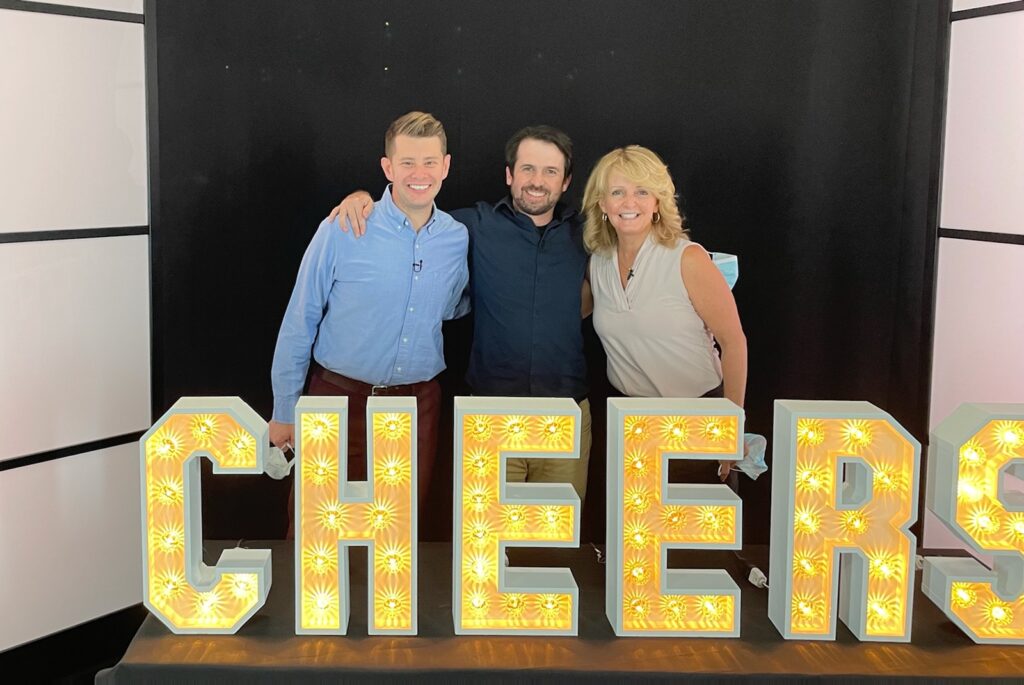
Michael DeGrandpre, Chris Bombardier, Laurie Kelley

No matter. We went live Thursday evening to celebrate 20 years of bringing funding, service and hope to over 2,000 families with bleeding disorders in developing countries. Two things made the evening unfurl without a hitch: the fantastic team we have in the Save One Life office, especially the untiring efforts of Jodi Weeks and Karen Serevitch, and having the irrepressible Michael DeGrandpre as emcee!

See the entire show here.

The evening was a hit. We met at Charles River Media Group near Channel 5 headquarters in Needham Heights, Massachusetts. Seeing the behind the scenes working of putting on a live show was fascinating.

I had not seen the behind-the-scenes videos that were show throughout the evening: our program partners, sponsors, donors, board members, and even some of the beneficiaries that I had known as children… all grown up and sharing their successes thanks to Save One Life.

I had tried contacting one person, Lisa O’Connor, who originally had given me the idea of Save One Life back in 1997! I still had the yellow lined paper with her idea on it that she had sent me. I had saved it all these years. I just wanted her to watch, so she would know we were crediting her. She never replied. How shocked I was when I saw suddenly a video of her, thanking us all! I was floored, and grateful.

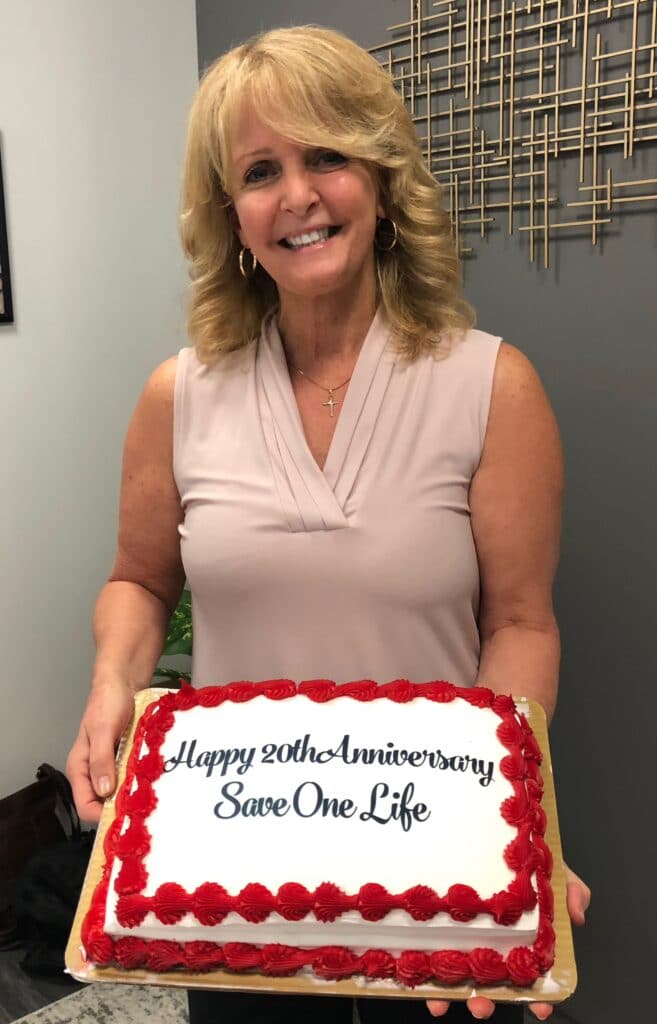
Laurie Kelley with cake!

And I wanted to surprise my mother, by thanking her for the gifts she has given to me when a child: raising us to love children, showing how to help one another, and above all, raising me in a faith that puts charitable giving to the poor and suffering above all things. Again, the team surprised me totally, when, after my thanks to her, she was in a video, offering cheers to us!

Watch the event here!

We covered our programs, and the videos highlighted the impact these have made on those who participated: young men who have become doctors or engineers through our scholarship program; families that benefitted from our micro-enterprise grant program; children who participated in camp; and of course, over 78 countries getting factor from Project SHARE.

The event was also a fundraiser. Thanks to Michael’s infomercial skill set, we raised over $36,000 with an additional surprise: a $100,000 gift from on donor, the Muir family of California (formerly from Massachusetts, who I had known when our sons with hemophilia were born).

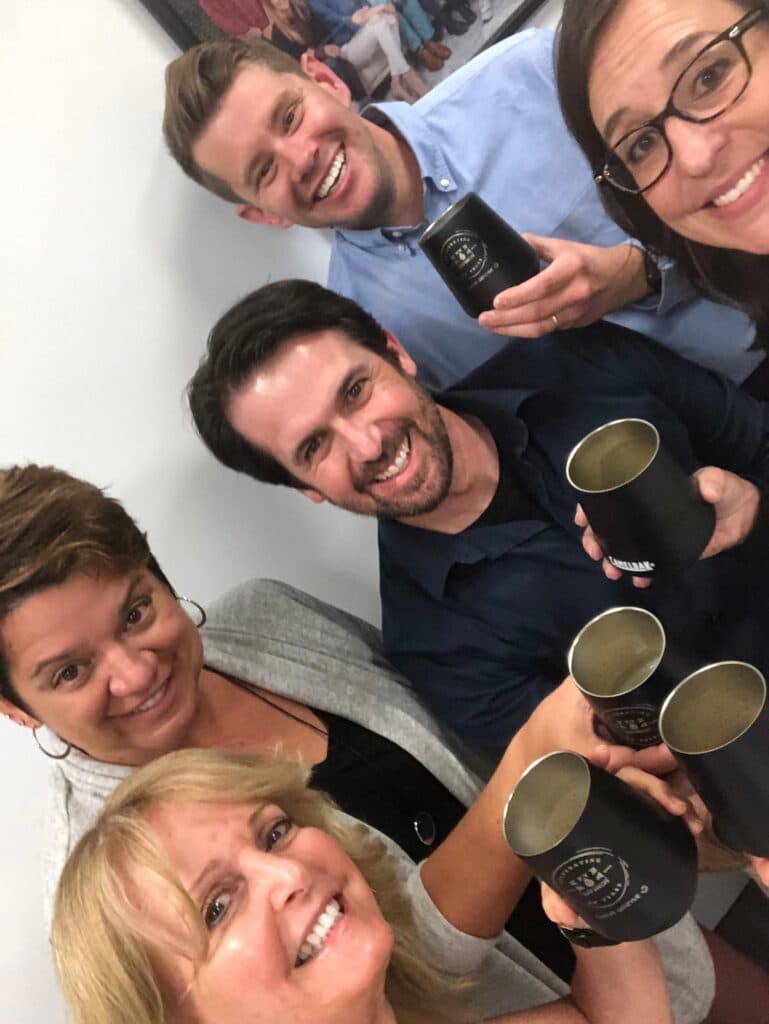
It was truly time to celebrate. After the show, and we said our thank yous and good-byes on air, we retired to the prep room, where champagne and cake awaited! We were elated and happy the program went off without a hitch.

Me: I never would have organized such a thing. It just isn’t me. But I see how a celebration like this allows everyone to share in the joy we have brought to others, and to allows us to celebrate each other as a community. It pumps us up to do more, serve more, and be more.

To Jodi and Karen, to Michael, to the Muirs, to the two donors who provided matches (Eric and Rich) to all our sponsors and donors and program partners: a huge thank you! We could not exist without you. We could not provide the needed help overseas without you.

Cheers to you all! And to 20 more years!

HemaBlog Archives
Categories