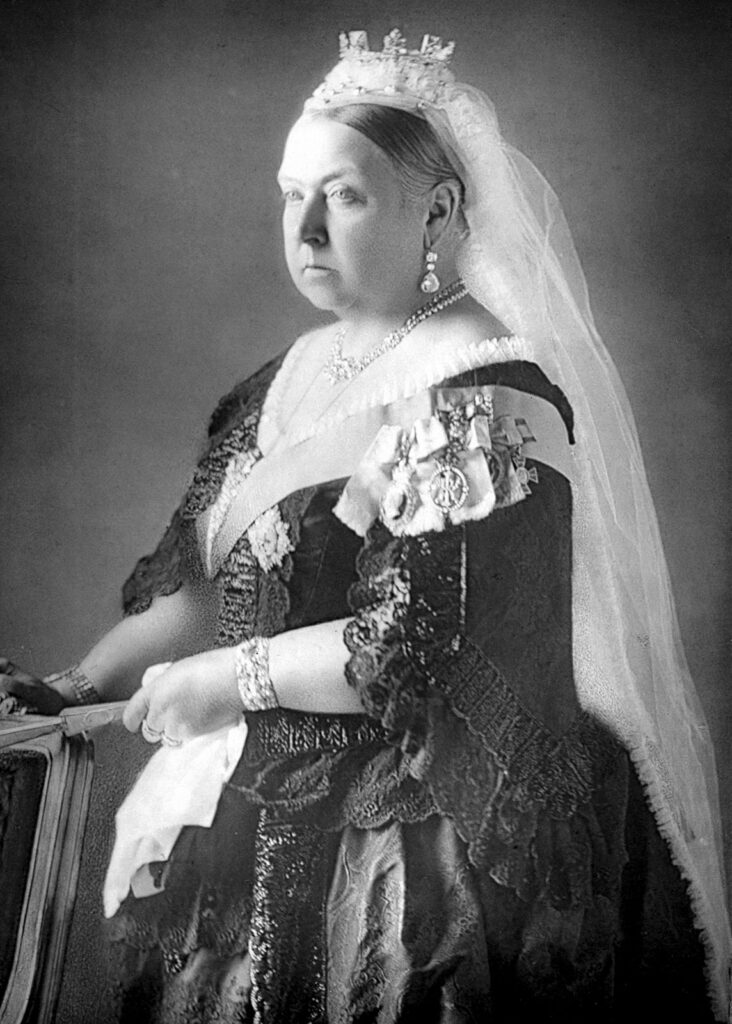
Queen Victoria: the most famous carrier of hemophilia
Perhaps because hemophilia is so rare, it has generated many myths. Myths are stories, sometimes created by people in an attempt to make something understandable when scientific information is unavailable. Remember the Greek tale of Pandora’s Box? Pandora was the first woman on earth. She was given a wedding gift from the gods, a beautiful container. But she was warned never to open it. Driven by curiosity, she disobeyed the gods and opened it. Inside were evils— hate, disease, pain—that flew out of the container and escaped into the world. This story was invented by the ancient Greeks to explain sickness and suffering, because they didn’t know about bacteria and viruses. Some myths develop from a nugget of fact or experience, but then take on a life of their own within certain cultural settings.
Becoming familiar with the most widely held myths about hemophilia and their sources will help you explain the facts of the disorder to others. During this month, which is Hemophilia Awareness Month, we’ll discuss some common myths about hemophilia.
Myth #1! Hemophilia is a royal disease.
The Truth? Anyone can get hemophilia—rich or poor, famous or unknown. Hemophilia was dubbed the royal disease because in the 1800s, hemophilia affected the family of Queen Victoria of England, who was a carrier of the hemophilia gene. Hemophilia was transmitted to three other royal families when Victoria’s daughters and granddaughters, also carriers, married into the Russian, German, and Spanish royal families. Though it’s no longer known to be present in any European royal family, hemophilia is still often associated with royalty.
Question 1: What type of hemophilia did the English royal family have, A or B?
Question 2: Why does the present royal family no longer have hemophilia?
Have you heard of the Currence Brothers? This band from West Virginia played and recorded gospel, bluegrass, and country music in the 1970s. The band members were known for their musical talent, especially with the banjo and fiddle. And two Currence brothers, plus their nephew, happened to have hemophilia. These band members overcame hardships to fulfill their passion for music.
For five generations, the musically inclined Currence family lived in High Germany on the Randolph-Upshure county line in central West Virginia. They lived in a six-room house on a small farm, four miles from a paved road. The nearby one-room school in High Germany housed 45 students in eight grades.
Every member of the large Currence family—including seven boys and five girls—either played a musical instrument or sang, though none was trained or ever had a music lesson. The children and their parents would listen to a battery-powered radio or hear live entertainment, then pick out the tune on guitar, fiddle, or mandolin. At home or in church, the family members sang and played musical instruments.
There appeared to be no family history of hemophilia. That is, until one of the Currence boys, Junior (1923–1925), died at age two after he bled out from a bumped nose, and hemophilia was later suspected. Junior’s younger brothers Jimmie (1932–1992) and Loren (1934–1987) grew up with bleeding issues, but they never visited a doctor until they were teens. There was no ice for treatment and nothing for pain, though the reason for this is unclear. The brothers applied high-powered liniments from Blair products for hemorrhages into their joints.
Jimmie and Loren seem to have visited at least one local doctor, and they were treated as “bleeders.” It’s possible that lack of money, transportation, and awareness of the need for a hematologist may have prevented visits to an appropriate specialist or hematology lab. Before factor VIII factor concentrates became available, the brothers received blood transfusions. Loren once received sixteen pints of blood for a kidney bleed. When Jimmie had a stomach bleed as a teenager, he received a pint of blood from his brother-in-law. The boys were often laid up from hemorrhages into their joints or from other internal bleeds.
Jimmie and Loren didn’t have their hemophilia diagnosed until the early 1960s. Dr. Mabel M. Stevenson, a hematologist at Morgantown University Hospital, diagnosed severe classical hemophilia in both brothers, who then called themselves “severe hemophiliac bleeders with near-zero clotting factor.” Neither brother could ever find full-time employment or get insurance. They both received supplemental social security, and the state of West Virginia paid for their medicine because they couldn’t afford it. Both brothers married, and each had three daughters.
Brothers Jimmie, Loren, Marvin (“Shorty”), and Buddy—along with Malcomb Pastine, a nephew who also had hemophilia—formed the Currence Brothers Band. Loren played guitar, sang, and managed the band. Jimmie played fiddle and banjo, winning banjo and fiddle contests in four states: West Virginia, Maryland, Pennsylvania, and Virginia. Jimmie won the fiddling championship in West Virginia for four consecutive years, and was undefeated grand champion in Maryland in 1970. Then his elbow bleeds forced him to switch from fiddle to banjo. Malcomb played guitar, and even did turkey calls. Buddy sang, while Marvin played the fiddle.
The Currence Brothers began spreading the gospel by playing their music at church functions. They traveled the country, usually in their van, to play in concerts and on radio or television. The band even recorded on their own, or with notable musicians, producing several albums in a genre they called Gospel Grass, along with a mixture of popular tunes. They collaborated with musicians including Larry Groce, who they met at a talent show at the firehouse in Parsons, West Virginia; Woody Simmons, who lived in Randolph County; Clyde See; and “Country” Charlie Jordan.
You can find Currence Brothers music on old vinyl records and in a few YouTube videos. Check out the following albums:
• The Currence Family, Precious Memories (Lark Records, n.d.)
• Larry Groce and the Currence Brothers (Peaceable Records, 1975)
• Larry Groce, Junkfood Junkie (Warner Bros. Records, 1976)
• The Currence Brothers, He’s Coming Back to Earth Again (Major Recording Studios, n.d.)
• The Currence Brothers Sing and Play Gospel Grass (Major Recording Studios, n.d.)
• The Currence Brothers, Ballads and Instrumentals (Major Recording Studios, 1978)
• The Currence Brothers, Muddy Boggy Banjo Man (Major Recording Studios, 1979)
• Woody Simmons, All Smiles Tonight (Elderberry Records, 1979)
• The Currence Brothers, That’s the Man I’m Looking For (Augusta Records, 1981)
• Clyde See with the Currence Brothers (Augusta Records, 1983)
The Currence Brothers are known for their talent on the banjo and fiddle, not for having band members with hemophilia. Their hemophilia did not define them, and it never prevented them from making music. Of course, some accommodations were made—switching instruments due to elbow bleeds; not playing at some events or traveling as much as they wanted—but not at the expense of their artistry and passion. Today, other family members continue the Currence musical tradition.
To learn more, read profiles of the Currence Brothers and other West Virginia musicians in Mountains of Music (University of Illinois Press, 1999), edited by John Lilly.
Today is Valentine’s Day, a day associated with celebrating love, affection and romance. The symbol of Valentine’s Day? A heart. Well, not an anatomical heart, but a rendering of it. The symbol we use now was popular as far back as the Middle Ages, and was popular during the Renaissance, as seen in art depicting the Sacred Heart of Jesus. By the 18th century, it was being used in Valentine Day cards. The origins of St. Valentine’s Day (to be specific) are found in Christian and even Roman tradition.
The heart is often associated with feelings: we describe someone as being “all heart,” having a “big heart,” or being “heartless.” Young children, often unaware of the contents of their own bodies, can still draw a heart (and a stomach!) when asked to draw what’s inside of them. Feeling the heart beat, they know they are alive. (Feeling their stomach hurt, they know they are hungry) Seeing themselves bleed, they worry, mainly about their heart not working. They learn that the heart pumps blood; when they see a bleed, they may fear bleeding to death. Especially if they have hemophilia!
So we have to be careful when we educate our children about their heart, blood and hemophilia. My book Teach Your Child about Hemophilia will help! (Order here)
And the heart has an interesting connection in hemophilia beyond making our blood travel about the body. Sarah Aldrich reported in HemAware, the magazine of the National Hemophilia Foundation, that in a six-state study of more than 3,400 men with hemophilia, CDC investigators found that after HIV and intracranial bleeds, the third most common cause of death was heart disease. This was comparable to nonhemophilic men. Hemophilia does not give you a Valentine’s Day get-out-of-jail-free card just for having hemophilia!
Subsequent studies confirmed this. Atherosclerosis, coronary artery disease… all show up in older men with hemophilia. Unlike hemophilia, these are linked to lifestyle. Stress, diet, smoking and obesity surely have a negative impact on heart health.
Be nice to you heart on Valentine’s Day. Refuse the chocolate! (I did) Start thinking of ways to exercise safely; eliminate high sodium and processed foods; cut down on alcohol; stop smoking. Especially stop smoking! And for your little ones with hemophilia, learn how they understand how the body works. It might be quite different than what you think! When they give you a Valentine’s Day card, it might be a good idea to get a conversation going about hearts, health and hemophilia!
For many parents of children newly diagnosed with hemophilia, the word “inhibitors” soon becomes part of their vocabulary. And although they may not know at first what an inhibitor is, they may have learned to associate the word with something fearful. But for people with hemophilia A and inhibitors, things aren’t as bad as they once were.
What exactly is an inhibitor? Who gets them? What happens when you get an inhibitor? How do you treat bleeds if you have an inhibitor? Do inhibitors go away on their own, or can you grow out of them or eliminate them?
What Is an Inhibitor?
Inhibitors are specialized proteins called antibodies. They’re a part of the immune system that protects us from bacteria, viruses, and foreign proteins—in other words, anything that the body identifies as not belonging, and as being potentially harmful. But sometimes the immune system makes mistakes: it may even attack the body itself, as in autoimmune diseases including rheumatoid arthritis or multiple sclerosis. With hemophilia, the immune system also makes a mistake: it misidentifies a helpful agent—infused clotting factor—as something harmful, and then mounts an immune response against the factor to neutralize it and mark it for removal from the body.
Inhibitors are very efficient. When an inhibitor is present in hemophilia, some or all of the infused factor is neutralized within minutes. This prevents the factor from participating in the clotting process to stop bleeding. And it means that people with inhibitors can’t use standard clotting factor concentrates to control bleeds.
Unfortunately, the alternative therapies we have for treating bleeds with inhibitors aren’t as effective as standard factor at controlling bleeds. As a result, people with inhibitors tend to bleed longer, develop target joints (joints that bleed frequently), and suffer from joint damage more often than people without inhibitors. Fortunately, for people with hemophilia A and inhibitors, treatment has improved dramatically over the past three years.
Diagnosing Inhibitors
How do you know if you have an inhibitor? There are usually no outward signs. Inhibitors are sometimes diagnosed during routine hemophilia treatment center (HTC) clinic visits; and sometimes inhibitors are suspected after you notice that factor infusions fail to adequately control bleeding. Your HTC should test for inhibitors at least annually and always before any surgery, and you should request a test whenever you feel that bleeds aren’t being controlled effectively with your usual dose of factor.1
When an inhibitor is suspected, a diagnostic test called a mixing study (activated partial thromboplastin time, or aPTT) is performed: the patient’s blood plasma is mixed with normal plasma to see if this corrects the clotting time. In someone with hemophilia without an inhibitor, a mixing study results in a normal clotting time; but if an inhibitor is present, then the clotting time is abnormally prolonged. If this happens, then another test, the Bethesda inhibitor assay, is done to determine how much of the inhibitor-causing antibody is present.2 The Bethesda assay is a quantitative assay, meaning that it measures the amount of inhibitor and the results are expressed in numbers.
Note: Testing for inhibitors is a bit tricky. It’s best to have a Bethesda assay done at an HTC, because the lab techs there have more experience performing the tests, and the results are more likely to be accurate when compared to tests done at other hospitals.
Strength of the Inhibitor
To develop a strategy for treating bleeds, your doctor will need to know the strength, or concentration, of the inhibitor. The inhibitor strength is reported as a “titer” and is expressed in Bethesda Units (BU).3 Inhibitor titers can be as low as 1 BU or higher than 10,000 BU.
An inhibitor titer less than or equal to 5 BU (≤5 BU) is considered a low-titer inhibitor. An inhibitor greater than 5 BU (>5 BU) is considered a high-titer inhibitor. If you have a low-titer inhibitor, you can still use standard factor to treat bleeds, although in higher doses to accommodate for some of the factor being neutralized by the inhibitor. If you have a high-titer inhibitor, standard factor concentrates are not effective because all the factor is quickly neutralized after an infusion.
In addition to the inhibitor titer, inhibitors are categorized by how the immune system responds to infused factor. For some people, the inhibitor titer stays more or less stable and doesn’t rise after the patient is exposed to factor. If your child has an inhibitor titer ≤5 BU, and it remains at or below 5 BU for several days after an infusion, he is a low responder.
For others, when factor is infused, the immune system quickly ramps up inhibitor production in an effort to neutralize the infused factor. This results in an increase of the inhibitor titer within four to seven days of exposure to factor, peaking within one to three weeks. This ramping up of inhibitors after factor exposure is an anamnestic response (meaning a memory or recall response). If, after exposure to factor, the inhibitor titer rises above 5 BU over a few days, then your child is classified as a high responder. High-responding inhibitors are more challenging to treat than low-responding inhibitors because normal factor concentrates are useless with high-titer, high-responding inhibitors. Treating bleeds with these inhibitors requires special factor concentrates called bypassing agents, such as FEIBA or NovoSeven.
But there’s one case where standard factor can be used to treat bleeds in high responders. In high responders, the immune system often produces fewer and fewer antibodies over time if it isn’t exposed to factor. If someone hasn’t been exposed to factor for several months, then the inhibitor titer may have decreased to a level low enough that normal factor concentrates may be used to treat bleeds successfully for a few days—that is, before the anamnestic response kicks in and the inhibitor titer increases again, making the factor ineffective.
1. You can get free inhibitor testing at federally funded HTCs by participating in the Centers for Disease Control and Prevention’s (CDC) Community Counts Registry for Bleeding Disorders Surveillance program. 2. There are several different types of inhibitor assays; the Bethesda assay is the most widely used. 3. A Bethesda Unit (BU) is the amount of an inhibitor that will neutralize 50% of factor VIII in normal plasma after 120 minutes’ incubation at 37°C.
The unparalleled, seismic societal shifts over the past year have made many of us readjust in ways never before imagined. At the time of writing, with pandemic fatigue already a reality, here in the UK we are facing yet another national lockdown imminently, with the uncertainty that this may not be the last. The strict physical distancing measures has meant that, more than ever, people are heavily reliant on maintaining connectivity using global digital social networks to facilitate human interaction and information sharing at a historic and extraordinary scale.[1,2] According to We Are Social, a creative agency who publish a quarterly digital report with social media management platform, Hootsuite, by October 2020, the number of people using social media around the world passed the momentous 4 billion milestone mark, with an average of 2 million new users joining every day. Much of this growth in social media use is the direct result of the new technological habits that people adopted during COVID-19 lockdowns.[3] It comes as no surprise then that Facebook, who also own Instagram and WhatsApp, were listed by the Financial Times in the top 10 among 100 companies “prospering in the pandemic”.[4]
Whilst the environment created by the coronavirus outbreak has, on the one hand, bred a multitude of falsehoods on social media from so-called “armchair epidemiologists”,[5] the rise in online traffic from housebound, captive audiences has also inspired ever-greater entrepreneurial hustle. Social media is unique in this respect; it places individuals at the centre of a vast network and shifts power by allowing anyone to be an influencer.[6] YouTube has been the go-to platform for those wishing to keep fit during lockdown and with gyms being forced to close, has been inundated with searches for yoga, pilates… and not forgetting workouts for the glutes! One of the first stand-out “heroes” of this crisis was “The Body Coach”, a UK-based fitness TV personality, offering free daily online sessions that accrued 75 million views internationally across 18 weeks.[7] However, even with such popularity, by social media’s very nature, there was no hiding from critics. Physical education (PE) practitioners were quick to react to “PE with Joe” as it was known, by generating their own innovative online content using the hashtag “#ThisIsPE”, to reflect the diversity of young people in mainstream education they felt hadn’t been accommodated for, especially those with a disability.[8]
Nonetheless, Joe et al were arguably responsible for bringing into sharp focus the importance of exercise for body and mind. For many people in the bleeding disorders community under lockdown, decreased physical activity may have impacted negatively on their joint and muscle status.[9] In response to this, patient advocacy groups have been forced to adopt and improve virtual operations and e-learning approaches using social media to promote the wellbeing of their members. For example, the European Haemophilia Consortium (EHC) hosted their physical activity campaign ‘#thisway’ through monthly Facebook live sessions with a specialist physiotherapist.[10] It is also noteworthy that there is an emerging literature suggesting that social distancing has put a strain on the mental health of many individuals. For young adults in particular, the World Health Organisation (WHO) has suggested staying connected with peers through social media can help them to remain positive and challenge stigma. The explosion in popularity of the entertainment-based platform, TikTok – with over 30 million monthly users in the United States alone – has demonstrated the potential, not only to convey important health information, but to address these aspects of the pandemic as well.[11]
Even pre-Covid, more and more people were going to social media to acquire knowledge and share experiences about their health.[12] To this end, the use of social media to increase and promote translational health communication strategies is being realised and has been advocated as an inexpensive means for patient education, to enable and empower consumers in their health and healthcare-related interactions.[12-14] This is particularly pertinent for people living with chronic conditions, including the six in ten Americans with at least one diagnosis,[15] and like those affected by haemophilia, where management and care can be self-guided, fostered through online peer-to-peer interaction and validation, or guided by an external source (e.g. facilitator or healthcare professional).[12] The number of physicians involved with haemophilia practice developing an interest themselves in social media in a professional capacity is increasing, championed by the likes of Professor Mike Makris in Sheffield, UK, who has become a reference point on Twitter (@ProfMakris) for research and treatment developments, and influencer in his own right. Accordingly, Professor Makris perceives that, “Information is no longer a privilege and the time when patients are more up to date and better informed than their doctors is already here.”[16]
Feeling empowered in decision-making about one’s health can play an important role supporting individuals as they seek positive health behaviour and lifestyle change.[14] Yet, to realise the benefits of health education that today’s healthcare infrastructure demands, a high level of patient participation and engagement is essential.[17,18] Preliminary studies have shown that social media interventions lead to some positive effects on health of people living with chronic diseases, such as promoting self-care, fostering self-confidence and psychosocial benefits, but these results are small and limited.[12,14] Likewise, the reporting in haemophilia is scarce, although a recent attempt has been made to increase awareness of Von Willebrand disease (VWD) by targeting women in their reproductive years on social media and inviting them to participate in an online self-assessment tool to recognise abnormal bleeding symptoms.[19]
While it is now a given to view social media as a universal communication channel, especially for those adept and savvy at using it, the risk lies in reducing health information access among those who are not technologically ‘’connected”;[13] notably, 22% of the UK’s population lack basic digital skills,[20] and 31% of rural households in the US are still without access to broadband internet.[21] The public health crisis gripping both sides of the Atlantic, stands to make the impacts of digital exclusion worse for the millions of people affected, and the socio-economic disadvantaged will be hit the hardest. What’s more, eHealth literacy – consisting of health and science literacy, among others – underpins users’ competence in leveraging online health information and tools for improvements in quality of life.[12] Providers designing social media interventions or campaigns must be mindful of the different population segments in the patient community to ensure equality of access to educational opportunities, so they are not just targeting those more socially mobile in society, and the tech- and eHealth-literate cohort of engaged members. Moreover, there is still a strong need to examine not only how to tailor and deliver more effective and responsive patient education through social media, but also how to assess its impact on patient health outcomes in the ‘new normal’.
About the author
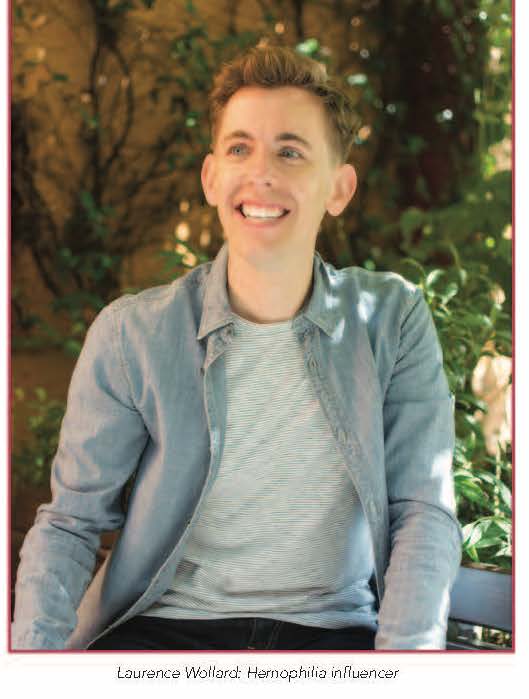
Laurence Woollard is founder and director of On The Pulse – an independent, strategic consultancy providing specialist insight to UK and global healthcare providers on the development and rollout of patient activation campaigns in haemophilia and rare diseases. He has extensive patient advocacy experience, having advised on and implemented a broad scope of community awareness, research and educational initiatives for commercial partners and third-sector organisations. Laurence is highly driven by his own journey and challenges of living with severe haemophilia and the impact on the family dynamic, to campaign for and effect real change in improvements to quality of life for his peers.
Twitter: @TheWoollard / @OnThePulse
References
[1] Limaye RJ, et al. Building trust while influencing online COVID-19 content in the social media world. Lancet Digit Health 2020;2(6):E277-78. Doi: 10.1016/S2589-7500(20)30084-4
[2] van Bavel JJ, et al. Using social and behavioural science to support COVID-19 pandemic response. Nat Hum Behav 2020;4:460–71. Doi: 10.1038/s41562-020-0884-z
[5] Limaye RJ, et al. Building trust while influencing online COVID-19 content in the social media world. Lancet Digit Health 2020;2(6):E277-78. Doi: 10.1016/S2589-7500(20)30084-4
[6] Leong C, et al. Social media empowerment in social movements: power activation and power accrual in digital activism. Eur J Inf Syst 2019;28(2):173-204. Doi: 10.1080/0960085X.2018.1512944
[8] Fitzgerald H, et al. COVID-19, lockdown and (disability) sport. Manag Sport Leis 2020. DOI: 10.1080/23750472.2020.1776950
[9] De la Corte-Rodriguez H, et al. What COVID-19 can mean for people with hemophilia beyond the infection risk. Expert Rev Hematol 2020;13(10):1073-79. Doi: 10.1080/17474086.2020.1818066
[11] Basch CH, et al. COVID-19 on TikTok: harnessing an emerging social media platform to convey important public health messages. Int J Adolesc Med Health 2020. [Ahead of print]. Doi: 10.1515/ijamh-2020-0111
[12] Zhou L, et al. Harnessing social media for health information management. Electron Commer Res Appl 2018;27:139-51. DOI: 10.1016/j.elerap.2017.12.003
[13] Stellefson M, et al. Evolving Role of Social Media in Health Promotion: Updated Responsibilities for Health Education Specialists. Int J Environ Res Public Health. 2020;17(4):1153. DOI: 10.3390/ijerph17041153
[14] Korda H, et al. Harnessing social media for health promotion and behavior change. Health Promot Pract 2013;14:15–23. DOI: 10.1177/1524839911405850
[15] Centers for Disease Control and Prevention. National Center for Chronic Disease Prevention and Health Promotion (NCCDPHP). 2020. [Online]. Available at: https://www.cdc.gov/chronicdisease/index.htm [Accessed November 2020]
[16] Makris M. Twitter and Haemophilia. Haemophilia 2020;26(2):181-82. DOI: 10.1111/hae.13931
[17] Adams R. Improving health outcomes with better patient understanding and education. Risk Manag Healthc Policy 2010;3:61-72. Doi: 10.2147/RMHP.S7500
[18] Gruman J, et al. From patient education to patient engagement: implications for the field of patient education. Patient Educ Couns 2010;78(3):350–56. Doi: 10.1016/j.pec.2010.02.002
[19] Reynen E, et al. Let’s Talk Period! Preliminary results of an online bleeding awareness knowledge translation project and bleeding assessment tool promoted on social media. Haemophilia 2017;23:e282–6. Doi: 10.1111/hae.13271
[20] Holmes H, et al. “Pay the wi-fi or feed the children”: Coronavirus has intensified the UK’s digital divide. 2020. [Online]. University of Cambridge. Available at: https://www.cam.ac.uk/stories/digitaldivide [Accessed November 2020]
[21] Ramsetty A, et al. Impact of the digital divide in the age of COVID-19. J Am Med Inform Assoc 2020;27(7):1147-48. Doi: 10.1093/jamia/ocaa078