Laurie Kelley

Leadership, Remembered

This has been a week of leadership reflection regardless of who you voted for. I read from one news source that Biden made this a campaign about character; and many friends on Facebook stand by Trump for his policies. These traits, and so many others, are what make up leadership. While it has been a rocky week, and an exhausting, challenging year, it is all about leadership.

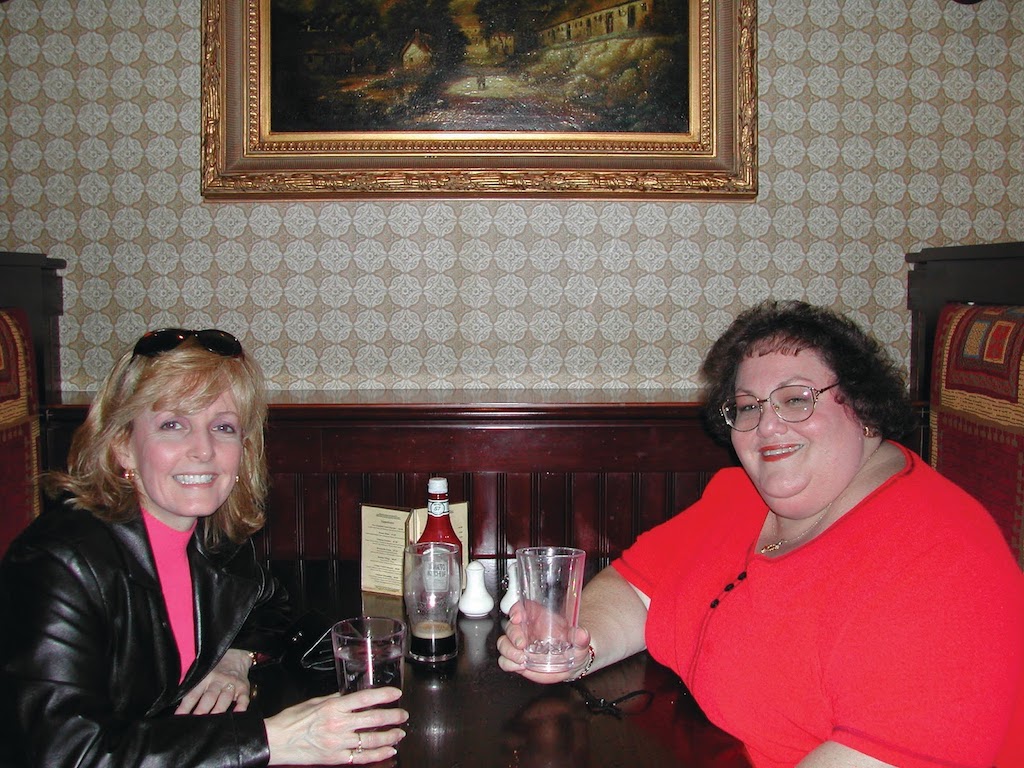
Laurie Kelley and Renee Paper 2002

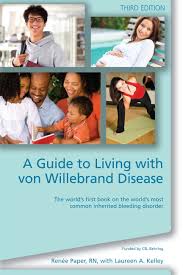
I reflected on leadership this week coincidentally, while remembering one of the greatest and most unique leaders we ever had in the bleeding disorder community—Renée Paper. She passed away November 7, 2007, at age 49. If you ever got to meet her and hear her speak, you probably never forgot it. I always say she was a great lady, in size, intellect and passion. The most intelligent woman I ever met. She had a photographic memory, razor sharp tongue, ribald sense of humor, love of animals and fiery passion to help people. She was an emergency room nurse who had von Willebrand disease (VWD), and truly became our foremost spokesperson and advocate for women with VWD. After hearing her speak (like a cannon going off) at various events five times, I was so excited myself (why wasn’t anyone doing anything to help those with VWD?), that I talked her into co-authoring a book with me, which became the world’s first book on VWD, published in 2004.

I could not imagine that I’d lose this amazing person, who lectured like an old time preacher, who could draw audiences from young women to seasoned hematologists, who pounded the podium in her quest to get the NHF, the country, doctors, patients and even the government to take women with bleeding disorders seriously. Who can forget her favorite line? “Know why doctors don’t take us seriously when we tell them we bleed too much and too often? Because men don’t have uteri!” And she would smile to see the audience either squirm (the men) or roar with laughter and approval (the women).

She and I traveled together, presented together, wrote together. She loved coming to visit my zany household (“You let your kids roller skate in the house?” she asked incredulously) And then proceeded to reprimand me for not giving my elderly dog pain killers.

I loved Renée and sadly witnessed her demise; years of health issues took their toll. She died far too young. She had character and was a character. She also possessed those vital traits of great leaders: compassion, boundless energy, drive, passion, and vision. She didn’t live long enough to see her vision come true. We do have much better care for those with VWD now. But I often wonder hw much further we could have gone, had this amazing leader stayed with us a bit longer.

A new edition of A Guide to Living with von Willebrand Disease will be available in 2021.

Vampirism: The Lust for Blood

Every Halloween I indulge my love for literature by reading the classics: War of the Worlds, Dracula or Frankenstein. Great novels with iconic characters and intelligent stories. While War of the Worlds, by H.G. Wells, is not exactly a Halloween story, it rose to new fame when Orson Welles broadcasted live from New York’s Mercury Theatre in 1938, in a now infamous radio play, based on the book, which terrified listeners and convinced them that an actual alien invasion of Earth was happening!

Richard Atwood, our favorite archivist from North Carolina, loves literature too, and keeps finding these amazing and obscure books with references to hemophilia. And here’s another one he uncovered about vampires and hemophilia—well, not exactly vampires…

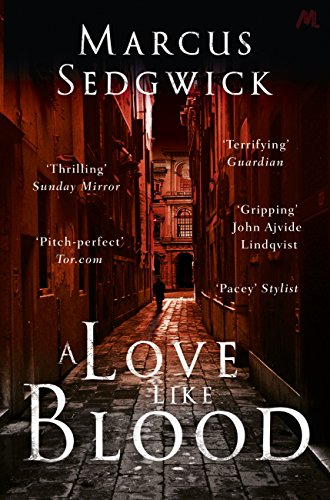
A Love Like Blood  by Marcus Sedgwick. 2014.

In 1944, Dr. Charles Jackson, a 25-year-old house officer at Barts, is called up as captain in the Royal Army Medical Corps, Field Hygiene Section. When Paris is liberated, he visits an antiquities museum at Saint-Germaine-en-Laye. Weirdly,  he stumbles upon a man in a bunker drinking blood from a woman. Stunned by either fear or curiosity, Charles turns and leaves quickly.

After the war, he returns to Cambridge as a 31-year-old consultant in hematology. In 1951, while attending an international conference in Paris to read a paper on leukemia, Charles spots the man in the bunker! He is dining with a beautiful woman in her early 20s. With a bit of sleuthing, he discovers the man is Anton Verovkin, a rich and titled Estonian in exile, and the woman is Marian Fisher, an American PhD student at the Sorbonne. Marian is researching her dissertation: how blood is used in Dante’s The Divine Comedy.

Charles eventually starts a relationship with Marian and falls in love. In Paris that June, Charles finds Marian to be paler and ill, and he warns her of Verovkin as being dangerous. By August, Charles is told that Marian has returned to America for a heart operation. Charles chooses to focus on his hemophilia research in Cambridge. His small research unit investigates improved plasma products to help patients with hemophilia. Charles eventually marries Sarah, who then tragically dies. This guy has bad luck!

In 1961, Charles receives a letter from Mrs. Margery Fisher in New York. She reveals that Marian died in 1951, and was buried in Paris, hinting that Marian had loved Charles. Following scant clues, Charles travels to Paris to learn of Marian’s brutal murder, and then to Avignon to discover Verovkin conducting a blood-drinking religious ceremony. Verovkin’s followers abduct and beat up Charles before the French police send him home. Charles inquires into clinical vampirism, or blood drinking. An invitation to visit Professor Enzio Mazzarino in Rome to discuss his hemophilia research turns out to be a ruse, but Charles encounters an underage prostitute. When Charles returns to London to be with his dying father, the police raid his house to find planted photographs of Charles with the prostitute. Fired from his job and fleeing the police, Charles takes his inheritance money and hides in Scotland.

Studying clinical vampirism, specifically the psychologically disturbed and their relationship to blood, Charles becomes more paranoid. He accidentally kills a private detective, who he hired to find Verovkin, when the detective instead stalks Charles. Hiding in London, Charles learns more of the perversions and taboos of blood. When, in 1964, newspapers report that Giovanna Scozzo, a young Italian female with hemophilia, will be treated at the Swiss Haemophilia Clinic in Lausanne due to the generosity of a rich Swiss philanthropist, Charles, without a passport, makes his way to Switzerland, killing a fisherman on the way. The abducted Giovanna is the bait for Charles, who is also abducted to Verovkin’s chateau in Yugoslavia. Imprisoned there, Charles is forced to drink blood to survive. By cutting off his thumb, Charles escapes his wrist shackle and burns down the chateau. Still wanting to avenge the murder of Marian, Charles searches three years for the scarred Verovkin, finally finding him in Italy, in 1968. Charles kills Verovkin, by slashing his neck with a knife, eerily realizing his personal desire for blood.

Richard comments: “ This novel, labeled as crime fiction, begins with an interesting love story and morphs into a disturbing thriller. The budding romance of a hematologist specializing in hemophilia and a beautiful woman never reaches fruition, yet the protagonist seeks revenge for the murder of his unfulfilled love, using his hefty inheritance to fund his obsession. The novel lists numerous minutiae about blood. Hemophilia is an integral part of the plot involving blood, adding vital substance and the appropriate name for the “love of blood.” Oxford researchers are attributed, in 1951, with the use of snake venom as a treatment of hemophilia, and then, by 1961, for the identification of additional clotting factors.          

Marcus Sedgwick, 2014, A Love Like Blood. New York, NY: Pegasus Crime. 310 pages.

Snakes and Hemophilia

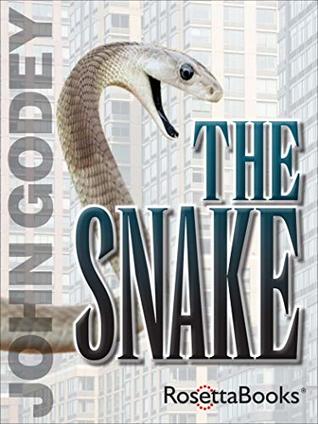
Just in time for Halloween, our amazing archivist, Richard Atwood of North Carolina, has found another reference to hemophilia in an unlikely place—a novel about snakes. The Snake, by John Godey, published in 1978, is a novel about… a snake.

It’s called a black mamba, though olive-slate in color, extending 11 feet, 2 inches. The black mamba is the largest and deadliest poisonous snake in Africa. The snake arrives in New York City in a plywood box with a burlap lining and air holes.

A Greek bought the snake in Elizabethville, then lost it in a poker game in Maputo. Matt Olssen, a seaman returning from Africa to the States, wins the snake and wants to sell it to a zoo. After docking in Brooklyn, Olssen takes his snake-in-a-box and begins drinking. In Central Park late that September night during a stifling heat wave, a thug named Ramon Torres mugs, then shoots Olssen dead. The box breaks open and the snake bites Torres twice in his thigh. Torres dies that night at East Side Hospital.

The next evening Roddy Bamberger leaves his date at the outdoor Delacorte Theatre. Walking past Belvedere Lake, Bamberger steps on the snake and is bitten three times in his left thigh. Bamberger dies at East Side Hospital. With two deaths to solve, and the city in a panic, Captain Thomas Eastman of the NYPD is put in charge of finding the unidentified snake in Central Park – an area covering 840 acres, of which 150 is water. The Reverend Sanctus Milanese of the Church of Purification proclaims that the snake is Satan, or Satan’s messenger.

Captain Eastman recruits Mark Converse, a young herpetologist, to locate the snake. Jane Redpath, a graduate student, takes photographs in the menagerie at night. She is accompanied by her boyfriend, Jeff, a former football player at Columbia. Jeff is bitten on his forearm, and dies at East Side Hospital. The snake then bites Alvis Parkins, a 15-year-old boy, twice in the neck, but Alvis is run over by a car before he can reach a hospital. Fortuitously, Redpath took a photo of the snake, that can now be identified for the correct antivenin.

Later, the snake chases a rat into an apartment and bites a family from Trinidad: Webster McPeak, wife Emily, son Webster Junior, and daughter Charlene. Even with black mamba antivenin, Emily and Charlene die at West Side Hospital. On the twelfth day of the heat wave, Converse spots the snake sunning on a rock in the East Meadow, but a police helicopter scares the snake away. A follower of Reverend Milanese named Graham Black is also searching for the snake. Black is bitten on his right leg and receives the antivenin. The police fire Converse. Reverend Milanese organizes Operation Pillar of Fire to burn the snake out of Central Park. The snake escapes and bites a couple three times in the back of a taxi. Another Milanese disciple is bitten by the snake after it is beheaded.

But it’s not over yet… the snake leaves 13 eggs in her burrow in Central Park!

It’s interesting to note that on page 56 in the book, a television newscast shows the milking of a Russell’s viper’s venom at a Brazilian snake farm. The film is narrated: “Not all snake poison is malign. The venom being taken from this Russell’s viper will be used as a coagulant for persons suffering from hemophilia.”

Richard comments, “The simplest of fears can sometimes be the most terrifying. The possibility of a single snake terrorizing an entire city seems realistic. The snake bites 11 individuals, killing at least six, plus she has the opportunity to bite numerous other New Yorkers during her short stay in Central Park. The revelation that Russell’s viper venom has been used to treat hemophilia as a topical hemostyptic is correct. The novel, however, does not reveal that the product has been commercially available from Burroughs Wellcome and Company as Stypven, and from Boots as Rusven. A Russell’s viper venom dilution of 1:10,000 clots hemophilic blood in 17 seconds. The commercial product uses a 1:100,000 solution, while the venom is still active at 1:1,000,000,000.”

I’ve heard of transgenic animals that are milked to collect factor, but never milking a snake for its venom to clot blood! Since Halloween is cancelled most everywhere due to the pandemic, read a good scary book this Halloween!

Is It Safe to Donate Blood in a Pandemic?

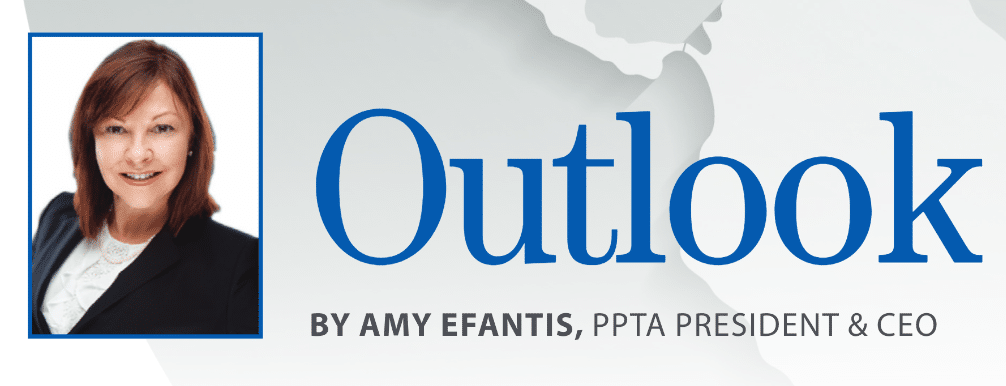
In the U.S., the first full week of September is designated National Blood Donation Week, to promote blood donations and the need for blood, for emergences and for therapeutic drugs. I normally post something about it, but with Covid-19 taking center stage, overlooked it this year. I just read The Source magazine, from the Protein and Plasma Therapeutics Association (PPTA), and found the welcome, called “Outlook,” by new president Amy Efantis, very compelling. Please have a read of this excerpt, and go to “the source” itself, to download your own copy here. Remember that some of our community members still use plasma-derived products, as do many in developing countries. Is it safe to donate blood in a pandemic?

Outlook by Amy Efantis

“… in those early days of this crisis, my committed and experienced colleagues recognized even before the scourge of Coronavirus SARS-CoV-2 was officially declared a pandemic that patients might have concerns about plasma-derived therapies (PDTs) and the safety of those therapies due to COVID-19. Our member companies’ leading pathogen safety experts came together to assure patients of the safety of PDTs. They outlined the extensive safety measures that industry follows for donor recruitment and validated pathogen removal/inactivation steps during the manufacturing process, providing assurance to patients and providers about the safety of PDTs. Our statement detailing these protocols was published on our website in several languages and has been frequently cited.

“PPTA sprang into action to make sure that plasma centers, center employees, and donors were deemed essential to perform their daily activities by authorities in the U.S. and in Europe. After appeals from PPTA, the European Centre for Disease Prevention and Control defined plasma as an essential substance of human origin and encouraged plasma centers to continue collection to ensure the continuity of production of plasma-derived therapies. PPTA also engaged in efforts to make sure that PDTs, and the essential goods needed in the collection of plasma as well as manufacturing of therapies, were considered essential to ensure the movement of goods between and among countries during the pandemic. This included appeals to authorities to make sure centers received priority for personal protective equipment and medical supplies.

“In the U.S., our efforts resulted in the President’s Coronavirus Guidelines for America noting the special responsibility of the pharmaceutical supply chain, including the important role of plasma and plasma donors. In fact, donors and staff were explicitly identified in every iteration of the federal government’s advisory list of essential critical infrastructure. But even as officials at the U.S. Department of Homeland Security and the European Commission issued guidance that deemed plasma centers, staff, and donors as essential, PPTA was called upon to engage directly with local, state, and national level authorities who were not aware of or did not understand the guidance, to ensure that centers remained operational. To assist in this effort, PPTA developed a repository of documented exemptions that plasma centers could have on hand if questioned by authorities during periods of restricted movement.

“We recognized early on that plasma donors, who are essential for addressing the clinical needs of patients for PDTs, might have concerns about their safety given anxiety surrounding the contagious nature of COVID-19. PPTA facilitated the development of a preparedness checklist for centers in the early days of the pandemic. PPTA member companies took immediate actions to accommodate the safety of donors in their centers with new protocols for increased screening, the use of personal protective equipment, social distancing, and the availability of disinfectants.

“Because of government-imposed restrictions in movement, our typical inspection paradigm was disrupted. In keeping with our historical commitment to standards, PPTA submitted a proposal to the European Medicines Agency (EMA) requesting remote good manufacturing practice (GMP) inspections and parallel inventory holds, which were agreed to by EMA’s GMP/Gross Domestic Product Good Distribution Practice Inspection Working Group. We adapted inspections in our International Quality Plasma Program to virtual models, and we advised auditors to match the U.S. Food and Drug Administration’s relaxed inventory hold period from 60 days to 45 days for purposes of PPTA’s Quality Standards of Excellence, Assurance & Leadership program. These efforts reflect our willingness to be nimble in a crisis with our abiding commitment to the highest possible standards.

“PPTA’s work with other stakeholders has meant increased attention to the urgency of plasma collection. Our partnership with the Platform for Plasma Protein Users and the European Plasma Alliance resulted in the European Commission launching a call for blood and plasma donations. It also prompted the EU Health Commissioner’s issuance of a statement recognizing for the first time the importance of plasma and its use in treating rare conditions, as well as its role in fighting COVID-19.

“In the U.S and in Europe, the patient community weighed in with local and national policymakers on issues supporting Source plasma donors and shined a bright light on the urgent need for plasma to treat rare disease patients. We are proud of our efforts during the COVID-19 crisis. PPTA has seen positive results in our responses during the pandemic. But this is not the end of the story.

“Concerns over plasma availability have now replaced initial anxiety around the safety of finished product. In March and April, plasma collections were down, understandably, compared to 2019 due to government-imposed restrictions on movement in the U.S. and Europe. But the expectation was that a recovery would occur as COVID-19 cases declined… in the U.S., as quarantine protocols were loosened, there was a resurgence of COVID-19 cases in several states, including Florida and Texas, states with a strong presence of plasma collection centers. Though a recovery continues, it is far less robust than expected. So now the real work begins.

“Just as it has been challenging to predict what will happen next in the pandemic, the same holds for the future of PDTs. But we do know this much today — donations NOW will mean better outcomes in the future. To meet patient clinical need, we encourage you to:

• Contact policymakers about the urgent need for plasma donations.

• Speak out about ending outdated regulations and call for the coexistence of the private sector with the public sector to collect more plasma.

• Use your own social media channels to spread the word about the ongoing need for plasma donations.

• Donate Plasma if you are an eligible, healthy adult — patients are counting on you!

“Let’s come together to show our commitment to patients.”

The Plasma Protein Therapeutics Association (PPTA) represents the private sector manufacturers of plasma-derived and recombinant analog therapies, collectively known as plasma protein therapies and the collectors of source plasma used for fractionation.

Pain Is Not the Problem…It’s the Solution

by Corey Pierce , November PEN 2020

The bleeding disorder community has a pain problem, but it’s not the problem of too much pain. The real problem is a misunderstanding of pain and its importance for our survival. Many people with bleeding disorders have come to devalue pain, because pain is often characterized as a mysterious and uncontrollable inevitability. A fallacious concept like “spontaneous bleeding” has sowed a seed in many minds that the actions we engage in are divorced from how our bodies respond. If the pain we experience is seen as inevitable, or with clouded causes, then we’re left with no other option than to manage the best we can, or trick ourselves into thinking the pain doesn’t exist.

If given the option to never feel pain again, many people would take this deal in a heartbeat. But only later would they truly understand the horrors of living without pain. What if you took this deal? Well, rare medical conditions like congenital insensitivity to pain (CIP) suggest that you shouldn’t be too attached to your fingers and toes. And you’d better hope to never get an infection or have heart failure, because you’ll be without the best warning sign nature ever created: pain. In short, your life would end much sooner. Living without pain is not a blessing—it’s a tragic, brutal curse.

If you want to understand pain, know that it results from a set of factors. Pain doesn’t arrive out of nowhere, and it’s rarely attributable to a single cause. For example, the mild ankle pain I am experiencing as I write this is not only the result of countless past ankle bleeds, but also the result of (1) standing for two hours straight while making an elaborate meal yesterday; (2) wearing “cool” shoes with no heel drop yesterday; (3) running three days ago even though I was sore; (4) eating inflammatory foods yesterday; (5) being dehydrated today; (6) slightly twisting my ankle on a tree nut while intently looking at a mailbox on a recent run; (7) not being able to ice myself after physical activity (my roommate has needed the ice more after his recent surgery); (8) not yet knowing my mileage limit while running (running is new for me since COVID-19); (9) switching to a new running shoe (is it helping or hurting?); (10) walking a mile on uneven sand recently. And so on…

If you look critically at what contributes to pain, you’ll see that it’s possible to improve your underlying condition by changing how you navigate through this world. By examining the obvious—and subtle—contributing factors to pain, you can create a template in your mind for what you should be doing and also avoiding. In my earlier example, there are complex interactions between my physical awareness, my activity level, and my shoes that I can monitor and refine over time, as I get used to my new activity—running. This introspective, reflective process is often at odds with the objectives of using pain medications.

Sadly, many people with bleeding disorders have been offered pain medications as the only solution to their pain. Too much reliance on pain meds may be nothing more than a deception that obscures the true problem(s). While effective over the short term in tamping down pain signals (the effects), pain meds also disguise the complex set of underlying factors (the causes). If we don’t address the true causes of pain, and instead focus solely on the effects with pain medication, the condition or behaviors at the root of pain will get worse, not better.

So, is pain your enemy, or is it your collaborator? If you want to live a long and healthy life, pain can’t be reduced to your tormentor Don’t let your pain be in vain by seeking remedy only through pain medications. You can’t arrive at the underlying causes of your pain when you are literally numb to them. Our pain is not what ruins life; it is what prolongs life, but only if we listen and learn from it.

Corey Pierce is a PhD candidate in public health at Oregon State University. He is currently completing his PhD dissertation, which explores how pain attitudes are connected to the experience of pain and use of pain medication. Corey has severe hemophilia A. He is active in the bleeding disorder community as an advocate and teacher of yoga, and he serves on the board of Pacific Northwest Bleeding Disorders.

HemaBlog Archives
Categories