Laurie Kelley

The Sacred Pint

The sacred pint alone can unbind the tongue. James Joyce

Following up on my blog of June 30, here’s more fascinating facts about blood. This time, what contribution war made to blood transfusion services. In Nine Pints: A Journey Through the Money, Medicine, and Mysteries of Blood , Rose George shares, in reference to World War II, how “London’s authorities had spent years readying for calamity on all fronts. But they had not thought it necessary to prepare any blood.” Below are excerpts from her excellent book!
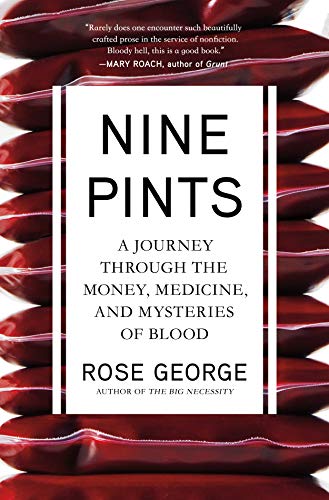
  • In 1937, the English secretary of state for war had been asked what the nation proposed to do about a mass blood supply. He said, “It is more satisfactory to keep our stores of blood on the hoof.” He meant that the best way to store blood was how nature intended: inside a human body.
  • By World War II, blood transfusion had been fully accepted by the British military, which planned in prewar years to set up an efficient blood supply to its forces and operated it extremely effectively. Field Transfusion Unit trucks carried refrigerators containing 1,100 pints of fresh whole blood. [This had a very short life span!]
  • The actual emergency blood supply for London, a city of several million people, consisted of the stock kept by four London county hospitals for urgent maternity use: eight pints.
  • Yet in wartime Barcelona, Frederic Durán-Jordà, a Catalan physician, had successfully pioneered the mass collection, storage, and delivery of blood. He made blood mobile, transporting it to the front line in glass bottles in a converted fish van. Blood was withdrawn, mixed with citrate solution, then bottled. Barcelona’s blood was good for eighteen days.
  • We owe a lot to Percy Oliver: Oliver’s was the world’s first voluntary blood panel and the beginning of a shift to a model of altruistic blood donation in Britain that has endured one hundred years.
  • Dame Janet Maria Vaughan was a British physiologist, academic, and academic administrator. She researched in hematology and radiation pathology. In early April 1939, during World War II, she gathered some medical colleagues in her Bloomsbury flat; they would change modern medicine. She initiated creation of national blood banks in London, setting one up with Frederic Durán-Jordà. She used a modified milk bottle for blood collection and storage.
  • She used ice-cream vans full of her bottled blood through bombed and blacked-out streets. Most of the drivers were women.

• The war embedded the idea of blood donation in popular consciousness like nothing else had done.

• For British Major General W. H. Ogilvie, “the greatest surgical advance of this war, more important even than penicillin, is the development of the transfusion service.”

A departure from the topic of hemophilia, we are proud to promote…

This week we are taking a pause on the topic of bleeding disorders to share with you a very exciting project one of our team members has created!

Our editor of over 20 years, Sara Evangelos, has co-authored a young adult book titled Somewhere Besides Denver. We are so excited for Sara and this new book. Please read the synopsis below and check it out for yourself by visiting https://somewherebesidesdenver.com/

Denver, 1907: Three spirited teenage girls leave their homes on the prairie for a yearlong European Grand Tour. Violet and Marion, members of Denver’s social elite, yearn for more than society parties and safe marriages. Helen, a rancher’s daughter whose mother has abandoned the family, resents being an outsider. All three girls long to stretch the limits of what’s “suitable” for young women.

In Paris, the teens escape their chaperone and explore the city’s seamy side. Marion falls hopelessly in love with her drawing tutor, who has a history of breaking pupils’ hearts. Violet meets a chic clothing designer who encourages her to follow a career in fashion—and to ditch the corsets. In London, during the 1908 Olympics, Helen conducts a secret bicycle search for her long-lost mother, and the girls join the growing suffrage movement, barely escaping a melee at a women’s rights demonstration.

During their travels, the teens ride the Twentieth Century train and sail on the Lusitania. They meet a radical suffragette, two nosy gossips, a ground-breaking African artist, a fascinating photographer, and some fancy-dressed dogs in jeweled outfits. By the time they sail home to America, Marion, Violet, and Helen have found the confidence they need, at a time when women craved freedom—but men held the power. They decide to rebel against society’s rules, and to follow their own paths as women of the new century.

Visit https://somewherebesidesdenver.com/ for more information!

Give a Pint!

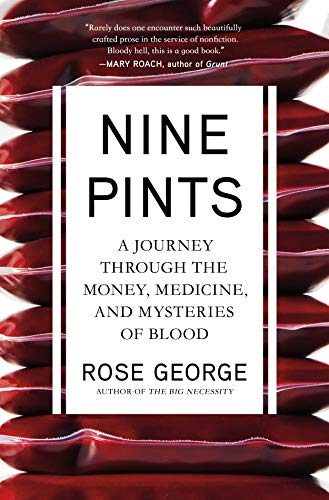
I love reading about medical history, and naturally blood is a fascinating topic. Rose George’s book Nine Pints: A Journey Through the Money, Medicine, and Mysteries of Blood is snappy and witty, and full of facts. I loved all the statistics, interwoven with real life stories of individuals. I appreciate the focus on the suffering and plight of those with hemophilia, who contracted HIV and hepatitis C. I know some of the people she quoted. George has highlighted some very important and crucial concerns: plasma donation practices, cultural differences regarding blood. A chapter on leeches– so interesting! As I am involved internationally in helping patients in developing countries gain access to clotting factor, I was very interested in the global situations she presented, especially India and Nepal, two countries I have been to many times. Here are some highlights from the book, which I strongly recommend reading:

• Every three seconds, somewhere in the world, a person receives a stranger’s blood. Globally, 13,282 centers in 176 countries collect 110 million donations.

• The mythical Gorgon Medusa, with her head of snakes, showed the two-faced nature of blood best: the veins on her left side contained blood that was lethal, while the right side gave life. Transfusions can be two-faced, too. The right type of blood can save your life; the wrong one can kill you.

• The bone marrow produces two million red blood cells every second. Daily, the blood’s thirty trillion red cells do a full circuit of the body, traveling about twelve thousand miles.

• Forty percent of Caucasians have type A blood, but only 27 percent of Asians. 19 The fact that O-type people are more susceptible to cholera was first noticed in 1977.

• Cold War Americans thought blood type so important that they tattooed it onto adults and children.

• A nation-state needs 1 to 3 percent of its population to give blood to maintain an adequate blood supply, 36 the higher the better.

• In Luxembourg only 14 percent of people give blood; over the border in France, it’s 44 percent.

• A leech bite will usually feel like a vague sensation, not a nip or scratch. Once their teeth are engaged, they emit the best anticoagulants known to exist, so that their blood meal keeps flowing long after they have stopped feeding, often for up to ten hours. The leech is in many ways a simple animal, but its anesthetic and anticoagulant have yet to be bettered by science.

• In 1985, a three-year-old boy from Massachusetts had his ear bitten off by the family dog. He was taken to Boston’s Children’s Hospital, where his surgeons proceeded as they usually did with amputated ears. But the blood couldn’t circulate well in the tight ear area. Leeches were flown in and attached to the area. They drew blood away from the wound and kept the circulation to the newly attached ear.

• The first barber-surgeon on the registry of the Worshipful Company of Barbers was recorded in 1312. The bleeding barber is the reason modern barbers display red and white striped poles: the pole was a stick for the patient to grip; the white stripes were the bandages, the red stripes the blood.

More to come next time!!

When to Suspect an Inhibitor

Let’s face it: an inhibitor is a major complication of hemophilia. It develops when the body’s immune system does not recognize infused factor as a normal part of blood. Instead, the body thinks that factor is a foreign invader, like a virus or germ, and it develops antibodies to attack the factor and make it harmless—and useless. So despite an infusion of factor, your child continues to bleed. Prolonged bleeding, even after a factor infusion, is the most common sign that your child may have an inhibitor. But other symptoms may also tip you off.

Unresolved bleeds

You may suspect an inhibitor the hard way: when factor no longer works well to stop bleeds. If you’re new to hemophilia, this may be difficult to judge—how long should it take for a bleed to stop after an infusion? It may not immediately dawn on you that the infused factor isn’t working properly, especially if your child is already well into a muscle or joint bleed. It’s common for parents to think that they simply need to give their child more frequent infusions, or give a higher dose per infusion. If you think your child’s bleed is not resolving normally, or wonder whether you should dose higher or more frequently, please call your hemophilia treatment center (HTC).

Increased bruising

Bruising in young children with severe hemophilia is common. But if your child is on prophylaxis and you notice increased bruising, this may be a sign of an inhibitor.

Routine clinic visit

A blood test at your child’s HTC comprehensive clinic visit can identify an inhibitor. Low-level inhibitors are often diagnosed in this way. It’s wise to have a child with hemophilia tested for inhibitors routinely. Learning that he has an inhibitor prior to surgery or a major bleed allows parents to have a plan in place and the correct treatment on hand.

Breakthrough bleeds while on prophylaxis

Prophylaxis is the scheduled infusion of factor to help prevent bleeding. Many children with hemophilia on prophylaxis receive factor two to three times a week, enough to allow circulating factor to prevent most spontaneous bleeds and abnormal bruising. When a child on prophy starts bruising or bleeding more often than usual, an inhibitor may be inactivating some of the factor, lowering his factor level and increasing his risk of bleeding.

Bleeding after surgery

Any kind of surgery on a child with hemophilia requires careful planning and monitoring of factor levels, and any child who continues to bleed following surgery, even with adequate factor, should be immediately tested for an inhibitor. Ideally, all children with hemophilia should be tested for an inhibitor before any surgery. If you see any kind of bleeding following surgery, call your HTC immediately.

Reaction following infusion

An allergic reaction is a response by the immune system to environmental contaminants such as pollen, animal dander, or food. It can also happen after an infusion of factor. Symptoms may include sneezing; itching; hives; rapid swelling of the skin, neck or face; wheezing; faintness; fast heart rate; low blood pressure. Allergic reactions are especially worrisome with hemophilia B. An allergic reaction after a factor IX infusion is sometimes the first sign that an inhibitor to factor IX has developed. A whopping 45% of people with hemophilia B and inhibitors also develop allergic reactions at about the same time that they develop inhibitors.

Don’t downplay allergic reactions. They may start out mild but then increase in severity after repeated exposure to products containing factor IX, often to a serious, life-threatening allergic reaction called anaphylaxis. If your child has severe hemophilia B, his first 20 infusions of factor IX concentrate should be done in a hospital or clinic with expertise in treating severe allergic reactions.

Following a major bleed or emergency

Whenever your child receives large amounts of factor—in response to a major bleed or during and after surgery—he may be at higher risk of developing an inhibitor. Experts aren’t sure if large amounts of factor stimulate inhibitor development, or if the body is more susceptible to inhibitor development during a medical crisis because the immune system is on high alert. But whatever the reasons, be aware that the risk of developing an inhibitor is slightly higher during an illness or surgery.

Later in life

If a person with hemophilia develops an inhibitor, it’s usually while he’s a child, almost always before exposure day 100. And he probably has severe hemophilia. But in rare cases, an inhibitor develops in a teen or an adult—usually in people with mild or moderate hemophilia, and usually after intensive exposure to factor during and after surgery or traumatic injury.

Inhibitors are scary to contemplate. Even when your child passes exposure day 100, don’t be lulled into thinking that he may never develop one. You can always request an inhibitor test from your HTC. Never try to diagnose on your own, or change your child’s dosing regimen on your own.

In your favor? A great array of educational resources, listed in this issue, and a wonderful team of medical experts. Don’t be afraid! Be proactive, just as you were when you learned about hemophilia. Inhibitors are one obstacle to overcome on your family’s hemophilia journey.

PEN 2.11     © 2011 LA Kelley Communications

The Joy of Giving

“Fundraising is a systematic, coordinated effort inviting people to experience the joy of giving.” Aly Sterling

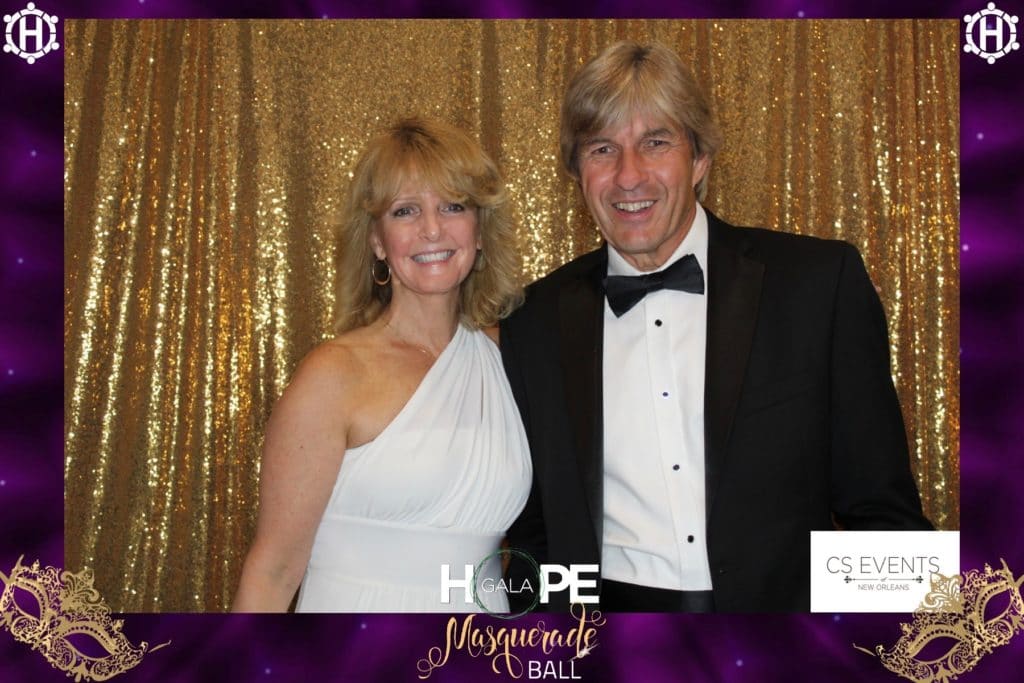
Last weekend, June 1, I was in New Orleans at the Hope for Hemophilia spring leadership weekend and gala, at the invitation of its president, Jonathan James, who has hemophilia. Hope for Hemophilia is a nonprofit that does in the US what we at Save One Life do overseas: provide direct financial aid for families with bleeding disorders who need assistance. While we have never worked together formally, I sometimes get requests for help here in the US: a plea for rent to be paid for the month, or a heating bill, car payment, co-pay. Even college tuition. I typically will forward the request to Hope first, or maybe HFA’s Helping Hands program, but if the person has already tapped out there, we will try to help them.

There is such joy in giving. Not so much like Christmas gifts or graduation gifts, but a gift that helps a person get ahead in life. A gift with no strings attached, often to a stranger.

Save One Life does this; Hope for Hemophilia does this. And this time, Hope did it to me. Gave me a gift, no strings attached.

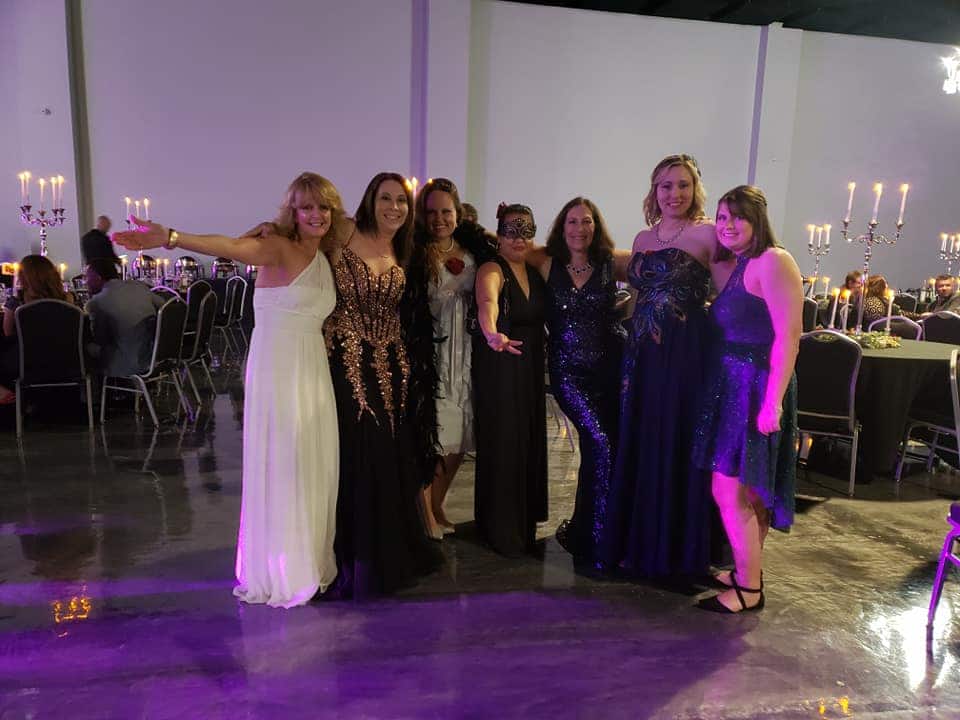
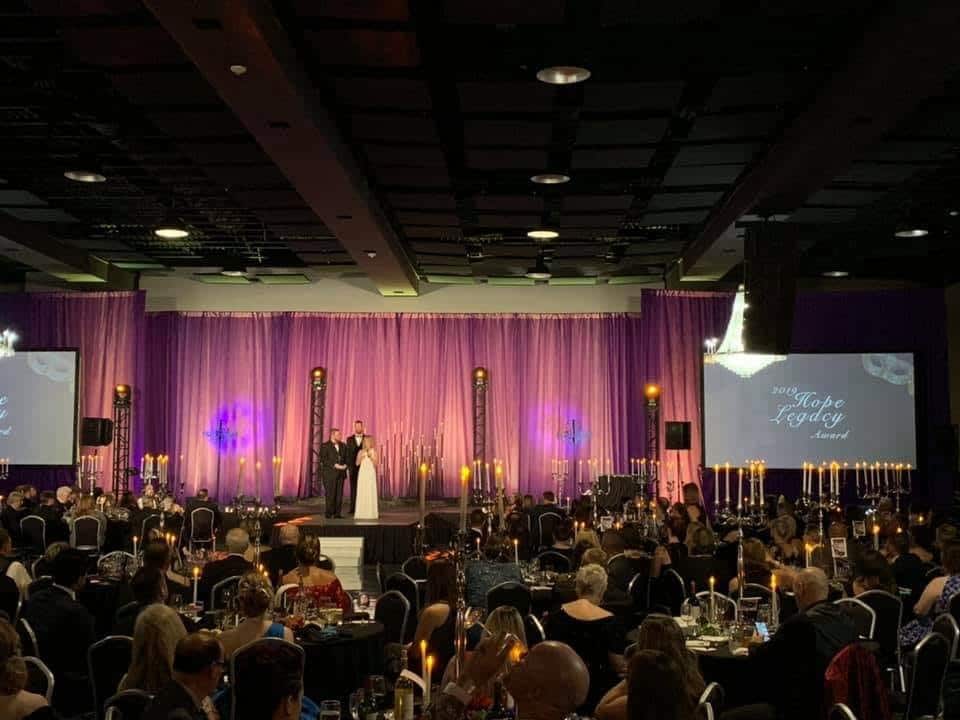
Jonathan had not prepared me for the gala, though I had heard it was the most elegant event in hemophilia in the country. Black tie and gowns, everyone was dressed for a ball, and the theme was masquerade. Many people bought charming masquerade masks to cover just their faces, á la Phantom of the Opera.

Doug and I walked arm in arm up a huge flight of stairs to the ballroom, which had such a high ceiling, it felt like a canopy of stars at night. Each of the many tables had huge candelabras; everything was donned in purple, giving it a mysterious, Houdini feel. We sat with Jonathan’s parents, who were charming, and another family, who were founding members of Hope.

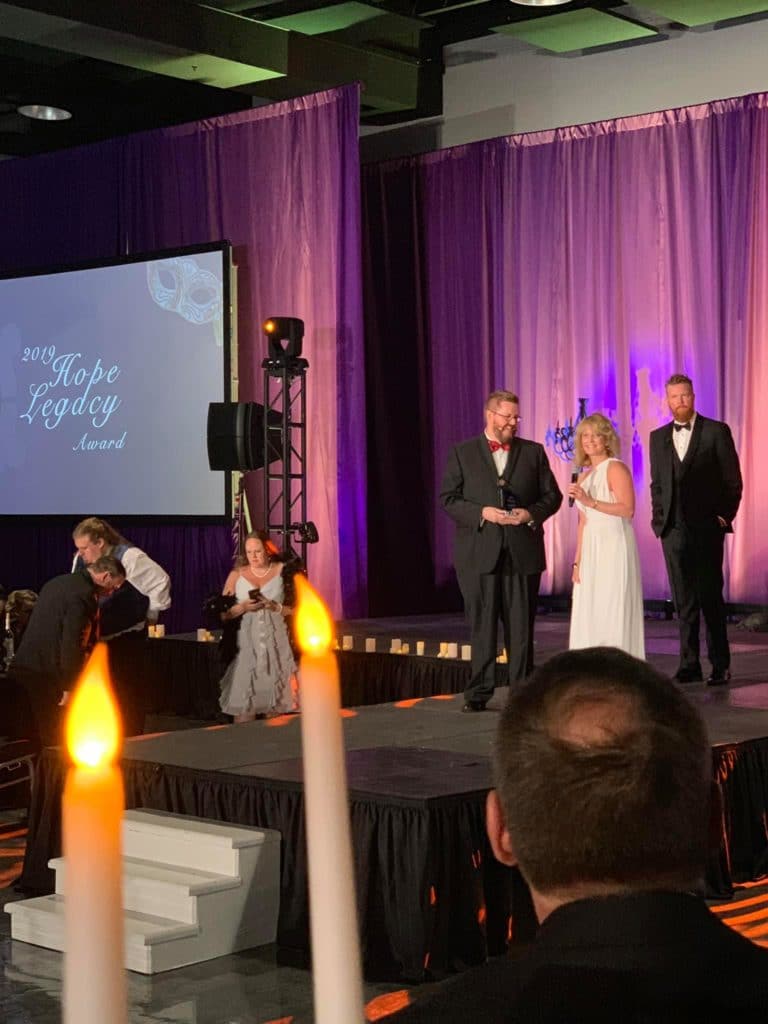
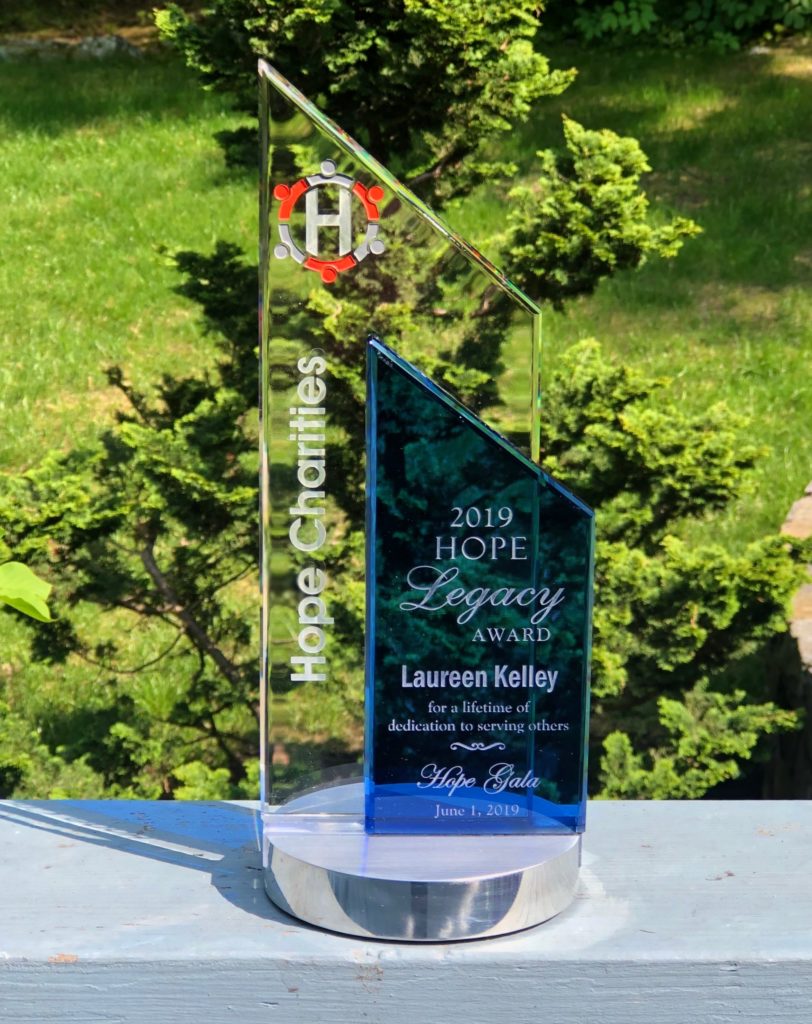
The gift Hope for Hemophilia gave to me that night was not just their Legacy Award, lovely in itself, but a beautiful video, narrated and sincere, which chronicled my story from the birth of my son, to my books, to my work overseas. I was stunned. No one had ever paid this type of tribute to me before. I don’t even have time to organize my own photos; how did they do this? How did they have the time, when they had an entire gala, with over one hundred guests, dancers, music, silent auction…

(See the video here)

It made me realize two things: 1) We truly honor whatever we spend time on. Hope for Hemophilia recognized the time and energy I’ve sent the past 30 years in the community, and I was honored with this amazing video. 2) Giving without any expectation of return. I’ve never donated to Hope for Hemophilia, as I have my own nonprofit to fund. And I give away funding to those in need directly. Jonathan James gave me an award and a video as a gift, pure and simple. And it was so profound. I was very humbled by this gesture.

In my acceptance speech, I touched upon this theme. We are put on this earth, I believe, to give without expectation of return on investment. We give because it’s the right thing to do. Because another human being is in need. And what we get in return whether it is immediate or somewhere down the road, or maybe even in the next life, is worth so much more than the gift!

That very week, on Tuesday, a handsome, fit young man of 20 showed up in the Save One Life office. Owen is from Kenya and he wanted to meet Save One Life, since we operate in Kenya. In speaking with him, I found out he also wanted to thank me; 18 years before, he was a two-year-old, in the public hospital, bleeding. There was no factor in Kenya. His doctor, who I know, made a request to us, and we shipped the factor . He was infused, healed and was sent home. Now he is in my home state, studying to be a physical therapist so he can one day work with hemophilia patients.

He came to thank me; I was the one who had sent him that factor, 18 years ago. Amazing!

And his gift to me? He will join our board of directors to represent Africa.

Thanks to Jonathan James, Porter Snow and everyone at Hope for Hemophilia for their generous programs, their sincerity in wanting to make the world a better place, and their goodwill and positivity. Thank you for an amazing weekend. I’m pleased to know we share the same values and outlook, and desire to help, and I would love to work with them in the future.

Please be sure to give, without expectations, and experience the pure joy of it!

See the video here.

HemaBlog Archives
Categories