Laurie Kelley

America’s First Family with Hemophilia

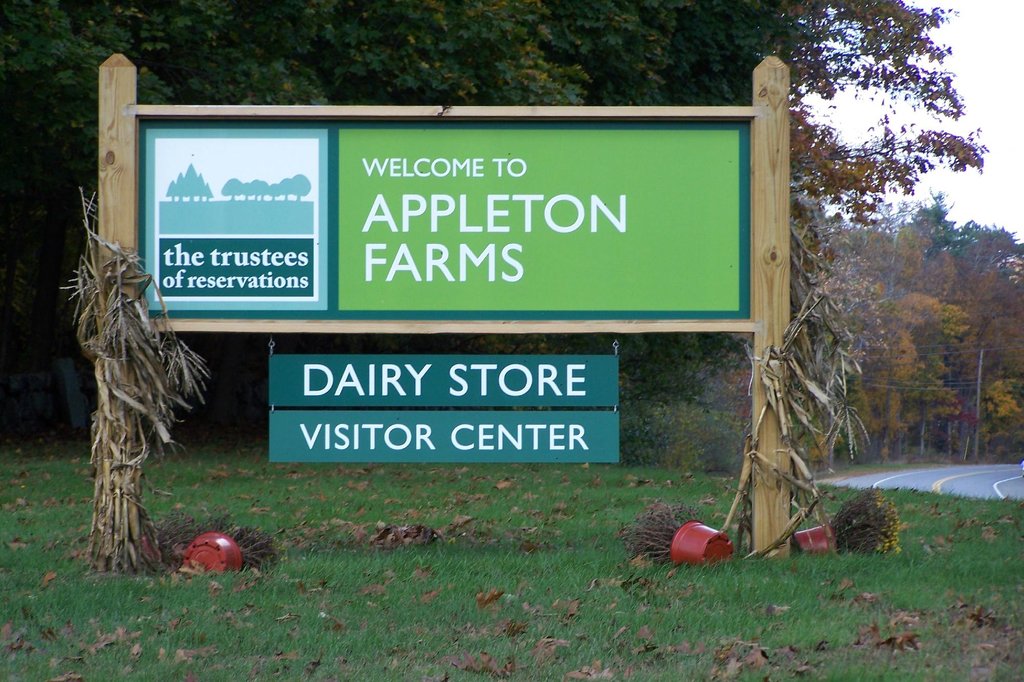
New England, 1639. Imagine that you are standing on the deck of the sailing ship Jonathan. You have just glimpsed the shore of your new home, the Massachusetts Bay Colony. Imagine the brilliant New England foliage, the bright chilly wind. Imagine your dream of farming your newly acquired land. Imagine the adventure. Now, imagine that you are the first European with hemophilia to step on the North American shore.appleton-farms.jpg (1024×682)John Oliver (1613–1642) traveled from Bristol, England with his family to settle under the leadership of the Massachusetts Bay Colony. He lived for only three years after he reached North America, fathering one child, Mary, and dying young as a consequence of his hemophilia. Not until after 1800 did the medical community begin using the term hemophilia to describe his disorder. John’s daughter, Mary Oliver (1640–1698), was likely the first hemophilia carrier of European descent born in the colonies. With her husband, Major Samuel Appleton, Jr. (1625–1696), Mary had three daughters and five sons. One of these sons, Oliver Appleton (1677–1759), was the first American colonist born with hemophilia.

Early Ipswich Roots
Mary and Major Appleton lived in a settlement known to native Americans as Agawam, but re-christened by the English in 1633 as the town of Ipswich. What would life in Ipswich have offered their son, Oliver Appleton? Thirty miles north of Boston on the Atlantic shore, Ipswich was owned by the Massachusetts Bay Colony; it was purchased earlier in the century from Native Americans for 20 British pounds. By the mid-1600s, Ipswich ranked second only to Boston in population and wealth. The Appletons were a wealthy colonial family. Major Samuel Appleton, Jr., Oliver’s father, was the son of Samuel Appleton Sr., one of the “landed gentry,” and a good friend of John Winthrop, the first governor of the Massachusetts Bay Colony. Appleton’s fertile 460 acres of farmland had been granted to him by the Colony in 1638, and left to his son, Major Appleton, around 1670.
Major Appleton, who served as a judge at the infamous Salem Witch Trials in 1692, died in 1696. He left his now nearly 600 acres, split into four parcels, to his four sons: Oliver, Isaac, Samuel and John. Oliver’s 100-plus acre inheritance included his father’s sawmill, ox pasture, and farmland bordering his brothers’ parcels.

In 1701, Oliver married Sarah Perkins. Well-to-do millers, farmers and traders, Oliver and Sarah possessed numerous household and farm goods. They were involved in local politics, church affairs and business. Together they raised fourteen children; several sons and their descendants would become fine cabinetmakers. At the turn of the eighteenth century, Oliver and his three brothers were working their adjoining farms in a loosely communal style. Each brother might grow a crop that the other brothers could use. Yet each brother farmed separately, produced his own goods for trade (like basket hoops), and kept his own business ledger. The brothers owned cattle, sheep, turkeys and hogs, and traded goods with family and friends in Ipswich.

A Dangerous Occupation?
On their “new” land (already cleared and cultivated by Native Americans), the Appletons cut and milled timber, raised livestock and worked the farm. Today, farming is still one of the most dangerous occupations. In the seventeenth and eighteenth centuries, its hazards were surely compounded by Oliver’s hemophilia, and the harsh New England winters. Yet Oliver lived to be 82—a considerable age in any century.

Late in life, Oliver was confined to his bed and developed bedsores on his hips. At age 82, his cause of death is recorded as bleeding from his bedsores and his urethra. Oliver appears to have been a generous and fair man, dividing his estate equitably among his children and his wife Sarah.

Making Medical History
Oliver and Sarah had six daughters and eight sons. Two of the daughters, Sarah and Hannah, had sons with hemophilia.

Interestingly, Hannah’s sons, Oliver and Thomas Swaim, were doctors. What would they have thought of their family’s disorder?

Without letters or other documents, we can only guess. Yet it was the Swaim branch of the Appleton family that attracted the attention of the medical community. Based on his personal connection with the Swaim family, Dr. John Hay, a Massachusetts physician, published an article on the Appletons in a New England medical journal in 1813. Following this publication, the Appleton family history appeared in numerous medical journals, at least as late as 1962. By then, the family had been traced through 350 years and 11 generations: 25 males with hemophilia, and 27 carrier females. In 1961 a blood sample, drawn from the last known living carrier in the family tree, revealed factor VIII deficiency, or hemophilia A.

Are the Appletons America’s “First Family” with hemophilia? Perhaps, in the sense that our knowledge of hemophilia has been enriched by the study of this large and long-lived colonial family. Thanks to our American Revolution, we have no “royal family” with hemophilia. Yet we can still honor and remember the Appleton family. This Thanksgiving, we can recall the challenges faced by earlier generations with hemophilia—people who contributed to our heritage as Americans, and as a hemophilia community. To understand ourselves, and create our vision for the future, we must always remember the past.

You can visit Appleton Farms in Ipswich, Massachusetts. 

From the November 2002 Issue Parent Empowerment Newsletter
“THE APPLETONS: America’s ‘First Family’ With Hemophilia”
by Richard J. Atwood and Sara P. Evangelos
© 2002 LA Kelley Communications, Inc.
United by Blood

Madonna Smith, executive director of Oregon Chapter, adopted a child with hemophilia into our “family”

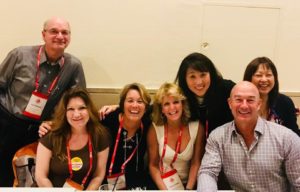
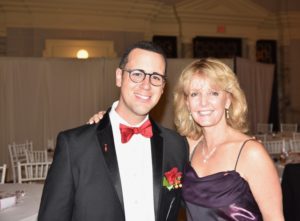
Well I’m ready for a rest! Last week I was in Orlando at NHF’s 70th annual meeting, and last night, at the New England Hemophilia Association’s Red Tie Soiree in Worcester, Massachusetts. And while there is so much happening with new products, with gene therapy coming closer, new programs for our community, and the spectacular movie Bombardier Blood ready for viewing nationwide, the overriding feeling I have after these major events is… this is family. We are truly a family, united by blood.

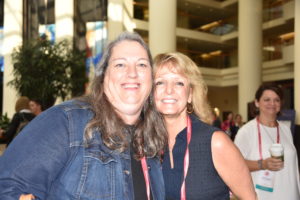
With the California gang!

As I’ve been in the community for over 30 years now, I’ve come to know so many people, and have watched as babies have grown to young adults, starting families of their own, some also with bleeding disorders. Our family grows, and grows older! My friends and I, all young moms and dads when we came into this family, are now in our 60s, looking back at the incredible path this bleeding disorder family has traveled together.

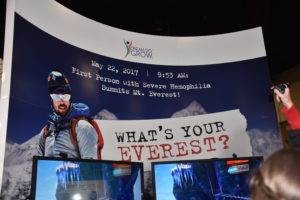
One path literally is the one that led to the movie Bombardier Blood, which debuted last Saturday in Orlando. To a standing room only crowd of over 500 people at 7:15 am, the Octapharma-sponsored event and movie about Chris Bombardier’s epic Everest summit brought laughter and tears to all. It is a stunning film, directed by Patrick James Lynch—whose name you all should know as well as Chris’s by now! These two young men with hemophilia have skyrocketed to fame with their achievement. It makes us, the older moms and dads, incredibly proud. We all kind of feel like they are “our” sons, or like our sons. Sons of our community, doing daring things for our community. 

Go Here to See Photos from NHF’s 70th Annual Meeting!

I was honored and fortunate to travel the actual path to Everest base camp with Chris and his wife Jess, and share in part of that historic journey. All the while, I felt like the mother I am, watching out over both of them (as if Chris needed it!). Viewing the movie that morning brought back so many memories and feelings of that journey in May 2017.
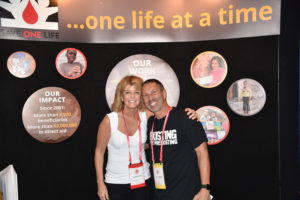
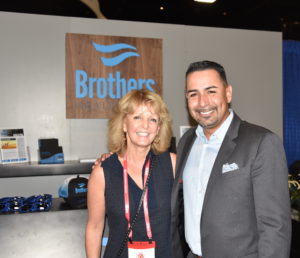
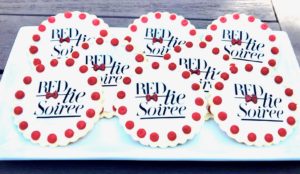
So much of the NHF meeting was connecting, with old friends and new, with families in need and families who can share and give. And at the final night we listened to music and danced the night away. While blood unites us as family, music unites us in joy.

I wish everyone could attend NHF’s or HFA’s annual meeting, though I know it’s improbable for most. The meetings are often held in the same spots: Dallas, Chicago,

Laurie Kelley with Derek Nelson, everyone’s favorite

Anaheim, Orlando, San Diego. You’ll never see one in Boston—too expensive. Not everyone can afford to go away by air and stay at hotels. While there are scholarships for first-time families, it sadly still leaves many in our family on the fringe.

Laurie Kelley with Kevin Shaughnessy, who she met when he was 12!

And that’s why we have local chapters and state bleeding disorder organizations. Does your state or region have one? The New England Hemophilia Association has become one of the best run organizations in the US. It wasn’t always that way. As we heard last night, when Charlie Dougherty, who served as treasurer and who passed away earlier this year, found when he joined, it was poorly run and $22,000 in the red. He straightened it up, but it took Rich Pezzillo, a young man with hemophilia, to rocket it into the highest level, and not just by squaring away financials. Rich has breathed new life into NEHA, infusing it with passion and commitment like never before. I confess I never donated to NEHA, even though I’ve lived in New England all my life. But with Rich’s leadership and his crackerjack team, we are all excited to give and participate once again. Last night proved it. I sponsored three tables and invited the team at Save One Life to come and experience the joy of this family reunion, and they had a blast, amazed by the comradery and caring.

In many ways, I find I can enjoy our bleeding disorder family simply by being local. So there’s hope for you too, to join this family by seeking out your local organization. Is it active? Does it have programs? NEHA has programs every month, sometimes every weekend! Does your chapter do a fundraising walk? Have a women’s or teen program? Is there someone to call to learn how to get involved?
I would really urge you to do everything you can to participate. Bleeding disorders can throw a curve ball at you at any time, as life can too. This family, this “Wicked Strong Family” as we say in Boston, is here to help. These friends have become more than friends—they are truly family.

And when I attended the wake last Friday of my first cousin’s husband, who died unexpectedly at only age 61, you realize how family is always family, no matter what. I visited with my cousins, who I rarely see anymore, except on Facebook. We were playmates as children, but life gets busy, the family gets bigger and reunions consist mostly of funerals now. Still, we have history and we are united by blood. It was good to see everyone again; I still love them all.

See Photos from NHF’s 70th Annual Meeting here!

Rising star: Rich Pezzillo with Laurie Kelley

We’ve lost a lot of people in this community this year and as life goes on will continue to lose more. It’s at this time that family comes together: whether nationally, or locally. Find out more about your local chapter; meet your hemophilia/bleeding disorder family. Get involved; give of your time or support. We are all united by blood, and can create the family we need by connecting, caring, sharing and loving.

And a little celebrating and dancing doesn’t hurt either!

The Importance of Plasma

“Das Blut ist ein ganz besonderer Saft” (Blood is an absolutely remarkable fluid)–Goethe, in Faust

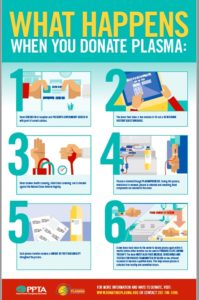
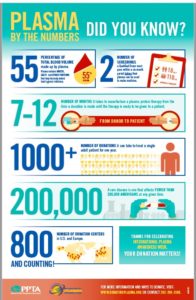
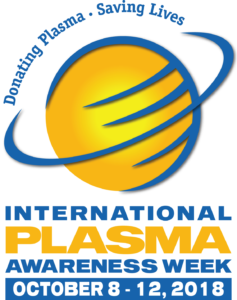
It’s Plasma Awareness Week! One of my favorite celebrations, because plasma is truly the gift of life. 55% of your blood is made up of plasma, and it is a vital ingredient in many therapeutic products to treat diseases and disorders. Plasma Awareness Week aims to :

  • Raise global awareness about source plasma collection
  • Recognize the contributions of plasma donors to saving and improving lives 
  • Increase understanding about lifesaving plasma protein therapies and rare diseases.

It’s so important that we donate blood, or even just plasma, to give companies the needed raw material to make their pharmaceutical therapies. While this week we saw another jump in the evolution of hemophilia treatment with the approval of Hemlibra for non-inhibitor patients, plasma still holds a very important place in our global community. People with hemophilia may need it for IT therapy in combating inhibitors. And the developing world truly needs it as a source of treatment… sometimes it’s the only source.

Read the posters below to learn more, know that people around the world have disorders that absolutely require plasma therapies, and then… donate! Go here to learn more about donating.  And visit PPTA to learn more as well!

Wine and hemophilia: what’s the connection?

“A bottle of wine contains more philosophy than all the books in the world.” Attributed to Louis Pasteur

Was wine ever considered historically as a treatment for hemophilia?

Richard Atwood, our contributing writer from North Carolina, offers this week’s blog about the history of wine as a medicine, by summarizing a book he read.

Salvatore P. Lucia’s 1963 book, A History of Wine as Therapy, purports that wine is perhaps the oldest of all medicines, dating back over 40 centuries of written record. Wine is also used as a menstruum for other therapeutic substances. Wine contains alcohol, aldehydes, ketones, esters, acids, carbon dioxides, nitrogenous compounds, pigments, tannins, sugars, pectins, glycerols, vitamins, and inorganic compounds. As a food, wine provides fluids, calories, minerals, vitamins, and proteins. As a medicine, wine acts an appetite stimulant, stomachic, tonic, tranquilizer, anesthetic, astringent, antiseptic, vasodilator, diaphoretic, diuretic, and antibacterial agent! Whew!

Wine was used in the healing arts in Egypt, India, China, Greece, Rome, Byzantine, Syria, Persia, the Dark Ages, and modern times. The therapeutic use of wine is documented in Egyptian medical papyri, the Bible, the Talmud, the Koran, Hindu vedas, Chinese medical treatises, plus ancient and modern formularies, dispensaries, and pharmacopoeias. Wine is prescribed as a pharmaceutical necessity. Among the prominent physicians promoting wine as therapy are Hippocrates, Socrates, Plato, Aristotle, Celsus, Homer, Pliny, Dioscorides, St. Luke the Evangelist, Galen, Avicenna, Maimonides, Arnald of Villanova, and Ambroise Pare. So maybe there is some philosophy to this!

Research scientists investigated the effects of the polyphenols and tannins found in grapes. These substances are thought to promote the resistance of the capillaries to hemorrhage. This would “confirm the empirical observations of the Spanish court physician who prescribed a diet of grapes and wine for the Prince of Asturias, the first recorded haemophiliac member of the royal family of Spain.” (pp. 197-198). The reference is an undated, unpublished manuscript by A.J. Lorenz.

Richard comments that there is only one reference to hemophilia in the text, but seven references to anemia. The absence of much hematological research on wine is disappointing. The use of wine as a treatment for hemophilia, especially when the patient with hemophilia is Spanish royalty, has seemingly never been replicated.

For the use of wine to treat hemophilia, Lucia omitted the reference to John Cochrane, MD, surgeon in Edinburgh, Scotland, who published in Lancet (ii: 147-150) the 1841 article titled “ On the haemorrhagic diathesis.” Cochrane discounted the effectiveness of the internal use port wine as an effective treatment of hemophilia because the wine increases the general force for circulation, causing the congested vessels to rupture. Ouch.

Maybe wine is best left to the parents or caregivers, to relax them from the aftermath of a hospital visit or surgery in their loved one with hemophilia?

Cheers!

Hiking for Hemophilia

Yesterday was a beautiful, sunny, crisp fall day in New England, and perfect for a hike. Hiking is even better when you can hike to help!

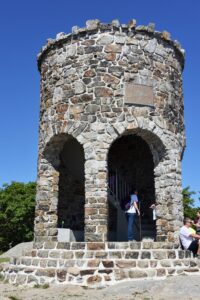
The Hemophilia Alliance of Maine (HAM) hosted its fourth annual Hike4HAM, at Camden Hills State Park, where we would hike up Mt. Battie. A one-hour hike up offered spectacular views of Penobscot Bay, a way to earn a great lunch, and enjoy the company of our “family,” the hemophilia community.

This was really special for me. For years I’ve been promising the dedicated staff at HAM I’d try to make their walk, or hike, or annual meeting. Something always came up that interfered with that plan. But Saturday, September 15… all clear to go! Doug and I drove the three hours to Camden Hills, enjoying the New England scenery and quaint towns. Maine is an absolutely beautiful state, “The Way Life Should Be,” as its slogan says.

I didn’t think I knew any of the families. One of the reasons HAM was founded is that it’s so difficult for Maine families to come to the New England regional events. Although New England is significant in size, a combination of six states, we really do have our own cultures. Massachusetts is different than Maine, which is different than Vermont or even New Hampshire. I was looking forward to meeting new families and maybe connecting with some who might be on our mailing list.


The Greene Team!

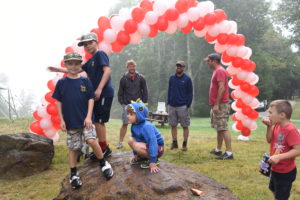
Families were grouped in teams, usually with a name of a family member with a bleeding disorder, like “Team Thomas.” Industry reps were there with tables of product info and giveaways, and donuts! It was fun to connect with known friends like Sandy (Octapharma), Tommy (Novo Nordisk), Ron (CSL Behring), Lisa (Bioverativ) and Victoria (Aptevo). And to see Jill Packard, president and founder of HAM. As we started our hike in the chilly air, it progressively got warmer as we moved, and I fell in to chatting with an adorable 10-year-old named Emery.

Emery

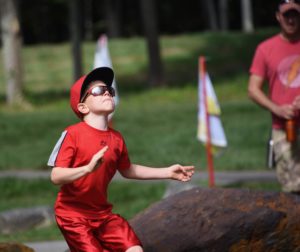
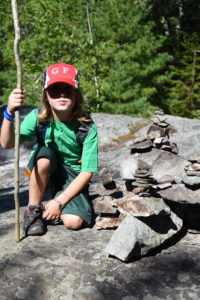
A long time ago I seemed to have more time and focus to chat with families, and got to know so many through these past 30 years. As we hiked, I loved asking Emery all about his hemophilia: he has hemophilia A, he told me–“…that’s factor VIII.” And he self-infuses–impressive! His little brother Hamilton has hemophilia too. Watching Emery I was impressed at his stamina, and absolutely no joint damage. You would never know this child has hemophilia. He jumped off a boulder, landed hard and kept hiking!

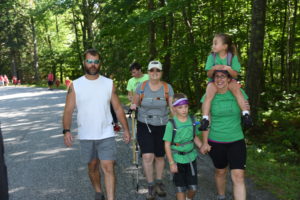
Families hiked in teams, and through the woods came moms, dads, uncles, aunts, friends, grandparents, lots of children and even dogs!

An hour later, we were rewarded with a view of clouds… we were above the cloud and fog line, which obscured the bay but still made for a worthwhile climb. As did the fundraising: HAM raised about $20,000 on this hike, which we were proud to contribute to–I even got a medal for being one of the top donors!

After the hike we had hamburgers, corn on the cob, potato salad and lemonade. I sat with folks I didn’t think I knew, but as we shared names, they knew me and shared stories of how my book Raising a Child with Hemophilia had helped them, especially back in the days long before HAM was founded. One mom told me RCH and our newsletter PEN were the only connections she had with the hemophilia community. That was so sweet to hear! And with HAM, she is now well connected.

Congratulations to Jill and team for creating HAM, for holding the hike, and for all the participants, particularly the industry reps who give up so many weekends to participate in our local events. I hope to hike next year too!

See Complete Gallery of Photos Here

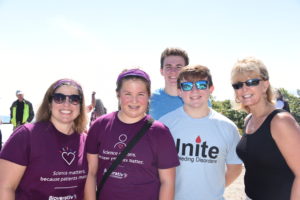
Laurie Kelley with Lisa Schmitt and family


HemaBlog Archives
Categories