Laurie Kelley

Hemophilia For Young Readers, Part 2

Originally published in PEN November 

written by Richard J. Atwood


Here are more books about hemophilia for younger readers. In the August issue of PEN, we surveyed books with fictional main and supporting characters who happen to have hemophilia. Other literary genres, such as biography, time-travel fantasy, as well as some unexpected references, also include hemophilia. Something for everyone.

            Follow your curiosity by exploring different genres of literature for younger readers. I suggest the following books for your enjoyment and learning.


Biography

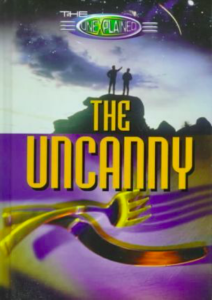
The Uncanny (Sterling, 1998)

Peter Hepplewhite and Neil Tonge

The Unexplained series of children’s books for young adults includes this story of how Rasputin, or the Mad Monk, used his powers to heal a joint bleed that Alexei Romanov, son of the Russian tsar, experienced because of his hemophilia in 1907. The text teases the reader, but doesn’t supply enough information on the full story of Rasputin.


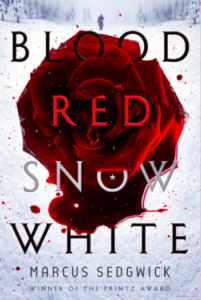
Blood Red Snow White: A Novel of the Russian Revolution (Orion, 2007)

Marcus Sedgwick         

Though this children’s biography is based on documented facts, it could also be considered a spy novel. In 1913, Arthur Ransome, a writer of children’s books, leaves his family behind in England to become a newspaper correspondent in St. Petersburg. There he learns of Alexei, who has hemophilia, and of Rasputin with his healing powers. Ransome marries the private secretary of Leon Trotsky (1879–1940; a leader of the Russian Communist Party after the 1917 Bolshevik Revolution), becomes a British agent, and returns to England in 1942 to write more children’s books.


Germ Stories (University Science, 2008)

Arthur Kornberg

These 10 profiles of germs are written for young readers as poetry, with catchy rhymes accompanied by dynamic illustrations and photographs. The story of HIV mentions the fictional Bill, a second grader with hemophilia. The references to hemophilia and AIDS seem dated, but readers may not notice.


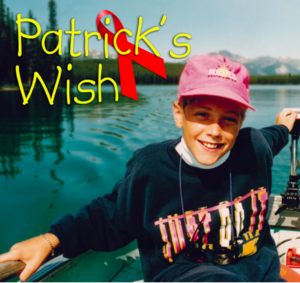
Patrick’s Wish (Second Story, 2010)

Karen Mitchell with Rebecca Upjohn

In this biography for young readers, with accompanying family photographs, Lyanne tells the story of her older brother, Patrick Fortin (1978–2001), who had hemophilia and AIDS in Canada. Patrick’s wish was a cure for AIDS, and before her brother died, Lyanne promised to tell Patrick’s story.


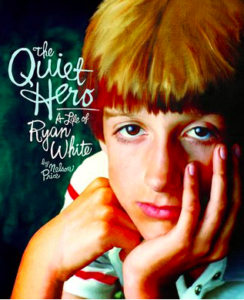
The Quiet Hero: A Life of Ryan White (Indiana Historical Society, 2015)

Nelson Price

This young adult biography summarizes the accomplishments of Ryan White (1971–1990), who became a national celebrity because he had both hemophilia and HIV. Ryan wanted to continue attending school in Indiana even with serious medical conditions. Taking advantage of all the publicity, Ryan became a spokesperson for AIDS education. Unfortunately, while hemophilia was controlled, AIDS was deadly. This book helps us remember Ryan.

Time-Travel Fantasy

Travel through the space-time continuum is a popular topic for young readers.


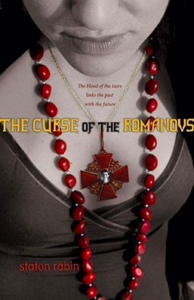
The Curse of the Romanovs (Margaret K. McElderry, 2007)

Staton Rabin

Alexei Nikolaevich Romanov, 12-year-old son of the Russian tsar, has hemophilia. He uses visualization techniques taught by Rasputin to save his own life by escaping Russia in 1918. Alexei travels through time and space to New York City in 2010. There he meets Varda Ethel Rosenberg, his 15-year-old distant cousin whose father with hemophilia died of AIDS. Varda saves Alexei by traveling back to St. Petersburg in 1918. Ages 12 and up.



 

Secrets of the Survivors (Xlibris, 2008)

Mark L. Eastburn

This young adult fantasy novel, written by an author with von Willebrand disease, tells the story of 10-year-old Alex Hidalgo and his younger sister Katherine, from Philadelphia. The siblings are contacted by survivors of an intelligent ancient reptilian civilization from 65 million years ago. In their struggle to save planet Earth, Alex and his sister enlist three other classmates, one of whom has hemophilia.


The Queen Must Die: Chronicles of the Tempus (Atlantic, 2010)

K.A.S. Quinn

The author admits that she “tinkered” with the facts in this children’s novel, part of a trilogy that involves travel through time and space. Katie Berger-Jones falls asleep in New York City while reading the letters of Queen Victoria’s daughters, and then wakes up in Buckingham Palace in London, 1851. There Katie meets Prince Leopold, who has hemophilia, before she struggles to return home on the same day she left. Leopold was actually born in 1853.


What’s Up with Louis? Medikidz Explain Hemophilia (Medikidz, 2011)

Dr. Kim Chilman-Blair and Shawn deLoache

This storybook comic features five Medikidz who live on the planet Mediland. When Louis, on Earth, is mocked by his friends for having hemophilia, the Medikidz teleport him to their planet. Once he discovers his potential, Louis returns to Earth knowing how to properly treat his hemophilia.


Risked (Simon & Schuster, 2013)

Margaret Peterson Haddix

This science fiction novel tells the story of 13-year-old Jonah Sizemore and his younger sister Katherine, from Ohio, who help rescue 36 famous missing children from the past. These missing children, now using aliases, include Anastasia Romanova and Alexei Romanov, who has hemophilia. With the aid of a time-travel device, the children attempt to alter history by traveling back to Russia in 1918. Ages 8–12.


Hemophilia in Unexpected Places

Authors of fiction for young readers may refer to hemophilia in unexpected ways.

Tiger Eyes (Bradbury, 1981)

Judy Blume

This young adult novel follows 15-year-old Davey Wexler when she moves with her family to Las Alamos, New Mexico. At her new school, Davey views a film on hemophilia, but she already knows about hemophilia because she read Nicholas and Alexandra in eighth grade.

Fallen Angels (Scholastic, 1988)

Walter Dean Myers

In this young adult novel, Richard Perry graduates from high school in Harlem, New York, and enlists in the army in 1967. Richard declines a bonding ritual of mixing blood with other black soldiers by claiming to have hemophilia. Another soldier notes that hemophilia is a medical deferment from military service.

Billy’s Boy (Wildcat, 1997)

Patricia Nell Warren

Included in a series on gay family life, John William Heden is age 12 in 1989. He moves with his single, lesbian mother to Malibu, California. Searching for his father, supposedly a gay Olympic track medalist who donated his sperm before he died, John William meets Michael, who is conducting research at UCLA on inherited blood diseases like hemophilia.

Summertime Blues (Oxford University, 2001)

Julia Clarke

In this coming-of-age novel for young adults, 17-year-old Alexander Harling, from London, responds to a rude comment about his mother. Alexander beats up the guilty classmate, who bleeds so much that Alexander thinks the boy is hemophilic and needs a transfusion.

The Healing Time of Hickeys (Polestar/Raincoast, 2003)

Karen Rivers

In this teen novel written as a diary, Haley Andromeda Harmony is a 16-year-old Canadian high school senior in 2002. Because she’s a hypochondriac, Haley searches internet sites for a definition of hemophilia. When she skins her knuckles, Haley then believes she is bleeding to death due to her supposed hemophilia.

Birthmarked (Roaring Brook, 2010)

Caragh M. O’Brien

As part of a fiction trilogy for young readers, this novel follows 16-year-old Gaia Stone, who lives in a divided country and trains as a midwife in the year 2409. Gaia learns about the health problems of dying children and infertile mothers due to inbreeding in the privileged city. The biggest concern is an increasing number of children with hemophilia. Sadly, hemophilia is not cured in the future.

The Truth About Celia Frost (Usborne, 2011)

Paula Rawsthorne

In this young adult thriller, 14-year-old Celia Frost is born with a rare blood-clotting disorder for which there is no treatment—or so her overprotective mother claims. When a classmate cuts Celia, she goes to the local hospital. Her mother refuses to allow any blood tests. After arguing with her mother, Celia learns the truth: her mother abducted her from a research laboratory, where as a child, Celia had

been experimentally injected with live viruses. To prevent the spreading of the viruses, her mother employed what is now called Munchausen Syndrome by proxy,1 imposing a fake medical diagnosis on a child. Meanwhile, the research doctor tries to capture his escaped research subject, putting Celia’s life in danger. You can find hemophilia included in a wide variety of literary genres. Literature meant for younger readers can be enjoyed by all ages, including adults. Find something you and your child like, pick up a book, and read.


  1. Unfortunately, the author never uses the label Munchausen Syndrome by proxy (MSBP), or ever attempts to fully explain the fictional mother’s psychiatric condition. In this rare condition, parents fabricate the physical symptoms in the child, producing a chronic fictitious disorder, most often without the child’s awareness or willingness. For hematology MSBP, this usually involves parents forcing their child to ingest an anticoagulant to induce bleeding symptoms.

Hemophilia Fiction for Young Readers

written by Richard J. Atwood

Originally published in August PEN

Learning to read is a significant milestone in our personal development. As adults, we nudge young readers along in this quest. First we read to them, and later we encourage and supervise for age- and skill-appropriate reading materials.

Our bleeding disorder community is fortunate to include notable authors who write about hemophilia. Their books for young readers are educational and entertaining. Look for short reviews of these books in PEN’s Biennial Bleeding Disorder Resource Guide.

Other authors who write for younger readers sometimes include hemophilia. I suggest the following books.

Main Characters with Hemophilia

Starring Peter and Leigh (Delacorte, 1979); The Friendship Pact (Scholastic, 1986)

Susan Beth Pfeffer

What could be better than a fictional leading character with hemophilia? Peter Sanders, a 17-year-old with hemophilia on Long Island, becomes stepbrother to 16-year-old Leigh Thorpe. Leigh, a former child actor, wants to be a normal teen, while Peter, often bedridden, wants to attend school. Pfeffer also included hemophilia in her pre-teen novel The Friendship Pact. Tracy Newfield, age 12, has a crush on a young actor, Ross Perlman. Ross is a Dartmouth graduate who gives a benefit concert for National Hemophilia Foundation and dedicates his unreleased song to Tracy. Hemophilia in these novels seems dated, yet the descriptions are accurate for the time period.


Panda Bear Is Critical (Macmillan, 1981); Picture Perfect (Severn House, 2000)

Fern Michaels

Michaels wrote Panda Bear, a suspense novel, and later retitled it Picture Perfect after making some changes. Five-year-old Davey Taylor stays with his aunt and uncle while his scientist parents travel to Florida to testify in a mob-related drug trial. Davey has hemophilia, for which he receives daily “antigen shots.” During a camping trip, Davey is kidnapped without his hemophilia treatment. He must cunningly escape, aided by his Yorkshire terrier and his CB radio, so he can be treated before it’s too late.


She Died Too Young (Bantam, 1994); All the Days of Her Life (Bantam, 1994); A Season for Goodbye (Bantam, 1995)

Lurlene McDaniel

This series of three inspirational novels deals with life-altering situations for children and young adults, ages 10 and up. In the series, teens with various medical conditions attend summer camp at Jenny House in Asheville, North Carolina. One camper is Jeff McKensie, who has hemophilia. Jeff moves from Colorado to Miami to study to be an architect, yet his romantic opportunities at camp are stymied due to his medical condition.


Diving for the Moon (Macmillan, 1995)

Lee F. Bantle

Bantle, a lawyer, tackles issues of puppy love, adolescence, hemophilia, and HIV in this novel for ages 9–12. Josh Charkey, age 12, has hemophilia and AIDS. Spending the summer at a Minnesota lake, Josh shocks his close friend Carolina Birdsong with his medical revelations, while still fostering their budding romance.


Uphill and Into the Wind (Royal Fireworks, 1996)

Willard Helmuth

In this young adult novel, 12-year-old Eric Kenton, who has hemophilia, wants to be normal. While his parents worry about hemophilia and HIV, Eric dreams of, then successfully accomplishes, riding his fat-tired Huffy bicycle almost 400 miles to a summer camp in Ohio.


Kinetic (DC Comics, 2005)

Kelley Puckett and Warren Pleece

Puckett and Pleece wrote and illustrated this storybook comic fantasy. Tom Morrell is a high school senior who has hemophilia, plus about a dozen other syndromes. Tom gains superpowers when he is hit by a truck, and the absorbed energy amazingly “cures” his medical conditions.


The Healing of Ryne O’Casey: A Novel (FaithWalk, 2004)

Scott Philip Stewart

Ryne O’Casey, a 10-year-old from Tynbee, Tennessee, is first diagnosed with “hemophilia type A” when just over a year old, and then diagnosed with HIV at age 8. Some of the medical details are questionable for 1995, but the social reactions are truly believable.

The Lorin Solo (self-published, 2006)

Chuck Edwards

This young adult romance novel follows Lorin Lenki, a music student at San Francisco State who has mild hemophilia. Lorin meets Tracy Martin, a nursing student at Saint Rita’s Hospital. Tracy has severe hemophilia, as did her identical twin sister who died. The budding romance tragically ends when Tracy dies from a brain bleed in 1986.


Jovenes vampiros. El codice secreto (versos y trazos, 2007)

Jose Aguilar

This illustrated novel, written in Spanish, tells the tragic love story of young Marco Tulio and Isabel, who has hemophilia. The setting is ancient Italy, and includes vampires and Leonardo da Vinci.


Supporting Characters with Hemophilia


Something Different in the Bank (E. J. Arnold and Son, 1989)

Grace Moulton

Something Different in the Bank is one of a series of books about children with medical conditions. The narrator describes his cousin Michael, who has hemophilia. The treatment of hemophilia seems out-of-date even for 1989, though some of the behavioral concerns are timeless.


Monkey Island (Bantam, 1991)

Paula Fox

This teen novel’s awards include an American Library Association Best Book for Young Adults, and a Horn Book Fanfare Selection. Clay Garrity, age 11, is homeless in New York City. When Clay is hospitalized for pneumonia, his roommate, an experienced hospital patient with hemophilia, provides sage advice.


Play to the Angel (Scholastic, 2000)

Maureen F. Dahlberg

Greta, age 12, has an older brother named Kurt who dies due to his hemophilia. Set in 1938 in Vienna, this motivational teen novel with historical detail involves children from a musically gifted family who fulfill their dreams, even using the death of a sibling with hemophilia for inspiration.


Angel of the Square (HarperTrophy, 2001)

This novel for ages 10 and up tells the story of Ekaterina Ivanova, called Katya, the 12-year-old daughter of a lady-in-waiting to Empress Alexandra in Russia before 1918. Katya is a playmate of Anastasia and learns what is wrong with Alexei, who has hemophilia. Although Katya is fictional, her perspective on the Russian Revolution is believable.


A Home for Garth (self-published, 2010)

  1. Reed

Jake Stevens, age 11, finds a lost dog that belongs to Robert Higgins, a 10-year-old with hemophilia. Jake’s moral dilemma is deciding whether to lie to keep the lost dog, or to be truthful and return the dog to its owner. Jake learns about hemophilia and how it limits what Robert can do.


The Hardy Boys Undercover Brothers, #32 Private Killer (Aladdin, 2010)

Franklin W. Dixon

This novel for ages 8–12 features teens acting as detectives to solve mysteries, and includes a female with hemophilia. Destiny Darity is the troubled daughter of the headmaster at an exclusive private school near Boston. Destiny has a rare blood type that she inherits from her mother and a mild case of hemophilia that she inherits from her father. The Hardy brothers, Frank and Joe, may not completely understand the genetics of bleeding disorders, but they determine who plays pranks on Destiny.


Blood Ties: A Blood Coven Vampire Novel (Berkley, 2011)

Mari Mancusi

This young adult novel includes a main character named Sunshine McDonald, a 17-year-old fairy princess living in Las Vegas. She loves Jayden, a mortal with hemophilia. When Jayden is bitten by a vampire, he needs blood transfusions—not for his hemophilia, but for his turning. Sunshine and Jayden travel to London and Tokyo to find a cure for vampirism by drinking from the Holy Grail, and by doing so, cause Jayden’s hemophilia to disappear.


I Hunt Killers (Little, Brown, 2012); Game (Little, Brown, 2013); Blood of My Blood (Little, Brown, 2013)

Barry Lyga

This trilogy of young adult mystery/thrillers delves into the world of serial killers, and the vivid carnage may be inappropriate for young readers, or for any readers. Seventeen-year-old Jasper Dent, called Jazz, is the son of an imprisoned serial killer. With the help of his best friend Howie, Jazz helps police identify serial killers. Howie is a “type-A hemophiliac” with an overprotective mother, so his assistance is sometimes limited when extracting Jazz from dangerous situations. Thankfully, Howie provides some comic relief to an otherwise serious topic.

***

Reading should be a life-long endeavor and source of pleasure. Take advantage of these books to help young readers learn something about bleeding disorders. And keep reading good books to your child!

America’s First Family with Hemophilia

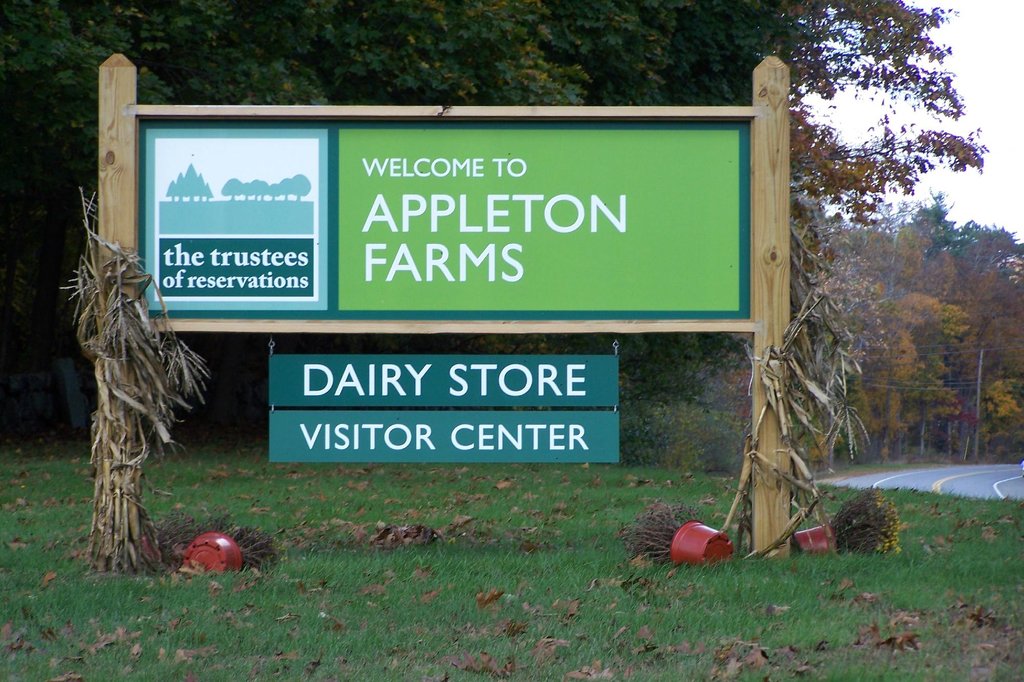
New England, 1639. Imagine that you are standing on the deck of the sailing ship Jonathan. You have just glimpsed the shore of your new home, the Massachusetts Bay Colony. Imagine the brilliant New England foliage, the bright chilly wind. Imagine your dream of farming your newly acquired land. Imagine the adventure. Now, imagine that you are the first European with hemophilia to step on the North American shore.appleton-farms.jpg (1024×682)John Oliver (1613–1642) traveled from Bristol, England with his family to settle under the leadership of the Massachusetts Bay Colony. He lived for only three years after he reached North America, fathering one child, Mary, and dying young as a consequence of his hemophilia. Not until after 1800 did the medical community begin using the term hemophilia to describe his disorder. John’s daughter, Mary Oliver (1640–1698), was likely the first hemophilia carrier of European descent born in the colonies. With her husband, Major Samuel Appleton, Jr. (1625–1696), Mary had three daughters and five sons. One of these sons, Oliver Appleton (1677–1759), was the first American colonist born with hemophilia.

Early Ipswich Roots
Mary and Major Appleton lived in a settlement known to native Americans as Agawam, but re-christened by the English in 1633 as the town of Ipswich. What would life in Ipswich have offered their son, Oliver Appleton? Thirty miles north of Boston on the Atlantic shore, Ipswich was owned by the Massachusetts Bay Colony; it was purchased earlier in the century from Native Americans for 20 British pounds. By the mid-1600s, Ipswich ranked second only to Boston in population and wealth. The Appletons were a wealthy colonial family. Major Samuel Appleton, Jr., Oliver’s father, was the son of Samuel Appleton Sr., one of the “landed gentry,” and a good friend of John Winthrop, the first governor of the Massachusetts Bay Colony. Appleton’s fertile 460 acres of farmland had been granted to him by the Colony in 1638, and left to his son, Major Appleton, around 1670.
Major Appleton, who served as a judge at the infamous Salem Witch Trials in 1692, died in 1696. He left his now nearly 600 acres, split into four parcels, to his four sons: Oliver, Isaac, Samuel and John. Oliver’s 100-plus acre inheritance included his father’s sawmill, ox pasture, and farmland bordering his brothers’ parcels.

In 1701, Oliver married Sarah Perkins. Well-to-do millers, farmers and traders, Oliver and Sarah possessed numerous household and farm goods. They were involved in local politics, church affairs and business. Together they raised fourteen children; several sons and their descendants would become fine cabinetmakers. At the turn of the eighteenth century, Oliver and his three brothers were working their adjoining farms in a loosely communal style. Each brother might grow a crop that the other brothers could use. Yet each brother farmed separately, produced his own goods for trade (like basket hoops), and kept his own business ledger. The brothers owned cattle, sheep, turkeys and hogs, and traded goods with family and friends in Ipswich.

A Dangerous Occupation?
On their “new” land (already cleared and cultivated by Native Americans), the Appletons cut and milled timber, raised livestock and worked the farm. Today, farming is still one of the most dangerous occupations. In the seventeenth and eighteenth centuries, its hazards were surely compounded by Oliver’s hemophilia, and the harsh New England winters. Yet Oliver lived to be 82—a considerable age in any century.

Late in life, Oliver was confined to his bed and developed bedsores on his hips. At age 82, his cause of death is recorded as bleeding from his bedsores and his urethra. Oliver appears to have been a generous and fair man, dividing his estate equitably among his children and his wife Sarah.

Making Medical History
Oliver and Sarah had six daughters and eight sons. Two of the daughters, Sarah and Hannah, had sons with hemophilia.

Interestingly, Hannah’s sons, Oliver and Thomas Swaim, were doctors. What would they have thought of their family’s disorder?

Without letters or other documents, we can only guess. Yet it was the Swaim branch of the Appleton family that attracted the attention of the medical community. Based on his personal connection with the Swaim family, Dr. John Hay, a Massachusetts physician, published an article on the Appletons in a New England medical journal in 1813. Following this publication, the Appleton family history appeared in numerous medical journals, at least as late as 1962. By then, the family had been traced through 350 years and 11 generations: 25 males with hemophilia, and 27 carrier females. In 1961 a blood sample, drawn from the last known living carrier in the family tree, revealed factor VIII deficiency, or hemophilia A.

Are the Appletons America’s “First Family” with hemophilia? Perhaps, in the sense that our knowledge of hemophilia has been enriched by the study of this large and long-lived colonial family. Thanks to our American Revolution, we have no “royal family” with hemophilia. Yet we can still honor and remember the Appleton family. This Thanksgiving, we can recall the challenges faced by earlier generations with hemophilia—people who contributed to our heritage as Americans, and as a hemophilia community. To understand ourselves, and create our vision for the future, we must always remember the past.

You can visit Appleton Farms in Ipswich, Massachusetts. 

From the November 2002 Issue Parent Empowerment Newsletter
“THE APPLETONS: America’s ‘First Family’ With Hemophilia”
by Richard J. Atwood and Sara P. Evangelos
© 2002 LA Kelley Communications, Inc.
United by Blood

Madonna Smith, executive director of Oregon Chapter, adopted a child with hemophilia into our “family”

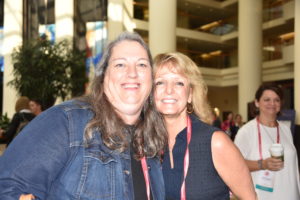
Well I’m ready for a rest! Last week I was in Orlando at NHF’s 70th annual meeting, and last night, at the New England Hemophilia Association’s Red Tie Soiree in Worcester, Massachusetts. And while there is so much happening with new products, with gene therapy coming closer, new programs for our community, and the spectacular movie Bombardier Blood ready for viewing nationwide, the overriding feeling I have after these major events is… this is family. We are truly a family, united by blood.

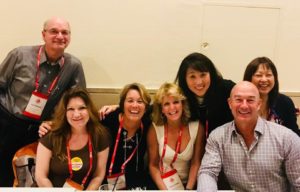
With the California gang!

As I’ve been in the community for over 30 years now, I’ve come to know so many people, and have watched as babies have grown to young adults, starting families of their own, some also with bleeding disorders. Our family grows, and grows older! My friends and I, all young moms and dads when we came into this family, are now in our 60s, looking back at the incredible path this bleeding disorder family has traveled together.

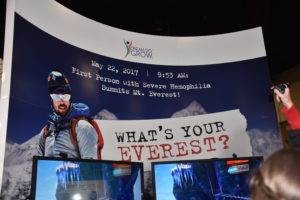
One path literally is the one that led to the movie Bombardier Blood, which debuted last Saturday in Orlando. To a standing room only crowd of over 500 people at 7:15 am, the Octapharma-sponsored event and movie about Chris Bombardier’s epic Everest summit brought laughter and tears to all. It is a stunning film, directed by Patrick James Lynch—whose name you all should know as well as Chris’s by now! These two young men with hemophilia have skyrocketed to fame with their achievement. It makes us, the older moms and dads, incredibly proud. We all kind of feel like they are “our” sons, or like our sons. Sons of our community, doing daring things for our community. 

Go Here to See Photos from NHF’s 70th Annual Meeting!

I was honored and fortunate to travel the actual path to Everest base camp with Chris and his wife Jess, and share in part of that historic journey. All the while, I felt like the mother I am, watching out over both of them (as if Chris needed it!). Viewing the movie that morning brought back so many memories and feelings of that journey in May 2017.
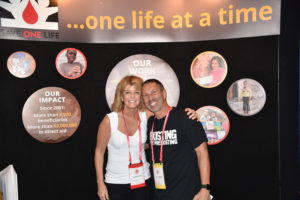
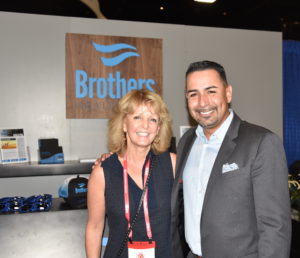

So much of the NHF meeting was connecting, with old friends and new, with families in need and families who can share and give. And at the final night we listened to music and danced the night away. While blood unites us as family, music unites us in joy.

I wish everyone could attend NHF’s or HFA’s annual meeting, though I know it’s improbable for most. The meetings are often held in the same spots: Dallas, Chicago,

Laurie Kelley with Derek Nelson, everyone’s favorite

Anaheim, Orlando, San Diego. You’ll never see one in Boston—too expensive. Not everyone can afford to go away by air and stay at hotels. While there are scholarships for first-time families, it sadly still leaves many in our family on the fringe.

Laurie Kelley with Kevin Shaughnessy, who she met when he was 12!

And that’s why we have local chapters and state bleeding disorder organizations. Does your state or region have one? The New England Hemophilia Association has become one of the best run organizations in the US. It wasn’t always that way. As we heard last night, when Charlie Dougherty, who served as treasurer and who passed away earlier this year, found when he joined, it was poorly run and $22,000 in the red. He straightened it up, but it took Rich Pezzillo, a young man with hemophilia, to rocket it into the highest level, and not just by squaring away financials. Rich has breathed new life into NEHA, infusing it with passion and commitment like never before. I confess I never donated to NEHA, even though I’ve lived in New England all my life. But with Rich’s leadership and his crackerjack team, we are all excited to give and participate once again. Last night proved it. I sponsored three tables and invited the team at Save One Life to come and experience the joy of this family reunion, and they had a blast, amazed by the comradery and caring.

In many ways, I find I can enjoy our bleeding disorder family simply by being local. So there’s hope for you too, to join this family by seeking out your local organization. Is it active? Does it have programs? NEHA has programs every month, sometimes every weekend! Does your chapter do a fundraising walk? Have a women’s or teen program? Is there someone to call to learn how to get involved?
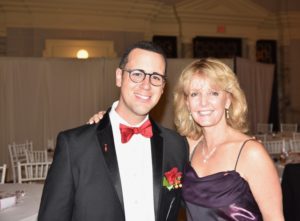
I would really urge you to do everything you can to participate. Bleeding disorders can throw a curve ball at you at any time, as life can too. This family, this “Wicked Strong Family” as we say in Boston, is here to help. These friends have become more than friends—they are truly family.

And when I attended the wake last Friday of my first cousin’s husband, who died unexpectedly at only age 61, you realize how family is always family, no matter what. I visited with my cousins, who I rarely see anymore, except on Facebook. We were playmates as children, but life gets busy, the family gets bigger and reunions consist mostly of funerals now. Still, we have history and we are united by blood. It was good to see everyone again; I still love them all.

See Photos from NHF’s 70th Annual Meeting here!

Rising star: Rich Pezzillo with Laurie Kelley

We’ve lost a lot of people in this community this year and as life goes on will continue to lose more. It’s at this time that family comes together: whether nationally, or locally. Find out more about your local chapter; meet your hemophilia/bleeding disorder family. Get involved; give of your time or support. We are all united by blood, and can create the family we need by connecting, caring, sharing and loving.

And a little celebrating and dancing doesn’t hurt either!

The Importance of Plasma

“Das Blut ist ein ganz besonderer Saft” (Blood is an absolutely remarkable fluid)–Goethe, in Faust

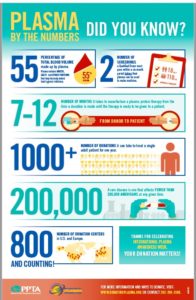
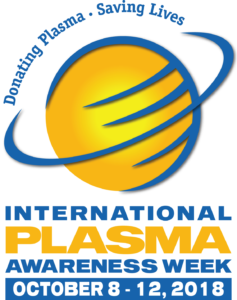
It’s Plasma Awareness Week! One of my favorite celebrations, because plasma is truly the gift of life. 55% of your blood is made up of plasma, and it is a vital ingredient in many therapeutic products to treat diseases and disorders. Plasma Awareness Week aims to :

  • Raise global awareness about source plasma collection
  • Recognize the contributions of plasma donors to saving and improving lives 
  • Increase understanding about lifesaving plasma protein therapies and rare diseases.

It’s so important that we donate blood, or even just plasma, to give companies the needed raw material to make their pharmaceutical therapies. While this week we saw another jump in the evolution of hemophilia treatment with the approval of Hemlibra for non-inhibitor patients, plasma still holds a very important place in our global community. People with hemophilia may need it for IT therapy in combating inhibitors. And the developing world truly needs it as a source of treatment… sometimes it’s the only source.

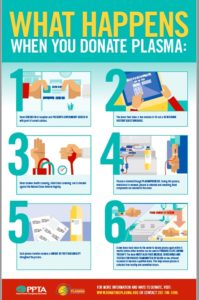
Read the posters below to learn more, know that people around the world have disorders that absolutely require plasma therapies, and then… donate! Go here to learn more about donating.  And visit PPTA to learn more as well!

HemaBlog Archives
Categories