Novo Nordisk

The Airplane Motor Named Factor

I’ve just returned from an amazing three-week trip to the Arctic. Specifically, a transpolar trip: from Spitsbergen, Norway (the highest human settlement in the world) to the North Pole, then down to Nome, Alaska. As this was as much a scientific trip as leisure, I studied for months about polar exploration of the Arctic in the 1800s and 1900s. Polar exploration is a passion of mine, and this was a chance to see the barren, hostile yet beautiful world seen by the early explorers.

Yet as of 1926, no one could definitely say what exactly was at the North Pole. Was it all water? Was there an ice cap? Was there land?
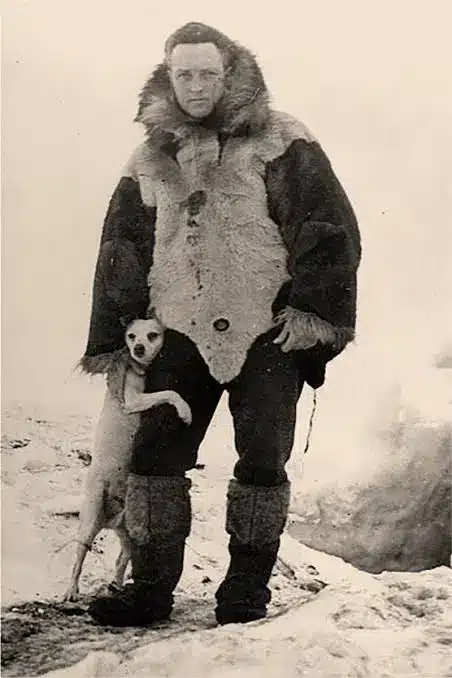
Admiral Richard E. Byrd

The North Pole was considered the last geographic trophy to nab. A million square miles that no one had seen; a huge blank space on the map at the turn of the twentieth century.

There were long and painful dog sled voyages, and sea voyages. The names Nansen, Amundsen, Peary and Cook go down in history.

But a major development was using airplanes. Imagine flying to the North Pole! And if one did, would there be enough fuel to return?

The birth of aviation is intrinsically linked to attempts to reach the Arctic. Besides dogsled and sailing ships, airships (dirigibles, or “blimps”) had been tried in 1897, first by a Swedish engineer, S.A. Andrée, which ended early and in the deaths of those on board, and then by American journalist Walter Wellman, on the airship called the America, in 1907 and 1909. This didn’t work either, though Wellman went on to live his life as a famous and successful journalist.

The “Great War”—World War I— accelerated the development of aviation, and fostered the idea to fly to the North Pole. By then Dr. Frederick Cook claimed to have reached the Pole in 1908 by sled, as did Robert Peary in 1909, but both claims were disputed and later refuted.

Admiral Richard Byrd proposed to retrace the route Peary had taken to the pole, but from the air. By March 1925 Byrd had a plan: possibly landing a seaplane in the Arctic pack in July and August and refuel, something that had never been done before. This was exciting, as aviation to the Arctic could open new trade routes, vital to world economy. And if Byrd found land, the U.S. could claim it.
He had competition. Norwegian Roald Amundsen was the famed explorer who had already been first to the South Pole and through the Northwest Passage. The Norwegian had already tried flying to the Pole, using two huge, all-metal flying boats made by Dornier, a German manufacturer. On May 21, 1925 Roald Amundsen and Lincoln Ellsworth took off from King’s Bay, Spitsbergen. I was privileged to see the place where they departed. One plane crashed, though all the men survived. They spent a month on an ice floe, with no radio contact, but cleared a crude runway and flew their last plane back with all the men on board. It was heroic.

Then it was Richard Byrd’s turn. By 1926, Byrd also planned to reach the Pole by plane.

Meanwhile, Amundsen had not given up. He prepared to reach the Pole by airship, in the Norge (Norway). They would actually take off within days of one another, from the same place—Kings Bay, Spitsbergen, Norway. Who would make it first?

What surprised me, reading about the race to the Pole, was learning that a thirty-five-year-old Dutchman named Anthony Herman Gerard Fokker, who became rich equipping the “Bloody Red Baron” von Richthofen during World War I,  took his company’s top  single-engine monoplane, the “F-VIIA,” and added two more engines to make it the “Fokker trimotor.” It was the first airplane out of seventeen to return to Ford Airport in Dearborn, Michigan during a seven-day, 1,900-mile promotional flight sponsored by Edsel Ford.

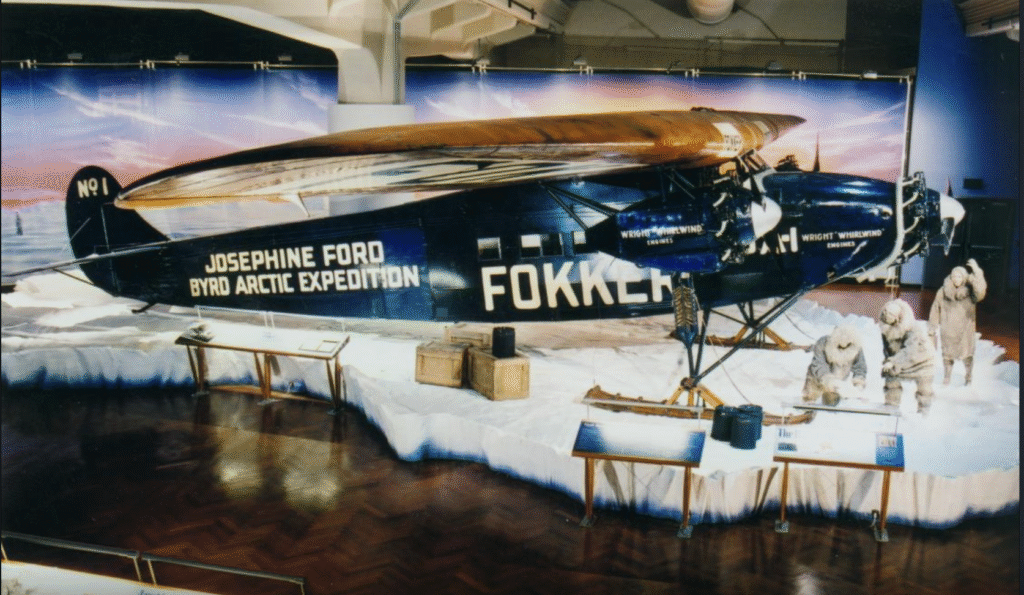
Byrd was friends with Edsel Ford, but had to purchase a trimotor from Fokker for his Arctic expedition after a fire at the Ford plant.  The range of the trimotor was only half that of Amundsen’s dirigible. Byrd purchased a “J-4,” and Fokker installed the same trimotor used in the Ford promotional tour. Despite buying the engine from Fokker, Byrd honored Ford, his chief benefactor, by naming his plane for the third of Edsel’s four children—his only daughter, three-year-old Josephine. “JOSEPHINE FORD” was painted above “BYRD ARCTIC EXPEDITION” on the fuselage, along with “FOKKER.”
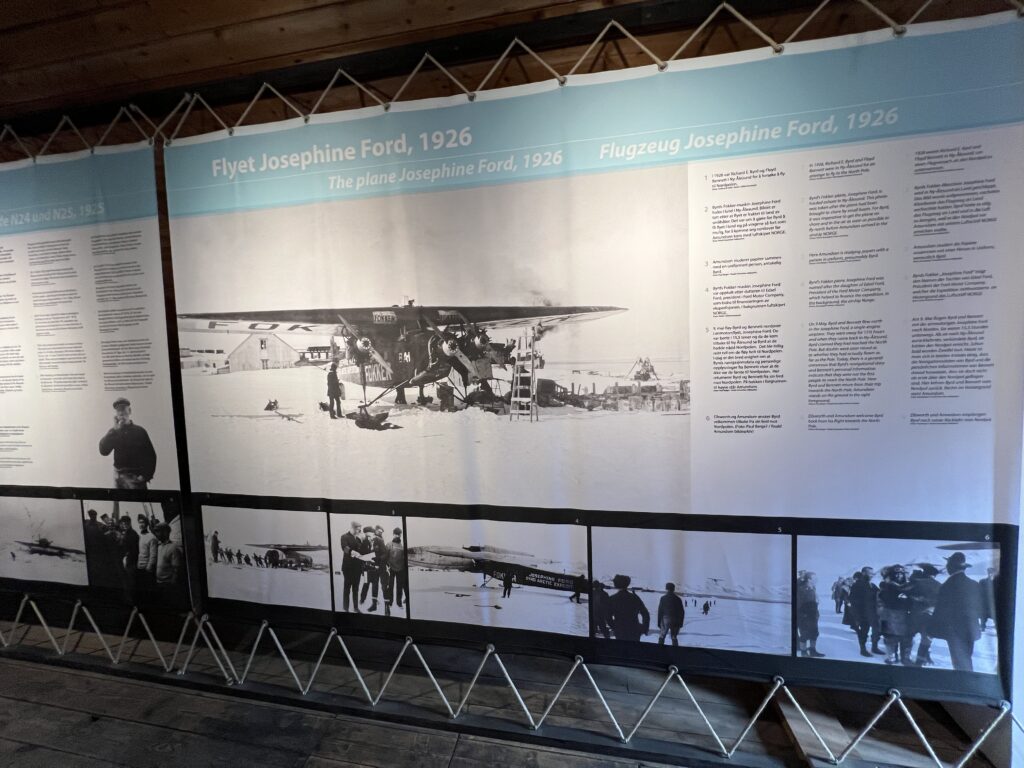
From the museum at Kings Bay, Norway

While Byrd completed his roundtrip to the Arctic on May 9, 1925 under incredibly difficult circumstances, he was not awarded the prize of claiming the Pole. It was difficult to measure accuracy under the conditions. Instead, the prize went to Amundsen, who flew for Norway in the Italian-made dirigible Norge, and who was able to say definitely, once and for all, that he reached the North Pole. This is acknowledged in history now.

But think of it! Byrd, a U.S. Navy admiral, engineer, and pilot, flew a plane to the North Pole with a trimotor that used the same nomenclature used for the groundbreaking, life-saving medicine infused by people with hemophilia and inhibitors—Novo Nordisk’s NovoSeven, activated factor VII, shortened to FVIIa.

Photo credit: The Josephine Ford, from the Collections of Henry Ford

Coming Changes: Kogenate® FS Discontinued

It was bound to happen sooner or later: in a community flush with hemophilia A therapies, one of them would have to give.

This past week Bayer announced that it would discontinue production of Kogenate® FS (Antihemophilic Factor (Recombinant), which has been in use since 1993. I’m nostalgic about it leaving; when it appeared, my second born was only 3. We used it at one point. We educated the community that it was the exact same product as Helixate®FS… though many parents tried to argue with me that they had different names and were from different companies, and were therefore different. They were not.

But times are truly changing. We have extended half-life (“long lasting”) products now; we have products made from a human cell line, and not hamster cell lines. We even have transgenic animal therapies. And we have Hemlibra, an injectable with a half-life of over 600 hours.

But above all, we have probably too many factor products for hemophilia A patients, who number around 20,000 in the US. How will the market justify all the products?

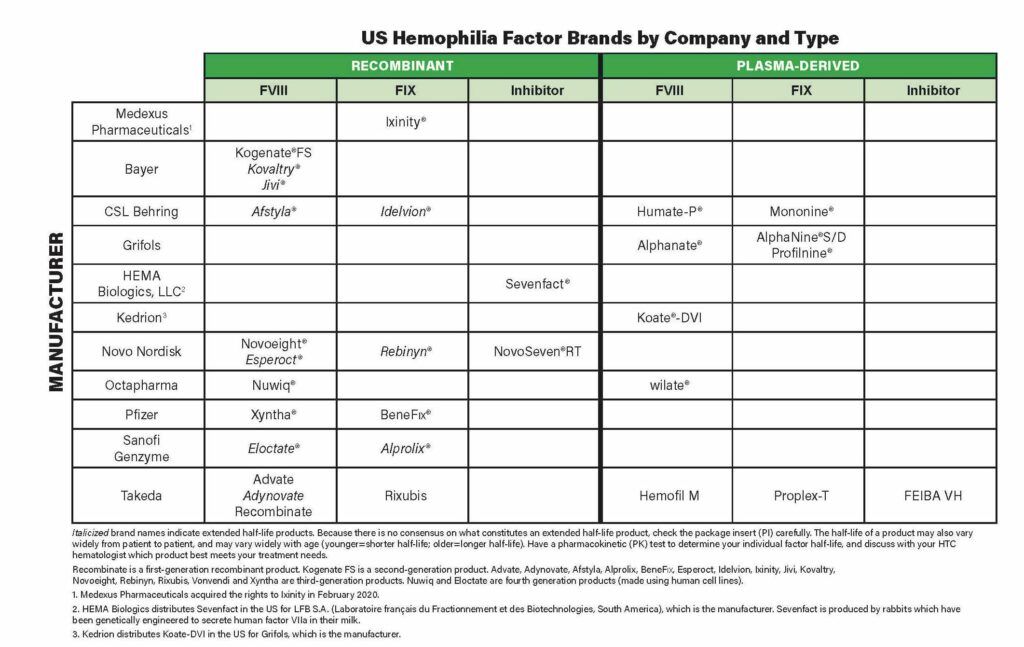
Our factor chart below shows 12 products for hemophilia A that are recombinant, and five products that are plasma-derived (from human blood). Some manufacturers, like Bayer, Novo Nordisk and Takeda, have multiple factor VIII products. It’s like they are in competition with themselves. Some are standard factor products and others are extended half-life.

Bayer’s press release says: “Recognizing the growing shift in patient use toward more recent products, such as Kovaltry® (Antihemophilic Factor (Recombinant)) and Jivi® (Antihemophilic Factor (Recombinant), PEGylated-aucl), Bayer has made the decision to discontinue Kogenate® FS (Antihemophilic Factor (Recombinant)) in the United States.  

“Keeping the needs of patients in mind, Bayer is keenly aware that they will need sufficient time to work with their HCP to make decisions about their next treatment. The timing of discontinuation will vary by Kogenate FS vial size. Customer demand may lead to depletion of the larger vial sizes of Kogenate FS during the fall of 2022. Remaining Kogenate FS vial sizes are anticipated to be available into 2023.

“As Kogenate FS patients and their caregivers embark on the next step of their journey, Bayer is committed to supporting them. Attached, please find our discontinuation announcement for your reference. Additionally, we have set up a website (explore.bayer.com) and a dedicated Kogenate FS hotline for anyone who has questions regarding this discontinuation, (1-833-40-BAYER), which is available Monday – Friday, 8:30am – 8:00pm ET.” See the full press release here.

If you are a Kogenate FS user, it’s time to contact your HTC staff and discuss next steps. We’ve been through this before over the decades: we know that some patients want to stay with the manufacturer, and will switch to their other products. Other patients will take this as an opportunity to learn more about other products from other manufacturers. Whichever you are, be sure you make your decision with your HTC staff… not the internet! Not even with me. Call the manufacturer and speak with your HTC staff, learn more about these products, and then choose which is right for you.

And probably more change is coming, in products, manufacturers… and eventually gene therapy.

Resolve to be a master of change rather than a victim of change.— Brian Tracy

Egyptian Bull God in Hemophilia

I’m in Egypt, first to visit a patient with hemophilia (read this story in last week’s blog!) and second to vacation and learn all I can about ancient Egypt. It’s an incredible tour, complete with lectures and a visit from the famous Dr. Zahi Hawass!

As I am learning about the ancient gods and pharaohs, one symbol keeps appearing on the carvings on the temples and tombs. A bull with the sun sign between his horns. Where have I seen that before? It’s the logo for the pharmaceutical company Novo Nordisk, which is a Danish company.

Who was this god? He is Apis, one of the sacred animals of ancient Egypt. He represents strength and fertility. His mother is sometimes listed as Hathor, an extremely important goddess, whose temples are everywhere. I visited some and carvings everywhere show the cow and bull.  

Our guide, Mohammed, tells me Hathor is the goddess of health and motherhood, and was also the mother of the god Horus, one of the most important gods of ancient Egypt.

I just found this all so interesting. The word “logo” is defined as “meaning,” so it’s always important to choose a logo (image, color, size and intensity) that has specific meaning to the company. I think Novo Nordisk chose well!

Celebrating Life at NHF

With my heroes Vaughn Ripley and
Barry Haarde
 

The beautiful speech given at NHF by chair Jorge de la Riva stressed caring, and the dangers of indifference. Jorge, the father of a teen with hemophilia, deftly drummed home by a quotation from Holocaust survivor Elie Weisel, whose book Night, I just reread a few weeks ago:


“The opposite of love is not hate, it’s indifference. The opposite of art is not ugliness, it’s indifference. The opposite of faith is not heresy, it’s indifference. And the opposite of life is not death, it’s indifference.” ― Elie Wiesel

 
How appropriate to use Weisel to remind our community that if we do not watchdog our own interests, we may be hurt–again. And this is why the theme of this year’s meeting was “Nothing about us, without us.” More and more, NHF (and HFA and other groups) are steering the interests of the community, from research, to data collection, to blood supply safety, to genotyping. We’ve come a long way in 20 years, and paid a hard price.
 
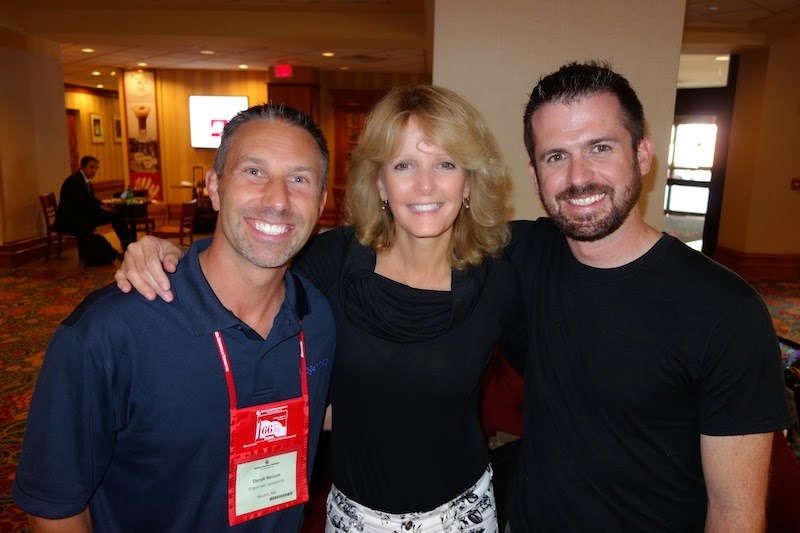
Derek Nelson and Chris Bombardier

Val Bias, CEO of NHF and person with hemophilia, gave a speech on the many and exemplary accomplishments of not only the NHF but of various groups and individuals in our community. During the videos shown, I thought instead of two people who have done extraordinary, history-making things in our community, just this year—Chris Bombardier, the first person with hemophilia in the world to conquer four of the seven summits. And Barry Haarde, who has now ridden his bike three times across America, to bring attention to the public of hemophilia and HIV. It’s nice that we showcased who we did, but Chris and Barry volunteered weeks of their lives to do something no one else has ever done, which are extraordinary feats even without hemophilia!

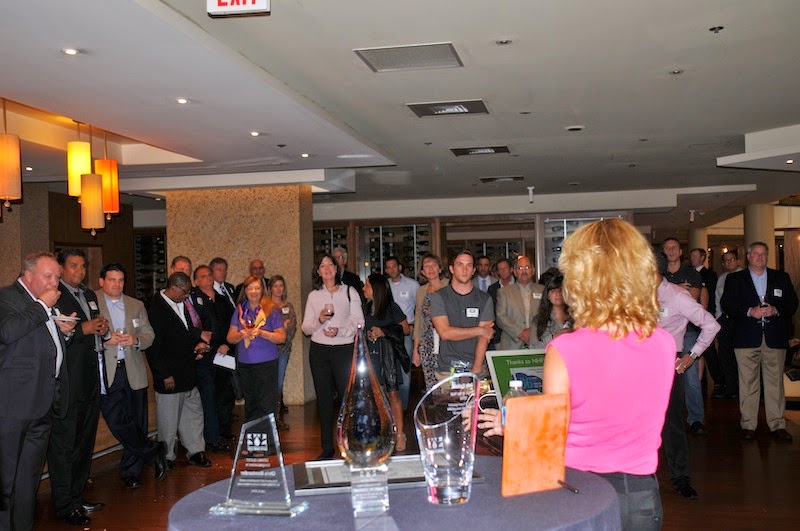
We did acknowledge them, at the Save One Life Celebration on September 17 at the Intercontinental Hotel in Washington DC, just before NHF kicked off. It was a lovely event, with about 77 attendees, including donors and sponsors. We honored special people who have helped make Save One Life a success so far:

 Over 1,300 people with hemophilia in 12 countries who live in poverty supported directly with financial aid 80 scholarships to foreign individuals since 2012 8 micro enterprise grants in 2014
Over $1.5 million in direct aid!
 
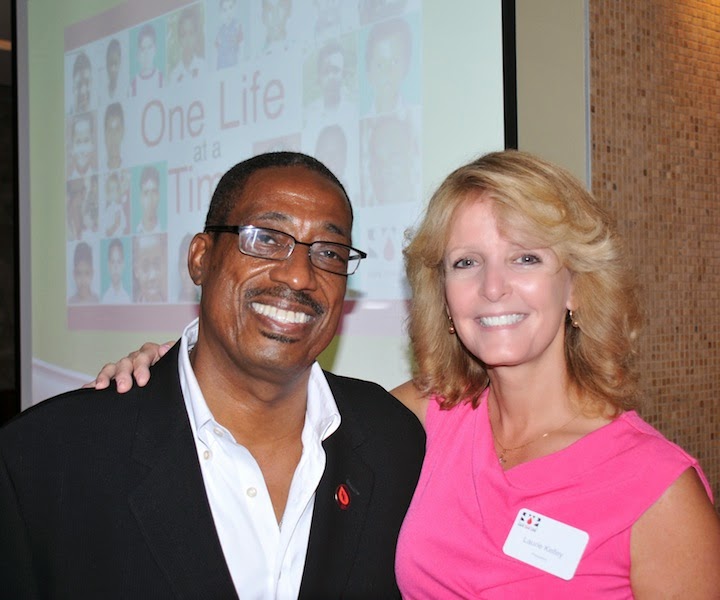
Laurie with friend and colleague Val Bias, CEO of NHF
 

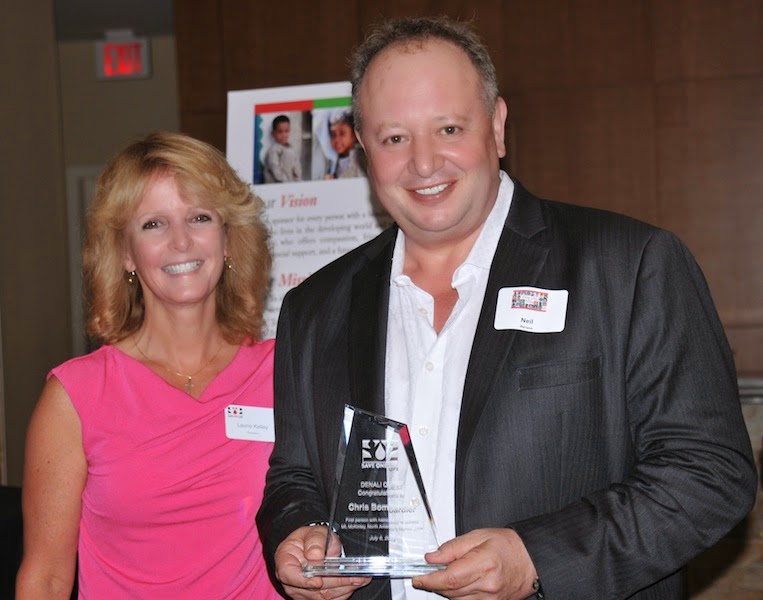
All this goes to people who live on the fringe of life, the poor, the suffering, in places like India, Zimbabwe, Pakistan and Honduras. And we honored Chris and Barry who have raised so much money for us. And our Inspiration Award went to Mark Skinner, former NHF president, WFH president and current WFH USA president (and personal friend) who has inspried me for many years with his brilliant insights, his compassion for the poor and his endless volunteerism. Accepting the award for him was Mike Rosenthal, executive director of WFH USA. We were surprised and pleased to see Doug Loock in attendance, who, back when he worked for the American Red Cross in 2000, gave us our first grant, and was the first supporter to help us!


Thanks to NHF for allowing us to hold the even at their event (thanks, Val!); and to ASD Healthcare (thank you, Neil  Herson!) for being our major supporter of the event. Also thanks to Baxter, Novo Nordisk and CVS Health for supporting the event.

 
Best news of all? We picked up 30 more sponsored children as a result! 
 
If you want to learn more or support a child, please visit http://www.saveonelife.net


Laurie with Neil Herson, president of ASD Healthcare, accepting award for Chris Bombardier
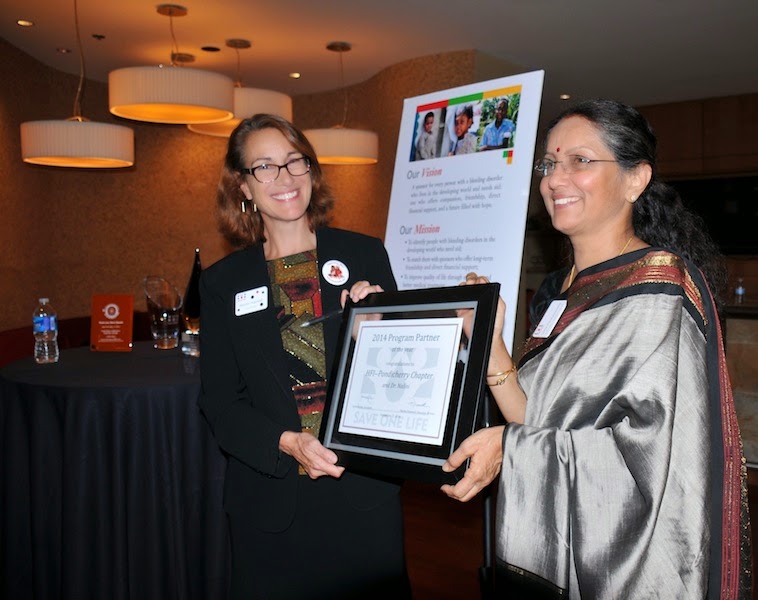
Usha Parasarathy accepting award for Program Partner of Year
 

Great Book I Just Read
Blood Meridian [Kindle]
Cormac McCarthy

The author of No Country for Old Men does it again. This is a masterpiece, an American classic, written with such skill and depth that you cannot skim, cannot rush; it has to be savored, thought about, explored. The main character, a young man only referred to as “the kid,” runs away from home in the south and heads west in the 1800s. He meets many groups and characters, but ultimately joins a scalping posse, intent on capturing as many Indian scalps to sell as possible.  Like many of McCarthy’s stories, the theme is bleak, desperate, dusty and desolate, like the land the kid crosses. The main theme seems to be that evil lurks everywhere: there are no good guys or bad guys in the Wild West: just survival. And every single person, whether Indian, white, male or female, harbors evil deep within in the quest for survival. It’s a somber read, but the writing style alone is like a delicate fabric of words, woven so that you see no seams, only a beautiful, dark, and captivating cloth; worth reading if you want to read something by a master. Five our of five stars.

Be a Hero!

To continue with our updates of programs and services from Pharma, here’s a new and exciting one!

Jeffrey Leiken Master Trainer at Evolution Mentoring

Remember when you were evolving from a teenager to a young adult – trying to assert your independence, work through all the social politics of high school, and figure out the direction of your life? Then consider the challenges of living with hemophilia on top of that – it can add a whole other layer of complexity. That’s why Novo Nordisk is offering HeroPath™ to help youths between ages 15 and 20 better navigate this transitional life stage.

HeroPath will be led by Jeffrey Leiken, Master Trainer at Evolution Mentoring and creator of HeroPath – you may remember his passionate speech about life transitions and personal growth at National Hemophilia Foundation’s 2013 Annual Meeting. HeroPath  will focus on helping participants grow their skills for success in areas including relationships, education, and careers.

Here’s the exciting part: Up to 25 selected US participants with hemophilia A or B* between ages 15-20 will have the opportunity to work directly with Leiken, his team of expert coaches, and their peers at a kickoff weekend in Chicago from August 22-24, as well as continue to receive personalized monthly coaching for the following year.

Visit http://www.changingpossibilities-us.com/HeroPath to complete your official HeroPath™ application, including several multiple-choice questions and an up to 150-word explanation of why you are a great fit for the program. Prefer not to write? Provide a 60-second video explanation instead – just upload your video to YouTube™ and paste the URL into the application form!

All entries must be received by 11:59 p.m. EDT on Thursday, July 17, 2014. Leiken will select up to 25 participants based on responses to the multiple-choice questions and the level of creativity and original thought conveyed through the essay or video entry.

What parents need to know: HeroPath™ isn’t just a weekend retreat – it’s a yearlong program designed to help offer teens or young adults the tools to identify:
·        What direction to move in professionally based on interests, strengths, talents, and natural proclivities
·        What kind of people to associate with personally and professionally (Leiken and his team will help participants give voice to their own values)
·        What kind of person they want to be

HeroPath™ is also structured to help develop their ability to manage their state, stay focused, and perform under pressure to help make better decisions.

Questions? See Complete Official Rules at www.changingpossibilities-us.com/HeroPath for details.

*Participants cannot be on a federal health care program.

This sevice announcement was sponsored by Novo Nordisk.

HemaBlog Archives
Categories