Laurie Kelley

Are Some Heads Going to Roll?
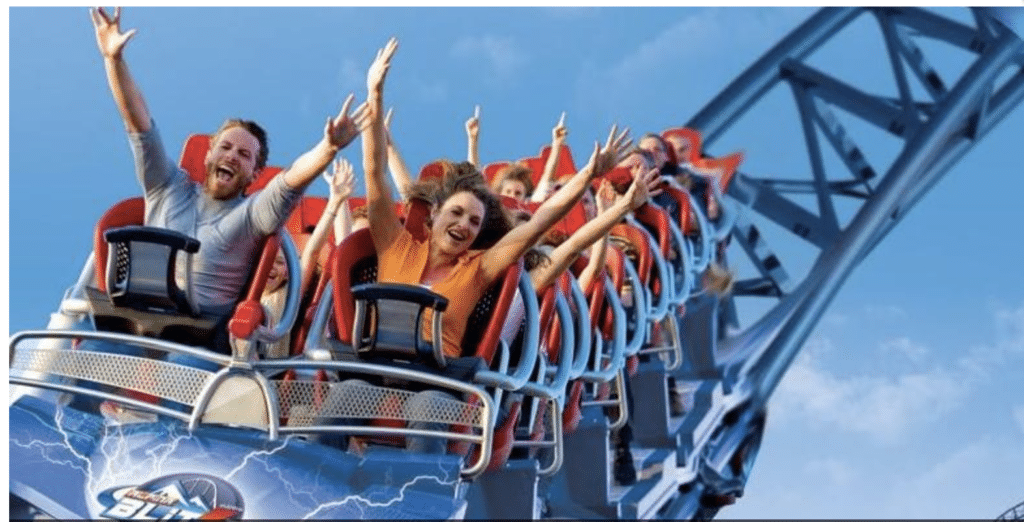
A mom posed a common summertime question on social media: should I let my child with hemophilia ride the roller coaster at a local amusemenet park?

If you Google “roller coaster and hemophilia,” a great article pops up from our blogsite about roller coasters, by Dr. Dick Lipton of the Jewish Long Island Hemophilia Center. Dick is since retired, but it’s a great article. And what does he recommend? Prophy up and have fun!

But even then, you should know the signs of a head bleed (an intracranial bleed hemorrhage, or ICH), for roller coasters and any other activity that put the head in motion.

Signs and Symptoms of ICH

• sudden severe headache or headache that worsens

• seizures with no previous history

• weakness in an arm or leg

• vomiting more than twice, with or without nausea

• decreased alertness; lethargy; trouble waking up or staying awake

• changes in vision, such as double vision, blind spots or blurred vision

• dilated or unequal pupils; eyes not moving together

• dislike of bright light

• tingling or numbness in extremities

• difficulty speaking or understanding speech

• difficulty swallowing

• difficulty writing or reading

• loss of fine motor skills; hand tremors

• loss of balance; difficulty walking; stumbling or falling

• abnormal sense of taste

• stiff neck or back

• extreme or persistent crying in babies

• excessive irritability in babies

• loss of consciousness, even for a few seconds

These are also symptoms I get when I am asked to cook. But seriously, with prophy, you or your child should be fine. But always know symptoms, and if in doubt, call your HTC!

Enjoy the summer and get vaccinated!
The Beats Go On

In person meetings are hard to find in hemophilia these days! But not in Nashville. Last weekend was the “Beats” program, hosted by the Coalition for Hemophilia B, which invited so many talented community members to perform. Checking them out on Facebook, looks like everyone had a fabulous time. All American Idols!

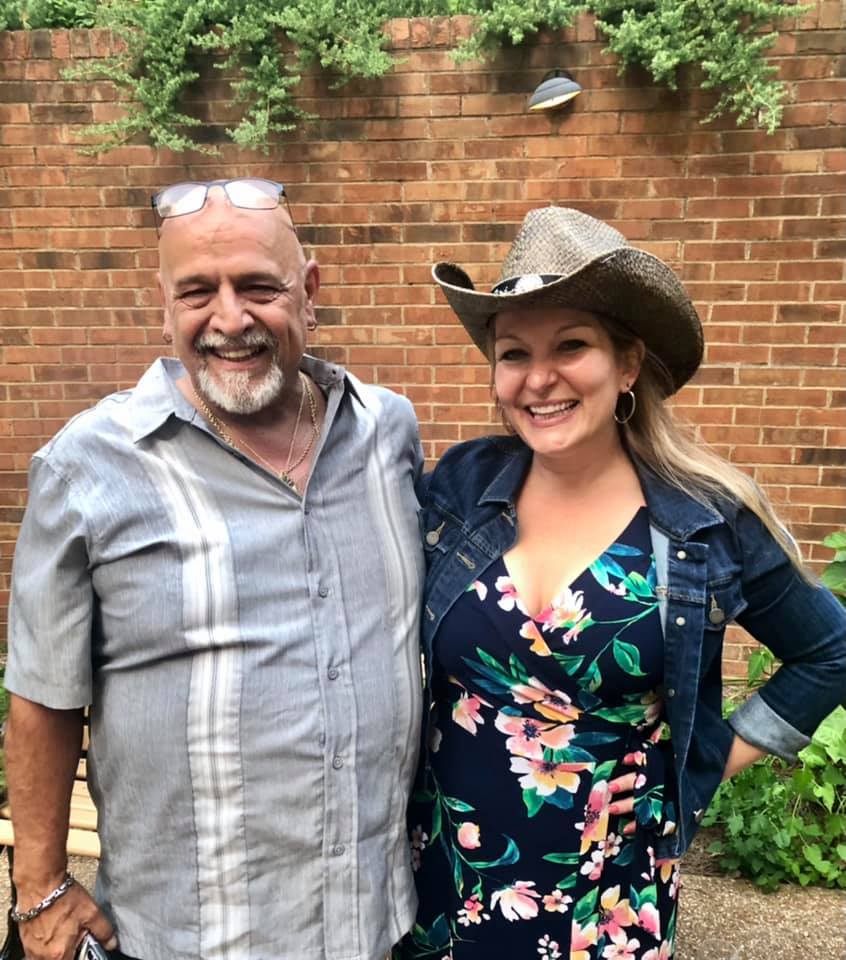
Wayne Cook with Kendall Fitzpatrick, RN, at “Beats”

Funny timing, as I was set to attend my first concert in two years at the Casino Ballroom in New Hampshire: Little River Band. But a persistent and particularly painful back spasm meant Doug got to go with friends… not me.

While these two events were happening, our blog contributor Richard Atwood of North Carolina submitted a book review about the healing power of music! Called Scales to Scalpels: Doctors Who Practice the Healing Arts of Music and Medicine, by Lisa Wong with Robert Viagas, it tells the story of the Longwood Symphony Orchestra (LSO).

The LSO is composed of over 100 health professionals, all over-achievers and all volunteers, who expect no fiscal reward. Their reward as healers is to have a healing experience by playing their musical instruments. Yet they perform classical music concerts with the skill of professionals. Every concert is a benefit. Founded in 1984, the LSO is based in Boston. The LSO has a budget of $300,000 and the organization has raised over $1 million for the medically underserved.

And… the New England Hemophilia Association is one of the local nonprofit organizations that benefitted from an LSO concert ! That concert audience is described as “bouncy hemophiliac boys.” [They must have been playing the 1812 Overture!]

Richard writes, “This voluntary ensemble is composed of health care professionals who are skilled musicians— healers who use music to heal. Much of the medical research on the health benefits of music is anecdotal and not very robust, but there is enough of the research to become a believer in music as a healing art.” 

As for Beats? Kendall Fitzpatrick, RN, also a healer, writes, “The Beats program in Nashville proved to be packed full to the rim of activity, friends, laughs, rhythm, food, fun, and making beautiful music with beautiful people! I’m so grateful to The Coalition for Hemophilia B and the staff and sponsors that made this possible!! You inspired me to feel the beats in my life!”

Check this performance on Facebook

https://www.facebook.com/HemophiliaB/videos/345108780573487
https://www.facebook.com/HemophiliaB/videos/199578925451301

Is Hema a No Go?

The Tour de France is on and suffered a big crash on the very first day, when a spectator stepped out in front of an onslaught of cyclists. What does the Tour de France have to do with hemophilia?

One of our favorite blog contributors and former PEN contributor is Richard Atwood of North Carolina, who is always on the watch for all things related to hemophilia. He noticed something interesting while watching the riders that first day. He writes, “Watching the Tour de France, I noticed the Jumbo Visma team kit with the words HEMA on the sides and sleeves of the jerseys. This Dutch pro cycling team is sponsored by Jumbo (a Dutch supermarket chain – not an elephant!) and Visma (a software company). I first thought HEMA might have something to do with blood, but it is a Dutch self-service store chain (not to be confused with the Chinese food chain with the same name).    

“The technology for the team kits is advancing. What used to be spandex has been developed into new materials. But this new material burns into the cyclist’s skin when they get road rash, adding to the pain and bleeding. I always think first about blood, regardless of the situation, even when I now know that HEMA refers to food in this cycling situation. Pro cycling is dependent upon sponsors, just like the bleeding disorders community.”

Why would a food company call itself HEMA? One on-line source says “According to many linguists, the Greek word aima (haema, hema, blood) is derived from the ancient Greek verb “αίθω” (aetho), which means “make red-hot, roast” “warm or heat”.

HEMA’s use of the word reminds me of Ford creating a car called Nova, which translates into “no go” in Spanish! It’s good to check globally before deciding on a name. Or maybe we can get HEMA to sponsor some hemophilia events?

Quick Update: an American named Sepp Kuss wins a stage in the Tour de France today, the first American to accomplish that feat in 10 years. And he rides for the Jumbo Visma team. With his solo breakaway in the mountains for miles before the finish line, he got lots of camera time, something that sponsors crave. So a large audience saw the HEMA logo on his jersey!

Barbers: A Cut Above

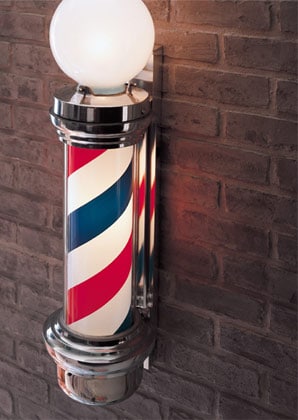
Today I was walking about Newburyport, Massachusetts, an old seaport, now a lovely tourist town, following an exciting whale watching boat ride. As Doug and I strolled past the sidewalk shops, I noticed an old-fashioned barber pole, with the red and blue stripes.

“Ever wonder how the barber pole got its stripes?” I asked Doug. He had not.

Well, medical science was basically primitive in the Middle Ages. In fact, barbers sometimes performed surgery. After all, they had razors, right? A standard treatment for just about any ailment was “bloodletting,” where the doctors—or barbers—would drain someone’s blood. It was believed that blood sometimes contained bad “humors,” and a build-up of them needed to be released. You can see a decent portrayal of it in the wonderful 1995 Ang Lee movie “Sense and Sensibility.”

The barber pole developed as a symbol of bloodletting. During bloodletting, the patient would grasp a pole to make veins stand out. Then the barber-surgeon would cut into a vein, and blood would drip into a basin. Afterward, blood-soaked bandages would be hung outside as advertisement. Twirled by the wind, they would form a red and white spiral pattern that was later adopted for painted poles.

Eventually the bandages would be replaced by a wooden pole, with painted red and white stripes. Variations of the barber pole appeared in different countries, with some alternating a blue stripe with the red, like the one I saw today.

While the barber pole is recognized around the world, its days could be numbered. The William Marvy Company of St. Paul, Minnesota is the sole remaining manufacturer of barber poles in North America. To date, the William Marvy Company has produced over 82,000 poles, but only sells about 500 a year.

When you spy a barber’s pole, you are seeing an icon that dates to the Middle Ages, and now is quintessential Americana.

HemaBlog Archives
Categories