
Pakistan 4: The Trip to Islamabad
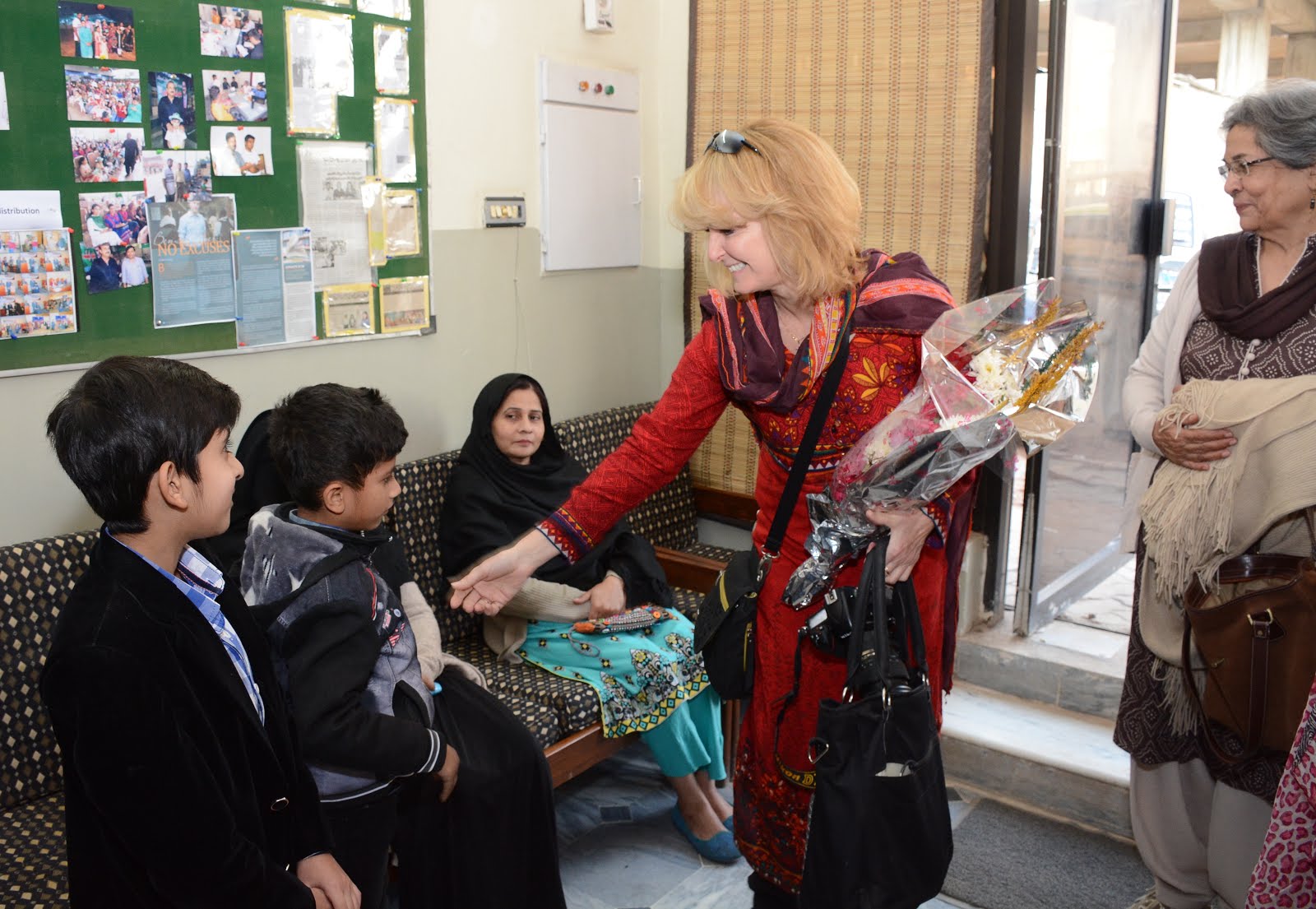 |
| Laurie Kelley receiving flowers |
spied in the waiting area a tall Pakistani soldier gazing at his newborn baby.
What a photo that would have made! Him in his khaki and green uniform, she,
barely a month old, in pink, cradled in his arms while he studied every bit of
her face, to remember her before he left for duty. To see this soldier at such
an intimate moment was precious. Too often we label people, but at their core,
most people want the same things: peace, family, love, a chance to work and
take care of their families.
Islamabad, the capital of Pakistan. I passed by thousands of acres of flat,
arid land, mostly dusty, with trees bordering farms. A very agrarian scene,
with dusty brick homes, farmlands, cows, and goats.
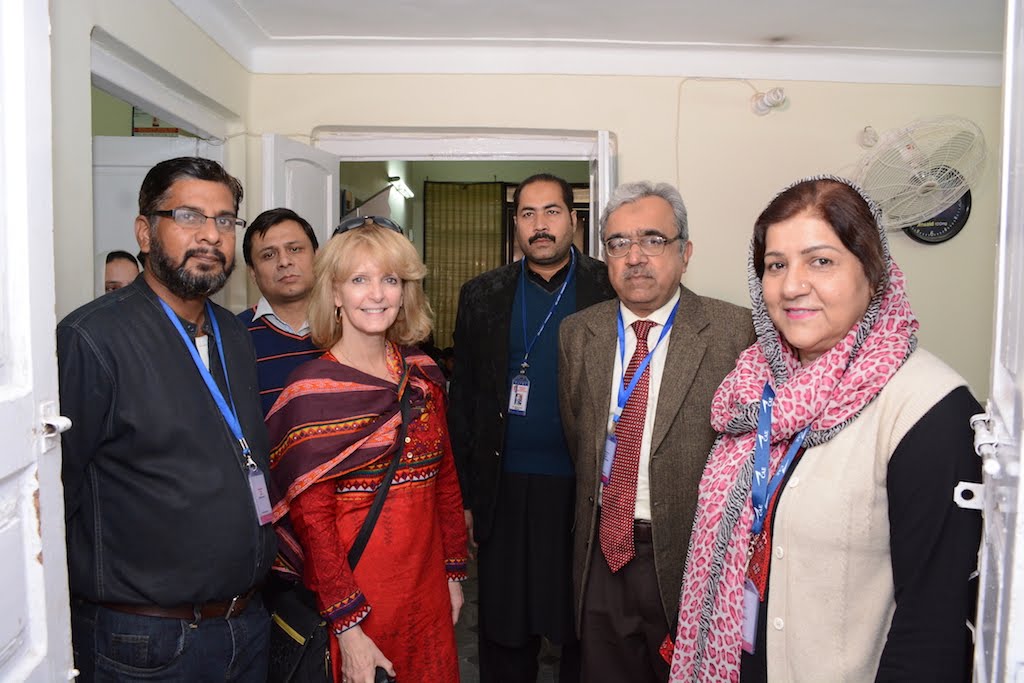 |
| Laurie Kelley with Rawalpindi Chapter team |
in Islamabad, a stunningly beautiful city, laid out in a grid like our capital.
When I exited the bus… there was Anjum Malik! I had not seen him in 10 years,
but it was like no time had passed. He works for a distributor of drugs in
Pakistan, but has been a stalwart friend to the hemophilia community from the beginning.
We chatted on the way to Dr. Munawar’s house. She is a retired physician, and president
of the Rawalpindi chapter of the PHPWS. When we met, it was as if we had known
one another our whole lives. It makes no difference that we are from different countries
or cultures—we are here to help those who suffer, so we are sisters! Her home
is lovely and no guest room could be better.
 |
| Mothers wait with children with hemophilia for infusions |
the Hemophilia Patients Welfare Society headquarters, where black-robed mothers sat with their small children, only their
eyes visible through the niqab. As
this is my fourth visit to Pakistan, this no longer seems strange to me. We
smiled at each other and shook hands. The staff greeted me with flowers, and we
had some tea and got acquainted.
right away while we had light. First stop, Hazma Quereshi, who is sponsored by
my friend and colleague Patrick Schmidt, president of FFF Enterprises. Hazma is
a tall, handsome young man with VWD type 1. He wants to go to school for IT
training. We didn’t spend much time with him, but his family was lovely and welcoming,
as all Pakistanis seem to be. Hazma lives in a nice home, made of concrete,
with several rooms.
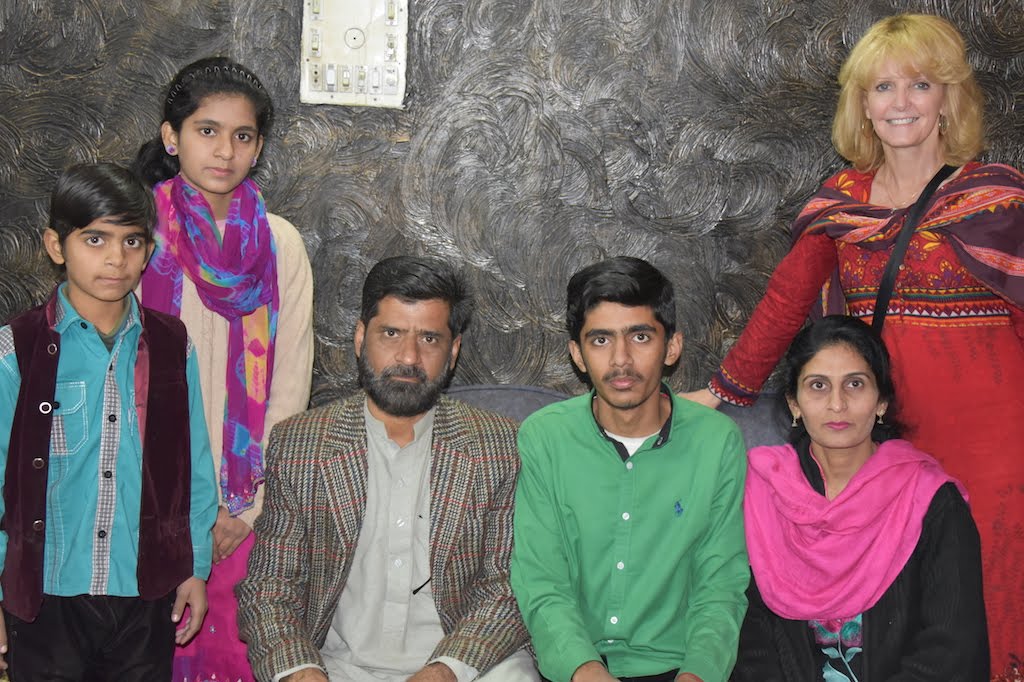 |
| Laurie Kelley with Hamza and family |
He’s sponsored by my friend and colleague Kyle Callahan. We walked down a dirt
road alley, past staring children, as twilight turned to night. We found his
door and then scaled up high, cold concrete stairs, and at the top was Gulsam, his
grandmother, a robust, very loud woman, jabbering away in a husky voice! What
character: she clearly rules the roost! Saeed was shy at the outset, head down,
quiet. He has two sisters, one of whom is a twin. He’s had 5-6 elbow bleeds in
the past year, and gum bleeds due to tooth losses. He won’t wear shoes, Gulsam
lamented, and indeed, looking at his toes, they were blue, and two had frostnip
on them! There are six children, including a new baby Muhammad Ali, who also
has hemophilia. We will get him registered with Save One Life. Munawar and
Gulsam had a lively and friendly exchange in Urdu, and we filed out of the
house. Now it was night, and we passed a little vendor shop on the corner
selling slabs of meat, young people on motorbikes, and children who fell in
line to follow us.
 |
| Dr. Munawar and Laurie with Saeed |
that of Faryal Tabassum (sponsored by my friend and colleague since 1990, Alison
Arter!). Up to the second floor again. Faryal is sweet, with her head covered
modestly, and a wise expression on her face. She has Glanzmann’s disease. In
2005, she and her family lived in the Kashmir section of Pakistan, when on
October 8 a 7.5 magnitude earthquake struck; 86,000 died. 15-20 family members
died, including her 3-year-old brother. The family moved to Rawalpindi for
another home and to get treatment. Her father doesn’t have a regular job; he
now waits tables but must search for new jobs all the time. He earns about $2 a
day. They rent 2 rooms in the place they are now. I gave the mother $100, about
2 months’ rent, to help them out. But the children look well cared for, clean
and happy. The grandparents were present; the grandmother was on the bed sick.
of their financial struggles, while we felt richer having visited these
beautiful children and young adults, so eager to have a normal life.
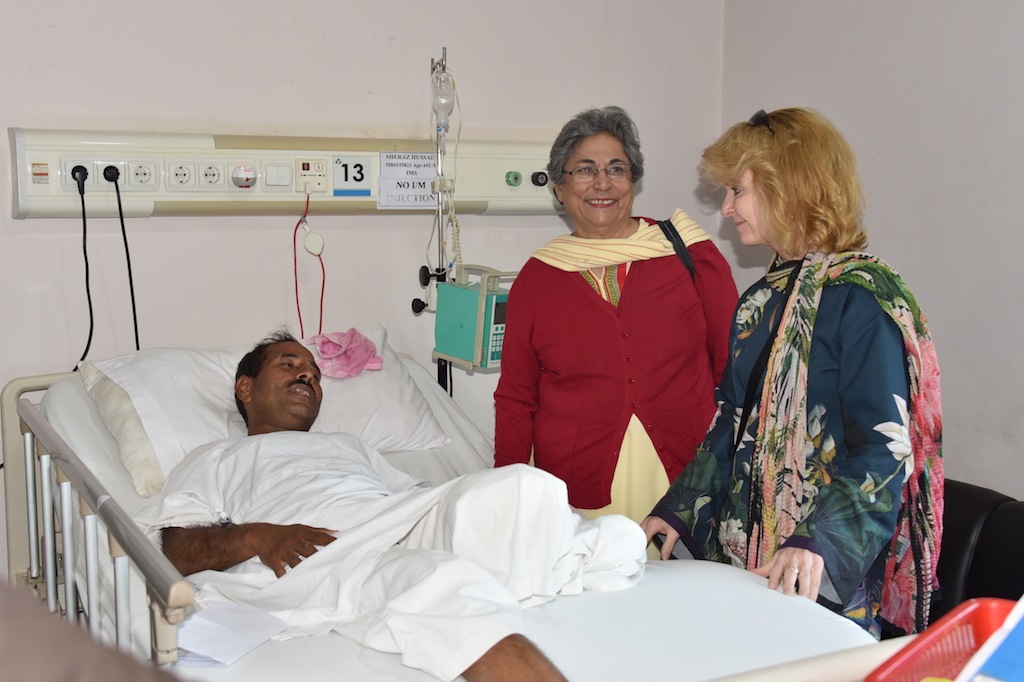 |
| Laurie Kelley and Dr. Munawar visit Sheeraz |
morning for the hospital: a beautiful, private one to see Sheeraz, who had an
amputation just the day before. He used the 50,000 IU that we had sent. He was
in a beautiful room, bright and sunny, lying in bed, his truncated leg propped
up. His entire family was there to see him: two elegant, beautiful women in the
prettiest of dresses, and two older men. They all thanked me over and over for
the factor. “Words cannot express our gratitude,” the elder brother said. I
thought of how nice the world can be, with us helping one another.
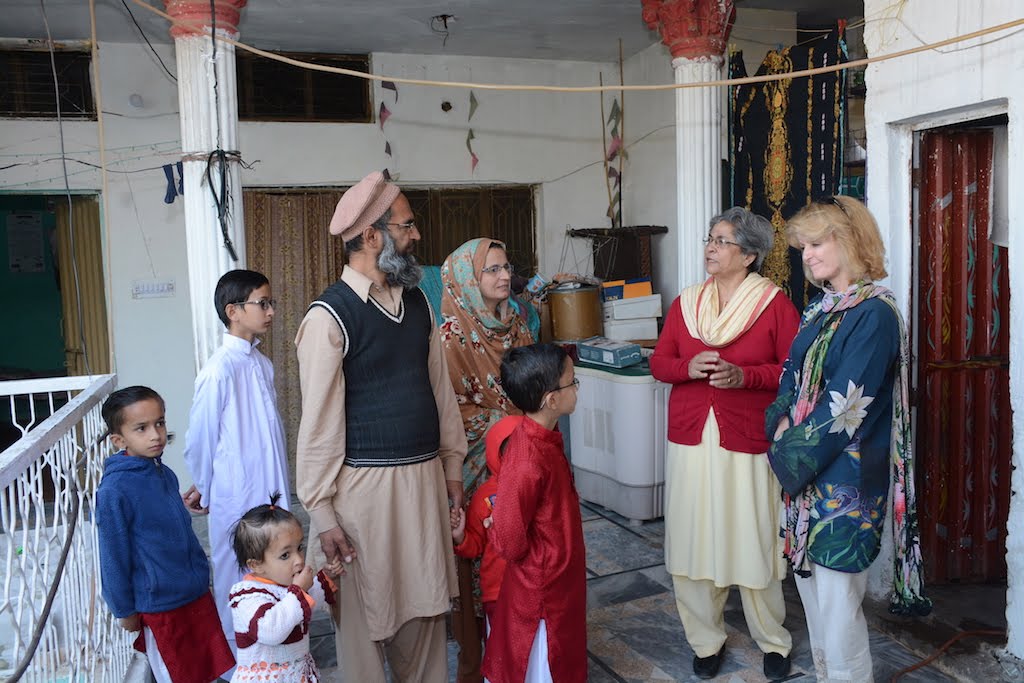 |
| With Azib and family |
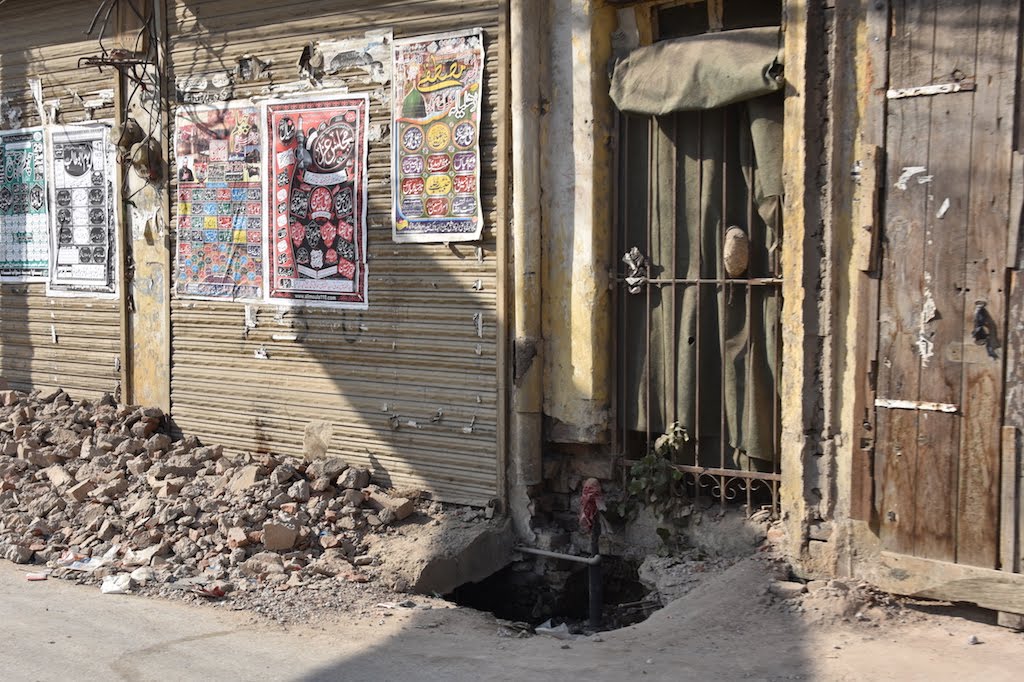 |
| Doorway on street with interesting colors and textures |
By 9:30 am we headed for the
Society office again for tea. Khawar Yasin was there, who I had met in 2007. He
has a brother with hemophilia. I also met Fayyaz, who has hemophilia. Then we drove
off to visit more patients. First Azib, my sponsored child! He’s 10 but looks
like about 6. Very small in stature, with glasses that made him look like Harry
Potter. The family lives in a large concrete home that houses the extended
family: this is quite typical in Pakistan, as a way to protect the longevity of
the family. This is also why families intermarry. Because hemophilia ran in the
family (Azib’s three maternal uncles have hemophilia) his mother married
outside the family. They come to the society for factor about once a month, on
a motorbike, which takes about 20 minutes. Azib does well in school. He had typhoid
a few months ago and is still recovering. The father was so kind: he poured us
tea, which was delicious, and then his wife brought out food. Normally I don’t
eat at each home, but I tried this, and it was the best thing I ever ate in
Pakistan! Very sweet with a texture like steel cut oats. It’s called suji halwa.
room, where the grandfather had been sleeping, and he was sick. He sat up with
help, and I saw a dark-skin, weathered man, with bundles of blankets on him. This
is their life—no privacy. They all act with restraint, civility because they
are all together. Kind of like being on an airplane, where we must all act and
behave well or else we will all be in trouble. This is a lovely family, and
there is much hope for Azib to do well in life, and through our program.
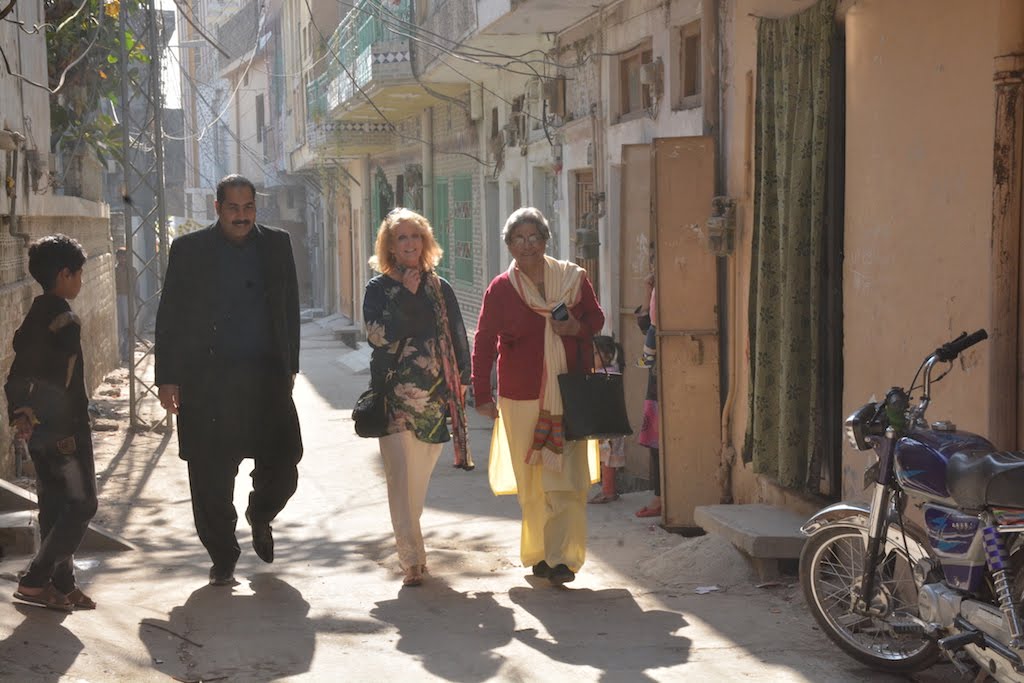
moved on to see Danish and Usman, cousins who live in the same housing complex.
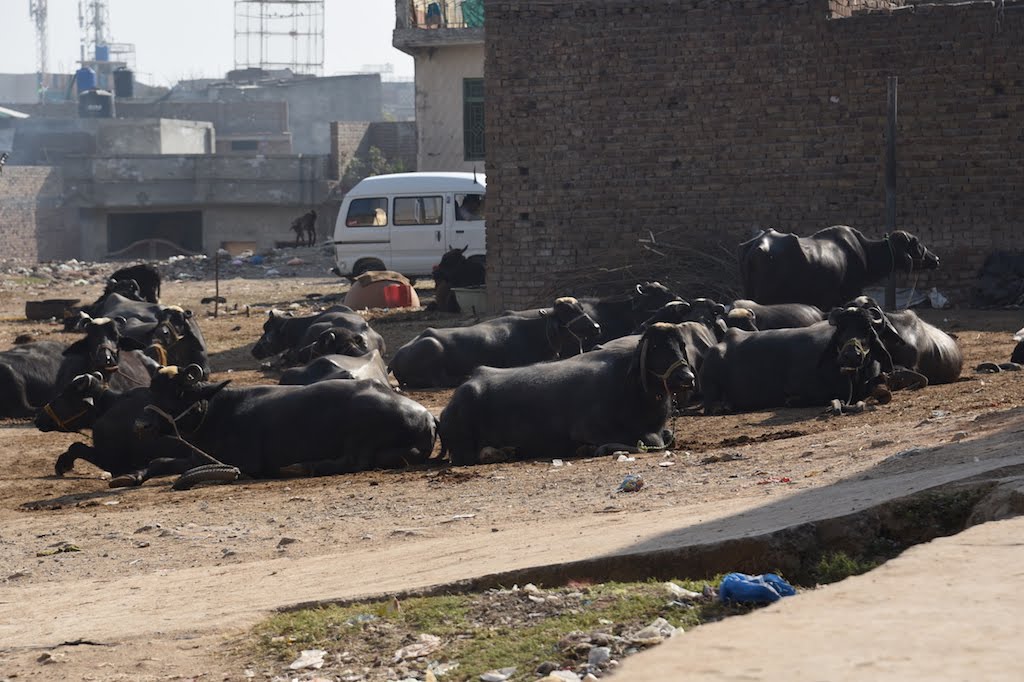
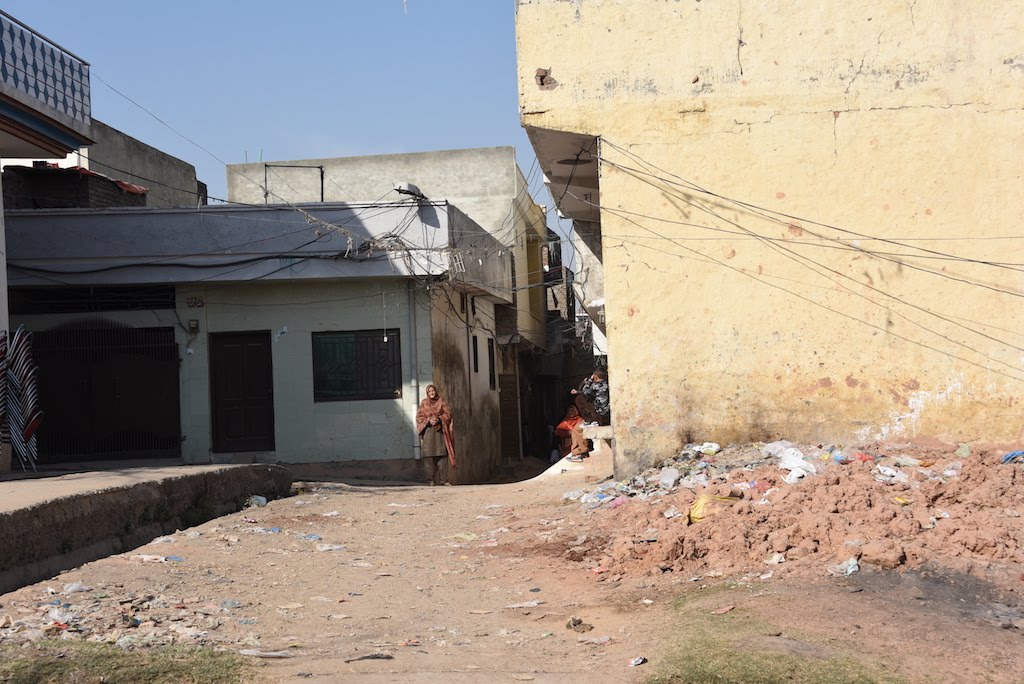
We had to walk down some alleys, until we saw to our right a big lot, filled
with black bulls, lying in the dirt. To our left, their home. When we walked
in, pandemonium—the two sisters, who I had met in 2007—cried and cried, hugging
me, babbling in Urdu, then the grandmother joined in, crying and hugging. They
were so happy to see me, and to welcome me to their home! They finally calmed
down and we got to see Danish, who is tall now. Danish is severely
developmentally delayed, but he knows what’s going on. He’s so shy! He kept
looking at me sideways but then turning his head and smiling, rubbing his hands
over and over. I worked with children like this in my 20s at a state
institution, so it was easy to chat with him, hold his hand, try to get him to
trust me.
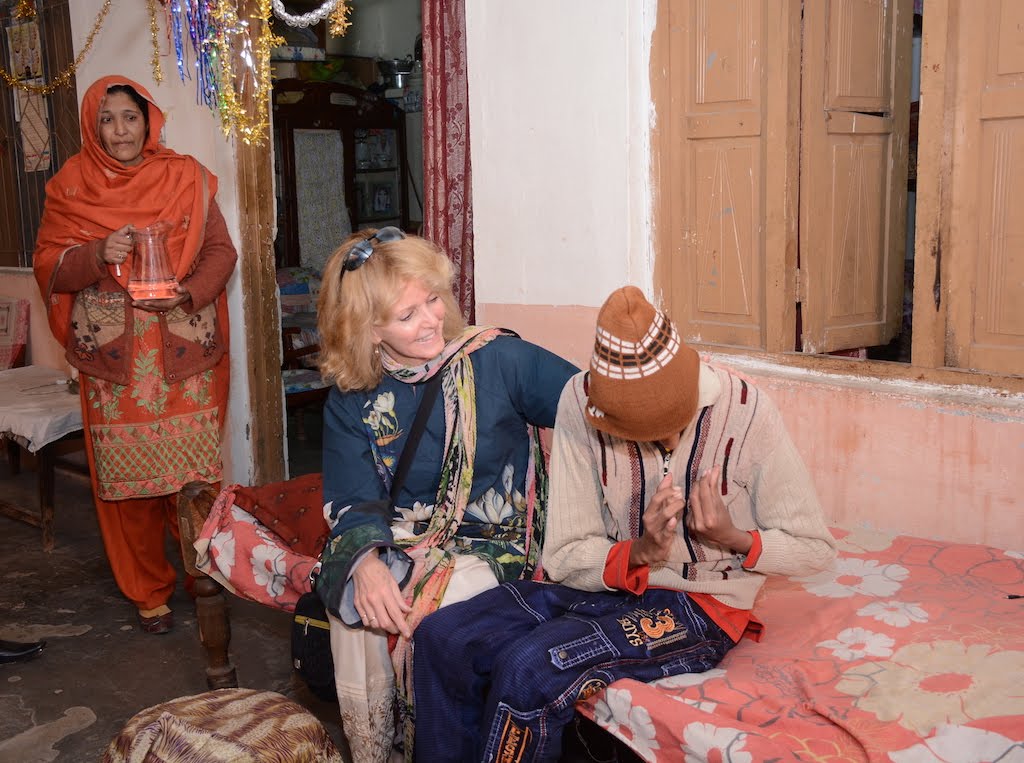
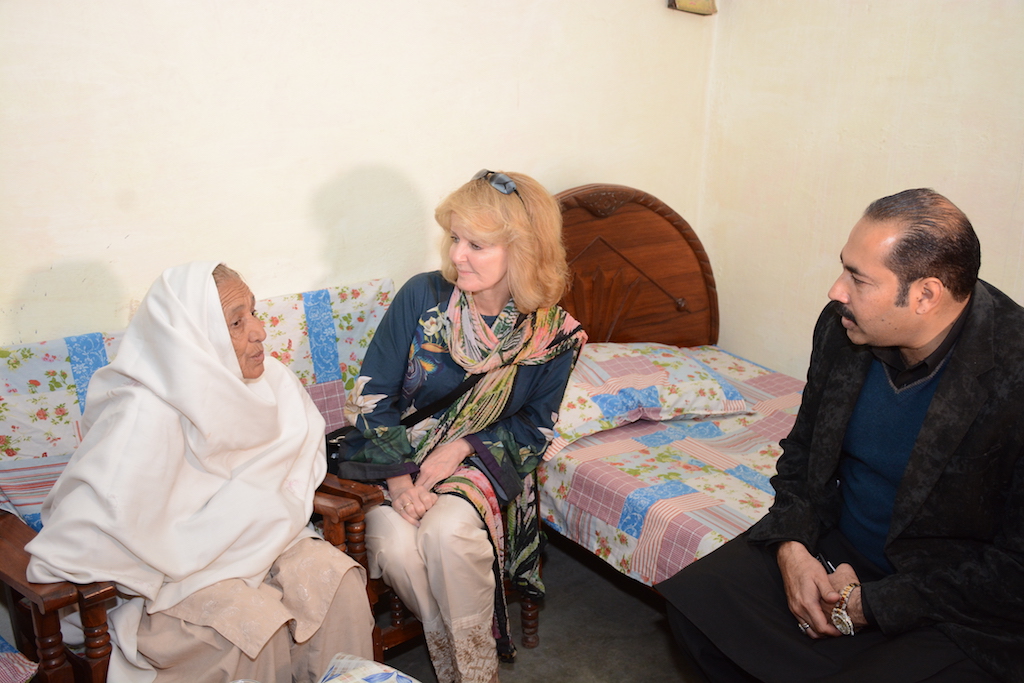
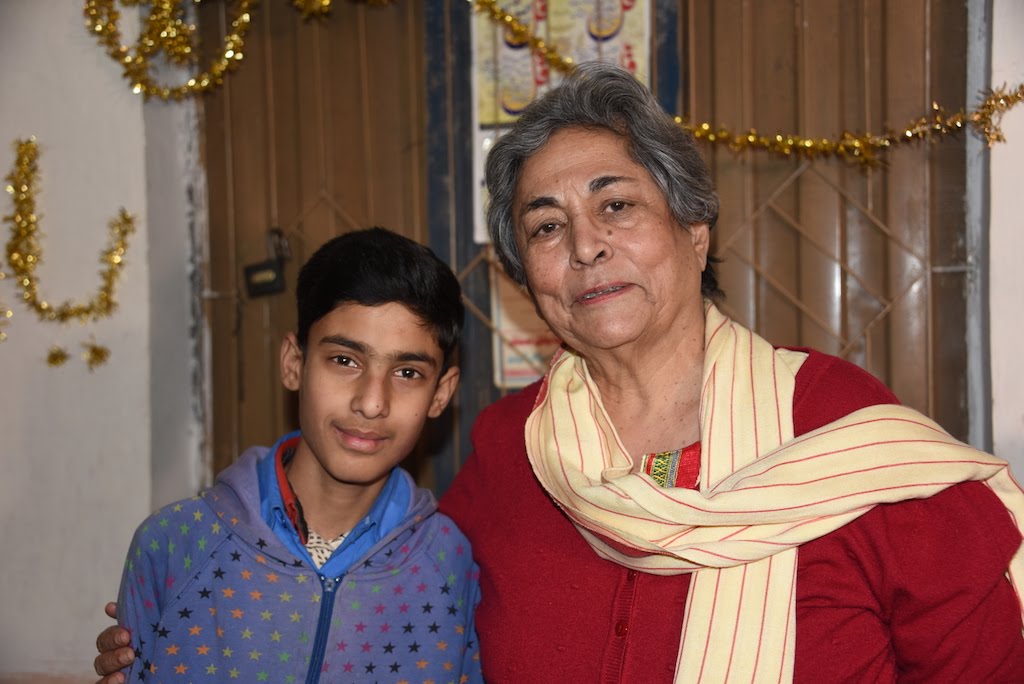
Usman, but it was impossible with the mom and aunt around. I had them shooed
out and we got to sit with Usman and his adorably cute cousin. We stayed and
chatted, and learned that Usman wants to be a doctor someday. The grandmother
pulled out a picture of her son, who died in 2006, leaving Usman without a father.
I ended up giving them $100.
way out, we decided to go check out the bulls. People stopped and stared but I
waved and smiled and everyone smiled and waved back. They were all so nice!
 My last day in Pakistan. Up early
again, at 5:30 am, to the sounds of the muezzin
chanting the prayers. I wouldn’t lie down again until (Pakistan time) 4:30
Monday morning!
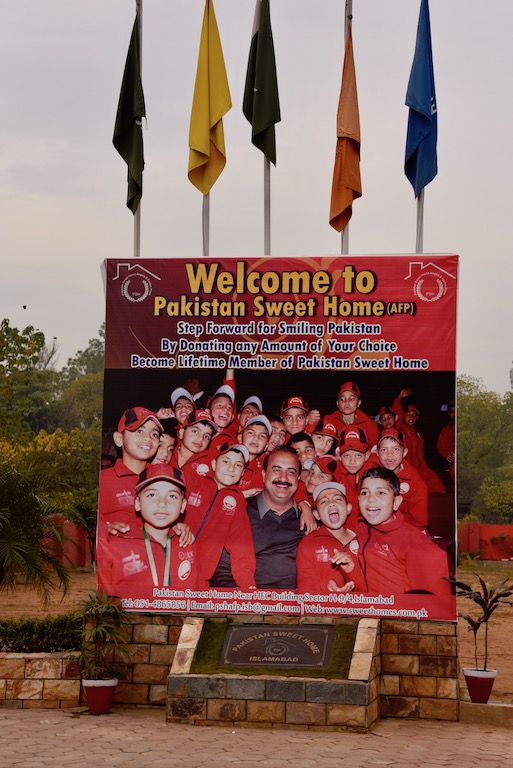
Sweet Homes, to have a celebration with the families and to disburse Save One
Life funds to reach beneficiary. I was told it was a place for orphans, but the
executive director and founder offered it to us for the day. I had no idea what
to expect and I was amazed. It’s a
compound of staggering engineering and efficiency, an incredible oasis of hope
for orphans. The complex has everything: mosque, meeting rooms, dorms,
schoolroom, dining room, huge sports field and bleachers for hundreds of
children. The founder, Zammurd Khan joined us. He’s 6’3”, light and fast on his
feet despite his height, self-deprecating but still can claim the limelight
wherever he goes and in all his promotional material. He is a celebrity. We
watched a DVD on the founding of Pakistan Sweet Home, which was impressive, especially
when it showed how Khan jumped into the middle of a street shootout over a kidnapped
child and rescued the child!
 |
| Laurie Kelley, Dr. Munawar with Zammurd Khan |
celebration. Many hemophilia families came and we had speeches, with the most
riveting by Dr. Nadeem, who kindly remembered the late Saif ul Islam, former
president of the chapter, who died this year. I knew Saif since 1999, and
considered him my friend. We each have three children, the same age, and I
suppose that helped us bond, along with our desire to improve the lives of
those who suffer with hemophilia. We keenly felt his loss then and there, and
when Dr. Nadeem said, “He had an active professional career in the Pakistan Navy.
With great effort, he transformed his scars into stars. A mammoth gathering of
his lovers, friends, fellows, and family members on the occasion of his funeral
prayers put a stamp on his faithfulness, religiosity, and humility,” I saw his
adult son in the front row shed tears.
 |
| With the Save One Life beneficiaries |
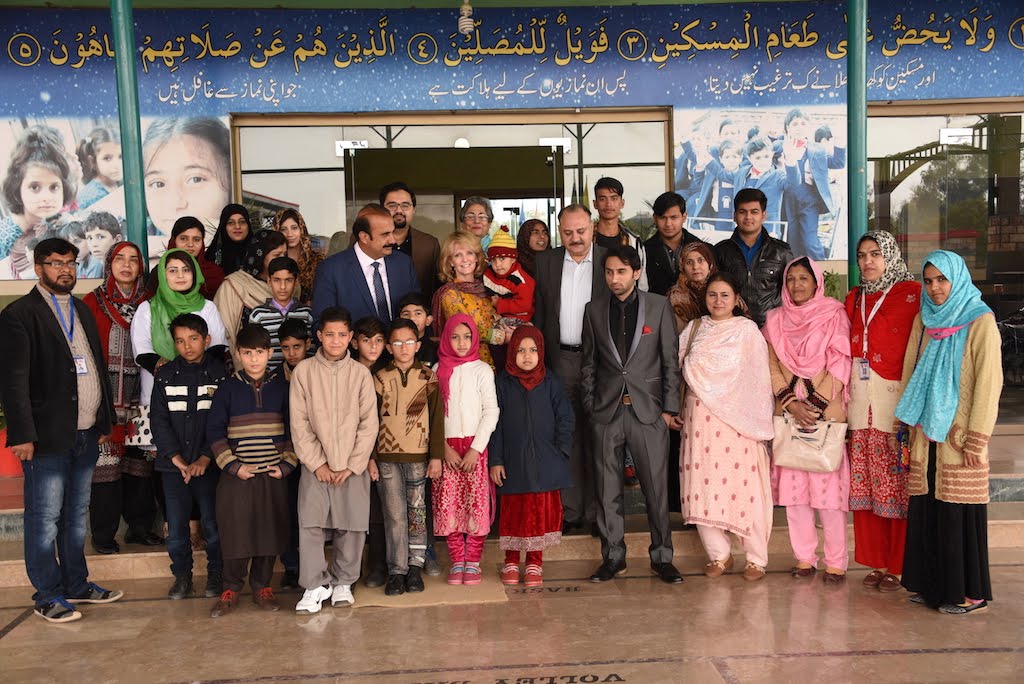
line up and gave each of our beneficiaries for Save One Life their funds. This was followed by lunch outside in the
sunshine and a tour of the expansive facilities.
 Back inside, the families mostly
left, and I met with the Youth and Women’s Groups. I noticed how much everyone
lectures here, so I changed it up and had them sit in a circle, and asked each
of them to state what their 5-year vision was for their group. This was great,
because rather than just sit and listen, they all participated. I looked for
themes in what they all said… lobbying the government to give support became a
dominant theme. Somehow we tied it all in together and then I asked for goals,
a breakdown of their lofty vision. It was a good exercise, and they caught on
about how to take ideas and turn them into tangible goals. The more we
discussed, the more the young people got energetic, and discussed more, and
when it was done, everyone seemed pumped up.
very high note; goal setting often does that!
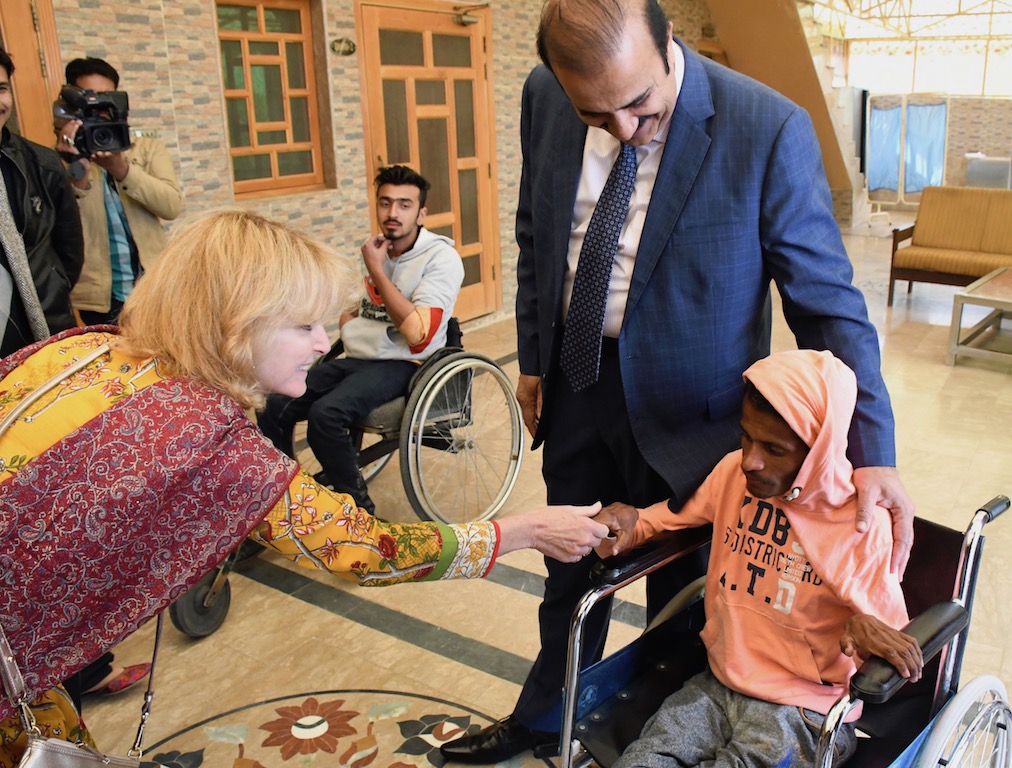
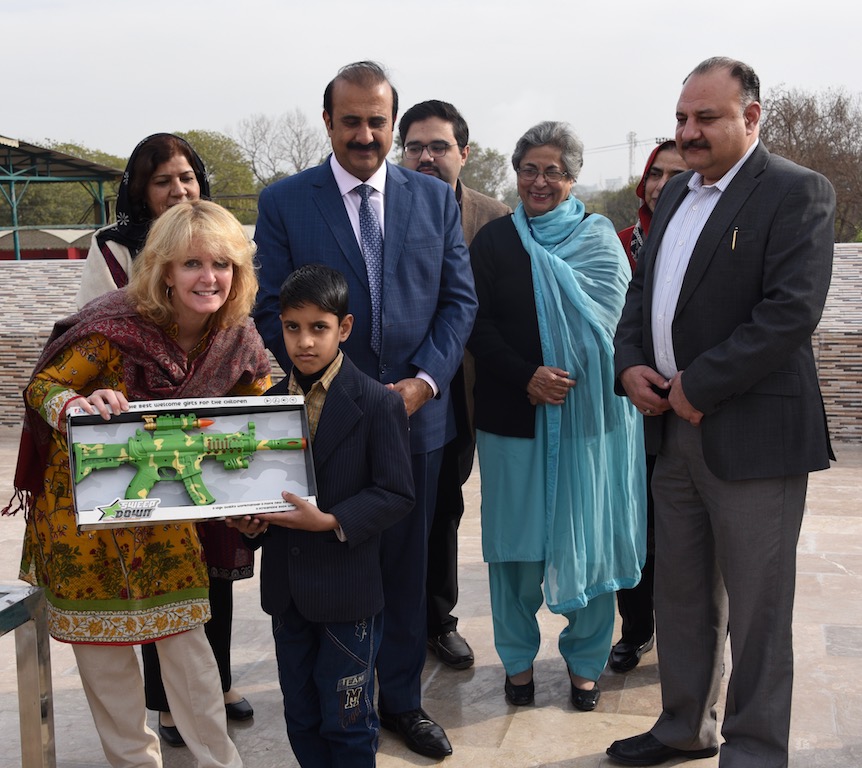
relaxed for a bit before Anjum retuned to take me to the airport. It was a
bittersweet trip and departure. I truly love visiting Pakistan. Some people in
America don’t understand how I can love Pakistan, but if you haven’t
experienced a visit there, felt the kindness, the hospitality that can embarrass
you when you realize it supersedes your own, the civility, then it would be
hard to judge. Some of the best people you could ever meet in hemophilia live
in this ancient land. And I can’t wait to return.
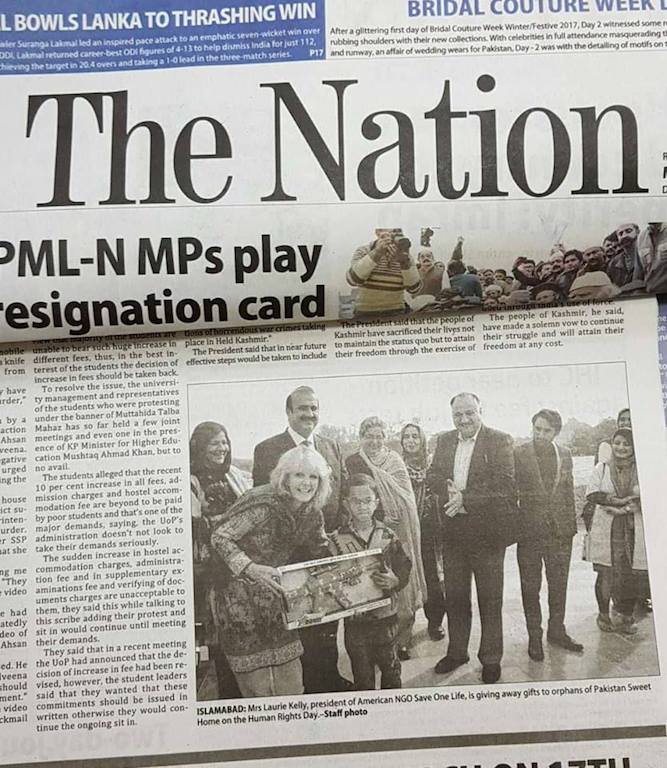
Pakistan 3: “82 patients, 82 stories.”
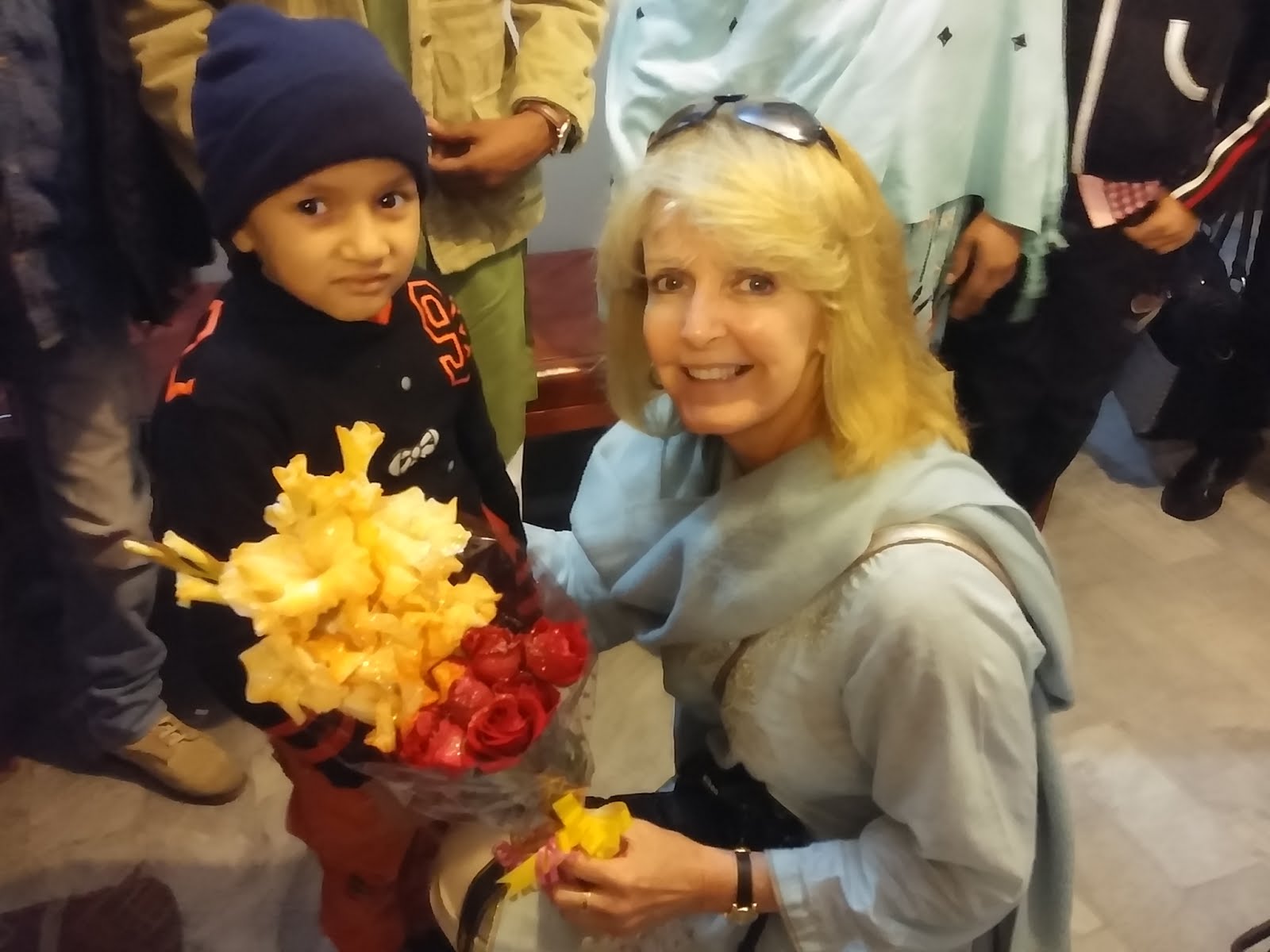 |
| Laurie Kelley greeted with flowers |
December 6, 2017, day 11 of my 14 day trip, we met with Imran Zia. With me were Masood Fareed Malik, president
of the Lahore Chapter of the Pakistan Hemophilia Patient Welfare Society
(PHPWS) and Raul Ahmed, who has hemophilia and is our main liaison for Save One
Life in Lahore. The day was sunny and cool, perfect for visiting. Rauf and
Masood picked me up at the hotel and after only a 20-minute drive we arrived. We wiggled the
car down a narrow street that was decorated with dangling shimmering streamers celebrating
the Prophet’s birthday.
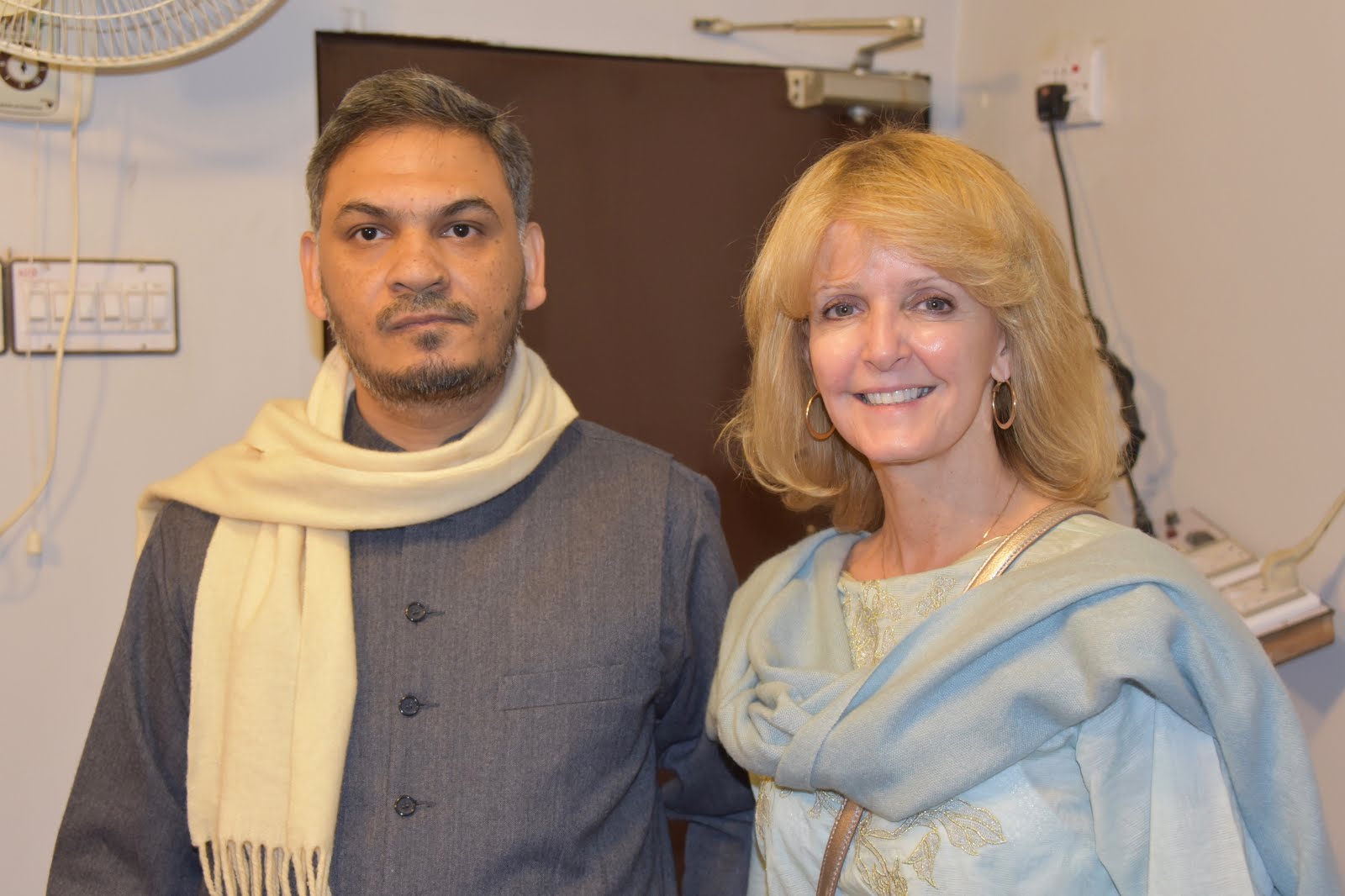 |
| Imran Zia and Laurie Kelley |
organization that helps people with hemophilia. Why does this exist when there
is the Lahore Chapter just 20 minutes away? Good question. The World Federation
of Hemophilia does not recognize two organizations in one country, which means
HCP is not eligible for any of their resources.
excited because it had been 19 years since I’ve seen Imran! I first met him in 1999, when he was just a 24-year-old with hemophilia. He was very quiet, under the tutelage of Dr. Shahla, who founded the chapter. I still have
an image in my mind of him sitting quietly behind her, as she presented
the chapter and all their work. I asked the boys around her to identify
themselves so I could know them. Who would ever have guessed that a few years
later this quiet 24-year-old with a degree in IT would start his own hemophilia
nonprofit and help so many patients?
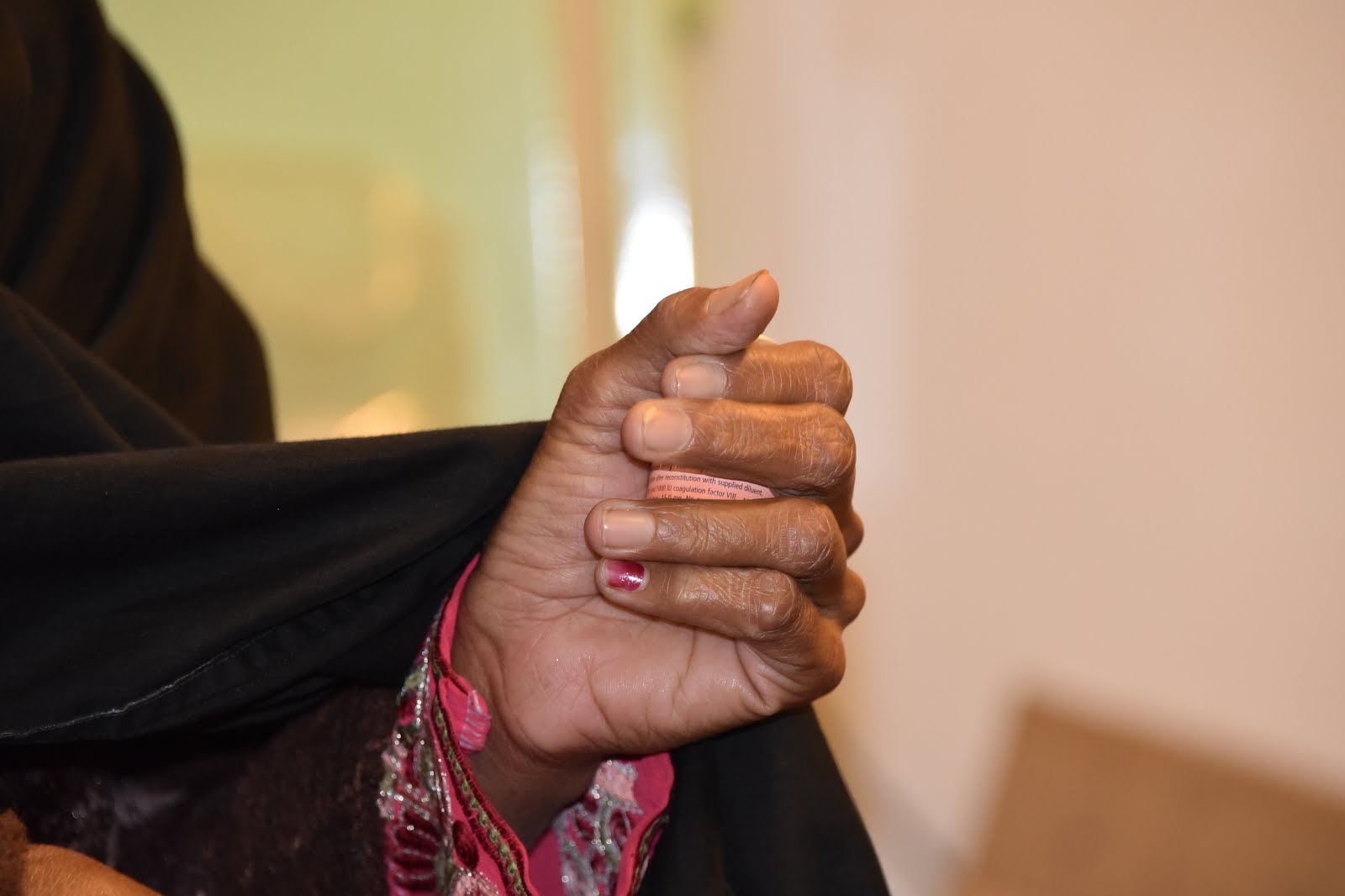 |
| Mother clutching vial of factor |
on the street corner, dressed in modest grey garb, flecks of gray streaking his
hair. He was and is serious, focused and professional. He extended his hand in
greeting. I hope I greeted him warmly, because I was truly happy to see him. I
learned that he and Rauf knew one another as little children at Fatimid, where they
used to go for FFP infusions! We stepped into the narrow hallway, where some families
waited patiently for us on a bench. A six year old in a warm knit cap extended
flowers to me and I knelt down to take them and smile at him.
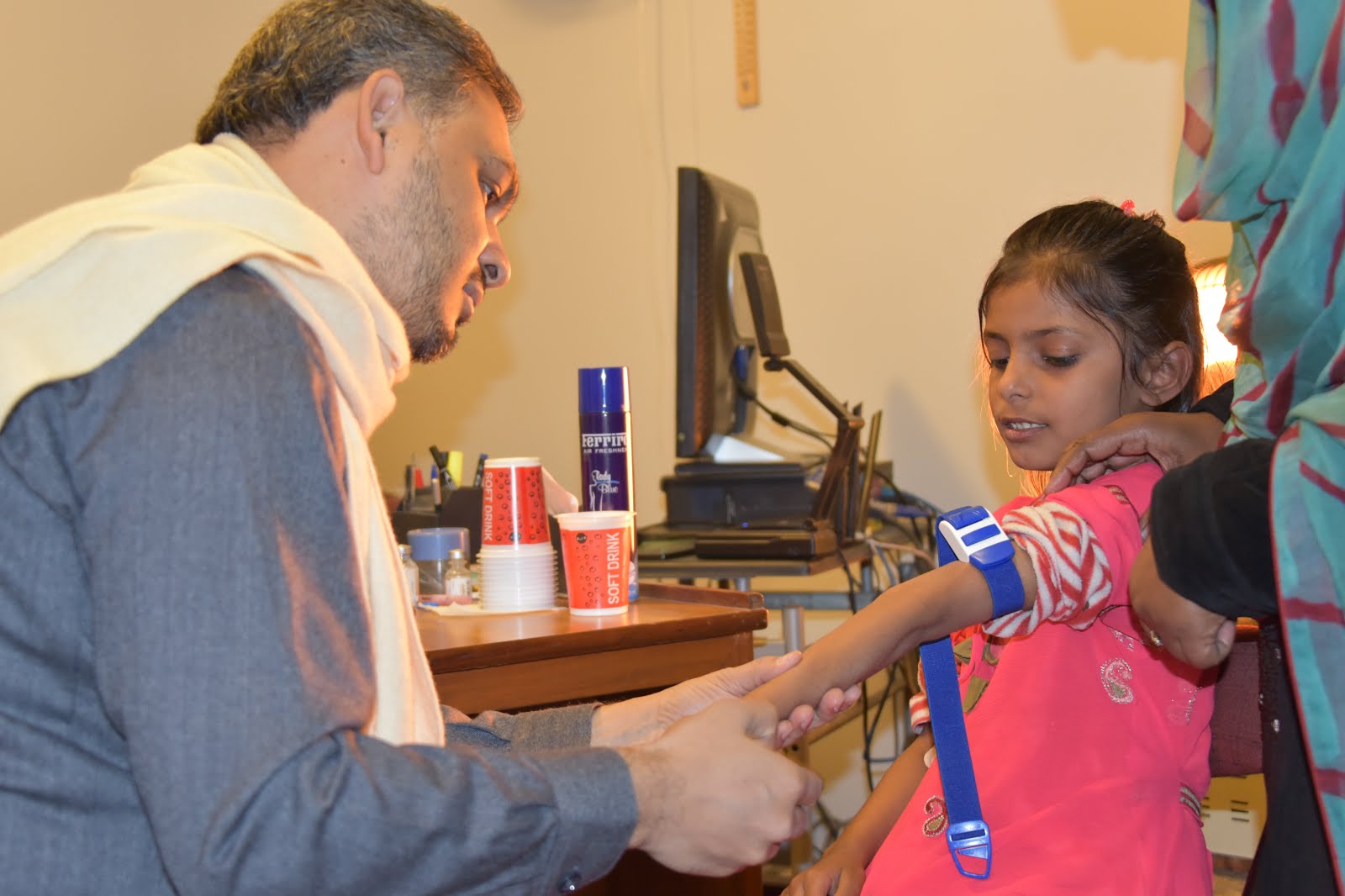 |
| Imran infusing girl with VWD |
Care of Pakistan exists in a one room office, attached to the Zia family home.
In it is a desk, two benches, a coffee table, fridge for factor, and shelves
which held all sorts of documents and reading material, including very detailed
infusion logs, certified by the hematologist; I was impressed. Imran has
existed really on his own for the past 15 years, assisting families who live in
Lahore, but also those who live very far away. He has made trips to visit them
in their homes up in the mountains, something I truly admire and would like to
do myself.
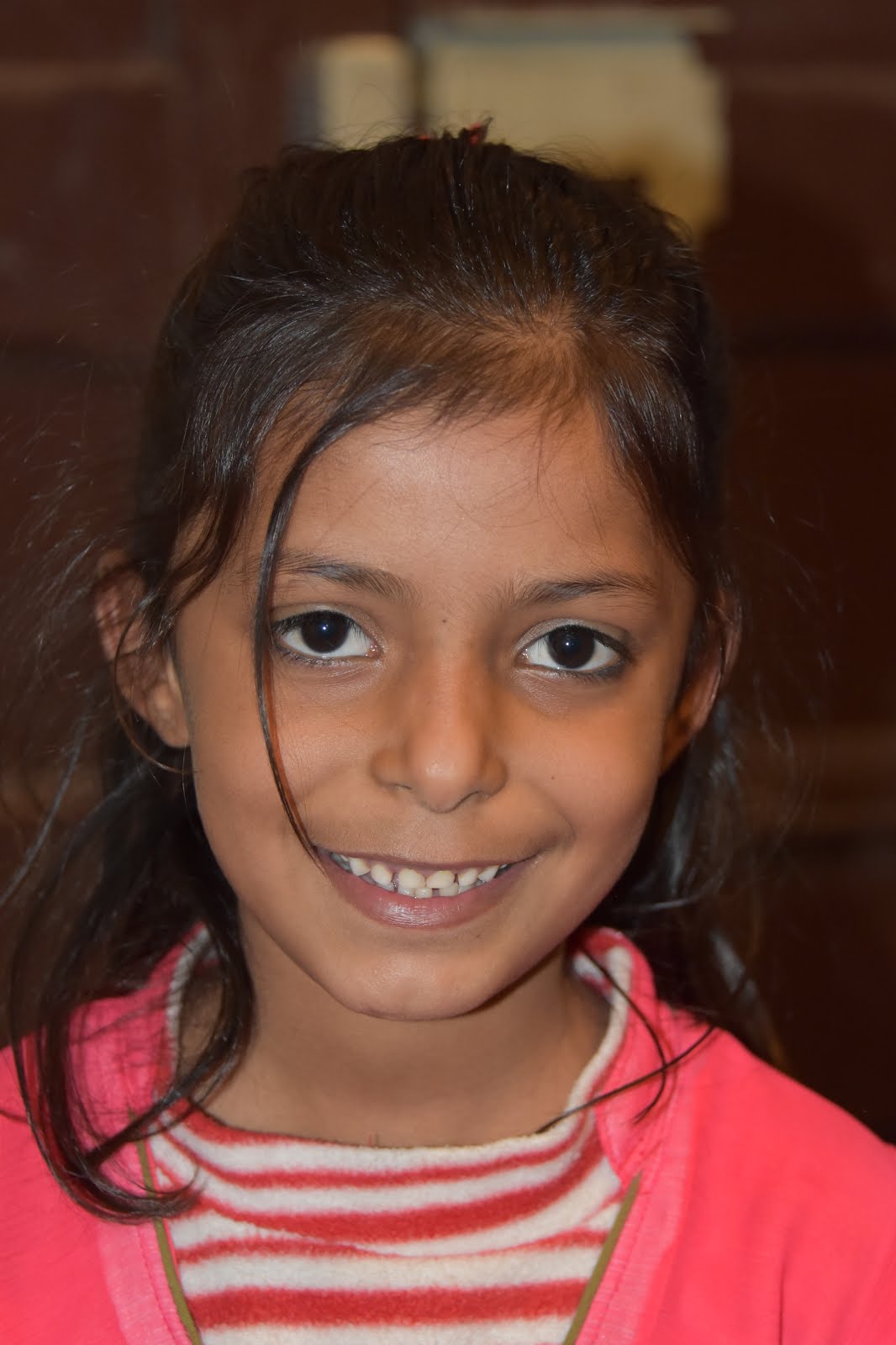 |
| Ayesha |
any chance he would merge his organization into the Lahore Chapter? Imran, I
learned very quickly, would never join PHPWS. He likes working independently,
has funds from somewhere as he volunteers full time, while having a family to
care for. And he clearly has a model that works.
Imran introduced the patients and families to us. “We have 82 patients,” he
told us, “and 82 stories.”
type 1 but has joint damage. Her brother Muhamma, was not present, and needs a
circumcision for cultural reasons. Circumcisions are the norm in the Muslim
faith, as in the Jewish faith, and here, not to have one means you are like a
social outcast. It will also worsen your chances of being married, as arranged
marriages are also still the norm. I felt the mother’s concern and knew it
wouldn’t use much factor. Just this small operation could change the boy’s
self-esteem and improve his lot in life. Strange but true! We pledged to help
get the factor for him somehow.
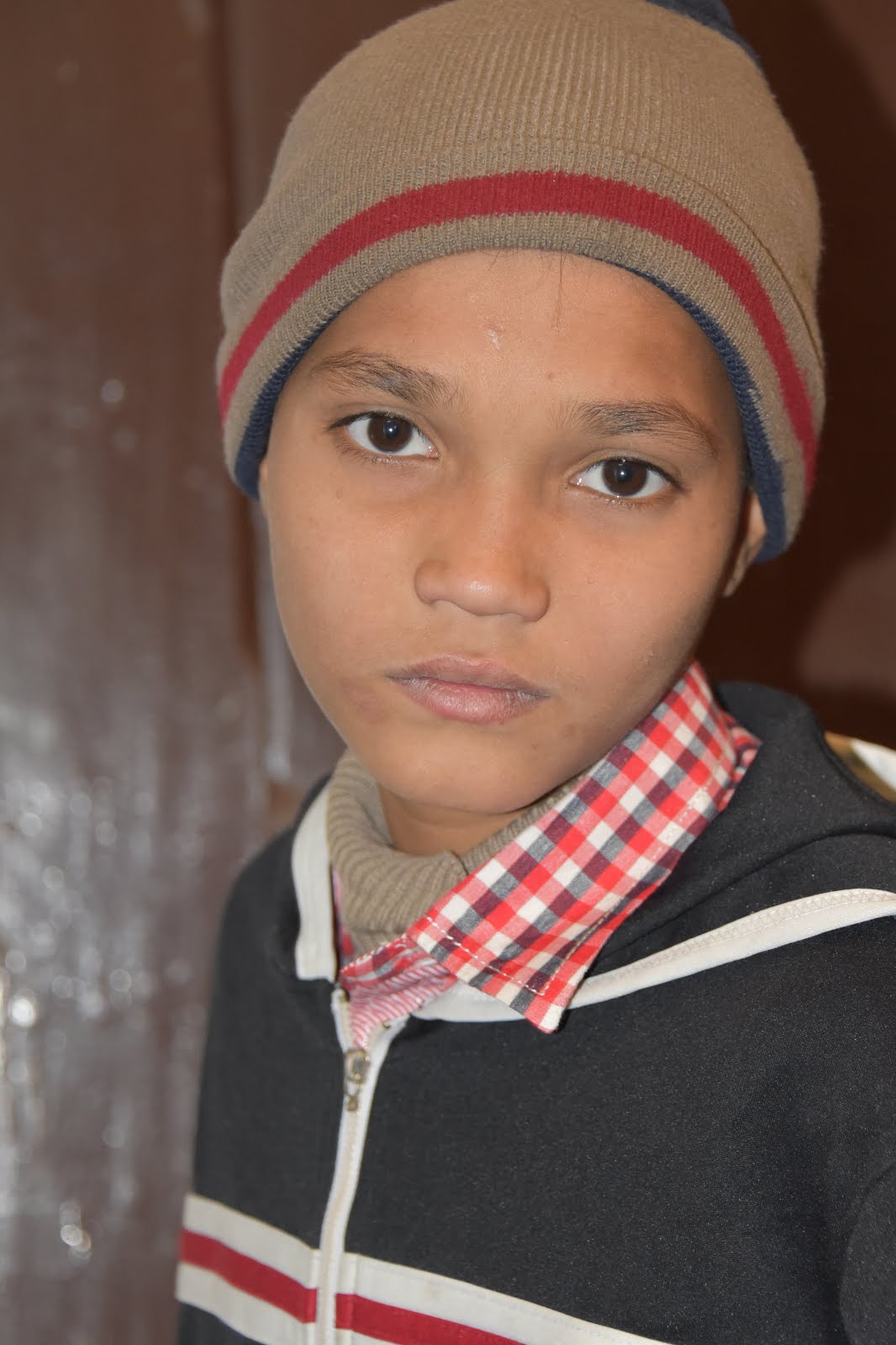 |
| Saleem |
the boys. Shumail Nadim, wearing a maroon jacket– a handsome son-of-a-gun with a
ready smile, hemophilia A. His brother Usama, age 15, wearing beige jacket,
also handsome with a wide and easy smile. Saleem, hemophilia B, age 11, a
confident, charming kid. His brother Amir, age 6, the one who gave me flowers.
so handsome, with a face like a child movie star—we dubbed him “Tom Cruise” for
his fair complexion and jet black hair. Age 11, he speaks a little English. He
had Volkman’s contracture once, and a right calf contracture. Imran showed us
the before and after photos. He has two brothers without hemophilia. His father
is a bicycle tube repairman, who earns about $150 a month, which is very poor.
that 70% of Pakistanis live below the poverty line and all his patients were
very poor.
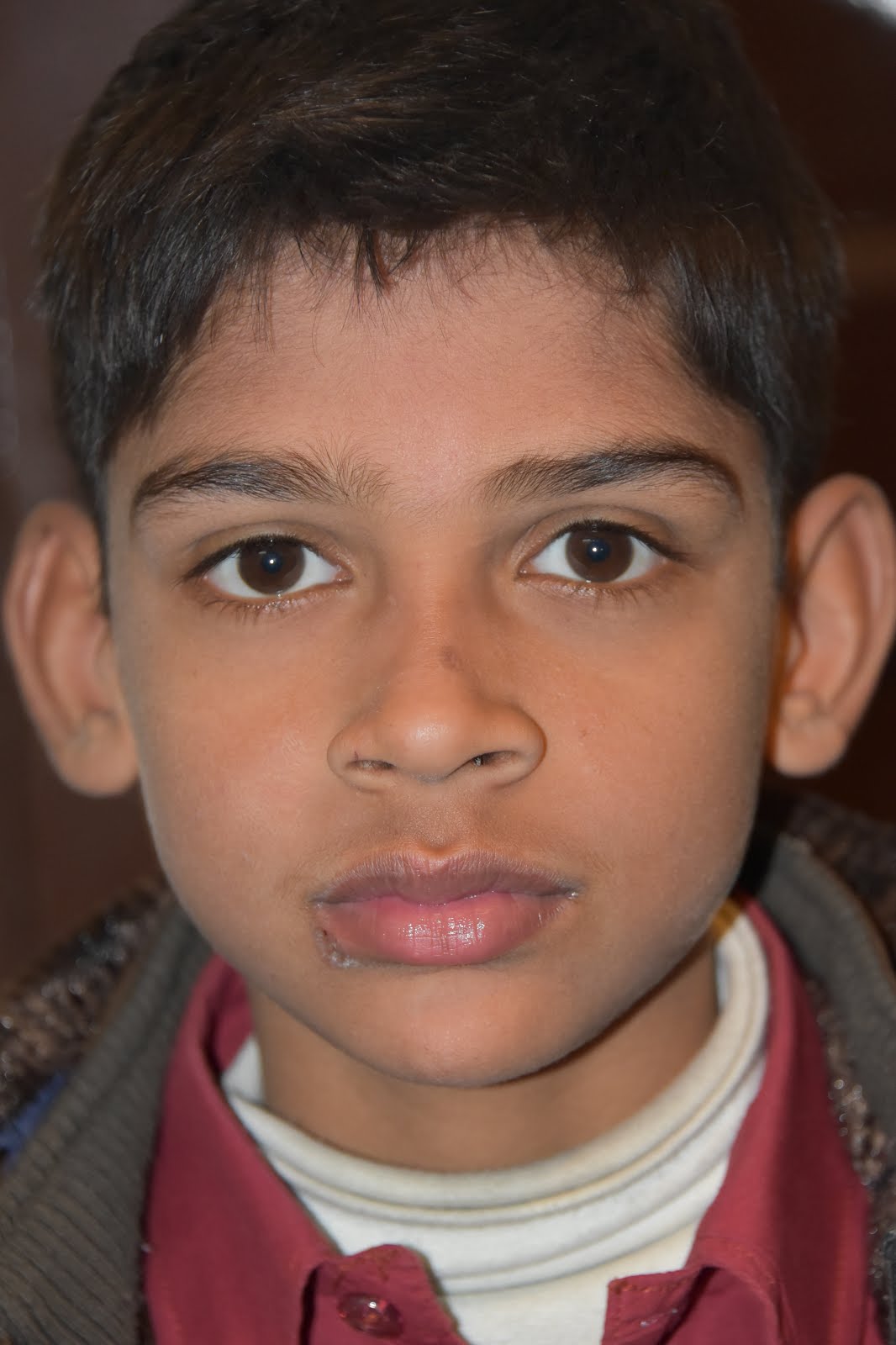
make his organization a stand out: 1) Imran provides very personalized care. He
visits with patients in their homes, oversees their infusions and rehabs. He visits
them in the hospital even. He feels that he does this better than anyone. 2) He
provides factor to patients for them to keep at home, and has taught them home
infusion.
those who live long distances from the HTC. On Facebook, everyone knows a few
select people from Pakistan who keep pleading for factor. Factor is available
thanks to the Bioverativ/WFH donation, but only in the major cities. If you live three-six hours away,
you are expected to travel all that distance, even with a bleed, to come and
get it. Impossible! Imran has found a solution by sourcing his own factor
(Project SHARE has helped in the past) and shipping to families who live in
remote areas. Kudos to him! This is where being independent has helped patients.
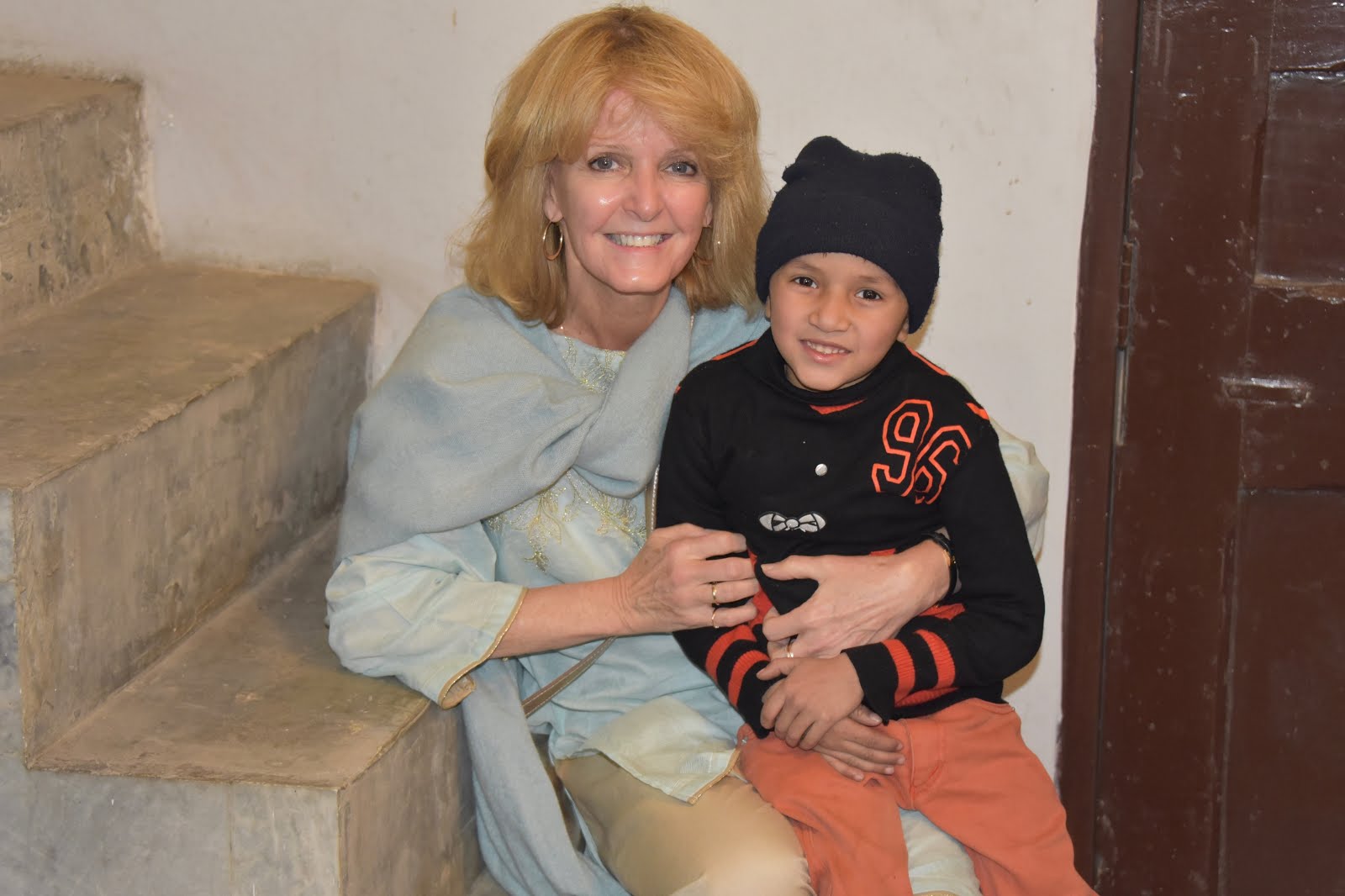 |
| Laurie Kelley with Amir |
may miss out on other things when not registered with the Lahore Chapter:
meetings, educational symposia, access to more medical experts. Imran has a
medical team that works with him, and they seem to work well together, and they
have expertise in hemophilia.
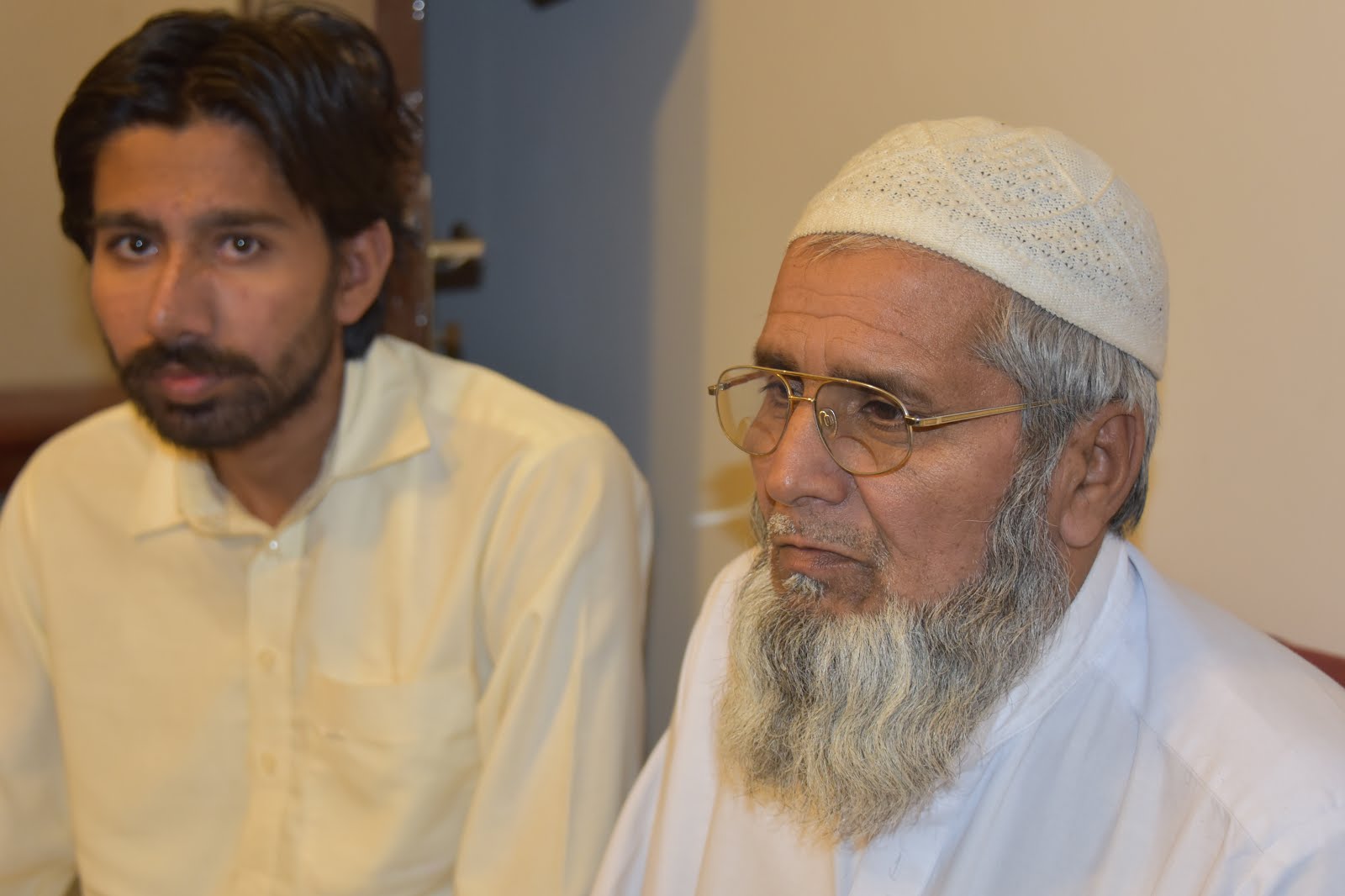 |
| Abid and his father: worried about their future |
met the saddest case of all: Abid Anwar, age 28. Thin, quiet, with hemophilia A
severe. Imran only met him a year ago. He’s had seven surgeries. Imran claims
that the doctors didn’t follow up and the wound suppurated, and is still
oozing. The father, present, sold his ancestral agricultural land for $25,000,
an absolute fortune here—all the
money he and his family ever owned and would ever own– so they could pay off
the hospital debts. They are now desperately poor. They have 4 sisters and
another brother. They live hours from Lahore.
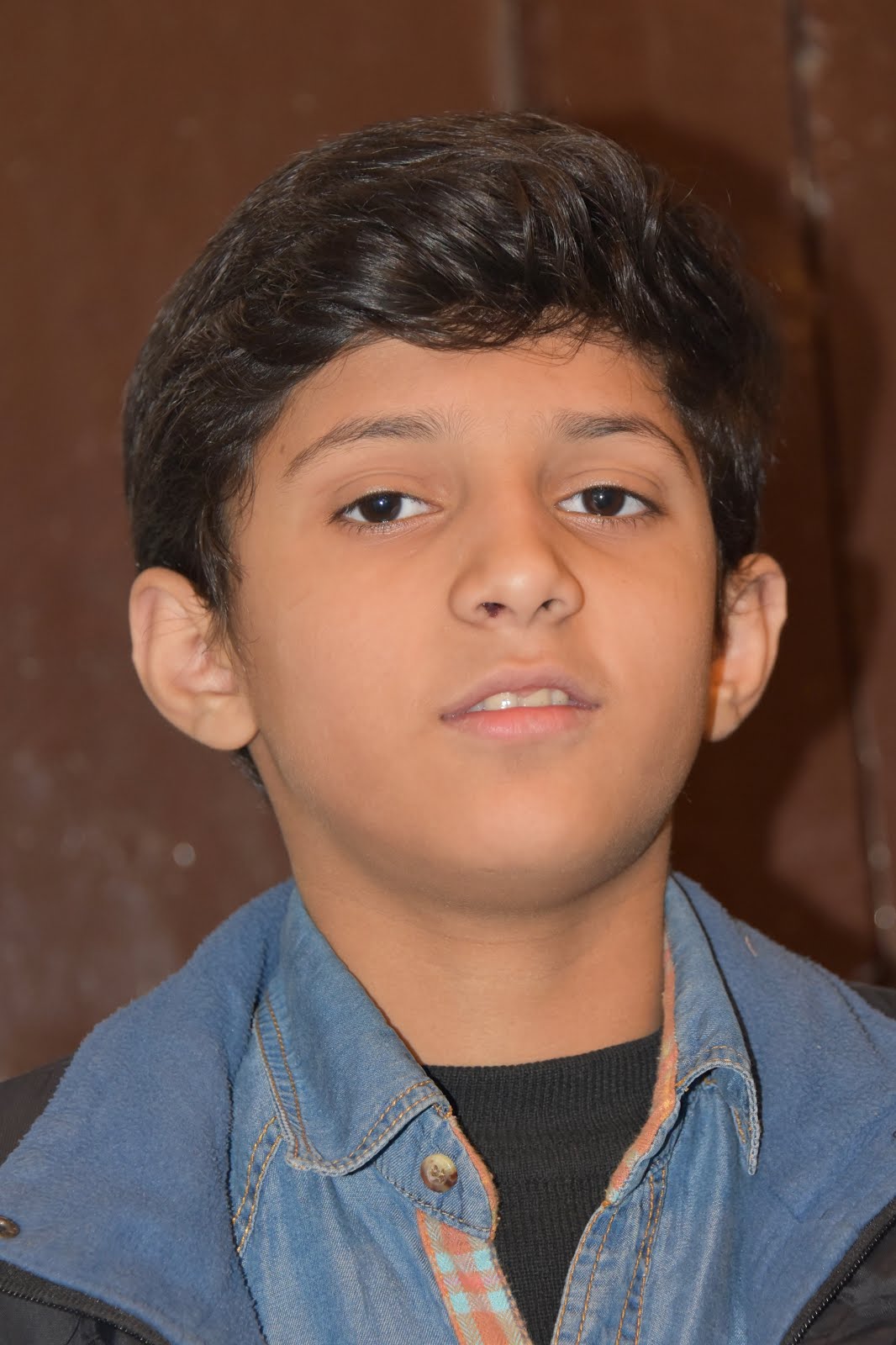 |
| Awair |
really disturbed me. This is exactly what we don’t want to have happen; patients threatening their entire family
system just to pay for factor that is readily available and medical services!
My heart broke. The look on the father’s face… worry, fear, hollow eyes that look to the future with no certainty. What can be done to
help? If we get him $25,000 he can get his land back, and the entire family
(in-laws, parents, children, even children yet to be born) will survive.
was to enroll Imran’s members into Save One Life which will help ease some of
their poverty. While we questioned whether we could do this, because the Lahore
Chapter is already enrolled, I was delighted when I returned home to learn that we could
do this! Soon, we will have more Pakistani children as part of the Save One
Life family.
visit with a delicious lunch of roti (bread), rice and meat. I met with Imran’s
family, his mother, sister and sister-in-law. All educated, English-speaking,
and wonderful hosts. The Pakistani culture is incredible: every visitor is
treated like family, but honored like royalty. The world could learn a lot in
civility from a visit to a Pakistani home, rich or poor.
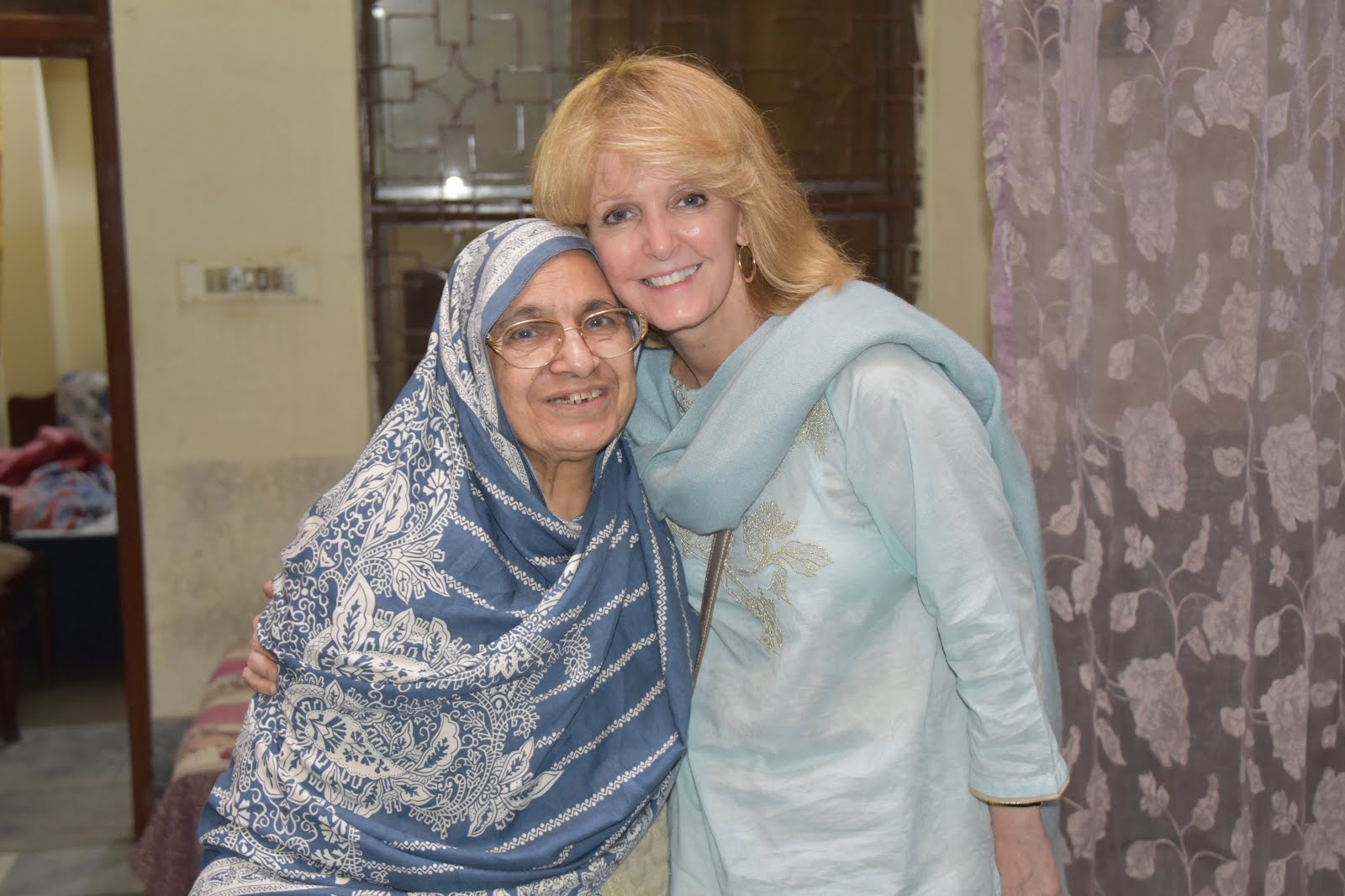 |
| Laurie with Imran’s mother |
treated me so well, I hope to return the favor by bringing more factor and funds,
no matter which organization we worked with. We said good bye to Imran: six
hours had flown by. I know it won’t be 19 years till we meet again—I don’t have
that much time here on earth. I vowed to return next year, and to see the faces
today as beneficiaries of Save One Life.
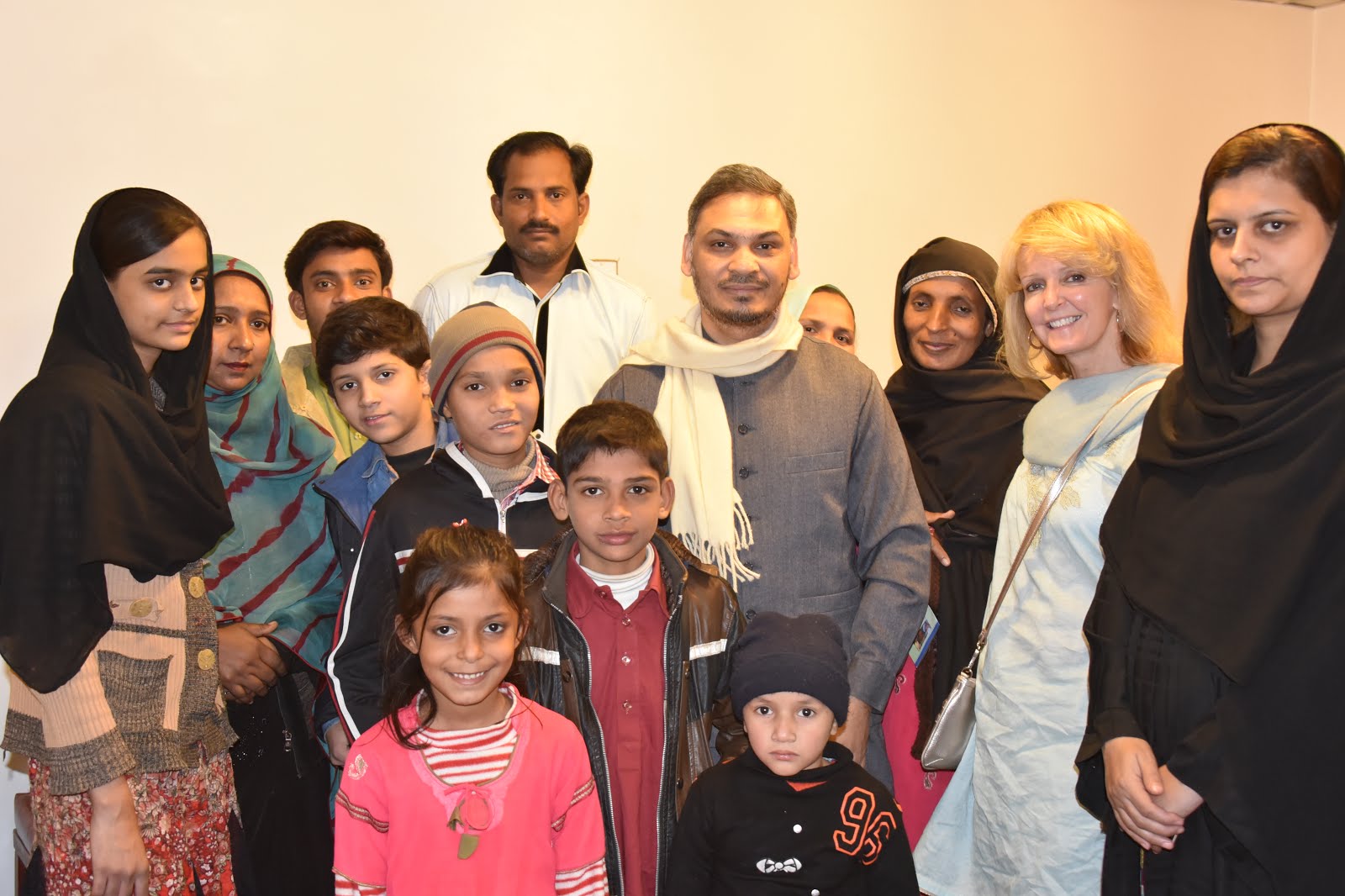 |
| Imran and the HCP families |
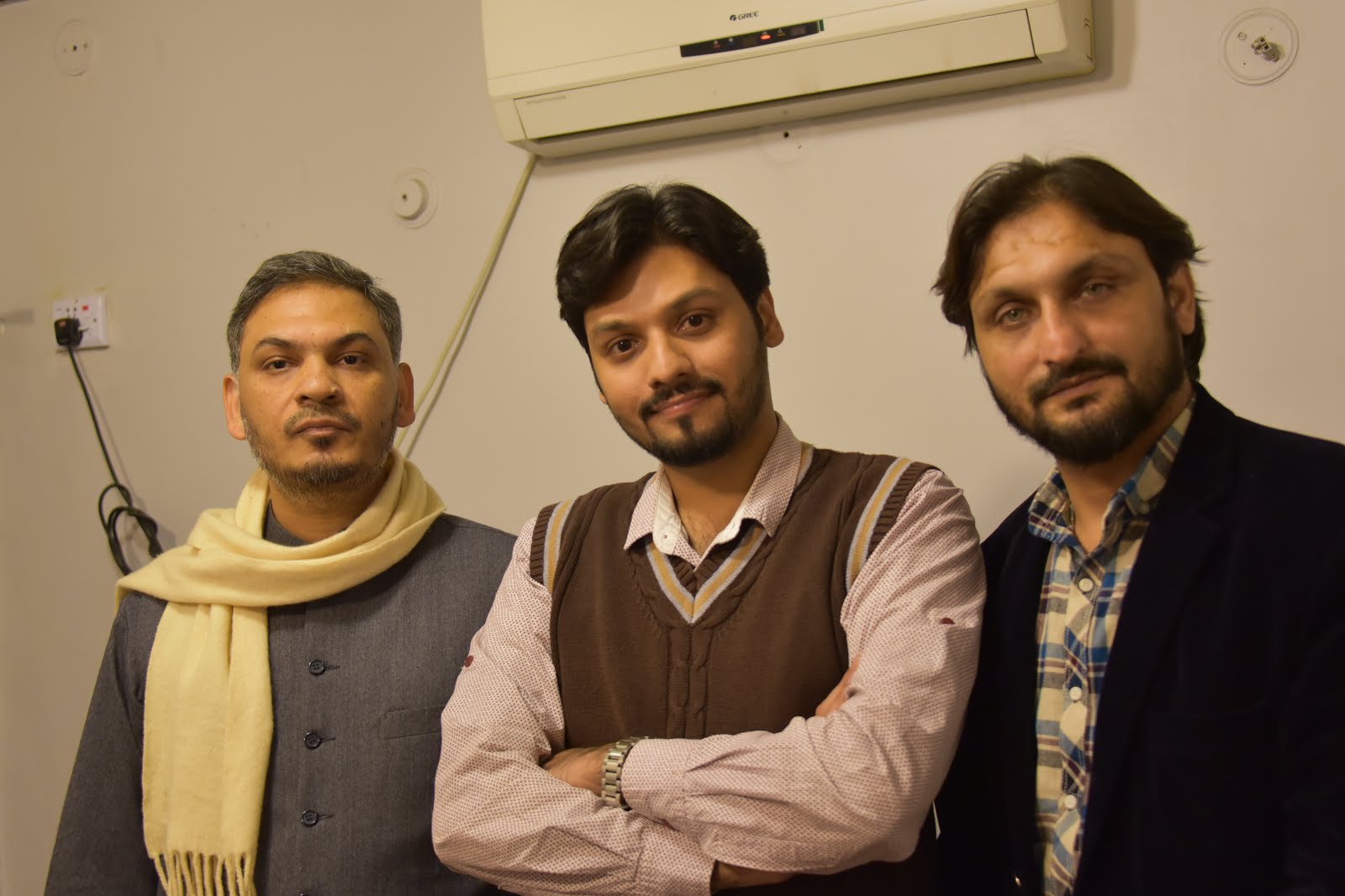 |
| Blood brothers: Imran, Masood and Rauf |
Jiva Pakistan! Part 2 Lahore City
|
|
were waiting outside in the cool, dry air. I first met Masood, now 35, when he was 17! It
was great to be here again. I love Lahore, a wide city, more lush and dry than
Karachi, with a high population of 11 million. I first visited in 1999, when
the Pakistan Hemophilia Patient Welfare Society (PHPWS) was only two years old,
and the Lahore chapter was in its infancy.
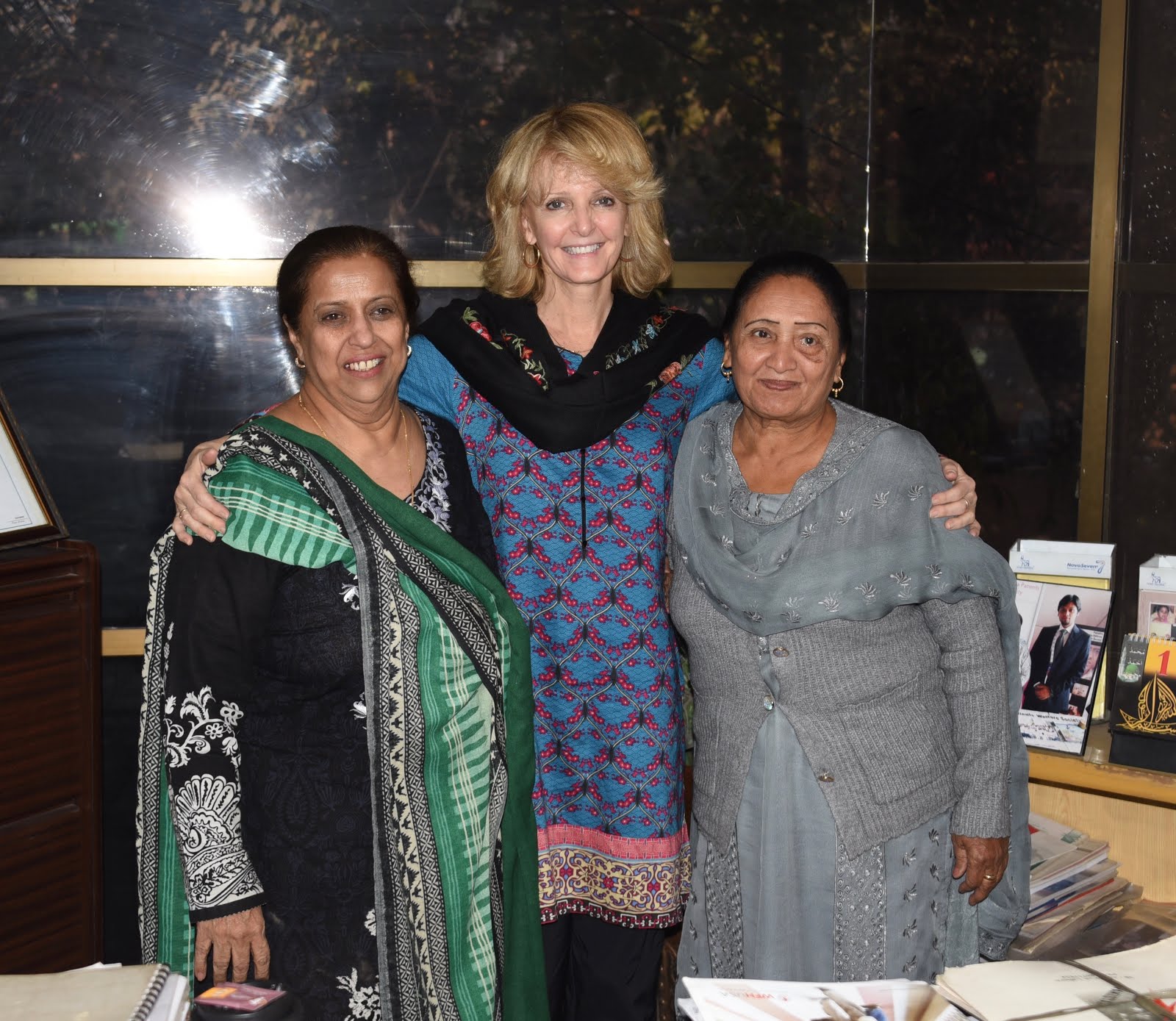 |
| Laurie Kelley with Dr. Shahla (L) and Sister Margaret |
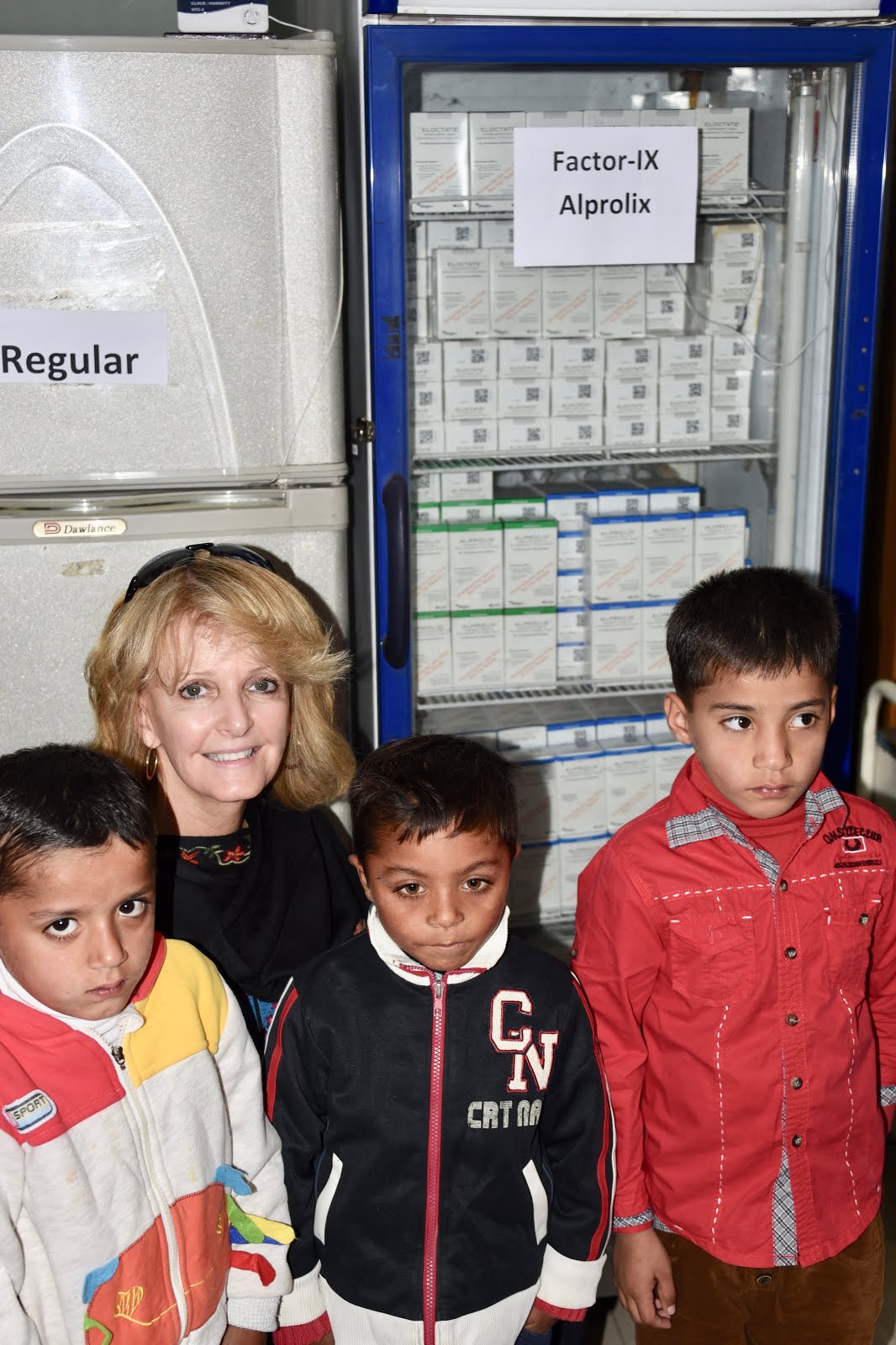
jam-packed with shelves, resources, refrigerators and people. One room is an administration room, the other is the factor/infusion
room, which completely impressed me. It has a security camera mounted on the
wall. The seven fridges are broken down by purpose of the donation, including “NMO”
only (national member organization of the WFH, so this means donations from the
WFH and most likely, Eloctate and Alprolix); “prophy” (also from the Bioverativ
donation); “Other” (VWF and bypassing agents). Their on-line registry is better
than anything I’ve ever seen! This chapter is a model of management, efficiency
and transparency. And when I visited in 1999, the first thing I asked was what
their goals were. They had none, and no vision, no registry, nothing! Now—supermodel for the world.
get infusions; they are not charged money but are encouraged to donate
something to the chapter. They have over 650 registered patients, and their
leadership is outstanding. These young men—Faizan, Adil, Masood, Rauf,
Farooq—are exceptional! Adil was the young teen I visited back in 2007 at his
home; Patrick Schmidt, CEO of FFF Enterprises bought him a computer at my
request, and now he does data entry for the chapter among other things, is over
6 ft. tall, married with a baby!
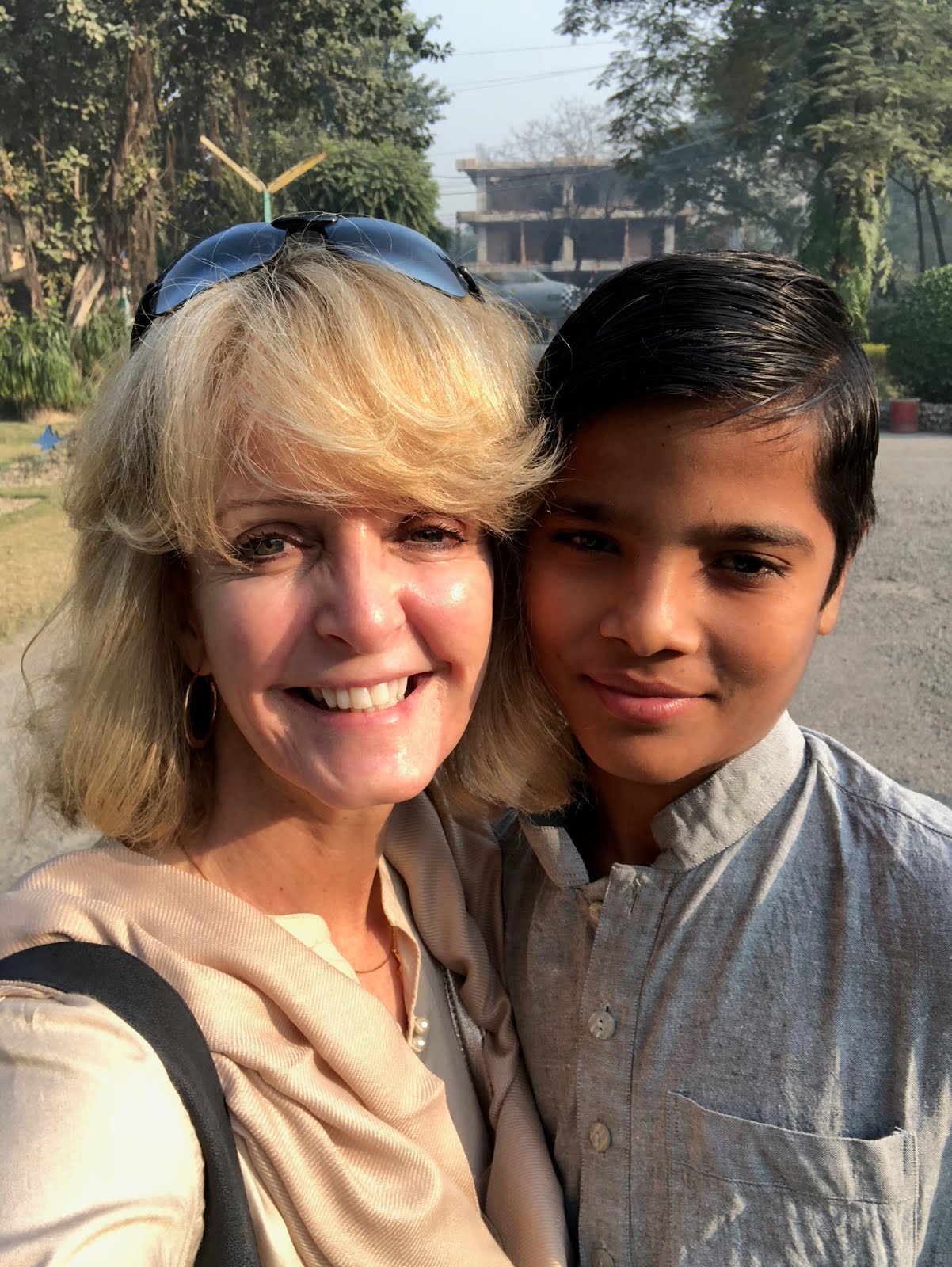 |
| Kashi with his first gori |
Library in Lahore, sponsored by a grant from the Novo Nordisk Haemophilia
Foundation. As I got into the car, Masood pointed out Kashi, a young boy with a
sly smile, who was helping him. Masood told me that Kashi has never seen a
“gori” before—a white person. So, I acted a bit silly with him, got him smiling
and we took a selfie!
waiting. I like to make it a point to greet the audience, to break the ice, so
I walked about, shaking hands, smiling, saying assalam-u-alaikum to all the families. I noted that in general men
sat on the left, women on the right.
 The ceremony took most of the day. There
were speeches, awards, and I gave my talk and shared the successes of Save One
Life. I handed out the Save One Life distribution funds for all the
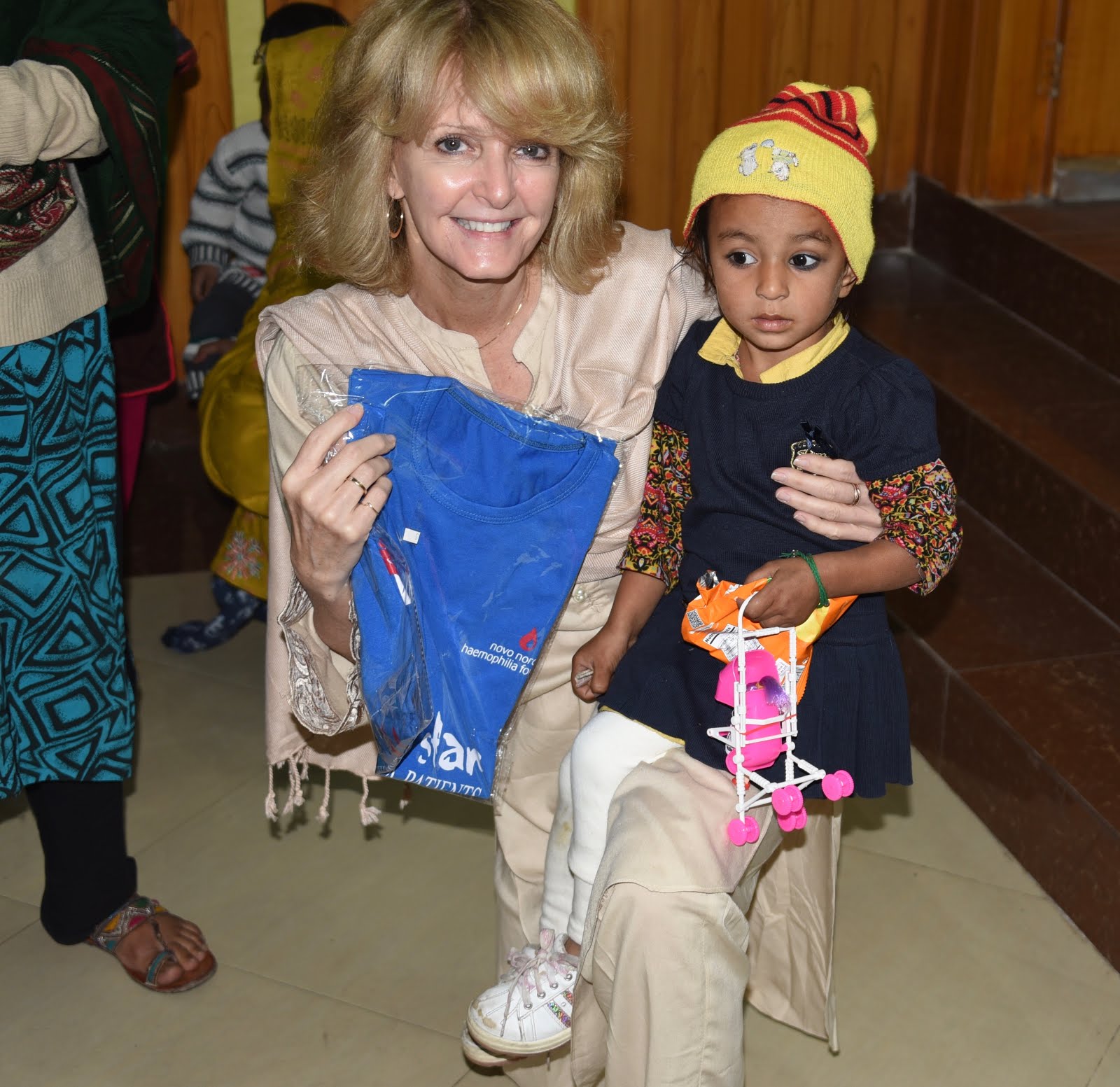
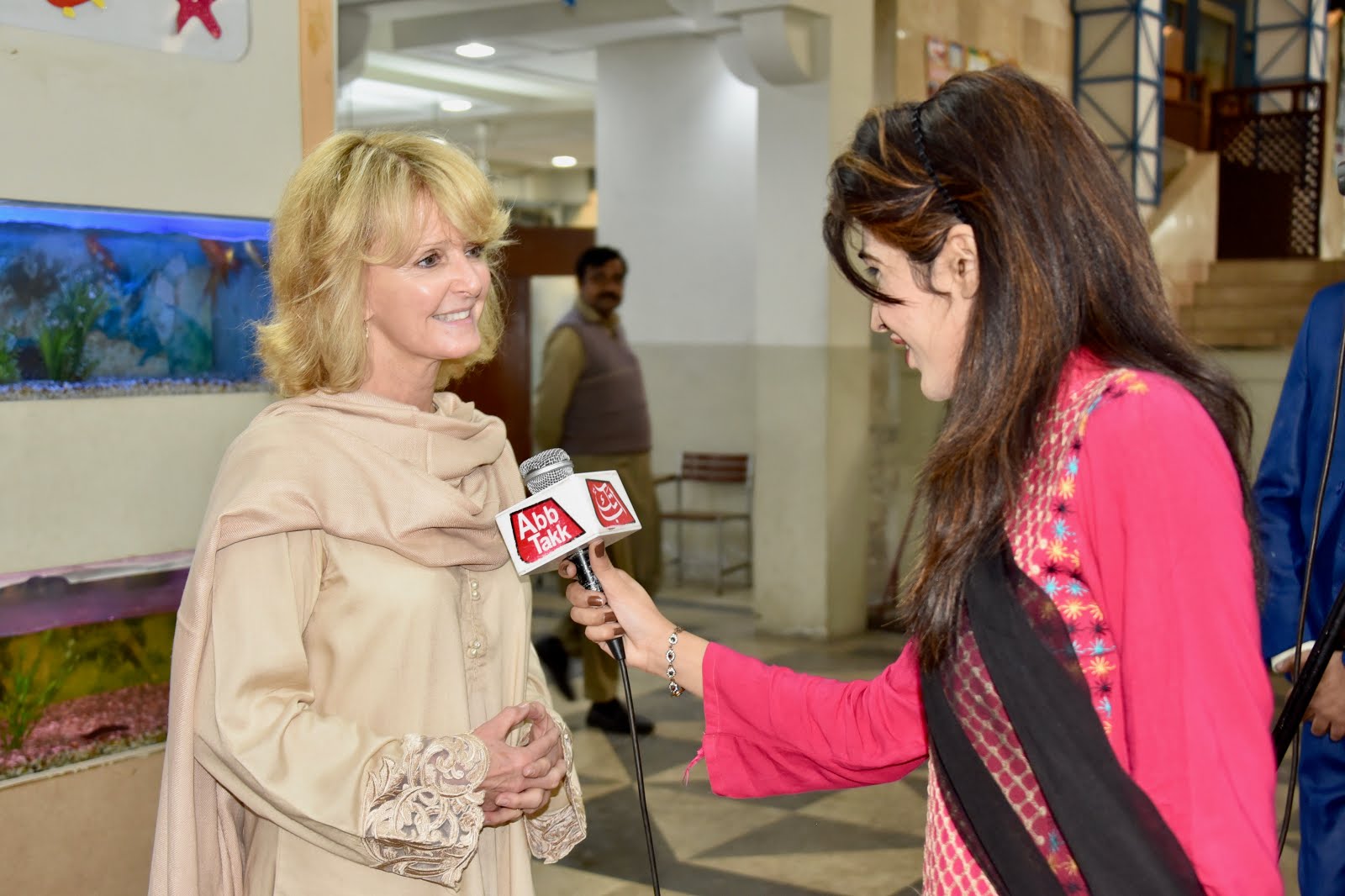
beneficiaries. Much of the day was a photo op. The press was present, and we
had four back-to-back interviews for TV. Many of the young men, even the
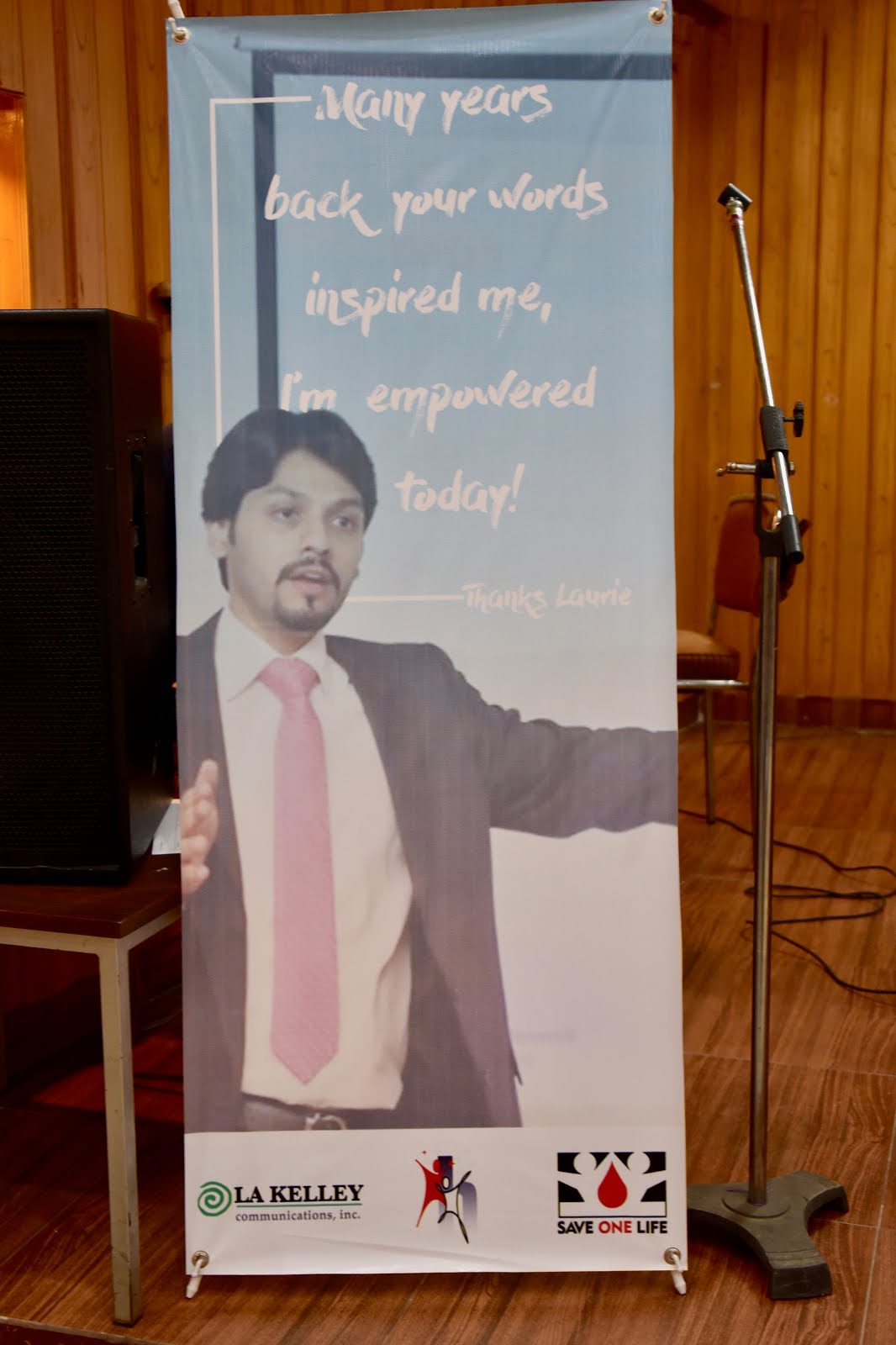
reporters, wanted selfies! One nice touch was the stand Masood made in my honor,
with his photo: “Many years back your words inspired me. I am empowered today!
Thanks, Laurie” That was sweet! Masood has become quite the national leader for
hemophilia in Pakistan.
you are special. God only gives burdens to those he thinks are special, worthy,
strong. This is from the Koran.” One fact of note is that there is a high incidence of
rare factor deficiencies due to family intermarriages. It is quite common for
first cousins to marry.

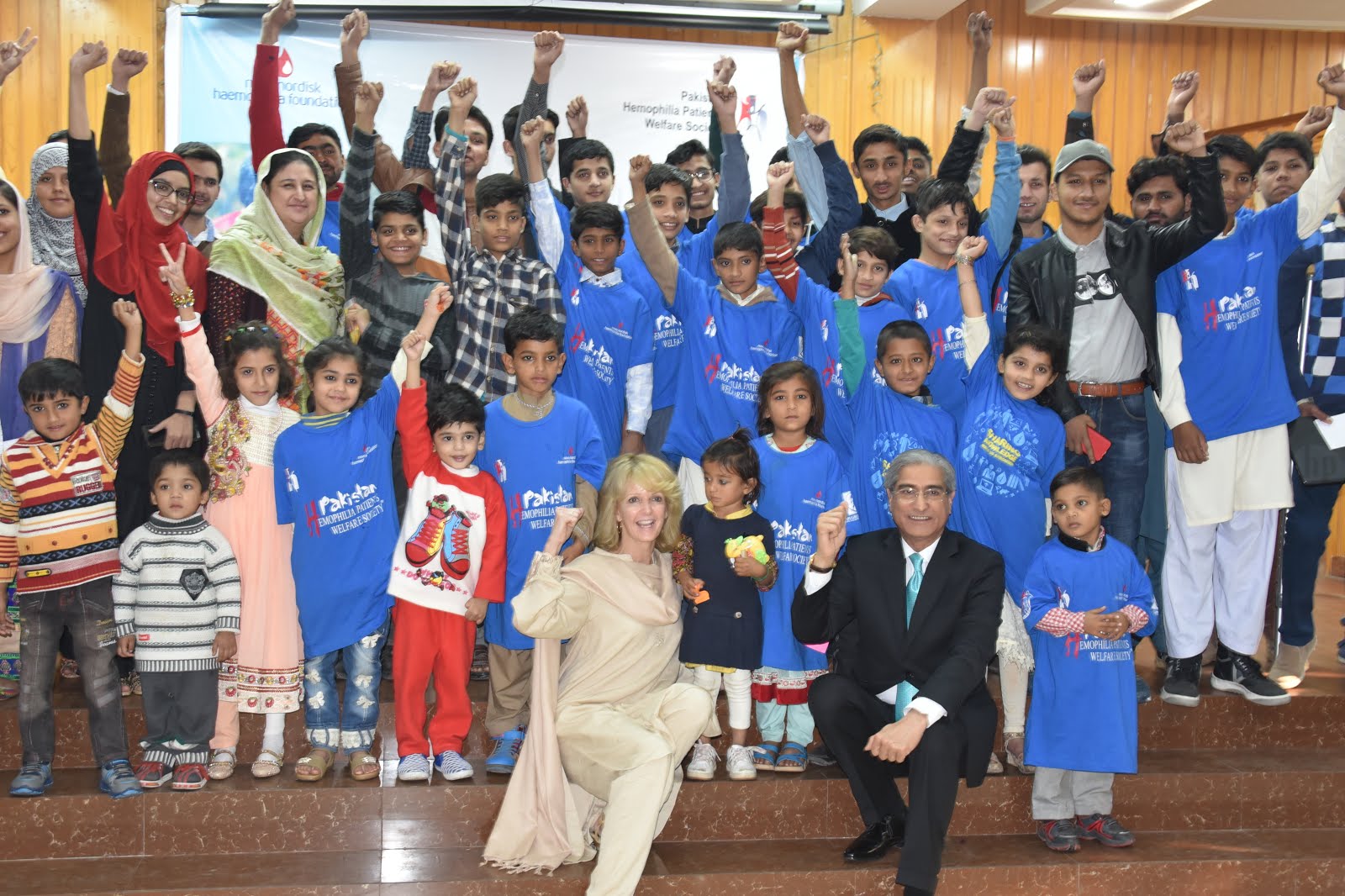
decided to visit families in their homes!
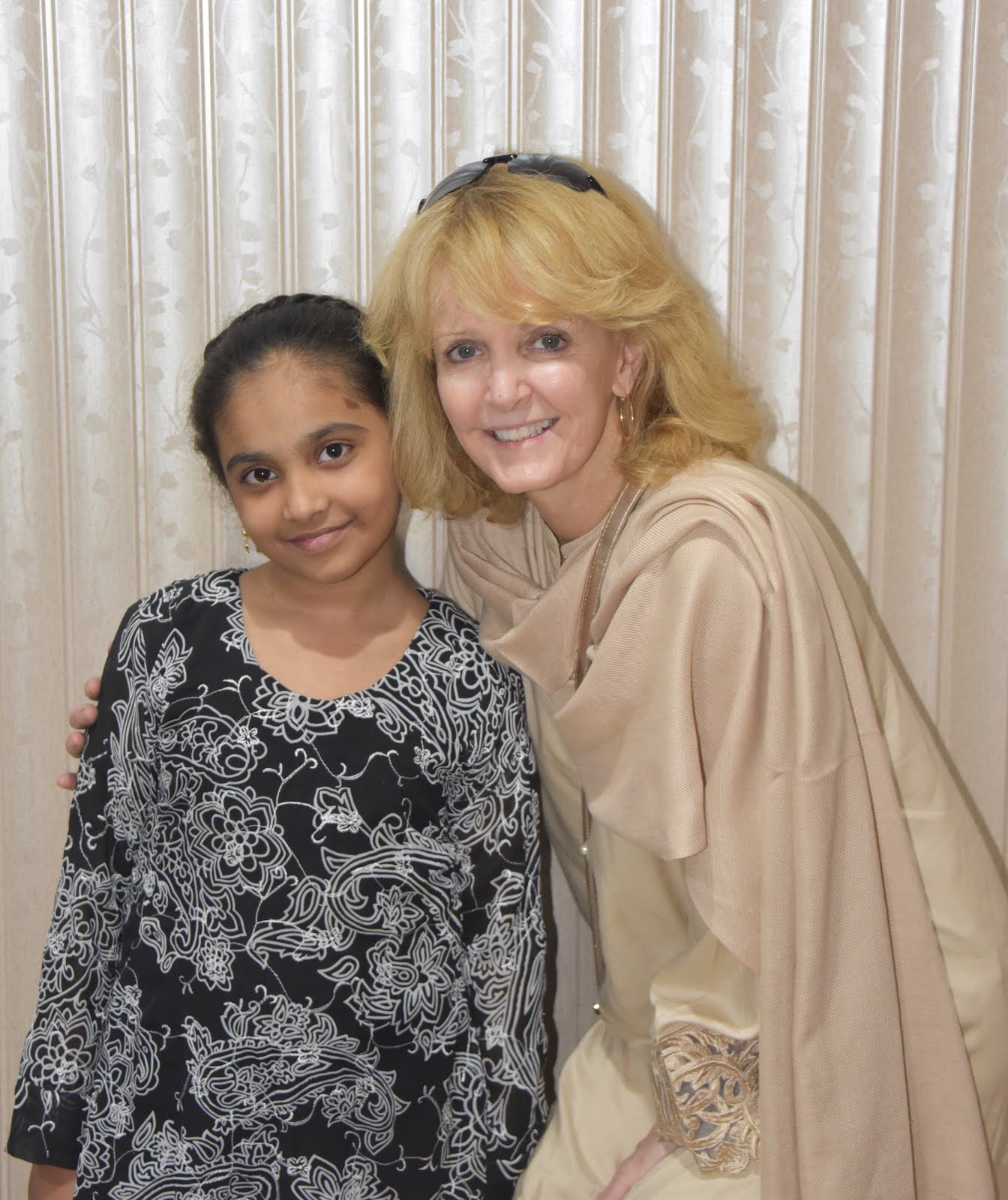
Momina, who has VWD type 3, and who wants to be a doctor. We discovered on this
trip that has a baby brother Alyan who also has VWD—he’s not registered with
Save One Life so we will get him registered now. They live in a concrete home,
with extended family, very typical in Pakistan. They live on the base floor,
and have a tiny kitchen with a cloth covering the door, 1 bedroom for everyone,
a motorbike in the hallway. They have a small flat screen TV and fan, all in
the sitting room, which was very small. The father earns 1,500 rupees a month ($150)
and spends 1,200 on school. School is a necessity for kids with bleeding
disorders but public schools can be dangerous: there are bullies, and some teachers
cane the children.
children played in the dirt with toy camels and donkeys and colored chalk,
celebrating the life of the prophet Mohammad. Yesterday was his birthday.
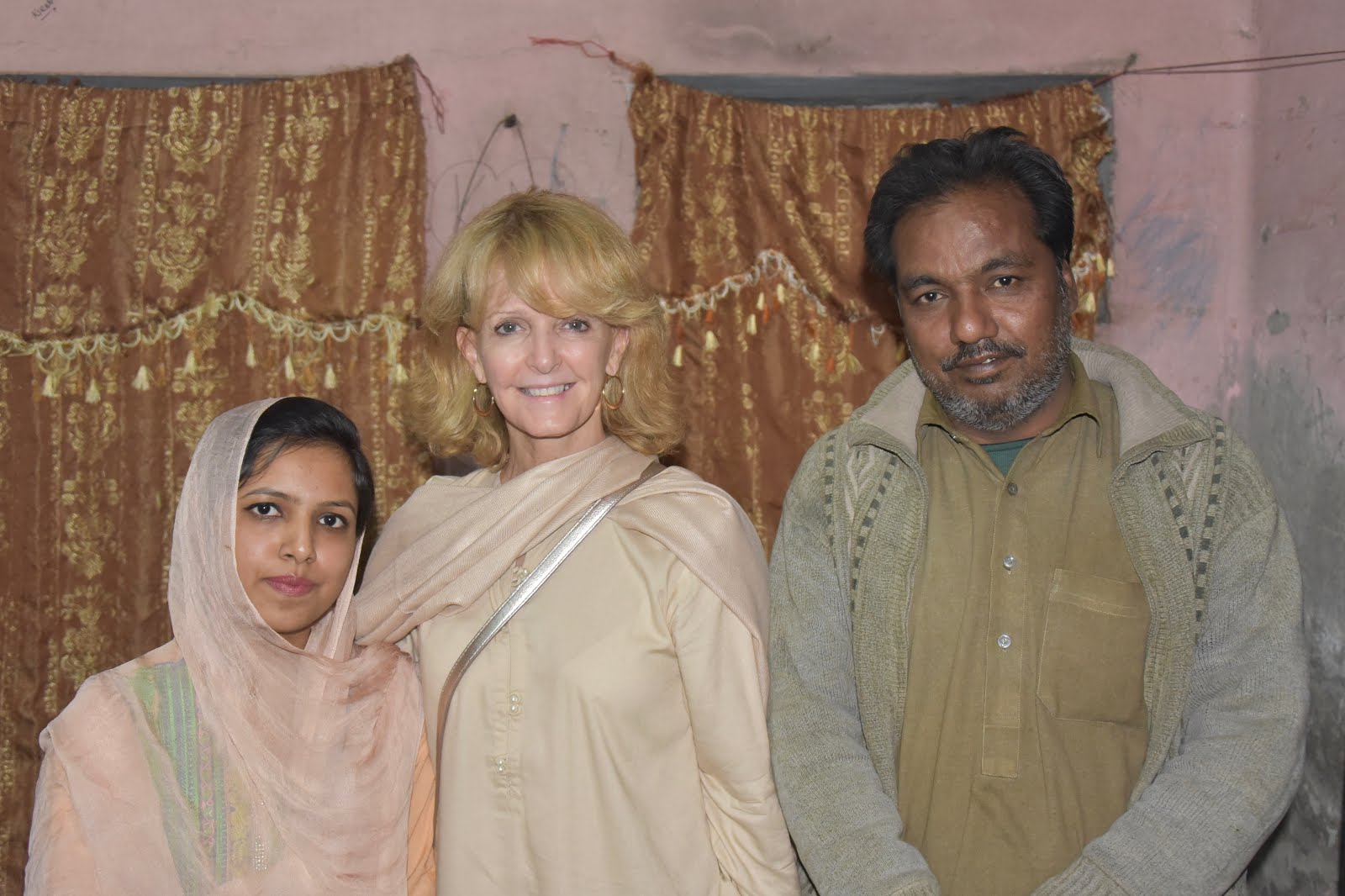
we saw at the ceremony today. A pretty 19-year-old girl with VWD type 3, petite
and quiet. She is on the Womens Group committee. Her father is a car mechanic, but lost his job (Masood didn’t know
that and was genuinely surprised and concerned). She’s waiting to be accepted
to nursing school. And she tutors about 20 kids after school to make ends meet.
They live in a family home, which is rundown, with plaster chipped off the wall. I gave her father $200 to help them out while he is out of a job.
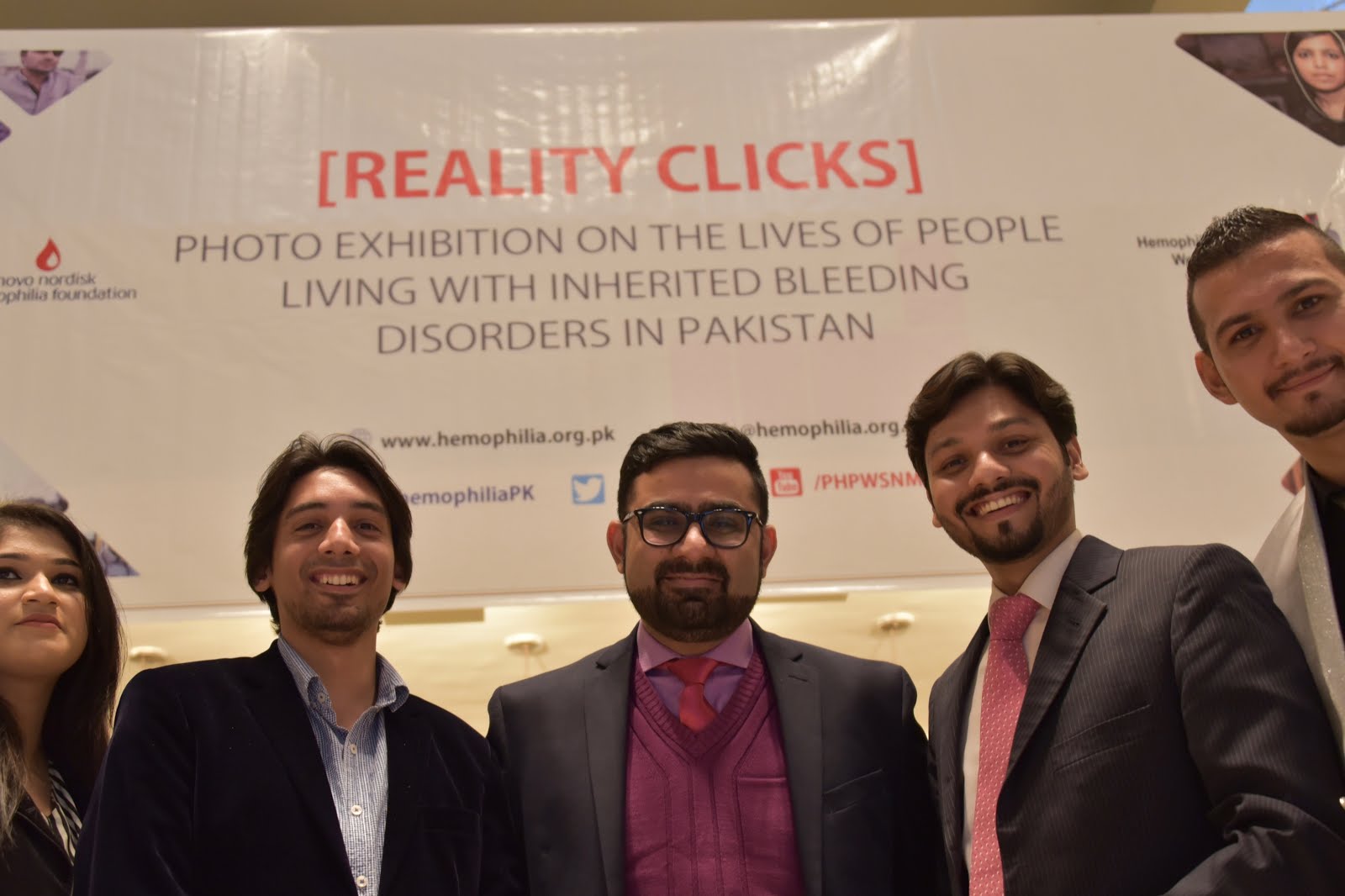
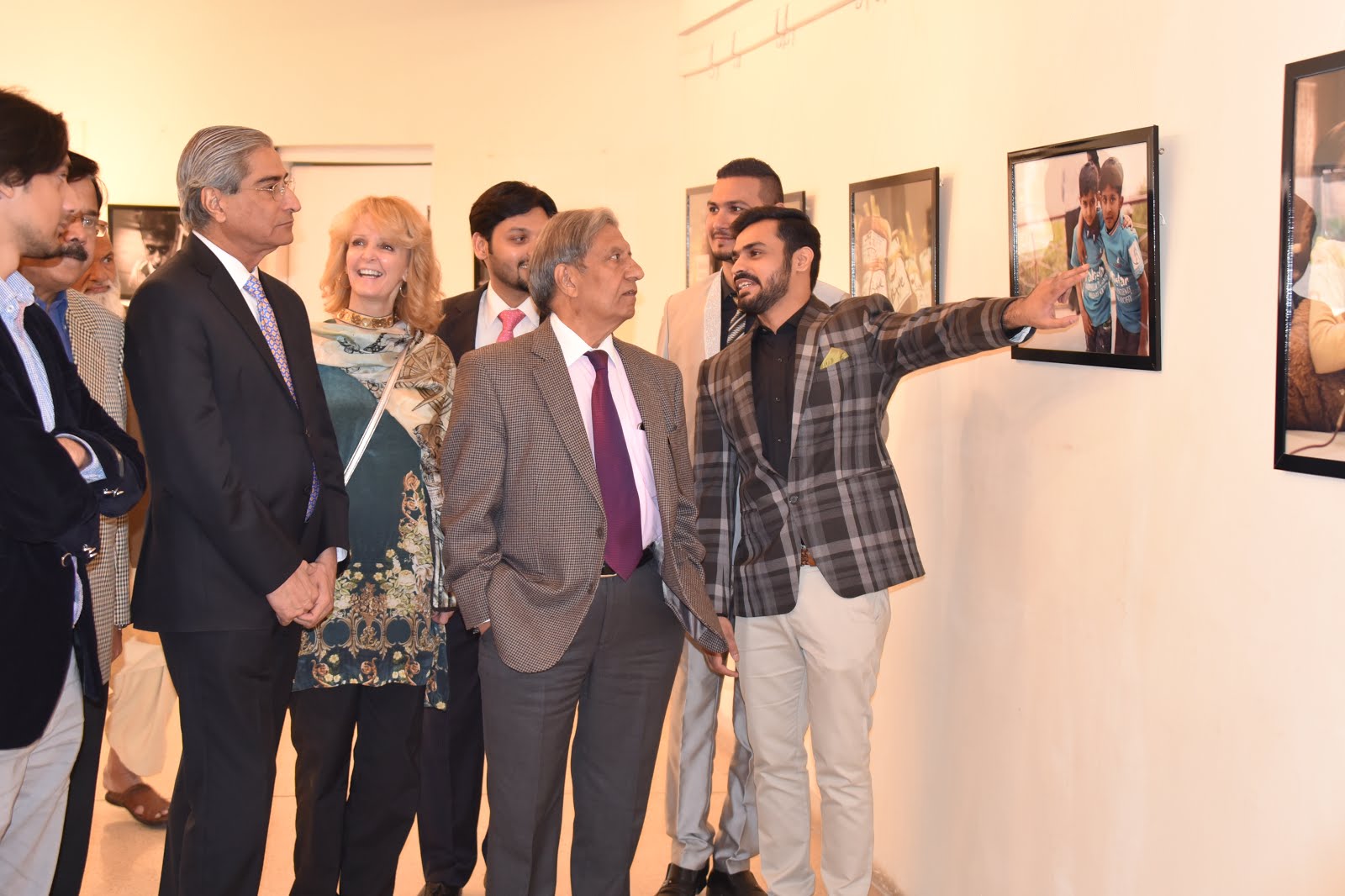
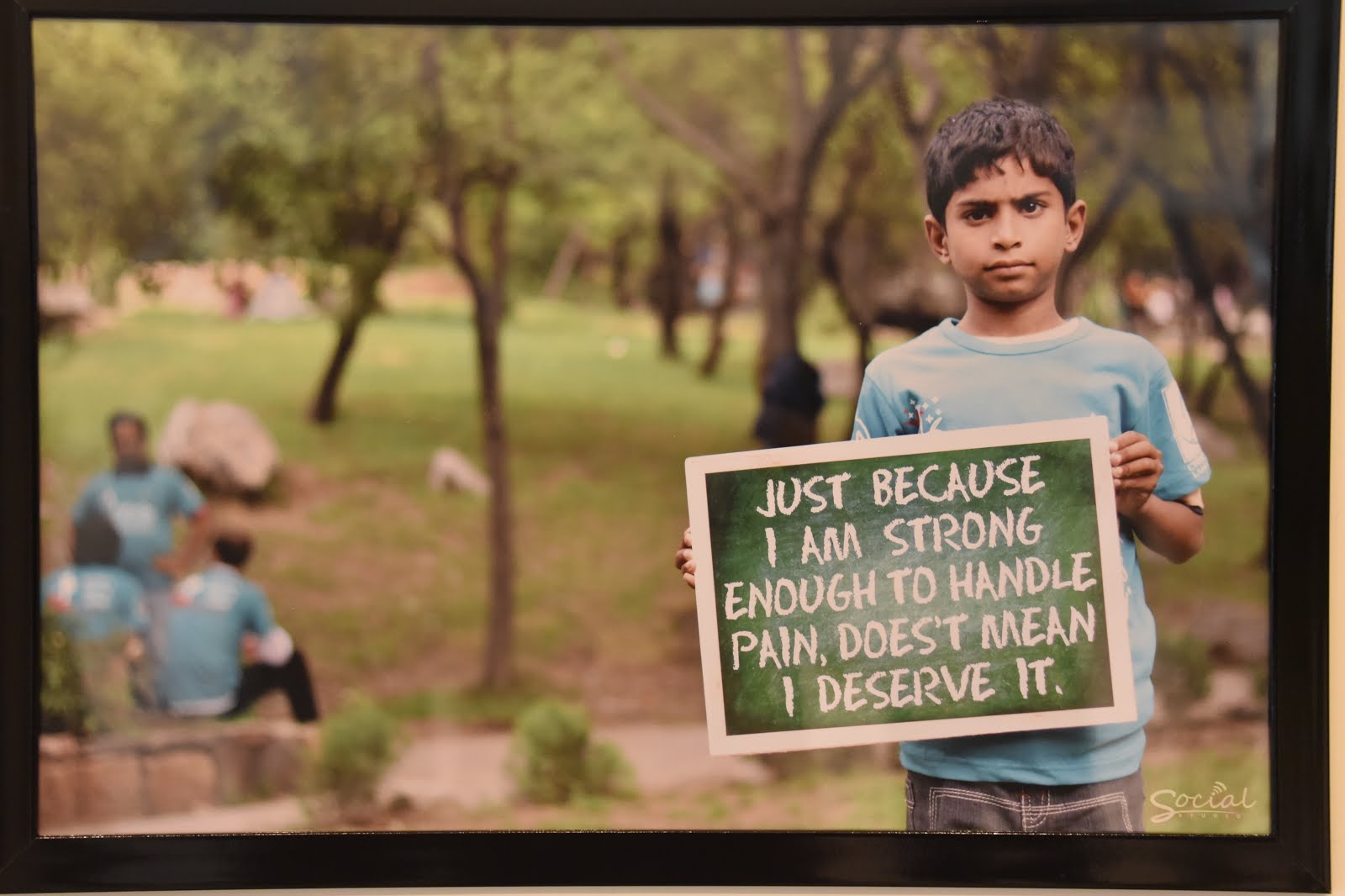 In the afternoon of Monday December 4, 2017, we attended an Art
Gallery presentation of photos of hemophilia, in an art show called “Reality
Clicks,” a project again sponsored by the Novo Nordisk Haemophilia Foundation. The photographer was none
other than Masood’s brother Bilal. The photos, displayed around the entire
circular room, showed patients in various situations: in pain, with one
another, at work. The press arrived in force again, and interviewed Bilel,
Masood, and Dr. Shahla. The entire project helps to promote hemophilia
awareness nationally.
man with hemophilia, Haroun, said: “I felt God never blessed me. I compared
myself to normal people. I had anxiety attacks. But then I joined the PHPWS. I
experienced my own community at last and found that I was actually better off than many of the patients. So
I was wrong to compare myself to normal people.”
afterwards, went to Masood’s father’s house, where they all live, to have “high
tea.” A snack to them, which to me is as grand a meal as I have ever had!
 On Tuesday December 5, 2017 I attended all day the Annual
General Meeting of the national hemophilia organization at the Shalimar Hotel. Saeed
ul Hassangave an excellent presentation
on the patient registry, and mapped out where patients were. He said their
registry was recognized as a success story by the WFH, and I can clearly see why.
Now in 2017 they have 1,850 registered. They use this registry for organization
elections, like an electoral college. 1 vote per 50 patients. With the registry
they found that 40.7% of their patients have joint deformities and 92.6% were not
tested for HIV.
Province (KPK), Punjab, Sindh and Baluchistan. The tribal belt adjoining KPK is
managed by the Federal Government and is named FATA i.e., Federally
Administered Tribal Areas. What was truly awesome was that at this meeting, I
met patients from FATA, a place that has me intrigued.
is a teacher, tall, with incredibly straight white teeth, impeccable English
and from Peshawar. Peshawar is the capital of KPK, and serves as the
administrative center and economic hub for FATA. Peshawar’s recorded history dates back to 539 BC, making it one of the oldest cities in Pakistan. Its economy has benefited in times past from being at the entrance to the Khyber Pass, the ancient travel route for trade between Central Asia and the Indian Subcontinent. Think of all the tea and spices that traversed this!
at age 23. There they speak Pashto. With him was Tahir Oman, the VP, and person
with hemophilia, and Faheem, who also has hemophilia. On June 2013 Peshawar
became operational as a chapter and already they identified 335 patients. How
different this area is from Karachi and Lahore: its has been negatively impacted from the rise
in global violence and is economically depressed. Syed told me there is a
great need for help from programs like Save One Life.
still needs to identify the remaining 17,000 or so people with hemophilia, but
is on its way to do so. Pakistan has among the best doctors in the world, and
while lacking some resources, is making headway. Donations of factor will not
last forever, but it gives everyone motivation and has allowed patients to be
on prophy for the first time in history! Thanks to Bioverativ and WFH.
all, Save One Life is being implemented perfectly in the country, with all
three program partners. My happiest moment, besides meeting our beneficiaries
in their homes, was knowing that we can focus next year on Peshawar, knowing we
have these three skilled men with hemophilia to help us.
plans for me to visit Peshawar next year, inshallah!
Chris’ Christmas Gift to the World
I’ve never met anyone in my life–and I have met some pretty amazing people in my several careers–who dreamed a dream, set the course, followed through against all odds, and made it happen in the way that Chris Bombardier has. If you met him, and I hope you do, you would be thunderstruck that this shy, extremely humble young man will soon conquer the Seven Summits.

And not just achieving an incredible goal that only about 450 people in the history of the world have ever done. No one has ever done this who has a bleeding disorder. No one might ever repeat this in my lifetime. We are witnessing history in the making! In hemophilia terms, this ranks right up there with landing a man on the moon.
Chris leaves tomorrow, Christmas Day, for the last adventure on this journey that has consumed the last few years of his young life. I interviewed him last week, before the holidays. How did he feel?

“I’m looking forward to my last summit bid—Mt. Vinson. I’m leaving my wife and family on Christmas Day to basically a frozen desert. On December 29, I’ll leave from Chile to fly to the Antarctica continent. I’ll land on Union Glacier, and from there we will get a flight to the mountain base camp, but everything depends on the weather. Base camp is a few miles from the base of Vinson. We’ll stay at camp, sort out our gear, then start the hike.”
I actually traveled with Chris last March when we trekked to Everest base camp, which took 9 days. It was freezing by the time we got to base camp. I stayed three days but Chris had to stay about a month to acclimate, as Everest is 29,000 feet. How long will it take to summit Vinson, which is 16,050 feet?
“It should take us about seven days total. Our challenges this time isn’t the lack of oxygen, like on Everest, but the weather and temperatures. Temperatures can be all over the place, but pretty much it will be below zero all of the time. The wind is the worst here. The wind brings the temperature down, and you can easily get frostbitten.”
With Chris will be his trustworthy guide Ryan Waters, founder and president of Mountain Professionals of Colorado. Ryan’s guided Chris on 5 of the Seven Summits. This one will make it 6! This trip, like the Everest one, is being fully sponsored by Octapharma, which manufactures blood-clotting products like Nuwiq® and wilate®.
What’s even more impressive is that Chris has undertaken these climbs not to make history or for personal glory. He knows that it will gather world-wide attention, but not for himself, but to highlight the inequity in treatment for those with hemophilia in developing countries. He worked in Kenya, before he started his climbs, helping to establish a lab in Eldoret, and what he saw convinced him he had to draw attention to how much people with bleeding disorders suffer. Chris and I met in 2011 at a NACCHO conference; after I gave my talk about our work in developing countries helping people with bleeding disorders, Chris told me he wanted to do the Seven Summits–just a wild dream he had to help bring attention to this problem. A lover of mountains myself, and avid reader of those who undergo extreme hardship while exploring (David Livingston, I presume?) and achieving (Mallory, because he’s there), and reading everything I could get my hands on related to summiting anything, I told Chris go for it, and I will help in every way humanly possible. He did all the training and work, and I’ve been cheering him on! And Chris joined our board of directors at Save One Life.
Chris wants to dedicate this climb to raising money for our scholarship program. He writes,
“With your support, I know I can make this climb successful!
Follow Chris’s adventures here!
 “No longer can anyone say that someone with hemophilia can’t climb Everest, Vinson or reach any dream, as long as they have with proper treatment, training and medical care. By standing on these Seven Summits, I hope to show what is possible. I hope by holding the Save One Life banner on each summit we can show the world that only 25% of people living with hemophilia even have access to adequate treatment to chase dreams. Let’s help everyone aim for their dreams by helping to raise $16,050—the height of Vinson— for our scholarships!”
Chris is doing the hard part; let’s help him achieve this last mountain and goal by raising $16,050! If he can climb Vinson, then we can raise the money!
Watch a message from Chris as he prepares to leave…
Our thanks to Octapharma for sponsoring this incredible, history-making adventure!
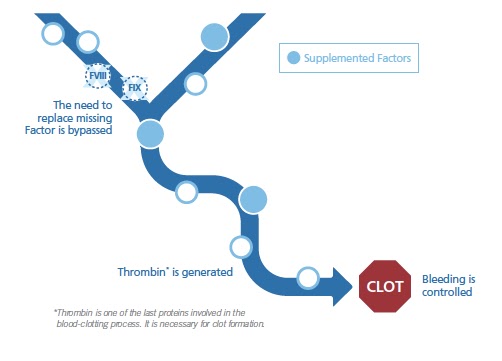
Learn about bypassing agents: a factor option with a long history of use

 |
Activation
Turning the light switch on—Before a bleed occurs, the process remains off but available when needed. When a bleed begins, the process is turned on. After infusion, bypassing agents are available to help control/manage the bleed.
|
 |
Inactivation
Turning the light switch off—Once the bleed is managed, the blood-clotting process is inactivated.
The unused bypassing agent factors are eliminated from your blood. This inactivation step is very important. Unchecked thrombin generation could lead to risk of blood clots over time.
|
|
PROPHYLAXIS
Infuse routinely to prevent bleeds1 |
ON DEMAND
Infuse when needed or to control breakthrough bleeds1 |
SURGERY
Infuse to prevent/manage bleeds during or after surgery 8, 20 |
http://www.bleedingdisorders.com/bleeding-disorders-info/
http://www.hemophilia.org
http://www.wfh.org
http://www.hemophiliafed.org/
| 1. | Peyvandi F, Garagiola I, Young G. The past and future of haemophilia: diagnosis, treatments, and its complications. Lancet. 2016;388:187‐197. |
| 2. | Antovic A, Mikovic D, Elezovic I, Zabczyk M, Hutenby K, Antovic JP. Improvement of fibrin clot structure after factor VIII injection in haemophilia A patients treated on demand. Thromb Haemost. 2013;111(4):656‐661. |
| 3. | Hvas AM, Sørensen HT, Norengaard L, Christiansen K, Ingerslev J, Sørensen B. Tranexamic acid combined with recombinant factor VIII increases clot resistance to accelerated fibrinolysis in severe hemophilia A. 2007;5:2408‐2414. |
| 4. | Johari V, Loke C. Brief overview of the coagulation cascade. Dis Mon. 2012;58:421‐423. |
| 5. | Lenting PJ, van Mourik JA, Mertens K. The life cycle of coagulation factor VIII in view of its structure and function. Blood. 1998;92(11):3983‐3996. |
| 6. | Factor Replacement Therapy. Canadian Hemophilia Society. http://www.hemophilia.ca/en/bleeding-disorders/hemophilia-a-and-b/the-treatment-of-hemophilia/factor-replacement-therapy/. Accessed December 1, 2017. |
| 7. | World Federation of Hemophilia. What are inhibitors? https://www.wfh.org/en/sslpage.aspx?pid=651. Accessed November 9, 2017. |
| 8. | Leissinger CA. Prevention of bleeds in hemophilia patients with inhibitors: emerging data and clinical direction. Am J Hematol. 2004;77(2):187‐193. |
| 9. | World Federation of Hemophilia. Guidelines for the management of hemophilia, 2nd ed. World Federation of Hemophilia, Montreal, Quebec, 2012. |
| 10. | DiMichele DM. Inhibitor treatment in haemophilias A and B: inhibitor diagnosis. Haemophilia. 2006;12(suppl 6):37-42. |
| 11. | DiMichele DM. World Federation of Hemophilia website. Inhibitors in hemophilia: a primer. http://www1.wfh.org/publication/files/pdf‐1122.pdf. Published 2008. Accessed November 9, 2017. |
| 12. | Ananyeva NM, Lee TK, Jain N, Shima M, Saenko EL. Inhibitors in hemophilia A: advances in elucidation of inhibitory mechanisms and in inhibitor management with bypassing agents. Semin Thromb Hemost. 2009;35(8):735‐751. |
| 13. | Retzios AD. The new and improved (?) activated factor VII molecules. Bay Clinical R&D Services. 2001:1-41. |
| 14. | Berg JM, Tymoczko JL, Stryer L. Many enzymes are activated by specific proteolytic cleavage. In: Biochemistry. 5th ed. New York, NY: WH Freeman; 2002. https://www.ncbi.nlm.nih.gov/books/NBK22589/. Accessed November 9, 2017. |
| 15. | Shapiro AD, Hedner U. Advances in bypassing agent therapy for hemophilia patients with inhibitors to close care gaps and improve outcomes. Ther Adv Drug Saf. 2011;2(5):213‐225. |
| 16. | Hoffman M, Dargaud Y. Mechanisms and monitoring of bypassing agent therapy. J Thromb Haemost. 2012;10:1478‐1485. |
| 17. | Astermark J, Donfield SM, DiMichele DM, et al. A randomized comparison of bypassing agents in hemophilia complicated by an inhibitor: the FENOC Study. Blood. 2007;109(2):546‐551. |
| 18. | Hemophilia Federation of America. Treatment of hemophilia. http://www.hemophiliafed.org/bleeding‐disorders/hemophilia/treatment/. Accessed November 9, 2017. |
| 19. | Hedner U. Recombinant activated factor VII: 30 years of research and innovation. Blood Rev. 2015;29(suppl 1):S4‐S8. |
| 20. | Santagostino E, Escobar M, Ozelo M, et al. Recombinant activated factor VII in the treatment of bleeds and for the prevention of surgery related bleeding in congenital haemophilia with inhibitors. Blood Rev. 2015;29(suppl 1):S9‐S18. |
| 21. | Mehta R, Parameswaran R, Shapiro AD. An overview of the history, clinical practice concerns, comparative studies and strategies to optimize therapy of bypassing agents. Haemophilia. 2006;12(suppl 6):54‐61. |
| 22. | National Hemophilia Foundation. Medical and Scientific Advisory Council (MASAC) recommendation regarding the use of bypassing agents in patients with hemophilia A or B and inhibitors. MASAC document #167. 2006. |
| 23. | NIH Clinical Trials Registry. Ongoing and complete clinical trials using bypassing agents in hemophilia patients with inhibitors. https://clinicaltrials.gov/ct2/results/detailsterm=hemophilia+a+with+inhibitors%2C +hemophilia+b+with+inhibitors&recr=Closed&cond=hemophilia+a+with+inhibitors%2C+hemophilia+b+with+inhibitors. Accessed November 9, 2017. |
| 24. | Higgins MC. Career imprints: creating leaders across an industry. 2005. |